
24th July 2025
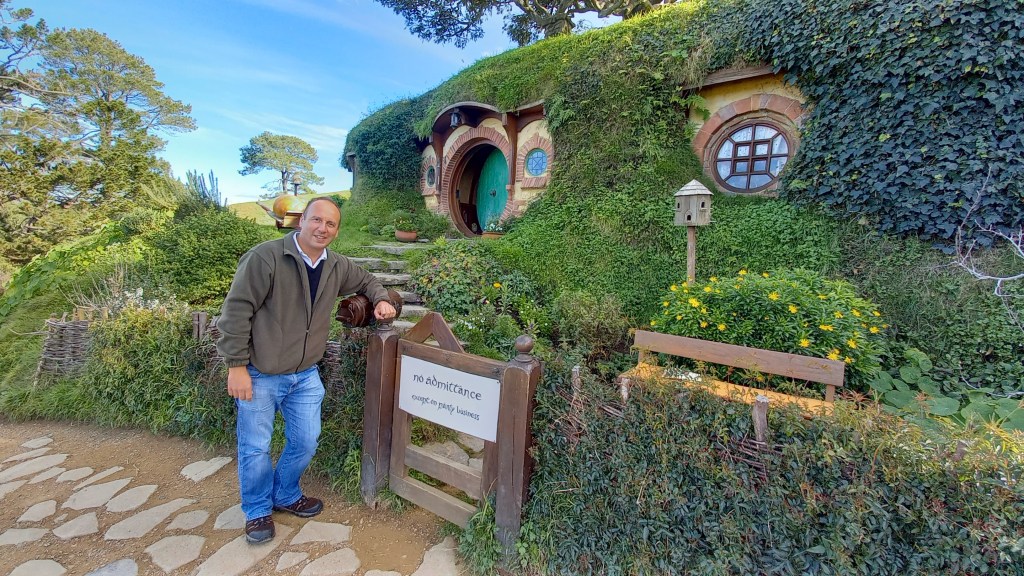
Wow, wow, wow! I’ve just had the most amazing first day on my North Island Road Trip. Being a huge Lord of the Rings and Hobbit fan here, what I think I was most excited about on my visit to New Zealand was being in Tolkien country itself. On many levels, it seems this small country at the bottom of the world was meant to be Middle Earth, and of course legendary film director Peter Jackson made this into a reality. As an ardent fan, I have of course the complete and extended edition box sets of both film series, and have also watched the additional content, including the fantastic documentaries on the filming locations. These really inspired me when I first watched them to visit this country and see where the magic was made, and here I was about to visit my first of many LOTR/Hobbit filming locations – I was seriously in my element.
But of course, New Zealand, and this central North Island part of my visit, is so much more than Middle Earth – in fact, the next three days on my trip were also filled with fascinating Māori tradition and culture, geothermal pools and geysers, and cute little kiwis, along with some absolutely stunning and other-worldly landscapes. What’s not to like?!

It all began with picking up my car rental back at Auckland’s International Airport – a Toyota Corolla from the super-friendly local car company called Snap which I highly recommend. Although I didn’t appreciate them not answering the phone when I arrived at the airport terminal to send their pick-up to collect me, and instead having to walk the half-mile journey there along a dual carriageway with no pavement carrying my two backpacks (!). They were most apologetic upon arrival, and their typical New Zealand super-friendliness very quickly overcame my initial wrath, and I left with my car having virtually forgotten about the whole incident.
I was so excited to be driving again, especially around New Zealand. Many have said how wonderful a country it is to drive around – less motorway, more winding country road. The first stage of my journey to Rotorua was, however, along a motorway, pretty much the only lengthy one in the country, from Auckland to the inland city of Hamilton. There was actually a really scary driving incident along this stretch, which had me making myself do some deep breathing exercises afterwards to calm myself down. I was just about to overtake a lorry when some debris started falling off of it and onto my car. They were only small bits of stone which fortunately didn’t make any dents. I had to speed up quickly and zip over the outer limit of the fast lane to overtake and avoid it. Then I saw in my rear-view mirror a whopping great piece of something falling off its back and covering a whole lane of the motorway. I could also see the car behind me having to swerve very quickly to narrowly avoid it. The lorry then slowed down, and goodness knows what happened after that. I just high-tailed it out of there, heart racing, and I can’t imagine what the poor chap behind me must have felt… Fortunately this was the only serious incident on my NZ Road Trip, although there is another road story which I will be relating in my next.

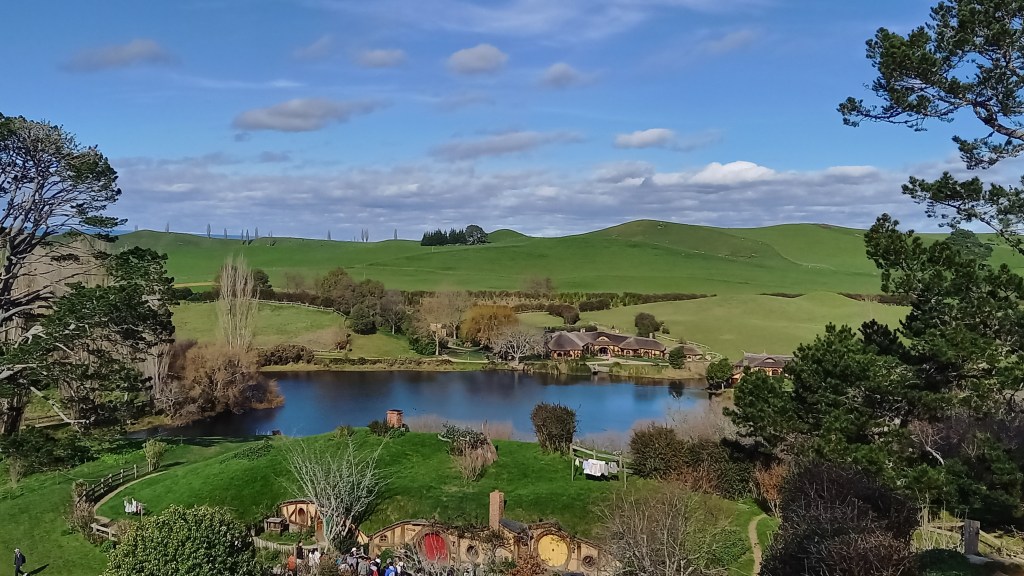
My first, and pretty much only, stop for the day was the absolutely fantastic Hobbiton! Out of all the many LOTR filming locations and sites throughout New Zealand, this is the only one that remains intact with the original set and features. After the filming of the three LOTR films however, the set was actually mostly dismantled, but when the Hobbit films were shot, they had decided to build it again with more permanent building materials so that it would remain there after filming. It is built on the Alexander Farm, whose owners were inspired by the initial trickle of visitors to develop it into the major tourist destination that it has become today, and I imagine they make just that little bit more money from it than they do from their still-existing sheep farm. I joined one of the tours with a small group of just 16 of us, which lasted a highly enjoyable two-and-a-half hours, and was filled with sheer and pure joy throughout. I actually nearly cried a number of times, and my face was beaming the whole time. I could see that an Aussie-English girl on the tour felt similarly to me, she was also beaming with joy throughout.


My absolutely favourite film series of all time just has to be the LOTR trilogy. I’m not as into the Hobbit trilogy to be honest, but it’s still high up there for me with its Tolkien stuff. And my absolute favourite place in all the films is the village of Hobbiton itself. I often see myself as a Hobbit living in my little and cosy Hobbit-hole of a mid-19th century cottage in South London wearing my dressing gown and slippers and tasting a brandy with a smoke every now and then, I’m not ashamed to admit this! While Bilbo and Frodo are both (mini-)men after my own hearts, with their bachelordom and globetrotting, Samwise Gamgee will always be my favourite character of all. I always say he is the real hero of the story, and if this is news to anyone reading this, I recommend watching the films again with this in mind and you might see what I mean.
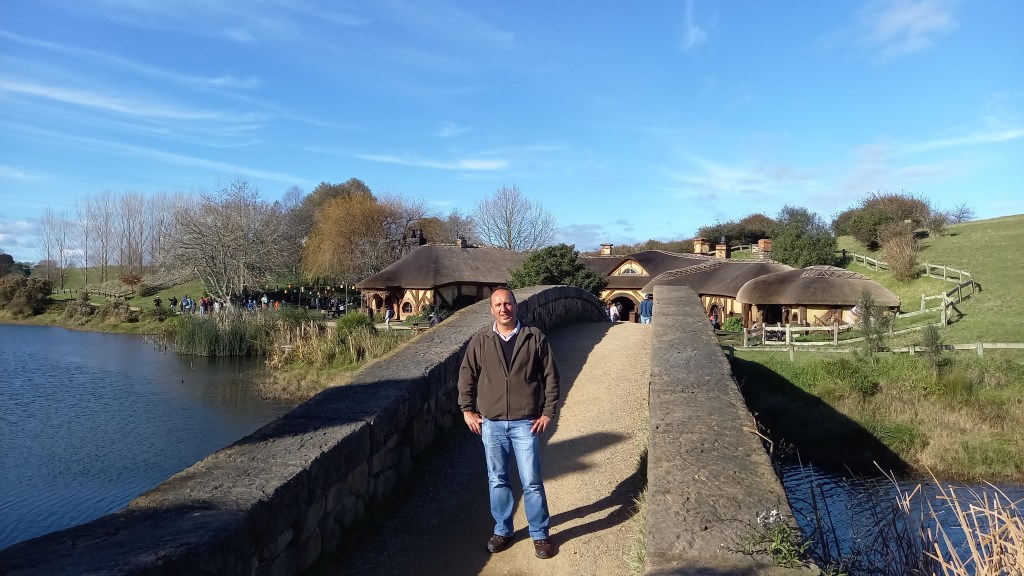
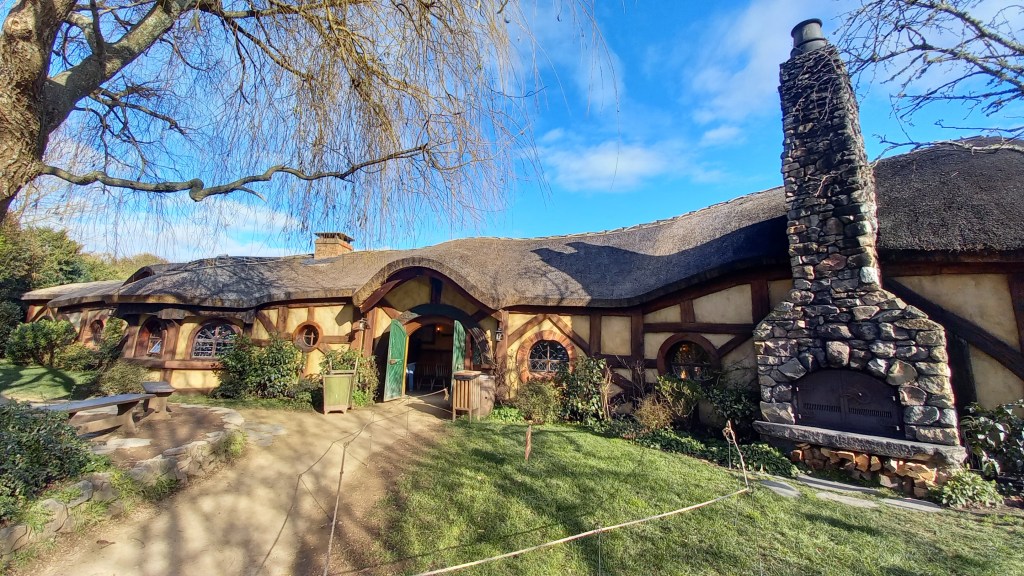
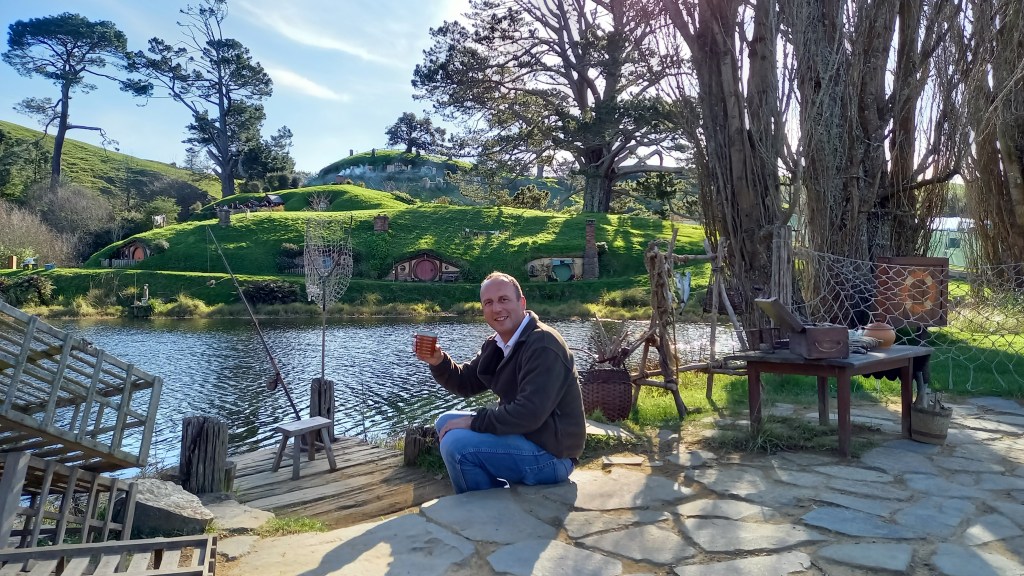
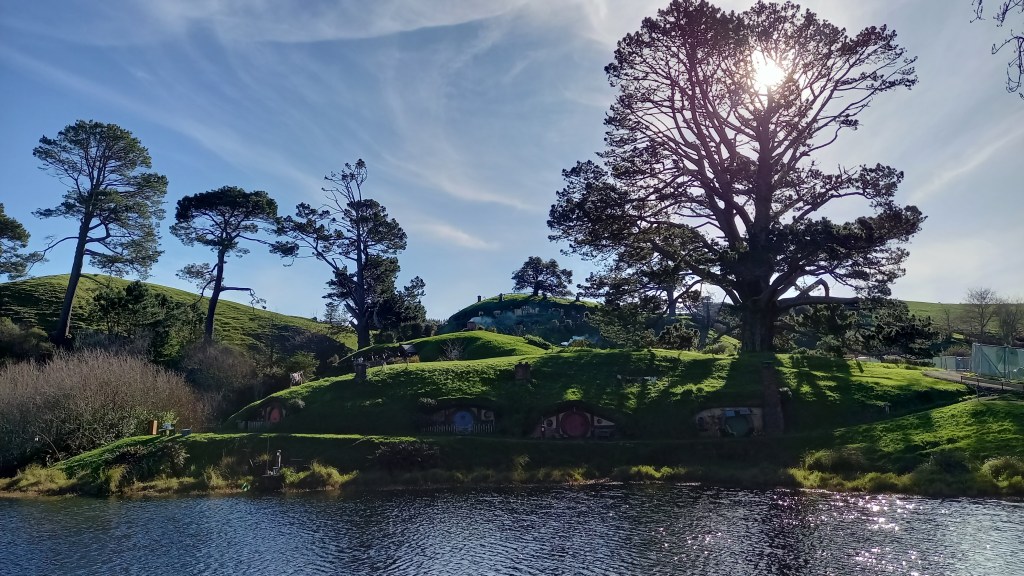
Anyway, sorry, back to my travels and back to Hobbiton – it was absolutely magical! We visited the walled entrance to the village through which Bilbo announced “I’m going on an adventure” in the first Hobbit film, Bag End, The Green Dragon Inn, and so many little hobbit-holes everywhere. It was an absolute delight to explore, and the attention to detail was just amazing. There were little stalls of veggies, cheeses and honey, along with real vegetable patches that were clearly and regularly tended, handwritten signs all over the place, and even a little hobbit-hole you can walk through, with living room, kitchen, bedroom, study, bathroom and hall, all also filled to the brim with detail. The tour finishes off with a beer at The Green Dragon. I had to have a non-alcoholic one as I was driving, but I bought a proper bottle at the gift shop to have later that evening. I absolutely loved the place, it was very meaningful for me, and I could tell I wasn’t the only one who was in their element there.
I drove onwards and on to the outskirts of a small village called Hamaruna, near Rotorua, where I’d be shacking up for my next two nights, in a delightful Airbnb with its very own bushwalk through a hectare of native NZ forest! I enjoyed a peaceful walk in there as the sun was setting and the birds were singing as they settled in for the night. I settled in myself too, after an absolutely delightful and magical first day of my North Island Road Trip.
The next day I had a brilliant one exploring in around the interesting inland city of Rotorua. With a population of just 60,000, it is one of New Zealand’s more substantial inland settlements, and is notable for its strong Māori culture, geothermal activity, and as a result a rather pungent smell in a number of places. It is also high up on the list of the country’s tourist destinations, and I was looking forward to exploring why.
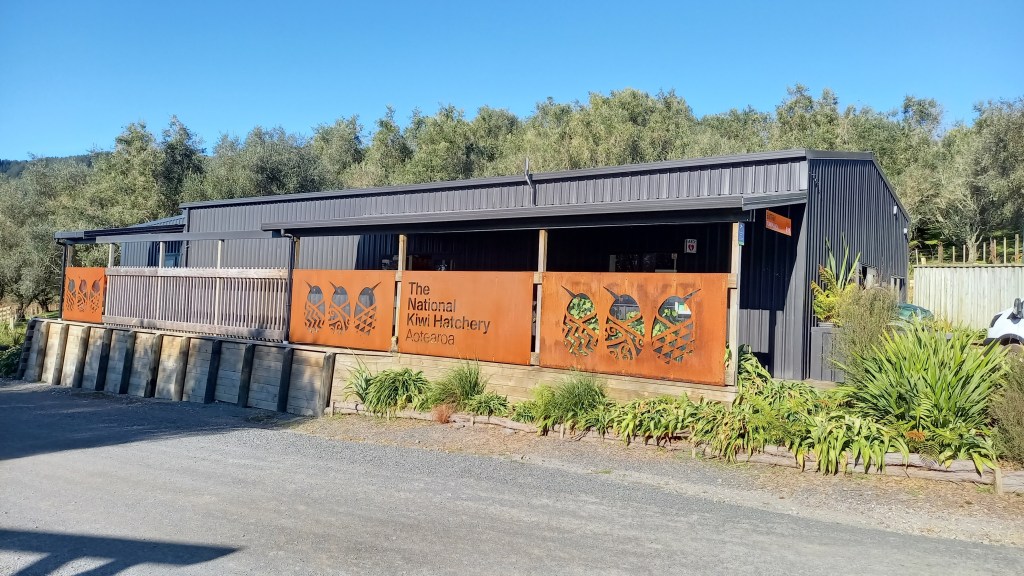
First up was the National Kiwi Hatchery, one of the few places in the country where you can actually see live kiwis, which are notoriously difficult to spot in the wild and the vast majority of human Kiwis apparently never get to see a real kiwi in their lives. I joined a friendly Austrian couple on a tour there, and after having been given a very informative introduction and tour around their display area, we entered the kiwi enclosure. Because kiwis are nocturnal birds, they simulate night time there for visitors during the actual daytime, and we were so very fortunate to see all three of the birds they had in their enclosure – they said that we might not even be able to see any of them as they could be asleep or hiding.
They were just gorgeous! Really quite large birds, the size of a bowling ball, with no discernible wings, a big bulbous body, and a long beak at the end of their small heads. They were really quite active, running around and foraging for food in their simulated undergrowth, and if it were possible I would have loved to have picked one up and cuddled it! Hatching season there is only in the southern hemisphere summer, so we didn’t get to see any eggs in the hatching area, but it was absolutely enough for me to have seen these adorable little balls of feather scurry around in the darkness. They understandably didn’t allow photos, so I only have a picture here of me and a plush version of the bird!

Kiwis are related to other southern hemisphere big birds including the African ostrich and Australian emu, as well as the extinct Great Moa which once lived in New Zealand and was the largest bird to have ever lived on the planet. Growing up to two metres high, these huge flightless birds unfortunately made easy hunting and tasty eating for humans, and so within just two centuries they were made extinct by the Māori after their arrival in around the 14th century AD. Contrary to popular opinion, the Māori are also relative newcomers to the islands, preceding the Europeans, or as they are locally called in NZ the Pākehā, by only 300 years! Also contrary to popular opinion, the original Māori had significant negative impact upon the environmental landscape of the land, resulting from having no centuries-old connection with it, and thus little understanding of it. As the Great Moa became extinct, so did the world’s largest bird of prey which hunted them – the Haast’s Eagle, with a wingspan of up to 3m and weighing in at around 18kg. The Māori also began widespread deforestation of the land which was later continued by the Pākehā, as they both sought more and more land for agriculture. The Māori brought dogs and rats, while the Pākehā brought cats, weasels, stoats and possums, all of which decimated the native bird population which had amazingly evolved throughout the North and South Islands without the threat of any predatory mammals to inhibit their survival. As a result, many birds, including the kiwis, lost their ability to fly, which has made them so vulnerable to these invasive mammals.
There is now a widespread and concerted effort to basically eradicate all wild mammals in the country, with traps evident wherever I went, and with the aim being for New Zealand to be predator-free by 2050. I truly wish them all the very best with that, it was beautiful to see here in the Sanctuary these native birds up close and beginning to thrive once more in their homeland assisted ably by many good people and organisations aiming to restore the country’s natural beauty and balance.
Next, I headed to the brilliant Whakarewarewa Living Māori Village, one of a number of places in and around town where you could visit the area’s geothermal pools and geysers. I chose this one as I’d read it had a very authentic Māori vibe, and I wanted to learn more about the people and their customs. It was an amazing place, with not only geothermal attractions, but also and indeed a living Māori village which you could walk through and observe centuries-old traditions still being lived out today. I spent a fascinating four hours there, and enjoyed first of all the self-guided walk through the thermal pool area, filled with the smell of sulphur and great views making for great photos. I particularly enjoyed learning on my walk, the legend of Polynesian fire goddesses Te Pupu and Te Huata. The story goes that the first Polynesian exploration leader to arrive in New Zealand, Ngātoro-i-rangi, found it a bit chilly in these southern islands, and thus called to his sisters back home to send fire to warm him. They sent the fire goddesses under the earth in a straight line from Hawaiki, the mythical Māori homeland to the north-east, who when surfacing a number of times on their journey, left behind a trail of volcanic and geothermal activity along the way. Their heat duly saved his life, and thus gave rise to the region’s fascinating collection of volcanoes, geothermal pools and geysers, which in fact do go in a straight line from Rotorua to the north-east and across the Pacific Ocean. I’m sure there’s a more scientific explanation to this, but I always prefer the local legends!
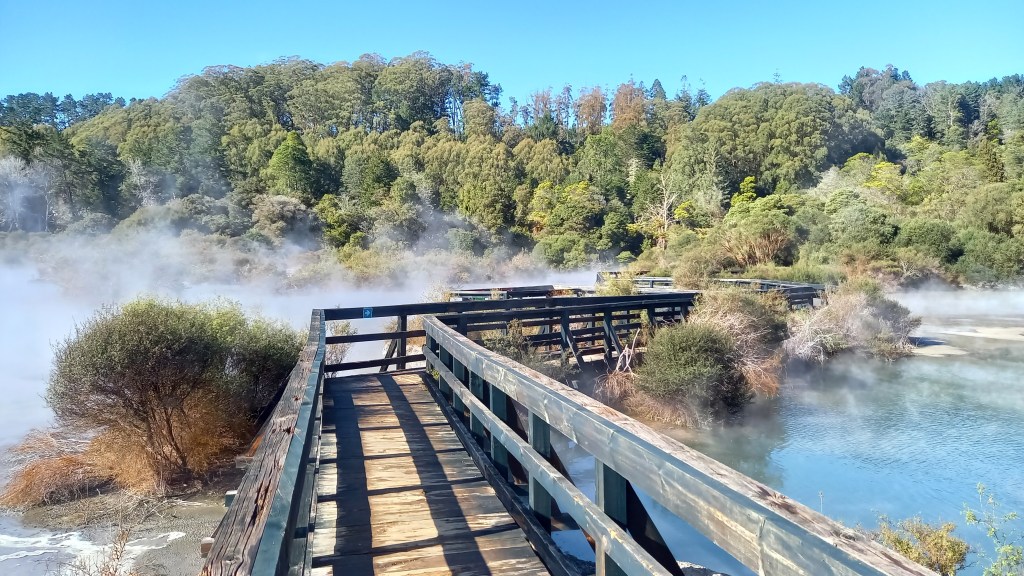
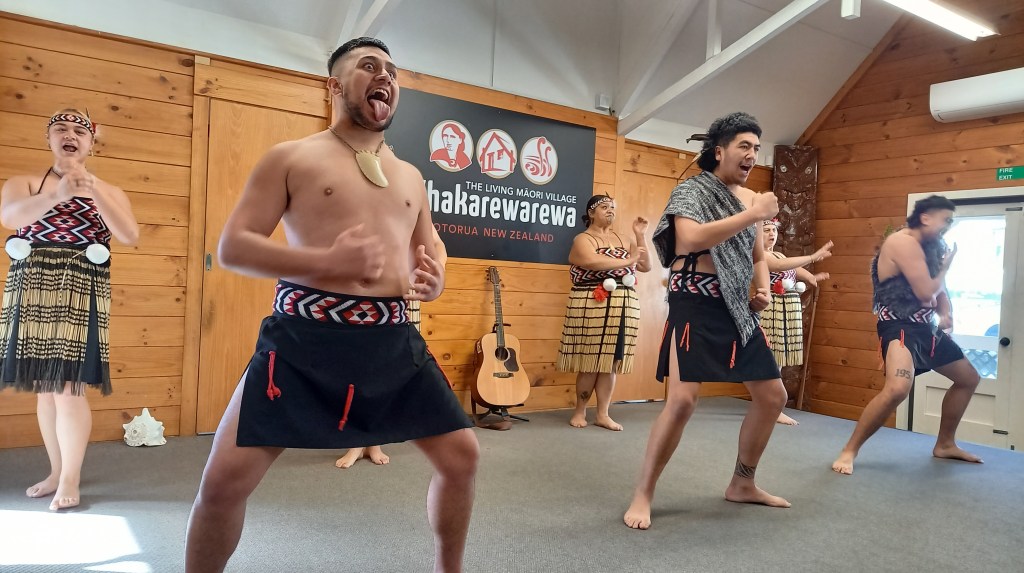
After my walk, I headed to the absolutely brilliant Cultural Performance, with villagers performing several dances, songs and most impressively the Haka! This was powerful, and with only seven people, I was seriously impressed with their ear-splitting chanting, and being up-close to the eyeballing and tongues sticking out – it was something else. Initially intended as a tribal war dance to frighten off the enemy before deciding to engage in actual combat, the dance is now most famously performed by the New Zealand Rugby Team – the “All Blacks”.
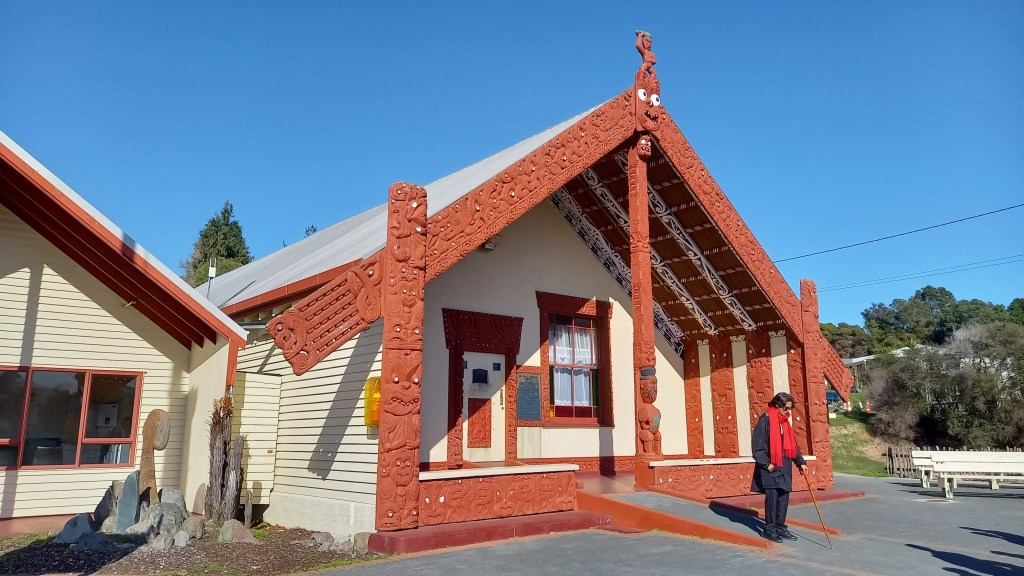
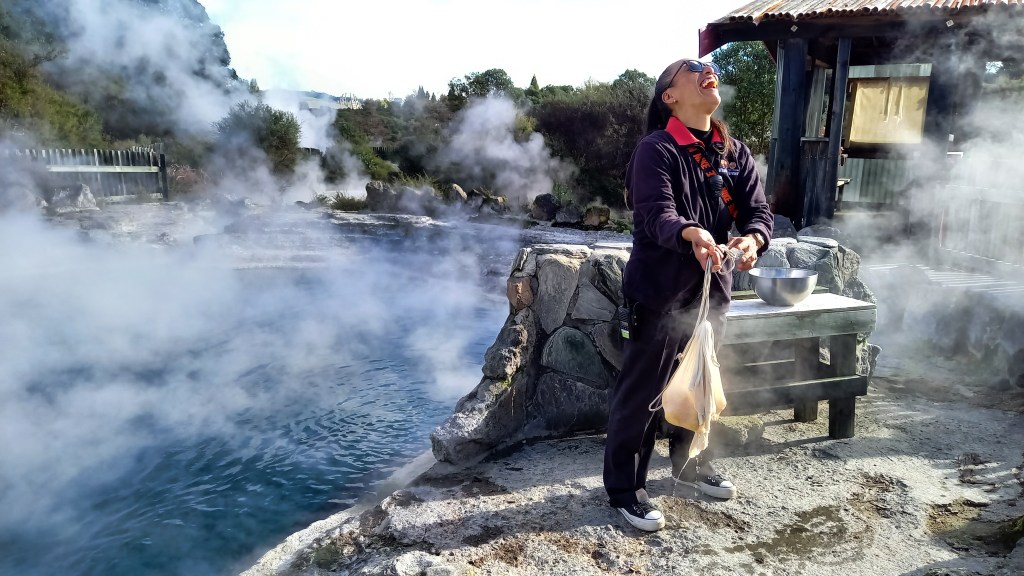
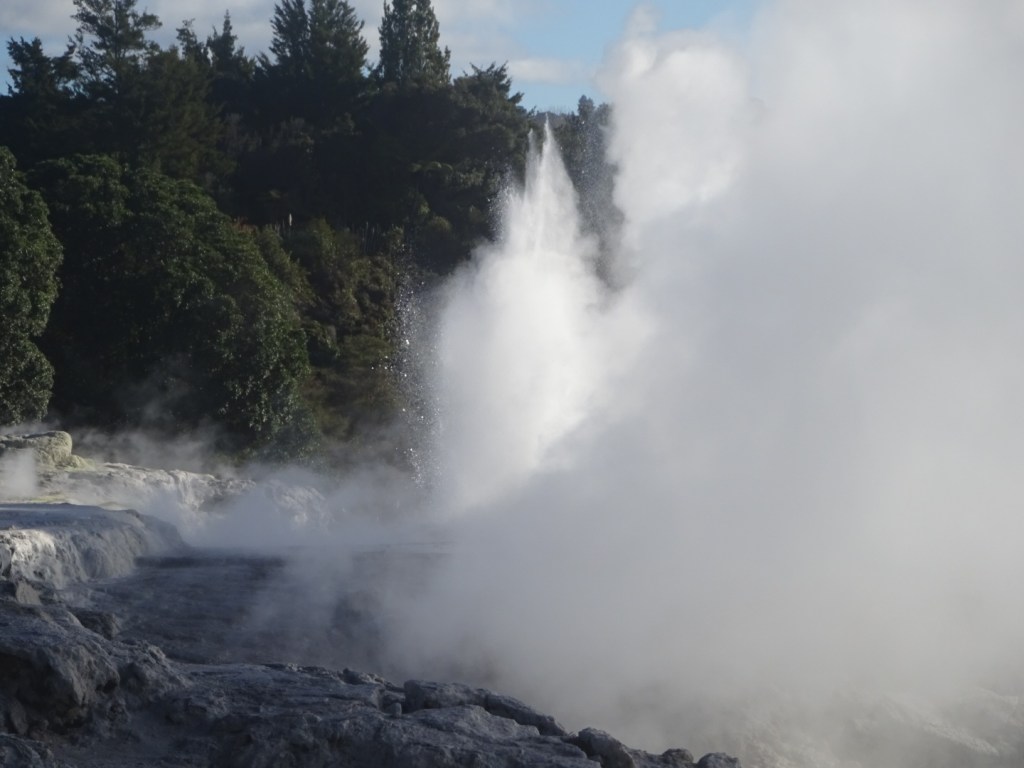
I finally joined a guided cultural tour through the living village itself, watching the people going about their lives on their native geothermal waters and land. We visited the central Meeting House, which is the most important building in a Māori settlement, the communal cooking and bathing areas which made use of the natural, super-heated geothermal water and clearly saved on cooking and heating bills, two churches (one Anglican, one Catholic), and enjoyed simply wandering the streets. The highlights for me were eating corn on the cob which was cooked in the hot waters hangi-style, and the Pohutu Geyser at the end. We were told it rarely erupts during visits, yet when the tour ended I decided to hang around and take my chances – lo-and-behold, around ten minutes later it erupted! I thought this was incredible, and had the whole viewing to myself as everyone else had left by then. I felt bad that they didn’t see it, but also really happy to observe the spectacle in peace and solitude.
I then headed into Rotorua town itself, with an amazing view over Lake Rotorua from its lakeside path, though there was nothing hugely special about the town I thought. It did have a few Victorian buildings left over from its time as a historical tourist destination in those times, including its famous Rotorua Museum located in the early 20th century Bath House in Government Gardens. Unfortunately the place has been closed for renovations since the Kaikōura earthquake hit the area in 2016, and there was nothing much to see of the otherwise-stunning exterior of the building. The town had a bit of an edge to it, which I didn’t like, although I did get talking to a bit of a vagrant there, and surprised myself to have connected with him. He seemed a wise man, and one of the many things he told me was that his job was to “watch over the place”. I also walked past a fight between two schoolgirls, which wasn’t nice. It was broken up by some security guards, but I really didn’t like how so many people around them were just filming it with their mobile phones. What has happened to humanity of late…?
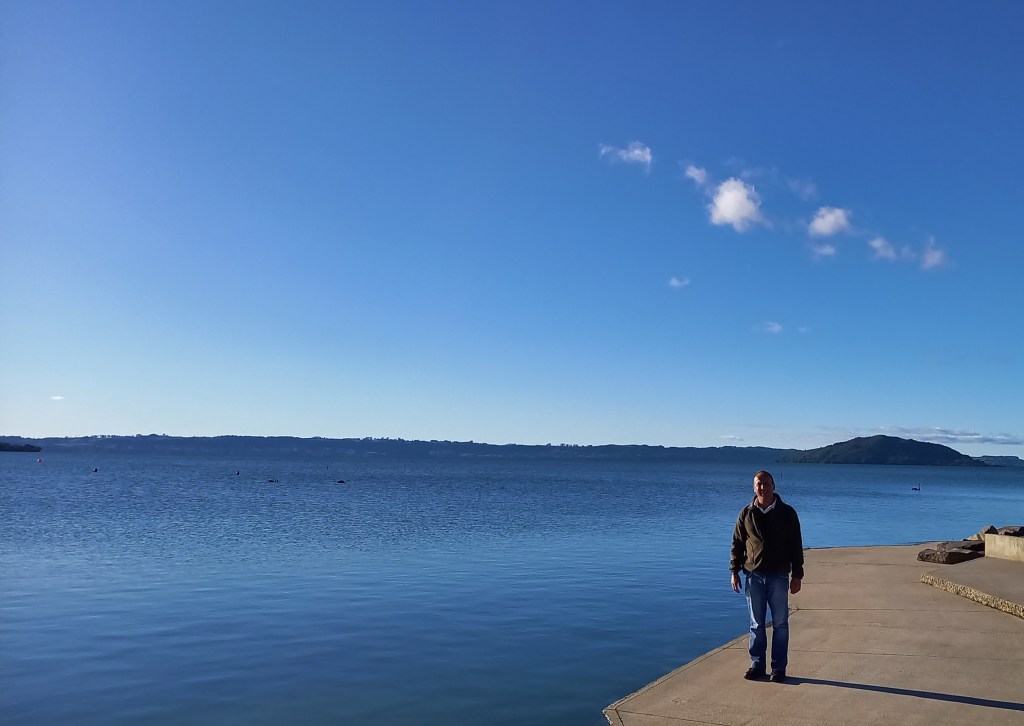
Finally, I drove back to my accommodation on the north-west side of Lake Rotorua from the town’s southern side, circumnavigating the waters anti-clockwise for some beautiful views of this jewel of a body of water. There were particularly gorgeous views from the north shore, just as the sun was setting.

The next day I was driving from Lake Rotorua to Lake Taupō, 56 miles away to the south. The drive was spectacular, and took me up and over a bit of high ground with fog as the temperature hovered just above zero. There was one amazing moment when the road rose above the fog, and you could see the tops of green grassy hills poking above the fog layer, fumaroles all around spewing up steam, and towering snowy mountains in the far distance basking in the sun and deep blue sky. It was incredible, and reminded me of what my fellow traveller and friend Merry Jo once said to me – being in New Zealand is like being in a postcard – and I couldn’t agree more!
I stopped off en route at a few places – firstly, for a couple of hours’ hot soak at the fantastic Wairakei Thermal Health Spa, with geothermal spring-fed pools of varying temperatures between 34°C and 40°C. I specifically chose this of many thermal spas in the area as it was adults only, so there were no noisy children and lots of peace instead – yay! I got talking to a local farmer who had nothing good at all to say about former NZ Prime Minister Jacinda Ardern, also known locally as “Cindy”, “Horsey Face”, or simply “The B!tch” – this was a sentiment which I’d heard a number of times on my travels from the otherwise genteel and good-natured Kiwis. This may come as a surprise to international readers following mainstream news outlets, but “Cindy” is not so popular at all here than she is on the international celebrity-leader circuit. And as they say, it must have been really bad to have arisen such anger and opposition towards her from these otherwise cool-headed and sensible people. I couldn’t have agreed more with him, and I say well done New Zealanders for getting rid of her. I hope it won’t be too long now for our very own joke of a leader – hopefully it will be quick and sudden as it was with Cindy.
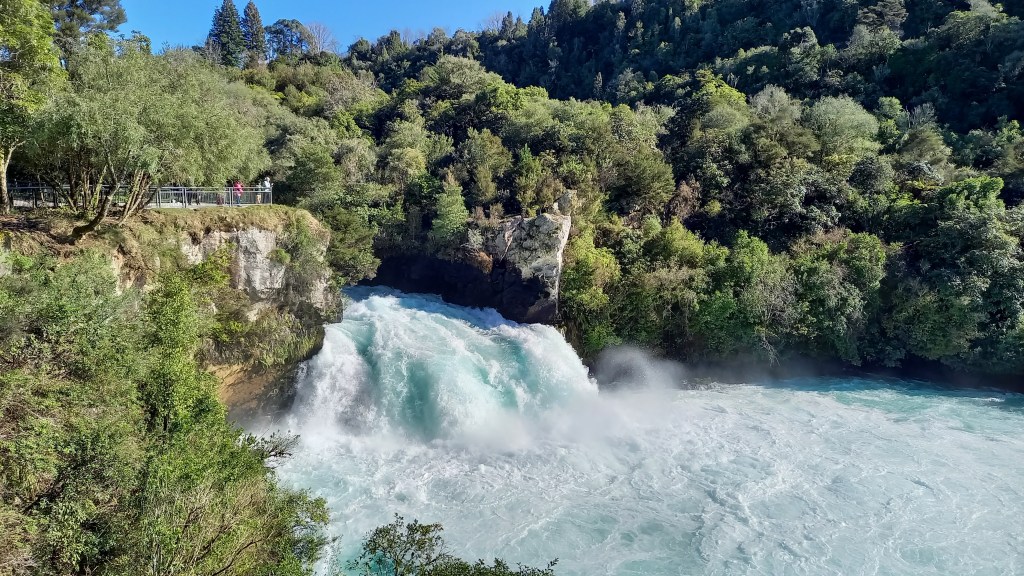
I then stopped off at the nearby Huka Falls to view this awesome emptying out of nearby Lake Taupō along 50m of huge rapids before a final 7m drop into the Waikato River. Salmon and eels apparently can’t make it up these ferocious rapids, so apparently Lake Taupō is eel-free – this seems to be a good thing around here.
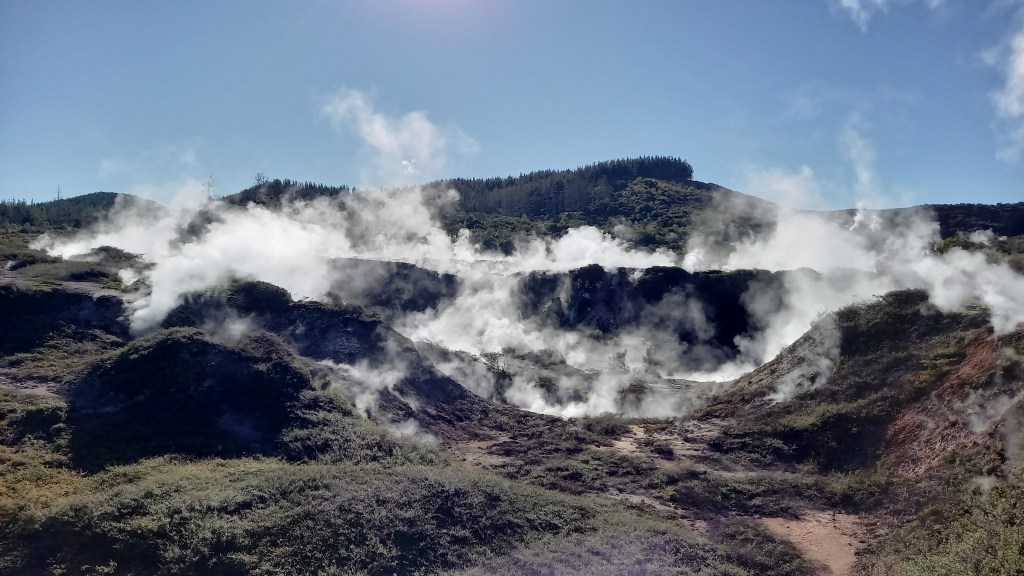
Next I explored the nearby “Craters of the Moon”, a fantastic hour-long hike through a geothermal field, complete with fumaroles, steaming holes and mud pools, with the sound of roaring steam and the smell of sulphur around every corner. It was amazing, and other-worldly.
I finally stopped for the day in the delightful lakeside town of Taupō, with its beautiful view across its adjoining lake of the same name, blue sky, and giant mountains in the far distance where I’d be heading the next day. The town had a genteel feel to it, with large grassy spaces and villa-type houses. I checked into a lovely AirBnB a couple of miles south of town, before walking back down again to the lakeshore nearby to watch the sun set over it – just beautiful!

It had been an incredible few days exploring the central part of North Island. The place seemed to have everything you can think of when you think of New Zealand – Māori, the Haka, geothermal pools, geysers, fumaroles, gorgeous lakes, kiwis and hobbits! I was so excited to explore more of this beautiful country at the bottom of the world, and they tell me that the South Island is even more incredible – I was excited! But there was still plenty more for me to explore in the North, which I’m sure I’ll be relating in my next!

 Alex Waring's Travel Blog