
29th July 2025
Greetings from the West Coast of the North Island! This is in fact a rather under-visited part of the country, and as anyone who may have read my blogs before will know, this is exactly the kind of place I love to explore! In travelling from Auckland to Wellington, Kiwis usually follow the State Highway 1’s inland route via Rotorua, while most tourists drive this route and then continue further on their Kiwi adventures by taking their car on the ferry from Wellington to Picton on the South Island to take it from there. I, however, was returning to Auckland via the western route, to take in mainly beautiful Mt Taranaki, also known as Mt Egmont, but of course known in my mind as Erebor, “The Lonely Mountain”, of Hobbit, or actually Dwarven, fame! Being the huge Tolkien-fan that I am, I could not miss out on this place, and it would also allow me to explore the South Island by public transport. I thought this would be better so as to avoid driving on potentially icy roads in the middle of the New Zealand winter, and to also avoid the ferry and one-way charge for my rental car.
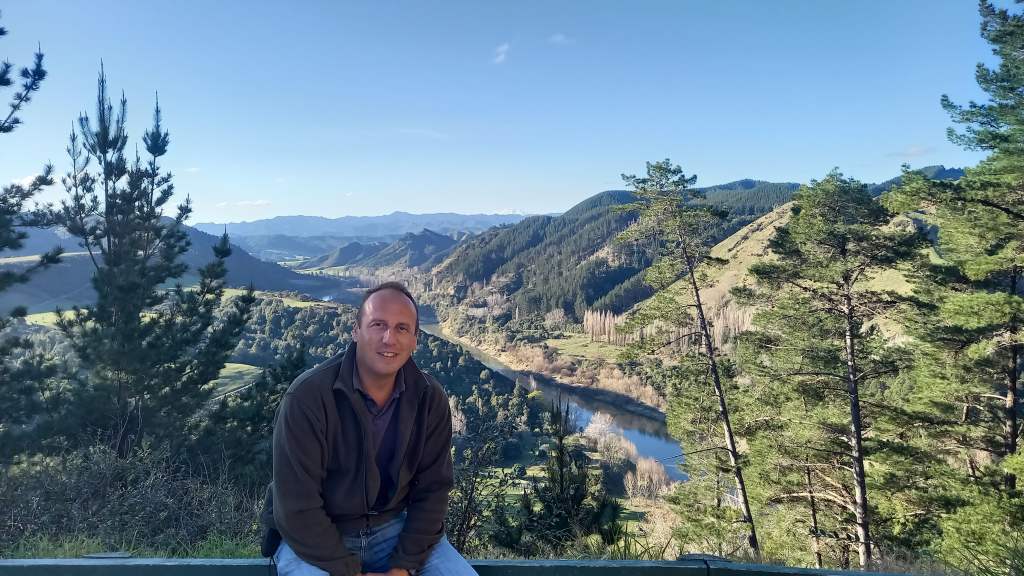
The drive from Wellington to my base for the night in Ōpunake was actually a fairly long one for New Zealand – 200 miles, taking around four hours in total. I decided to break the journey halfway in the lovely Whanganui River Valley, just inland from the town of the same name. This valley is located in the Whanganui National Park, and is popular with tourists seeking off-the-beaten track hikes and Māori experiences. I unfortunately did not have time for this, but did manage to locate an absolutely gorgeous viewpoint to drink in the lush pastoral valley scenery and enjoy a pie for lunch before continuing the drive. I was not disappointed, and found myself drinking in another postcard-perfect New Zealand scene.

After driving mostly north thus far from Wellington, my road then took a generally north-westerly direction, straight into the path of the evening, setting sun. The last hour-and-a-half of this drive was actually excruciating, blinding in fact, as the sun was always straight ahead of me. With the road also being wet, there was just light shining in my eyes from all directions, and I had so many dots on the inside of my eyelids after having finally arrived in my accommodation in Ōpunake just after dusk. I was relieved to get there. My digs for the night were just incredible – I was staying on a little mini-farm homestay, with ducks and chickens running through the small field in front of my room’s decking. The place even had an outdoor bath with hot water that I was soon enjoying shortly after a couple of glasses of wine and dinner – it was a real rural paradise of a place, and certainly soothed my aching eyes.
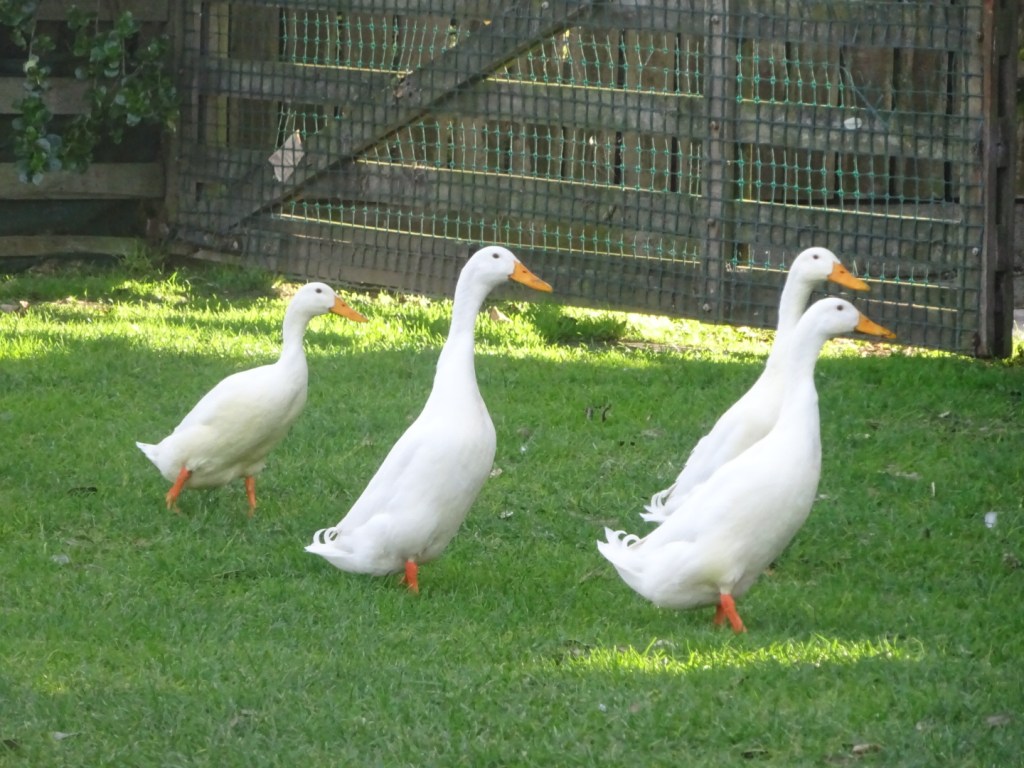
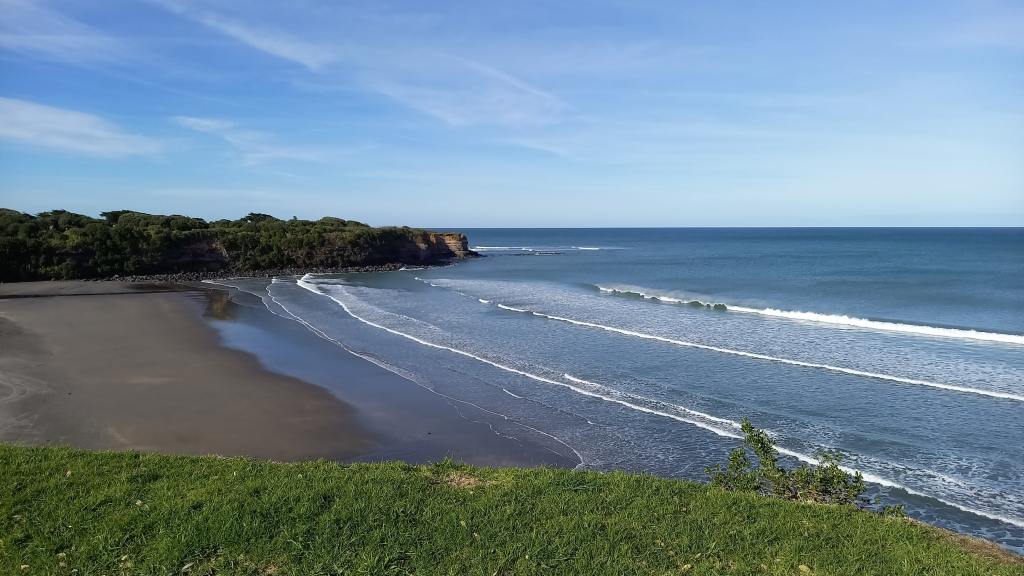
After breakfast and coffee the next morning while watching ducks and chickens roam the land, I checked out of this delightful little accommodation and headed straight to the coast a couple of hundred metres away to the west. This western stretch of the New Zealand coastline overlooking the Tasman Sea is wild and remote, and is also popular with surfers due to its big breakers – the coastal road is in fact named the Surfers’ Highway. I enjoyed a lovely coastal walk along the cliffs and beaches of Ōpunake, before then driving up to my main destination for the day – Mt Taranaki!
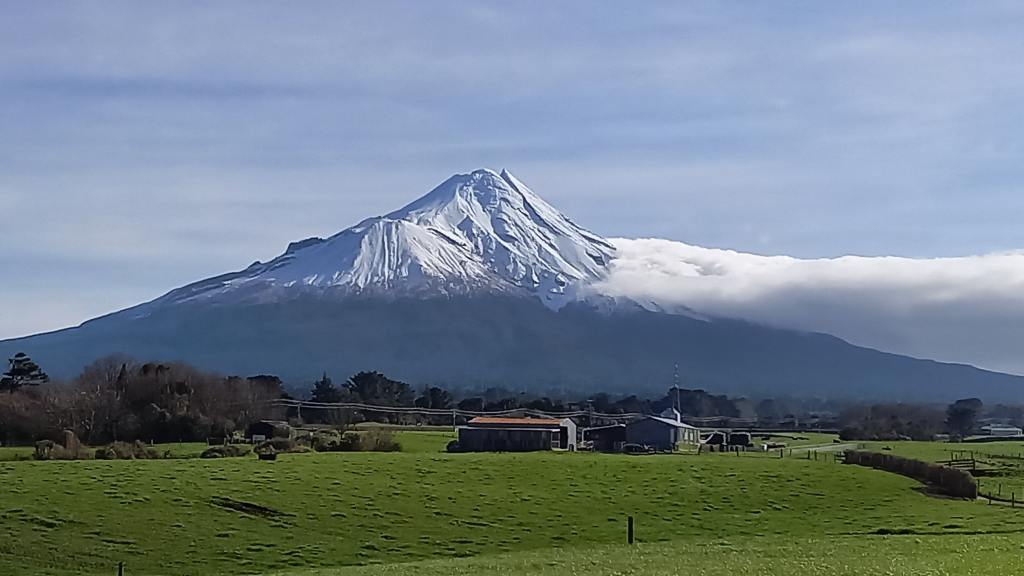
My MP3 Player was playing the Hobbit film soundtrack, particularly the awesome Misty Mountains motif, and I was getting excited. I was so glad I stopped off on my way up the mountain at the delightful little Hollard Gardens. Along with free coffee in its old-school lounge complete with a small library, it also had stunning views towards the volcano from its extensive gardens on this beautifully crisp blue-sky morning. Not long after I left though, the summit clouded over, and apart from the briefest of views a few hours later, that was it for volcano views. And hence my sincere gladness for having chosen to stop off there first.
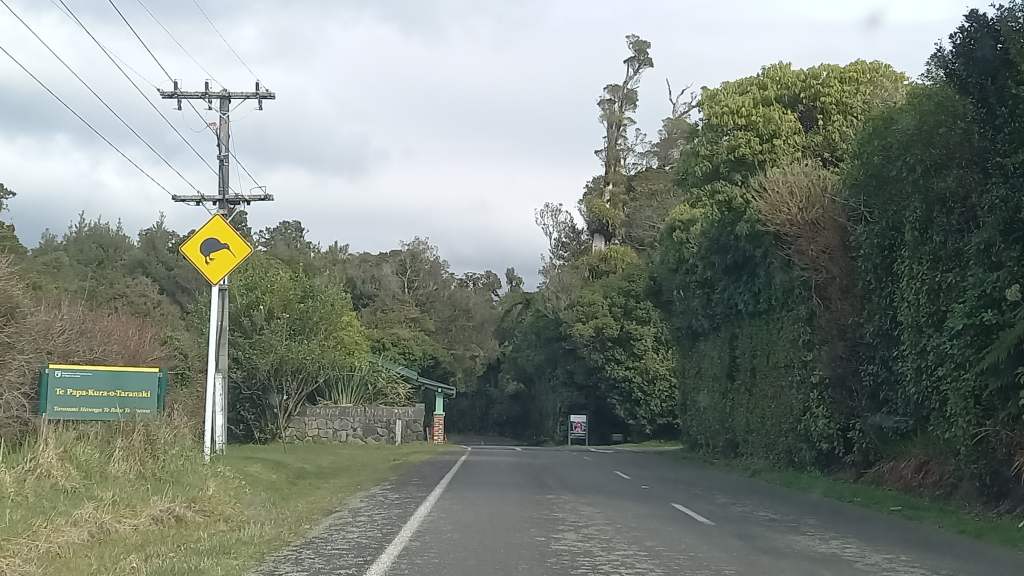
I had been absolutely blessed thus far with stunning mid-winter weather, endless blue skies, and atmospherically frosty mornings. On this day though, the clouds very much rolled in, while the next day was forecast to be very wet and windy all day. I would soon get to see what the locals had been telling me all along about their terrible winter weather!
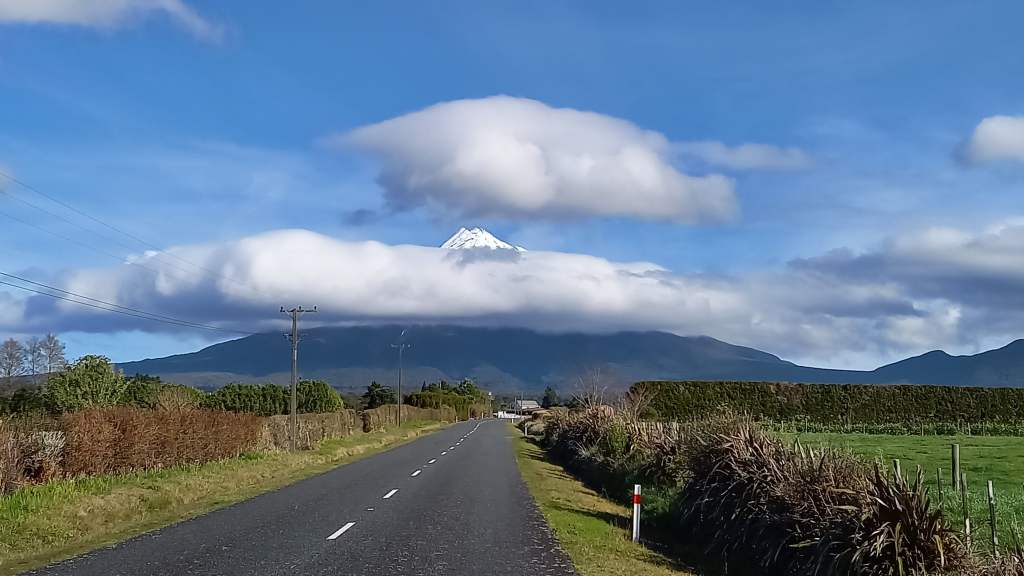
Before I had left my accommodation in the morning, the owner had told me a wonderful Māori legend of how Mt Taranaki was cast away there to live by himself after an argument with his brother back in the central mountain region of the North Island. This did make sense considering the three peaks of Tongariro, Ngauruhoe and Ruapehu are all sociably situated together around 60 miles away to the east, and Taranaki certainly seemed the perfect choice to become Erebor in the Hobbit film series, “The Lonely Mountain” to which the dwarves long to return in the book. She also told me how the mountain has “at last” been granted the status of a person, and seemed so pleased with this – I wasn’t so sure about this myself, and was still trying to figure out how that one worked…
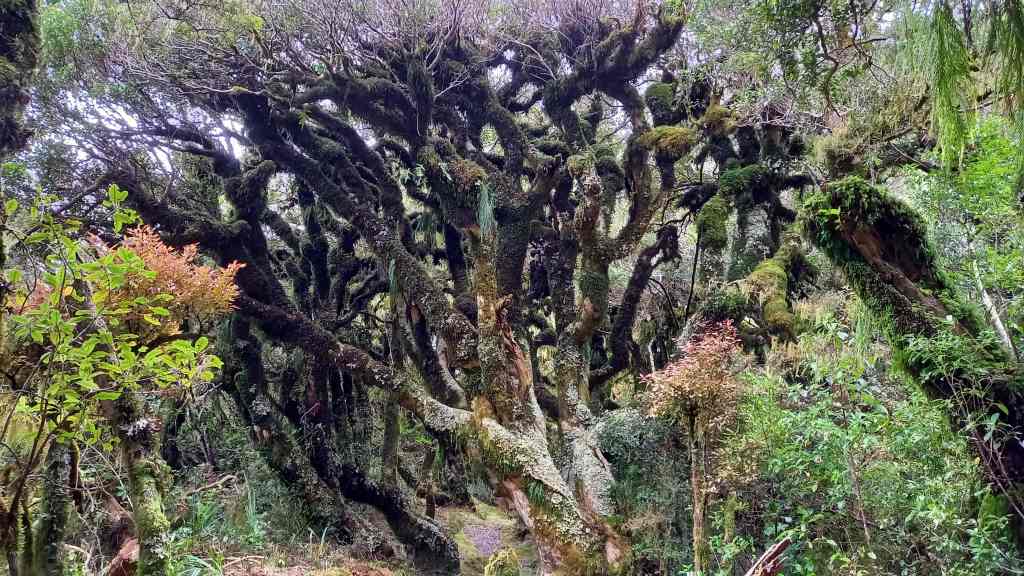
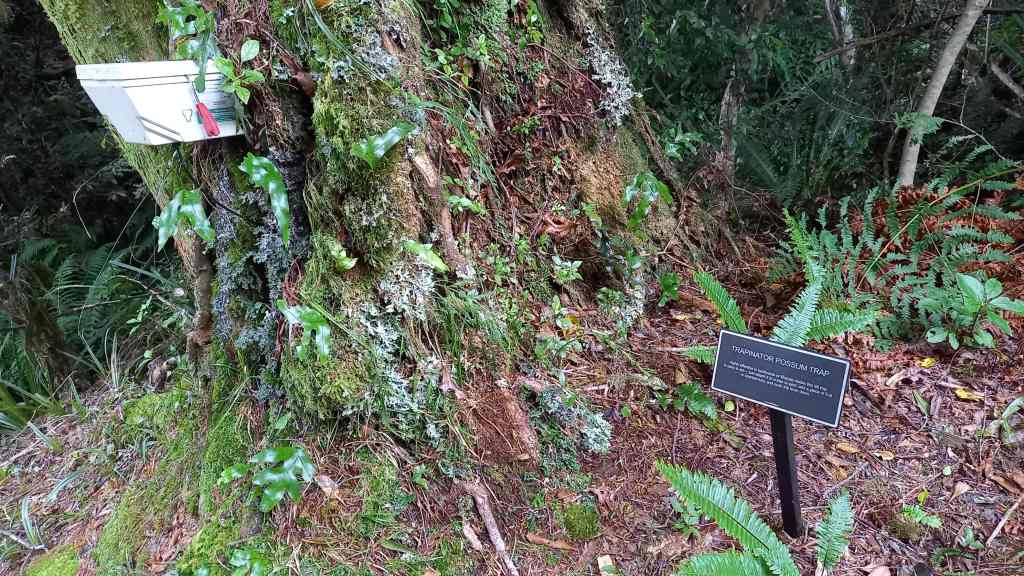
Despite not being able to see the peak anymore, I still drove up to the remote North Taranaki Visitor Centre to park up and enjoy a couple of lovely loop hikes exploring its slopes. The first went through the “Goblin Forest”, as the trees up there with attached hanging moss are called – it was truly unique and ethereal walking through this ancient forest. The second showcased the kinds of predator traps that are fitted throughout the whole country, in its drive as mentioned in a previous blog to become predator-free by 2050. These traps all came up with unique, quick and ingenious, though still rather macabre, ways of killing the invasive predatory mammals that are lured into them, including possums, stoats, feral cats and rats. This is to allow the islands’ indigenous, threatened and endangered bird life to recuperate. I absolutely applaud this, and hope we can achieve something similar back in the UK with the grey squirrel, to allow our native and beautiful little red squirrels to also flourish again once more.
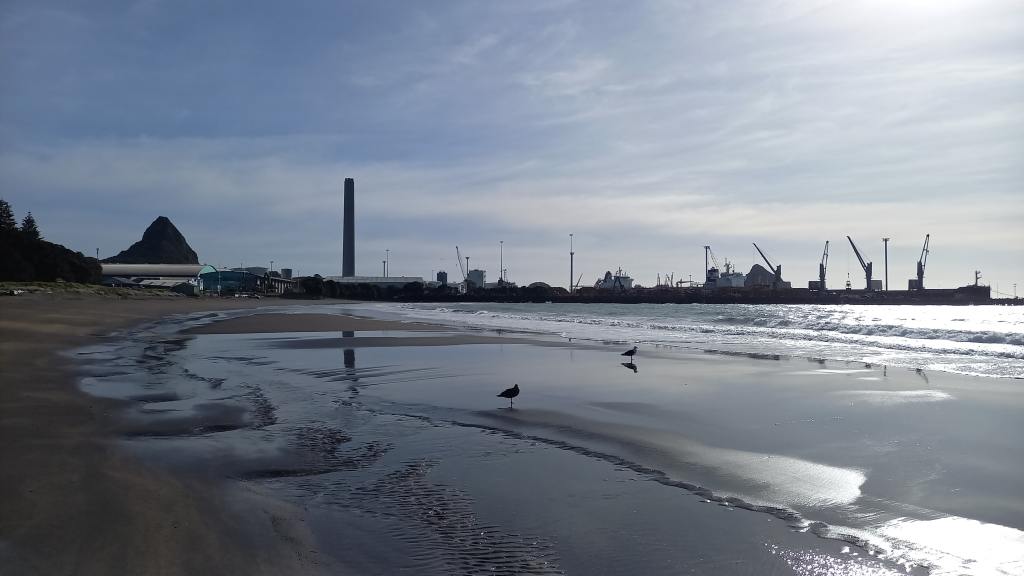
After the Lonely Mountain, I headed back to the coast again to a small city called New Plymouth, though there didn’t seem anything too special to see there. I was beginning to understand now why many visitors avoid NZ’s towns and cities, favouring instead to spend time in its stunning rural areas and wildernesses. Urban centres here are certainly cute and pleasant, and I particularly love the number of independent shops and businesses that seem to predominate over the big chains. But they all seem a bit similar after a while, and I was happy to join the majority in also sticking mainly to the rural and the wilderness.
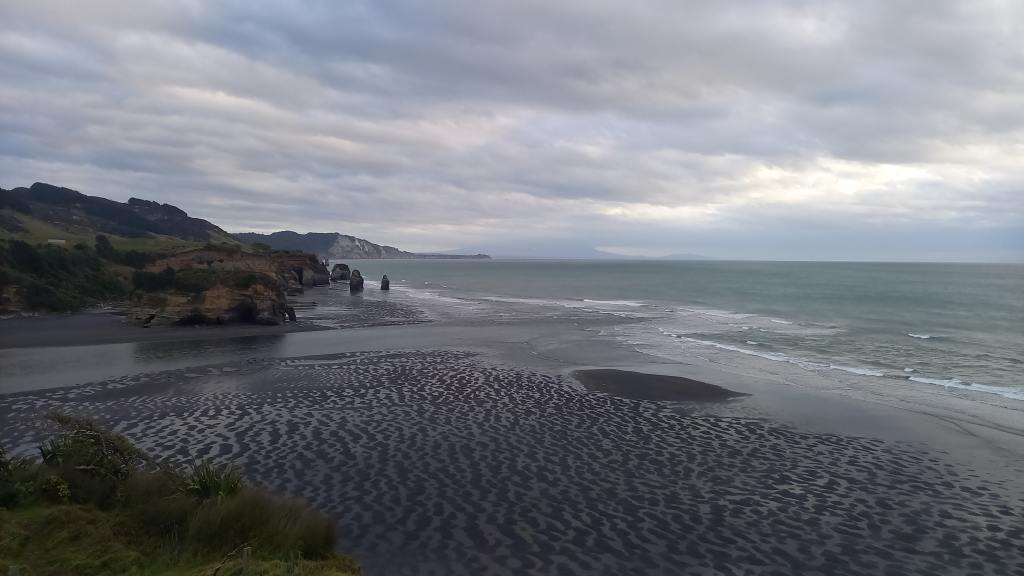
I then drove up the coast to the tiny hamlet of Awakino, as a staging post to stop the night in between Taranaki and back to Auckland again. Along the way I was so glad to have stopped off at a coastal viewpoint for absolutely divine vistas over the Tongaporutu River as it joins the sea through a desolate black-sand beach, headed by cliffs with three coastal stacks called the “Three Sisters”, and a huge one called Elephant Rock, all overlooking the expansive Tasman Sea that separates New Zealand from Australia. If the sun was actually out from behind the clouds, and if Mt Taranaki was also visible without the clouds, then I imagine this would have been one of the greatest views I’d ever witnessed in my life. It was still beautiful as it was though, and I could have stayed there for hours just gazing over it and contemplating how awesome and beautiful life is.
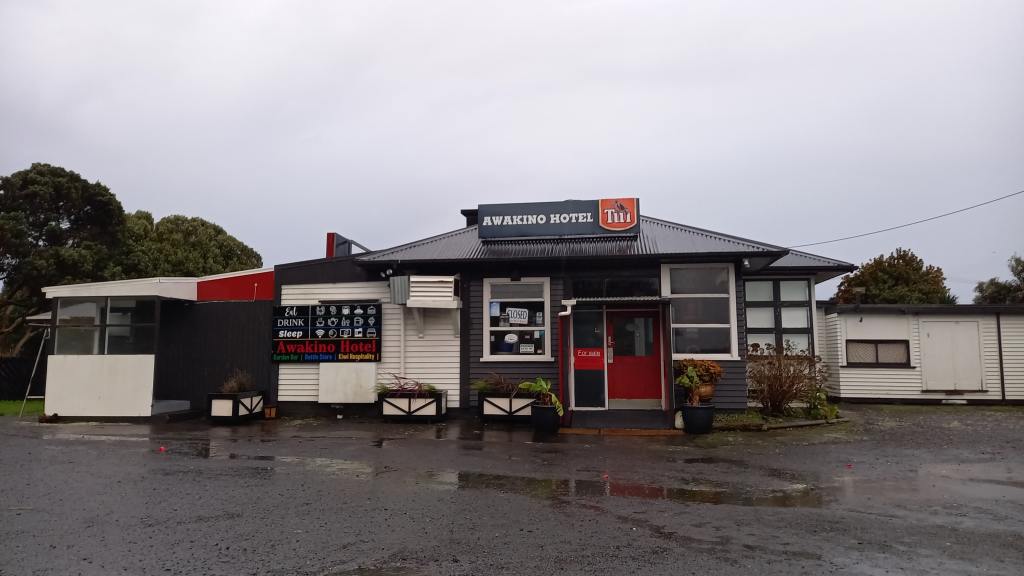
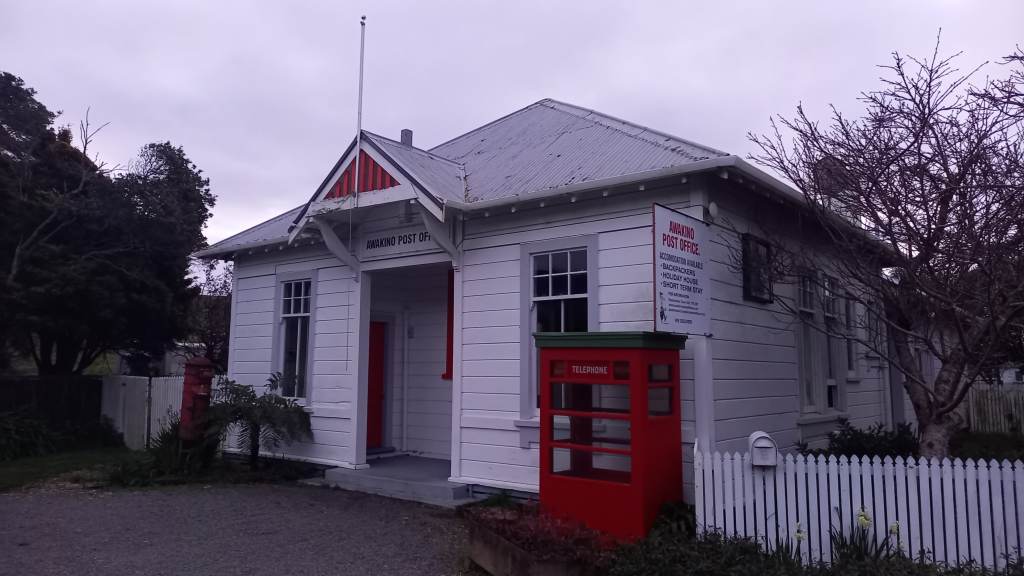
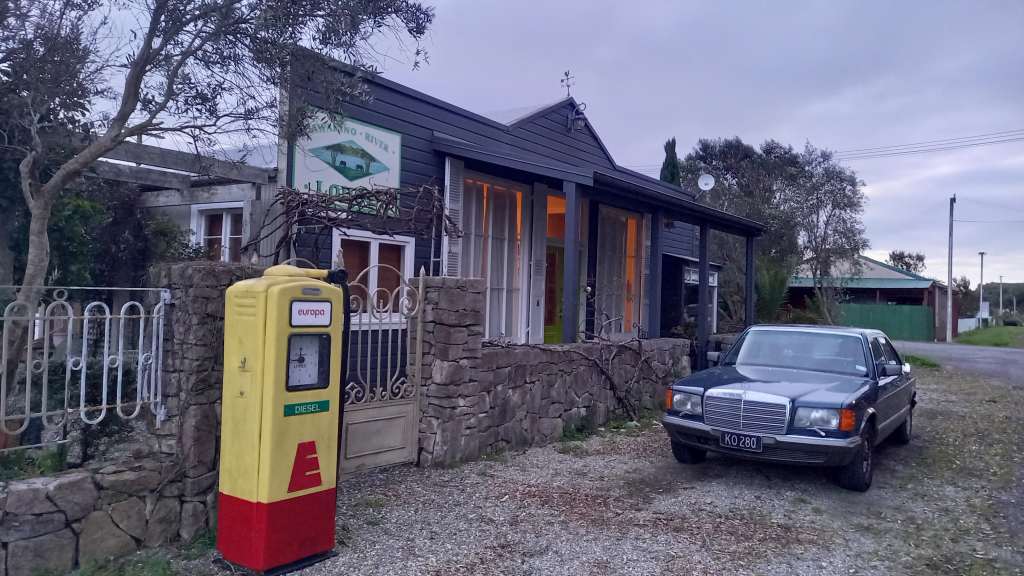
Then on to Awakino, where I was stopping the night in a seriously old-school place called the Awakino Hotel. This was the only accommodation I could find here for miles around, and I booked it by simply being able to locate it on Google Maps and then emailing my booking rather than using one of my booking apps. The hotel has a very local bar, evidently popular particularly with passing truckers stopping the night at weekends. I was so glad it was a Monday, and it seemed quiet enough when I was there. My room had quite modern bedding with a very welcome electric blanket, as did many of my accommodations throughout the country, but everything else in it seemed to have been last updated in the 1970s! The room had an old-school wash basin with taps that move, and there was a shared bathroom along the dark corridor outside. I would not at all have been surprised had I found that the place had any spooky stories, or if it was indeed supposedly haunted. The hotel and little village were certainly characterful, and it reminded me of my early travelling days back in the 1990s!
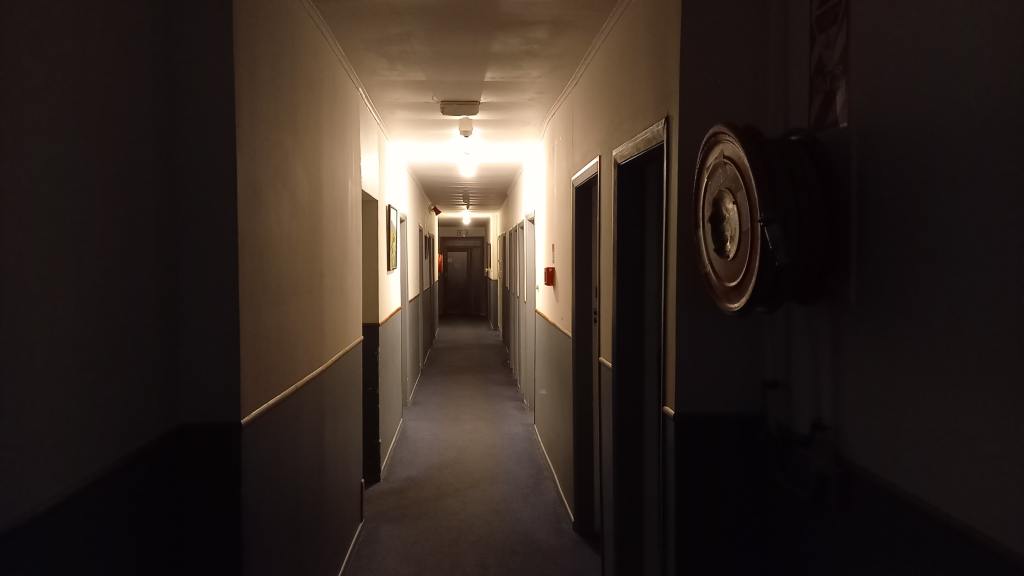
While as mentioned I had thus far been really fortunate with the weather, gale-force winds and heavy rain arrived that night and continued throughout the following day, my last one of driving. I could then see why these islands are so green, and why the natural vegetation is called a “temperate rainforest”, lol! My sleep that night was bitty, with a howling wind all night that seemed to lift everything not fixed to anything in this ramshackle hotel, which seemed to be pretty much everything, creating all sorts of knocking and banging throughout the night. There was also very much a spooky vibe to the place – my dreams were very strange, which is symptomatic to my mind of there being something not quite right in the air. I never did get to ask if the place had any ghost stories to tell, before I left on my merry way again the next morning, onwards through the driving wind and rain.
Inevitably this day was a slower driving one for me. Most New Zealand drivers seemed sensible, but there were some serious hot-heads around which surprised me. I’d been very much keeping to the speed limit since my police encounter a few days earlier, but some drivers seriously tailgate you, and even beep you if they think you’re going too slowly. Chill, people – you’re supposed to be laid back down here! If you beep or tailgate me, I’m driving slower.
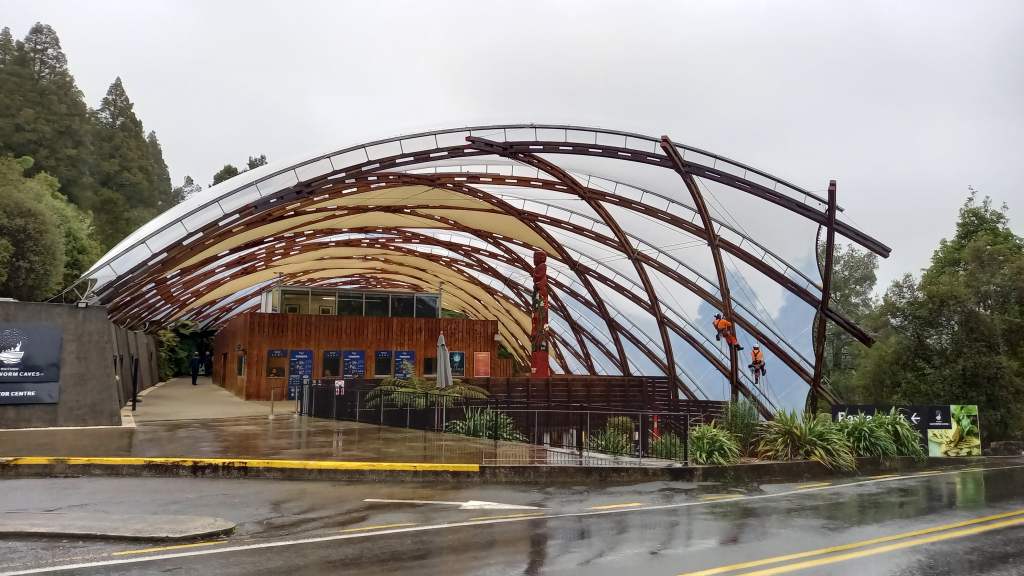
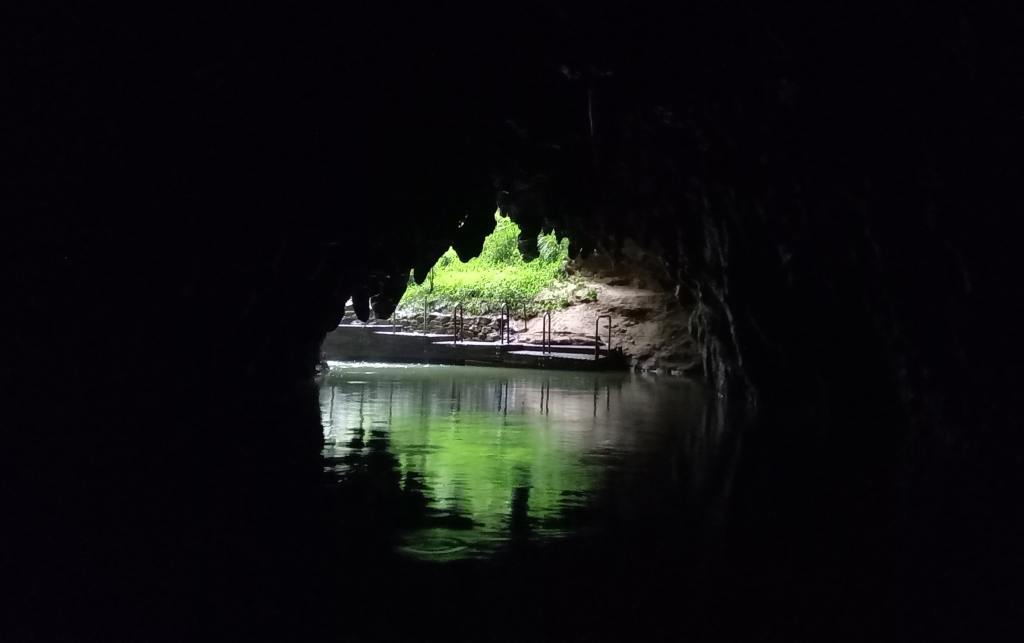
My first stop for this day was the famous Waitomo Glowworm Caves! These were amazing! After a tour of the usual stalagmites and stalactites found in such cave systems, along with the obligatory spotting of images and features in the stone structures, the tour then takes you on an impressive boat ride through the dark underground river tunnels, with the bioluminescent beauties up above on the cave roof like the stars at night. These glowworms are not actually worms, but rather the larvae of an endemic New Zealand gnat species which hang down from the roofs of such caves throughout New Zealand. The bioluminescence is emitted from their tails to attract small insects, and provides food for the larvae before they grow wings, become adults, and fly away. No photos were allowed, although at the end the guide said we were such a good group that he let us take a sneaky photo or two, lol!
I then joined State Highway 1 again linking Hamilton back to Auckland, the only proper stretch of motorway in the country, for a short while before turning east off it towards the absolutely brilliant Hūnua Falls, in the Hūnua Ranges Regional Park just to the south-east of the Big Smoke. The Wairoa River here falls 30m into a beautiful pool, and the sight is powerful and impressive. The rain was absolutely tipping it down at this stage, but I didn’t let this bother me as I enjoyed the short walk to the Falls and back, having the whole picturesque beauty to myself, presumably because no-one else was daft enough to be out in this weather.

The absolutely stunning Hūnua Falls.
Finally, I took a long drive through the wind and rain, all the way through Auckland from south-east to north-west, onwards through the Waitakere Ranges Regional Park, and finally down a very narrow six-mile long and winding road. There were few passing places on this part, and with a local car every now and then just speeding along without a care in the world, I found this last part of the drive both there and back pretty hairy, particularly with the wind and rain.
On this day I was initially hoping to visit a Hobbit filming location called the Denize Bluff, just before the Waitomo Caves – this is the place where the scene with the three trolls was filmed. I unfortunately found that advanced bookings were needed, and they were fully booked for the next week. Fair enough, and I came to remember that the Hobbit and the Lord of the Rings weren’t the only films to be filmed in New Zealand. Another absolute favourite of mine is “The Piano”, which I particularly loved growing up as a teenager, with its haunting soundtrack and stunning photography, which inspired me early on in my life to someday visit the country – and here I was! I think the most famous part of the film is the bit with the piano left behind on the beach, and I was thus heading to this very filming location at Karekare Beach.
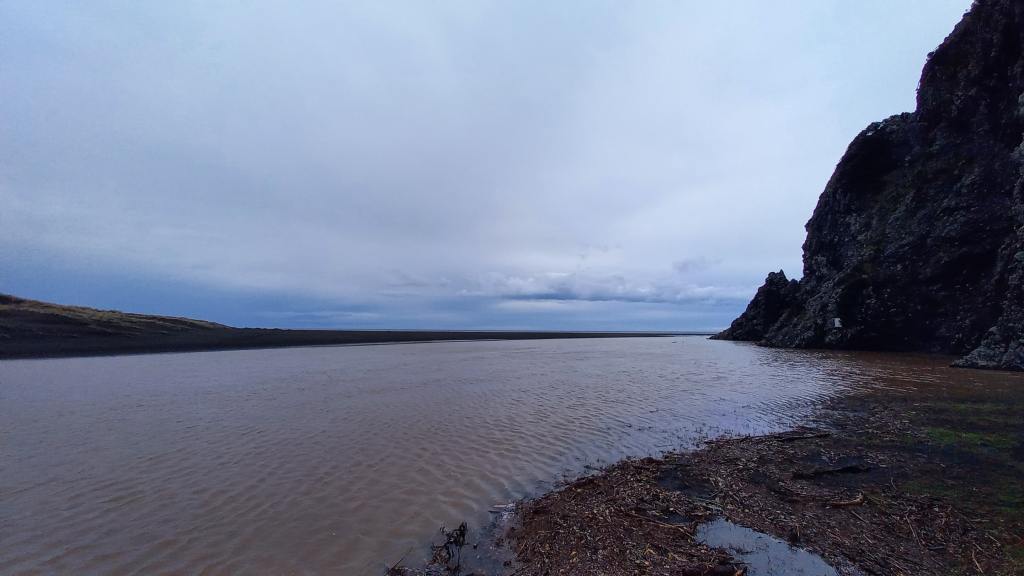
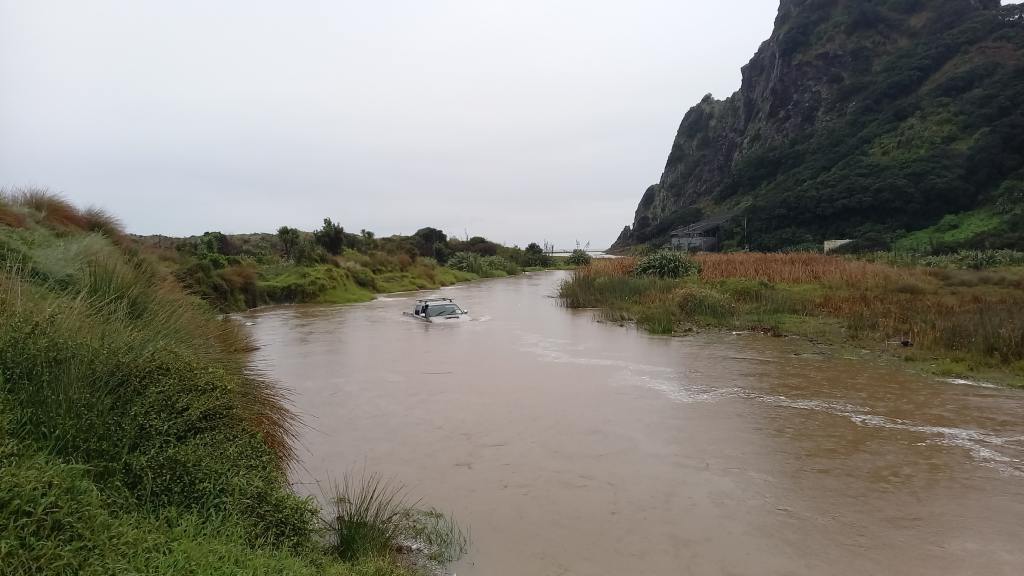
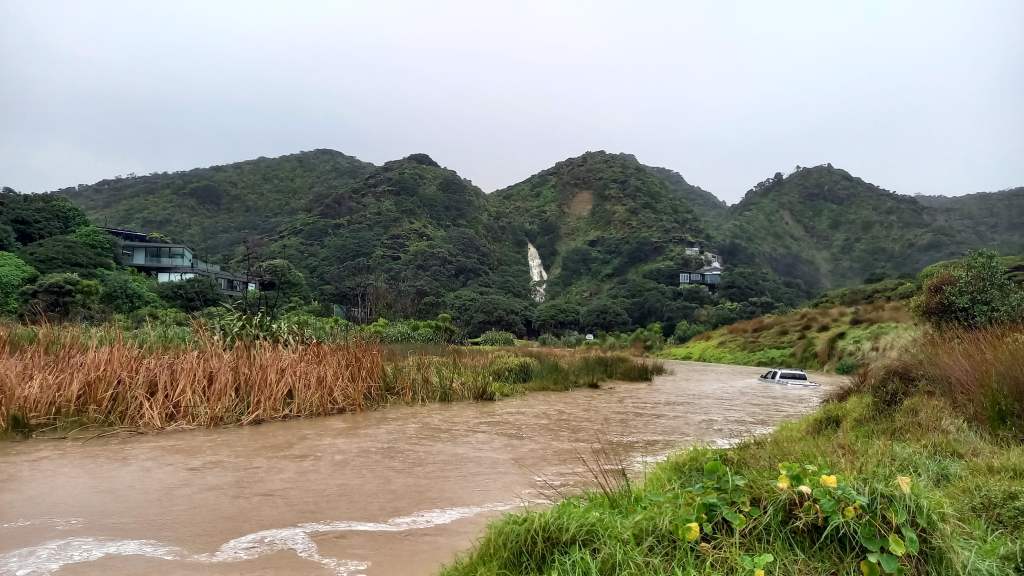
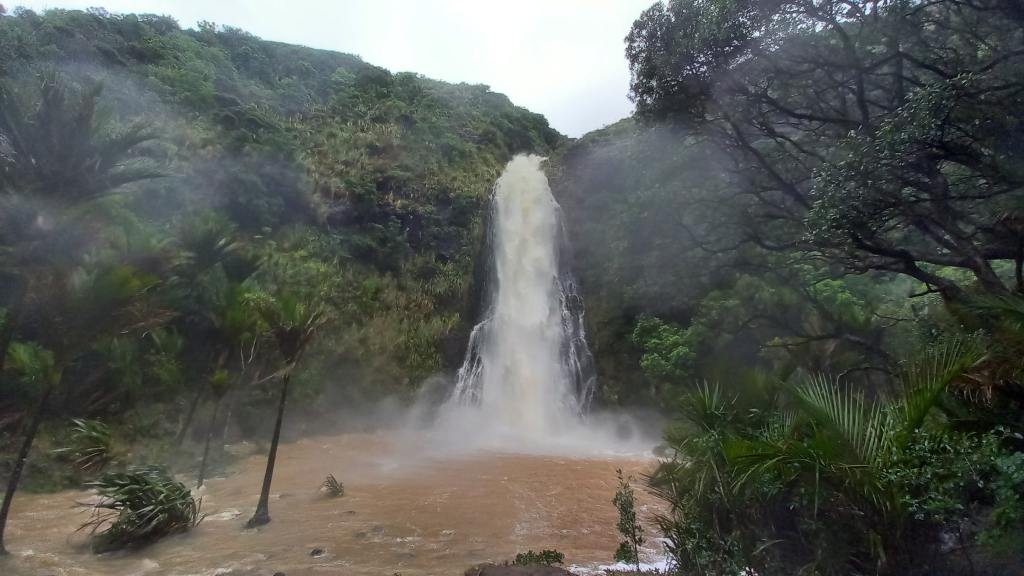
Upon arrival in the beach car park, I saw that the awful weather had actually caused flooding down there, and while the drive there and back was just about ok, the only path to the beach from the car park was flooded and impassable. There was a flooded-out car in the middle of the bloated river as it was making its way to the beach, and the whole scene felt foreboding. With a very heavy heart I decided to abandon my plan to visit the beach. Later I thought I could have just taken off my shoes and socks and waded through the flood water, but realized also that this would probably have been a really bad idea. I’d heard plenty of stories later in my travels of hikers doing just this to cross a river while hiking in the country, and then being completely cut off and prevented from returning as the river rises even higher in the flood waters. I’m glad I didn’t become one of those guys. I happied myself instead with a visit to the nearby and absolutely roaring Karekare Falls, clearly in more than full flow with the rain, and managed to at least glimpse a very small fraction of the stunning, other-worldly black sand Karekare Beach from a nearby surf club. I’m still glad I went though, if only to see the full force of New Zealand weather in its very powerful element!
My drive back through Auckland and back to the airport to drop off my car rental was far from fun, through the driving rain and increasing amount of surface water – at one point it actually felt like someone above me was tipping a bathful of water over my car. I heard on the radio that flash floods were hitting parts of the city, and breathed quite a significant sigh of relief when I arrived back once more at the car rental centre to drop her off. It had been quite simply an amazing week of driving around the North Island.
I took the car rental shuttle to the airport, and then my hotel shuttle to my accommodation for the night, just me, myself and my two backpacks. I felt really happy with that. While I’ve been absolutely loving my Road Trip-type of travelling over recent years, I still very much favour the old carrying of what I need on my back for six weeks, and literally walking the open road in front of me. This to me is the ultimate sense of freedom, and I loved being back with it again!
I had driven a total of 1,160 miles. My trip the next day would be taking a different turn, not just with using public transport again, but heading this time to the South Island baby! Quite simply, everyone I’d met thus far had raved about the South Island, and it being even more beautiful than the North. I had been suitably impressed with the North so far, and was bracing myself for even more in the South.
But of course, more on that in my next!

 Alex Waring's Travel Blog