
2nd August 2025

Hello and greetings from New Zealand’s South Island! I am so excited to be here. The North Island was just incredible, yet as mentioned in my last, the word on the street was that the South Island would be even better – hence my excitement at being there!
I started my adventures in the southern city of Dunedin, flying there from Auckland on another fantastic Air New Zealand flight – this one just slightly shorter than the one from Hong Kong! I didn’t want to fly directly to touristy Queenstown, even though this place was certainly on my itinerary, but instead wanted to get a taster for what it’s really like down here for the locals. Dunedin was a great place to start. The South instantly felt different, as viewed both from above coming into land, as well as travelling the 17 miles on the airport shuttle into town – more rugged, more natural, more wilderness. I felt like I was still getting to know the Kiwi nature – friendly, but not so outgoing as the Aussies. I found it harder to strike up conversations with people there to be honest. They were polite, but not gregarious, a little self-effacing perhaps, and certainly not so self-confident and brash like the Aussies.

Kawarau Gorge on the Kawarau River, near Queenstown
Having arrived off the airport shuttle and straight into my accommodation, I felt an instant liking for the city of Dunedin. It was grey, cold and rainy, yet the city seemed warm and inviting – like a soothing lamp light in a warm lounge room, coming in from the bitterness of a windswept moorland. If the North Island feels like England, then the South is definitely Scotland. Many Scottish people in fact settled there, and fascinatingly, Dunedin is actually the Scots Gaelic name for Edinburgh! Having grown up myself in a gritty urban industrial city in the north of England, on the doorstep of windswept moors and rugged beauty, I instantly felt at home in this city.
With a population of around 130,000 people, it is presently the 7th largest city in the country, but in the late 19th century with the discovery of gold in the surrounding area of Otago it was in fact New Zealand’s most important and prosperous city. It also lays claim to being the country’s oldest city, founded in 1848 and achieving city status with a population approaching 30,000 in 1865, the same year my house was built. Walking around, there is very much a sense of regality and power to the place, and for my night in town I checked into a lovely grand old dame of an early 20th century mansion kitted throughout with dark oak furnishings, which accompanied the faded-opulent feel to the city. I was staying on a street called High Street – not because it’s the main street as I had originally thought and expecting shops and things, but because it is high above the city centre, and thus a right walk uphill from it which I had to do a couple of times.
There was just enough time that day for a walk into and around town for a quick look-see before sundown. I’d been starting my travel days early down here, as they also needed to end early. The sun set at around 5.30pm, and most businesses and museums close at 5pm, so I became used to waking up between 6am and 7am on this part of my trip, to take advantage of the little amount of daylight available for explorations.
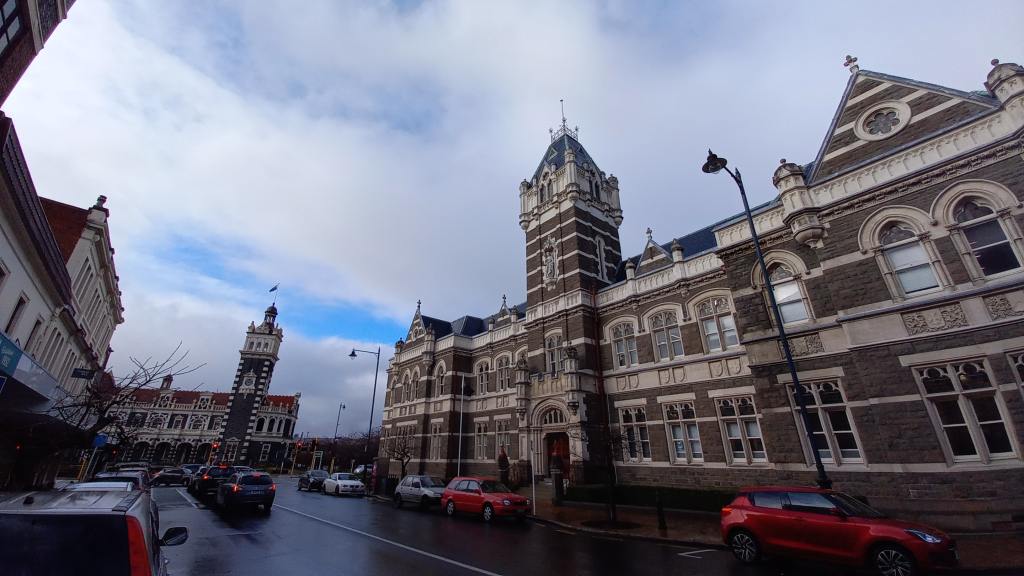
I just loved the centre of Dunedin, uniquely based around an octagon design surrounding the central city “square” which is in fact a grassy circle. Designed as early as 1846 by Scots-born architect Robert Arthur Lawson, and centered around a statue of none other than Scottish poet-hero Robert Burns himself, the design was highly original at the time of its conception, and is just as original today. The buildings were also grand, and told of a time when indeed the city was prosperous and public expenditure was high. Still, it felt lived-in and friendly, and as mentioned I really loved this stately-yet-faded feel to the city. It was also way off-the-beaten tourist track, and thus more authentic and right up my street. It would be the place out of the whole of my New Zealand travels where I’d choose to call home if I was given the choice.
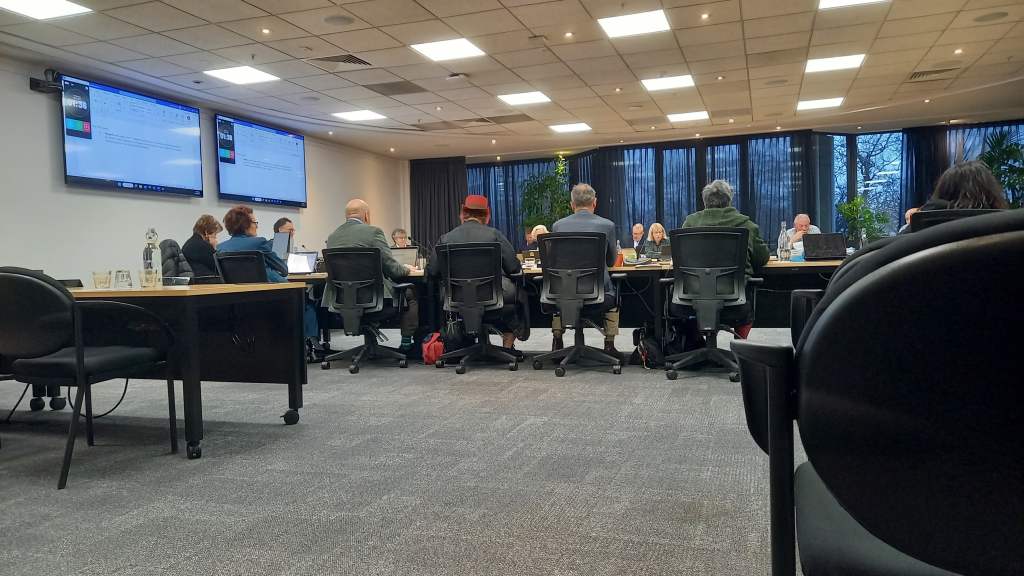
I had around an hour to visit the Dunedin Public Art Gallery before closing time, and enjoyed viewing its collection of classical and contemporary pieces. I also happened upon while in there a Dunedin County Council meeting which was taking place in one of the upstairs rooms, and which was also open to the public – namely me! Chaired by none other than the Dunedin Mayor himself, Jules Radich, he and the councillors were discussing fascinatingly mundane issues such as the changing of road names, road closures, and the poor state of the city’s rental properties, particularly those rented to its high student population of around 25,000 (around 20% of the city’s total population!). It seemed a fairly civilised meeting with a calm, understanding mayor, compared to the absolute sh!tshow of an excuse for a mayor we have back in London.
While admiring the art in the Art Gallery, I got the shock of my life when my mobile phone suddenly vibrated and sounded a really loud siren noise, with a national alert warning of the potential for a tsunami hitting the South and North Islands’ coasts following the huge Kamchatka earthquake measuring 8.8 on the Richter Scale. Wondering why no-one else in the museum was panicking as I was beginning to, Dunedin being a coastal city, I headed to the front desk and asked them about it. It turned out that most people had received this alert about two hours previously – the message must have somehow gotten delayed on its way to my international phone number! The updated news which quickly followed this initial alert subsequently only warned people against going to the shoreline at this time, when unusual currents were predicted to arrive around midnight that evening. Phew, panic over, but I had been seriously contemplating how to head back up High Street as quickly as possible, with images of the terrible Japanese and Indian Ocean tsunamis I’d previously seen on YouTube flashing through my head, before my mind and heart were thankfully put at rest!

The next morning I had a bit more time to spend in the city before my mid-afternoon coach onwards to Queenstown, and I continued to enjoy Dunedin very much. It was definitely a city I could live in – sizeable enough to be interesting, small enough to be friendly, with great nature nearby. It also felt prosperous, with a cool arts scene, and a pleasant university vibe. I awoke that morning to another alarming alert on my phone about the tsunami, but this time just saying to continue to stay away from the coast due to strange and unusual currents and surges. I had the wherewithal this time to take a screenshot of this one, which I wasn’t able to do with the previous one due to having been in a bit of a panic-mode. It was again quite scary to receive this, but I was glad for it.
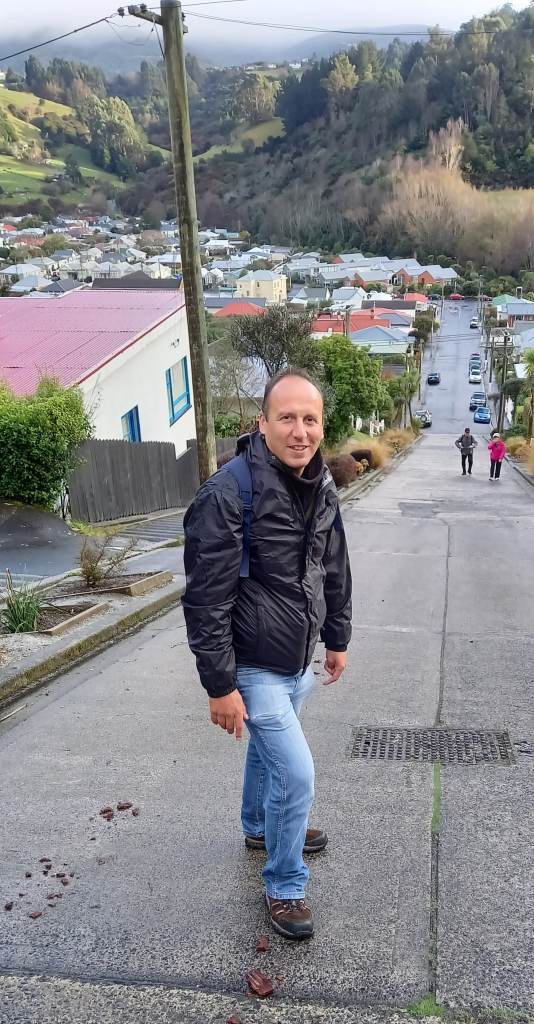
My accommodation owners were kind enough to let me leave my luggage with them while I explored for the morning, and I took a bus all the way through town, through the university district and into a northern suburb. I was heading for Baldwin Street, the steepest street in the world according to the Guinness Book of Records, with a gradient reaching 35%, or 19° – for comparison, a road is considered to be steep if its gradient is over 15%, and England’s steepest street is Vale Street in Bristol, “only” reaching 30% at its steepest point! I really enjoyed walking up it, and back down again, and can confirm it was definitely a steep one! I felt vertigo looking down it, and while turning around after having taken a photo, I realised that one misplaced footing would have you tumbling – it is definitely not a street one would want to fall down. There was an amazing view from the top, as well as fascinating plaques commemorating a guy who once roller skated up it, and another who pogo-sticked it up – just, how…?! I got talking to another friendly local while waiting for the bus back into town again, another Kiwi-MAGA guy regarding Cindy, and I congratulated him for “Making Ardern Go Away!” I asked him if he could please help us do the same for our own Granny and Farmer Harmer. Hopefully it won’t be long now.
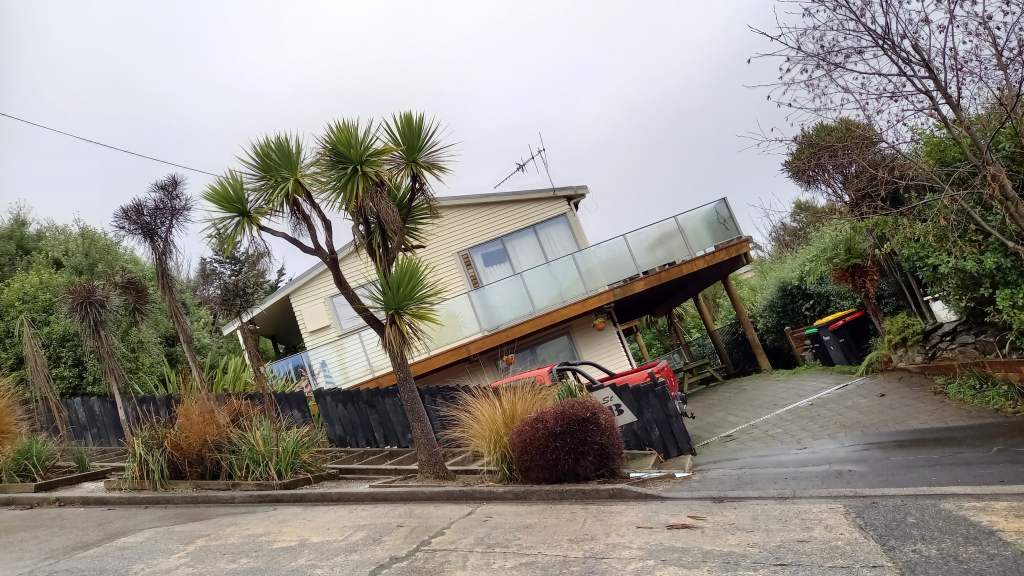
Baldwin Street, “The World’s Steepest Street”
Back in town, I visited the brilliant Otago Settlers Museum, telling the fascinating story of Dunedin’s history. I gained great insight there into how the city became NZ’s most prosperous at the end of the 19th century following the Otago gold rush. There was also a great exhibit on the long months at sea which the early settlers undertook to get there from England and Scotland. We complain about the flight to New Zealand being long at around 24 hours today – try up to six months back in the day! I then wandered the town again taking in its beautiful architecture, including the train station and the First Church of Otago. After a bargain NZ$10 takeaway lunch from a friendly Chinese joint, I whiled away some seriously happy moments in a very old school music shop that was still selling dusty cassettes, as well as LPs and CDs. The owner said some of them had been there since they opened up 45 years ago, and are still on sale! It brought back amazing teenage memories of browsing music cassettes of the latest singles and albums in HMV, Our Price and Woolworths back in 1990s Sheffield all those years ago! I bought an Ace of Base CD to add to my collection, I was in nostalgia paradise!
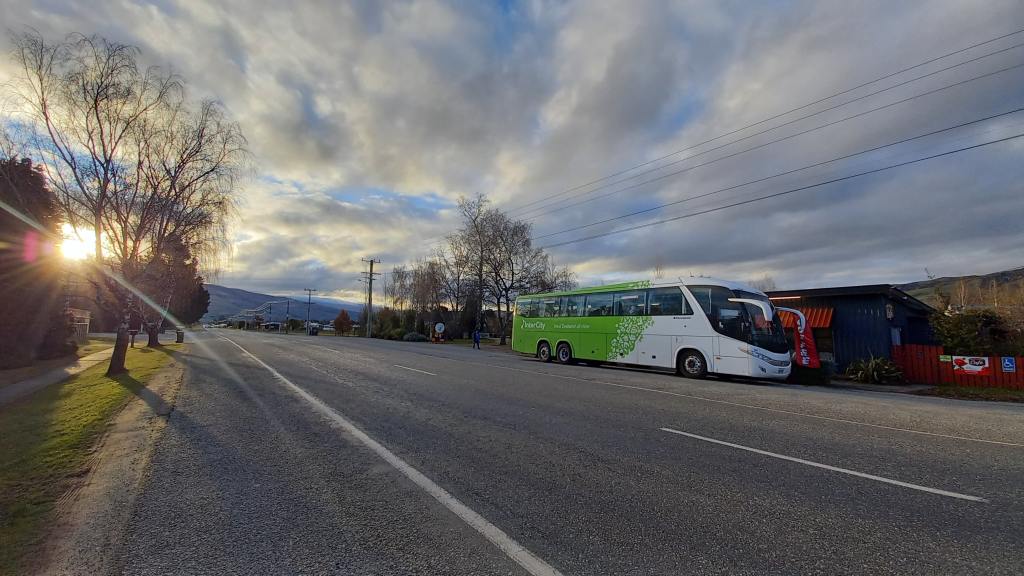
After collecting my bags from my accommodation, I said a sad goodbye to wonderful Dunedin, and took the Intercity bus to Queenstown, South Island’s tourist central, around five hours away. New Zealand’s coach network has comfortable buses, but surprisingly no toilets on board, so instead we stopped off halfway at one of those fantastic random roadside places to go to the loo and refresh. The journey traversed some beautiful countryside of the South Island, and it was nice to let someone else do the driving, so I could appreciate the views instead, and also not constantly worry about the speed limit. I was very much looking forward to my time in and around Queenstown, and after a quick food-shop at a central Four Square supermarket, I headed to a fantastic budget accommodation with shared bathroom and kitchen (still my priciest digs throughout my time in the country – Queenstown is expensive!), and an amazing view over the town, lake, and hulking great snow-covered mountains beyond. It would be my home for the next three nights, which felt quite the relief, considering this would be my sixth night in a row sleeping in a different bed!
So Queenstown is pretty much tourism-central for New Zealand – it is popular with outdoor enthusiasts, winter sports seekers, and appreciators of nature, and has built up quite a sizeable tourism industry for itself. Despite its small population of only 30,000 people, it rakes up nearly five million tourist nights per year, and has the country’s fourth busiest airport after Auckland, Christchurch and Wellington, with flights arriving from throughout New Zealand as well as the east coast of Australia. Needless to say, with such tourist-related busy-ness, it wasn’t my favourite place in the country, but I absolutely loved using it as a base to explore its surrounding wonders.
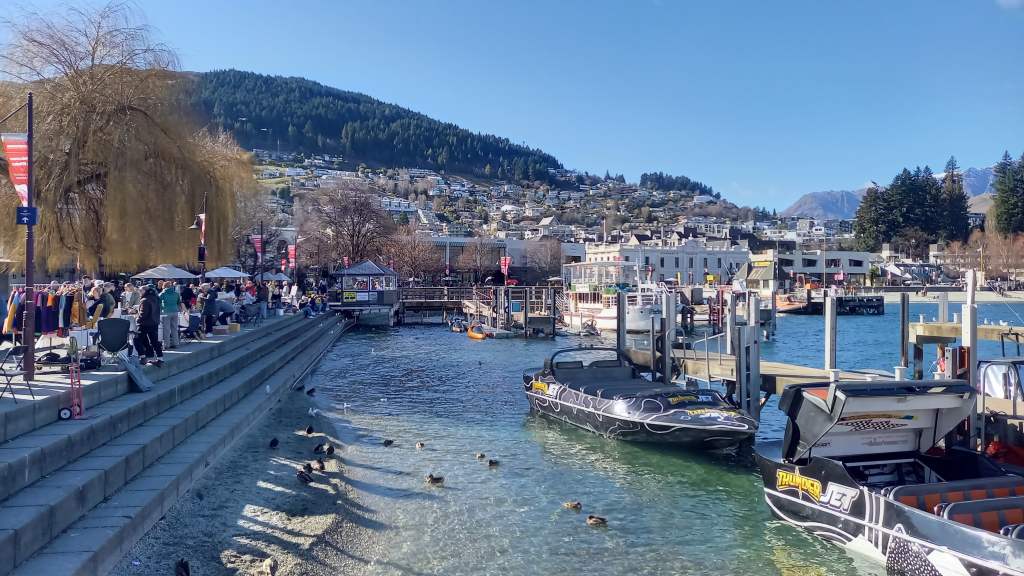
First and foremost is the stunning lake upon which it is situated, Lake Wakatipu, one of several ribbon lakes along the western edge of the South Island, formed by the actions of glaciation over millions of years. I actually preferred, as I always do, the local legend recounting its formation with a different story. According to Māori legend, local hero Matakauri, in rescuing a chief’s daughter from the clutches of a giant called Matau, burned the perpetrator to death as he was lying down asleep. The flames burnt a body-shaped hole into the ground, and left behind this large lake after it subsequently filled with water – if you look at the lake from above or on a map, it is actually in the shape of a very tall person lying down with his knees up – fascinating!
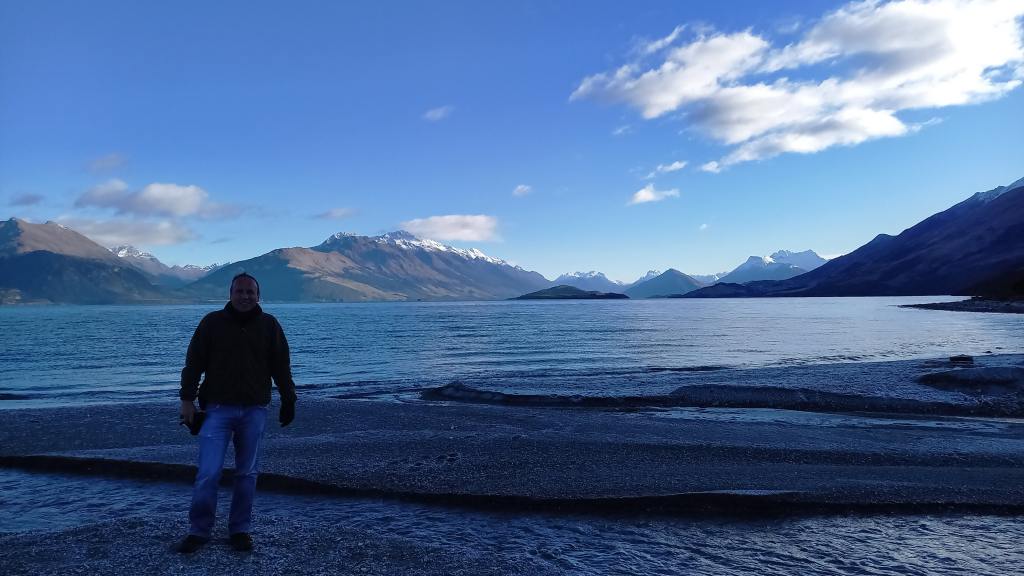
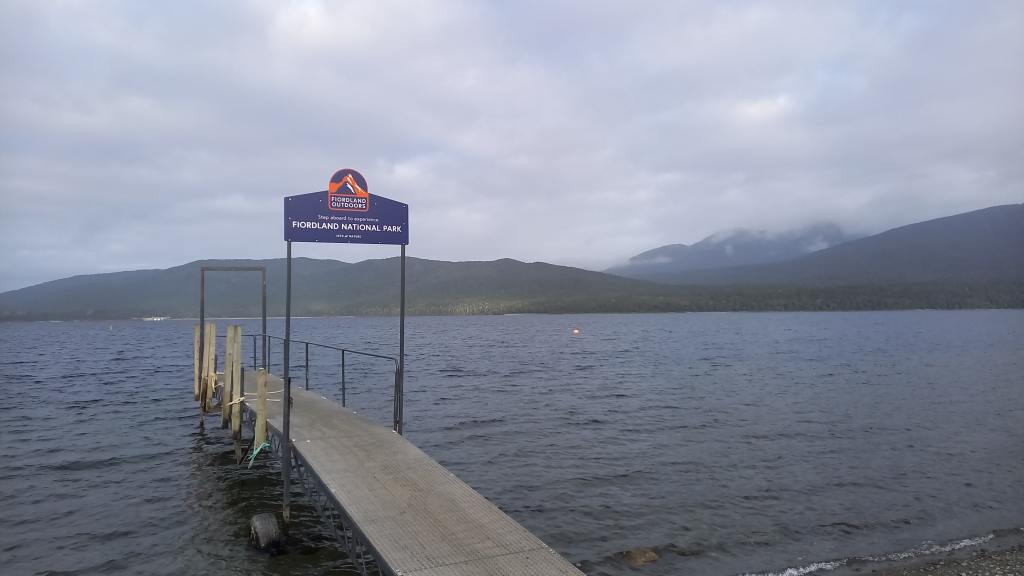
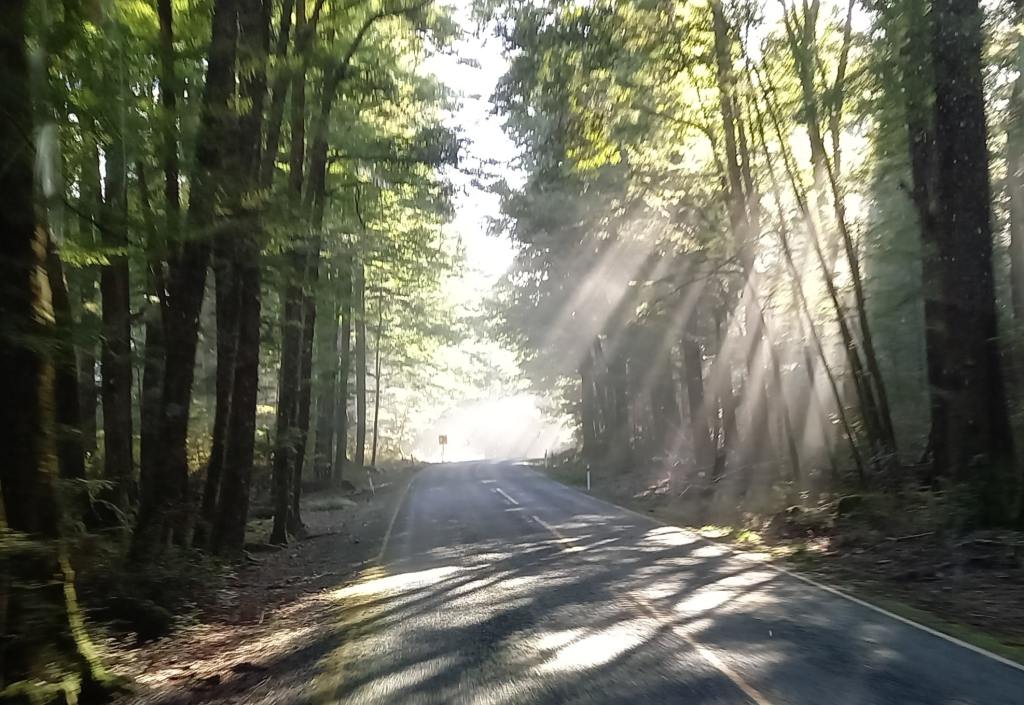
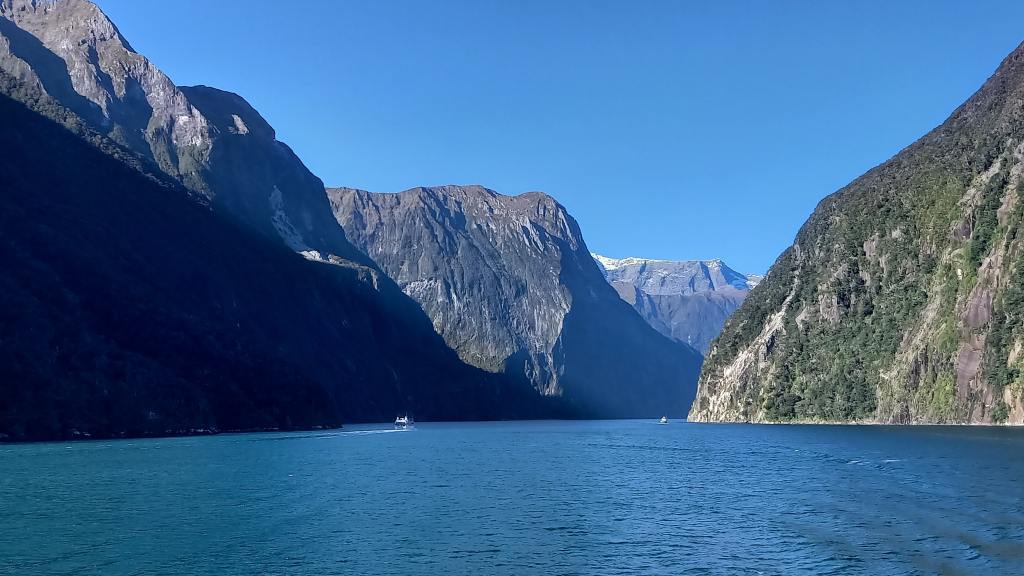
I had two full days in town, and my first one began with a 5.30am wake-up call for a full-day trip to nearby Milford Sound and back. Well, actually, it is nearby only as the crow flies – 40 miles away to the north-west. But difficult terrain, involving huge mountains, deep valleys, lakes and forests, means that to get there, the journey takes four hours one-way (six hours with the stopping points my tour included on the way there) along 180 miles of road that first goes south, then west, and then back up north again – definitely the long way round! The journey of course was just spectacular, and the coach-driver/guide was great in explaining everything to us and stopping in several places on the way, including the lakeside town of Te Anau, Mirror Lakes, and Monkey Creek. We first passed along the shores of Lake Wakatipu, then Lake Te Anau, before passing through the mile-long Homer Tunnel, and descending to sea level on the shores of perhaps New Zealand’s most famous fjord – the stunning Milford Sound, in the country’s expansive and mostly unvisited Fjordland National Park in the far south-west corner of the South Island.
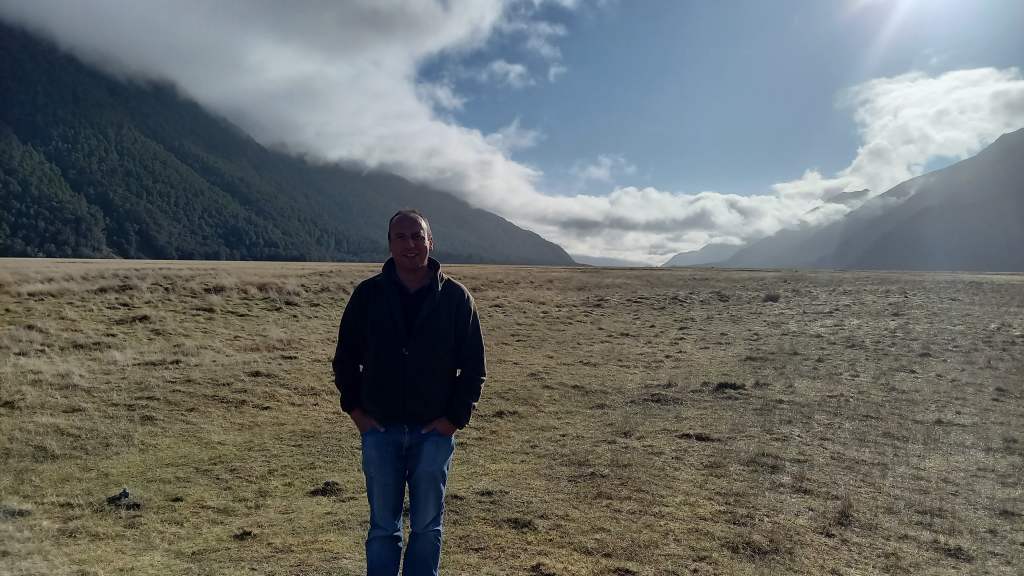
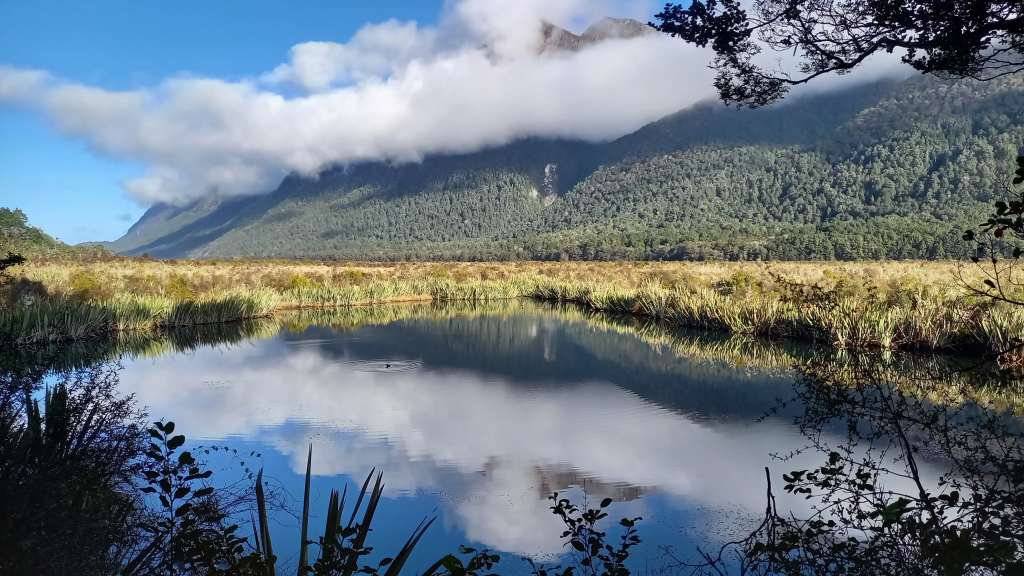
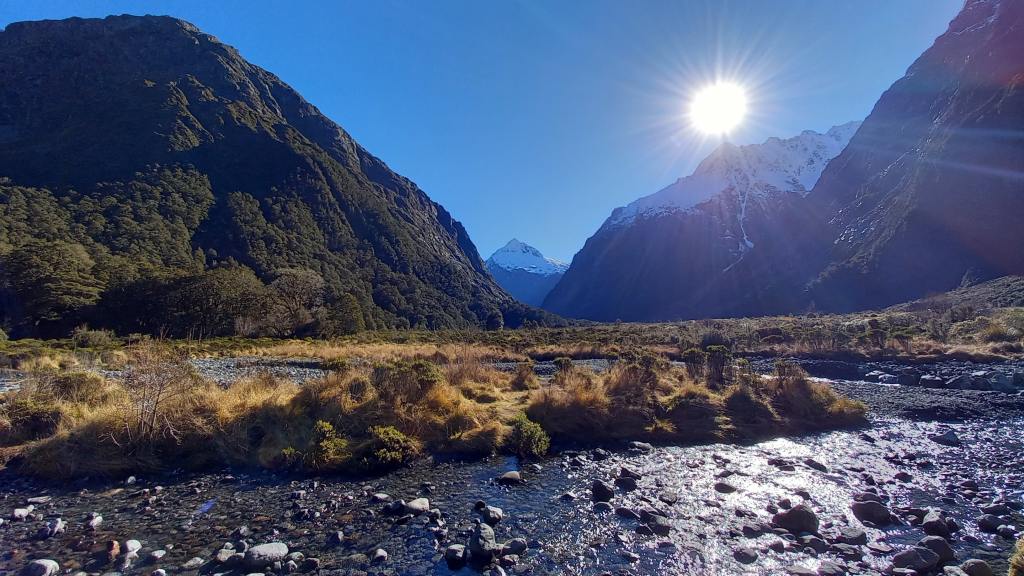

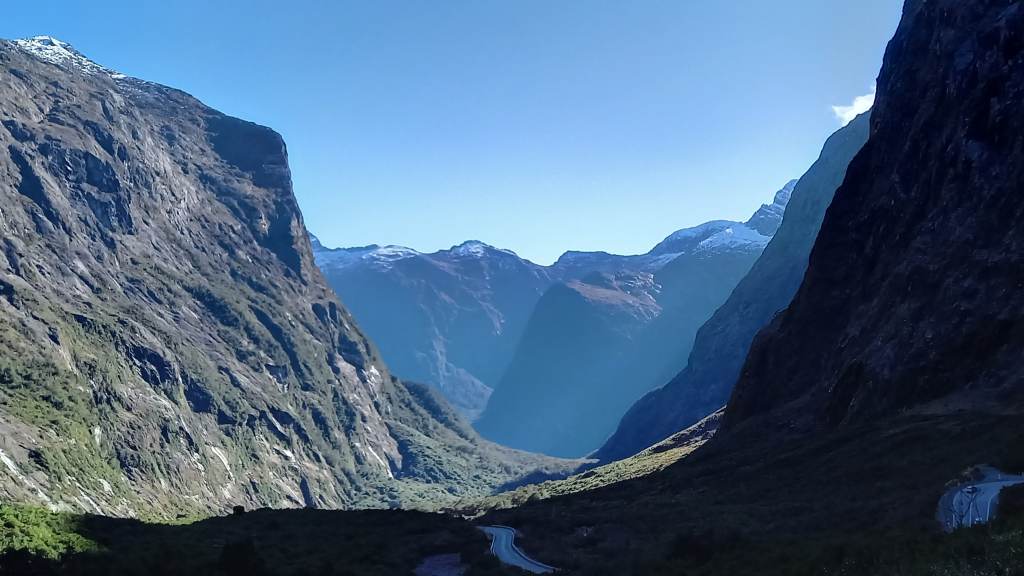
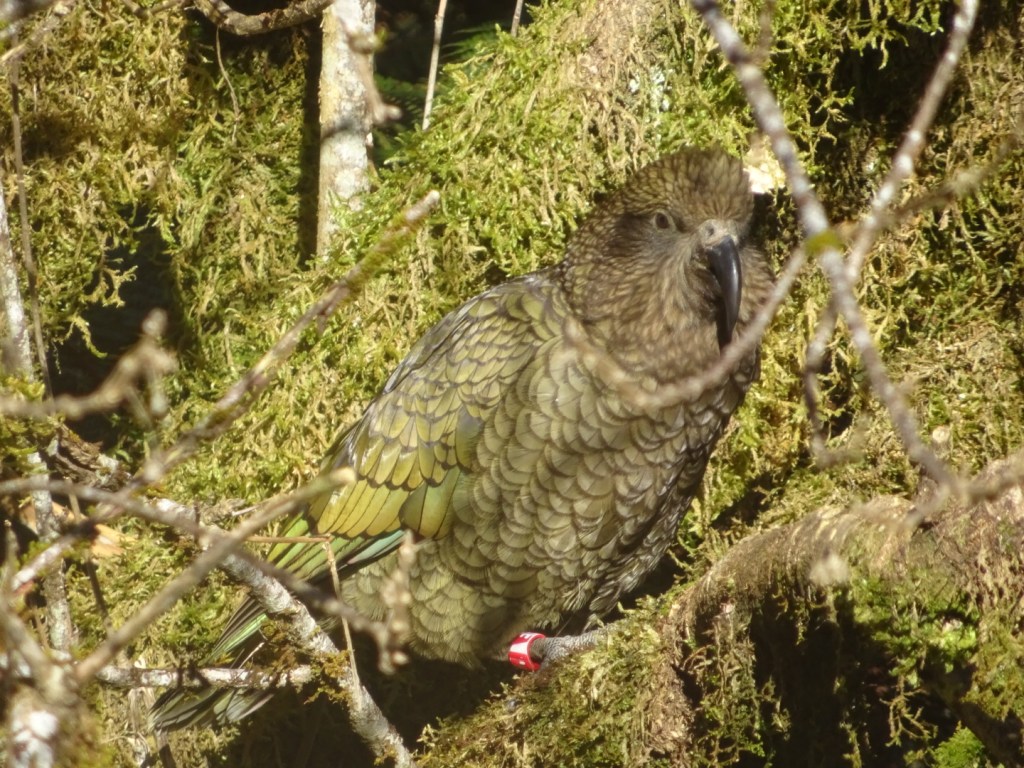
I was really fortunate on this day, as the day before all boat tours of the Sound had been cancelled due to the tsunami warning – on this day the boats were resuming again. It also turned out to be a gloriously sunny day after two days of intermittent rain that I’d had on the South Island so far. With 200 rainy days and 12m of rain falling annually, I was a very happy traveller on this beautiful day in the temperate rainforest of New Zealand. We also encountered the legendary kea birds on the way there – large, rotund parrots who are famed to be partial to a good chew on a windscreen wiper or anything else rubber on a car!
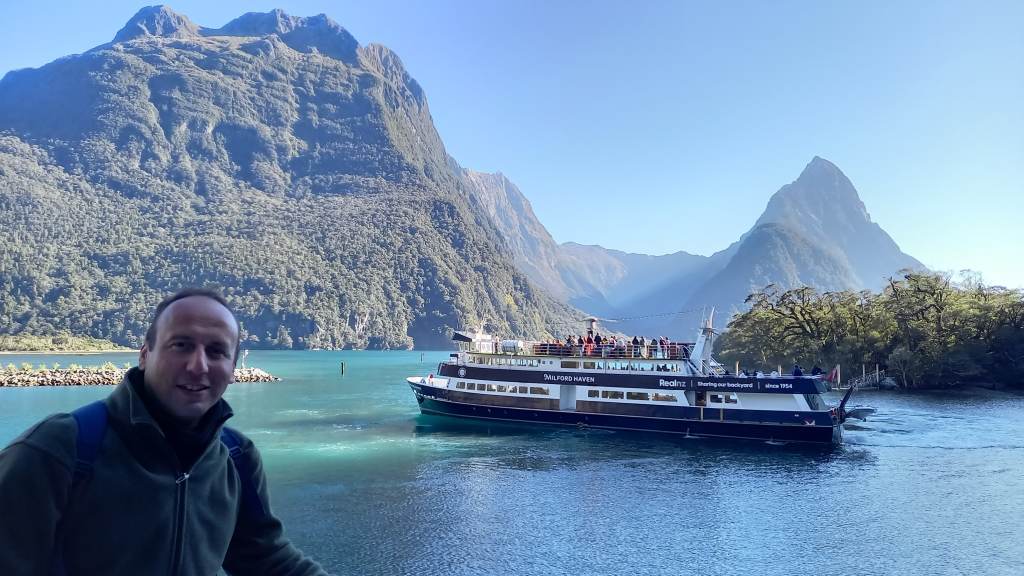
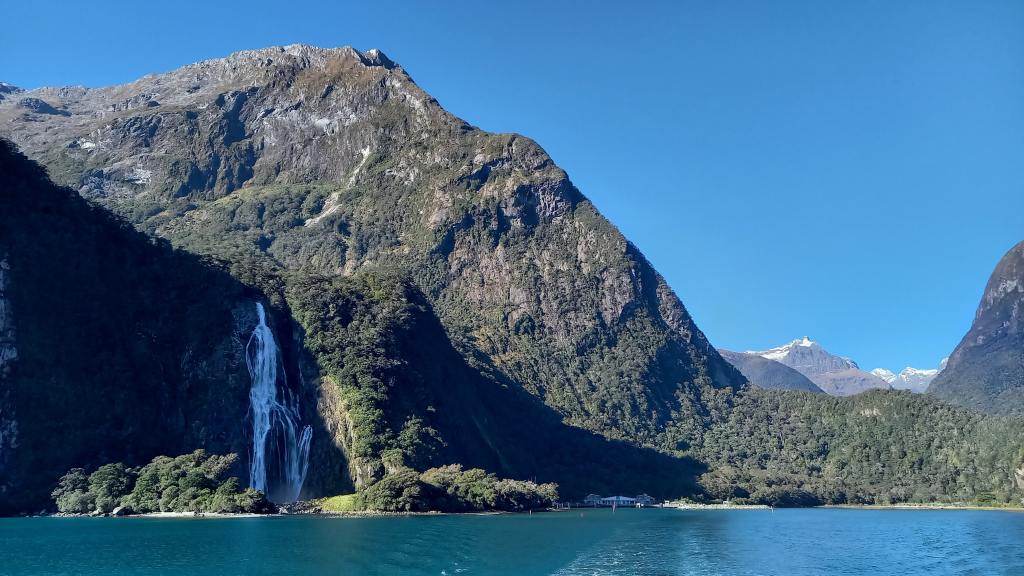
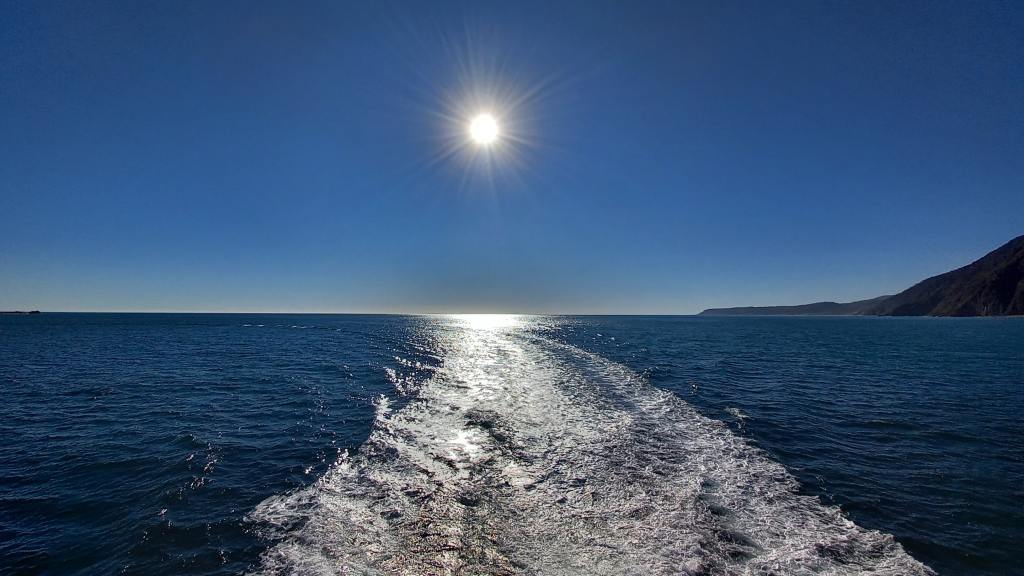
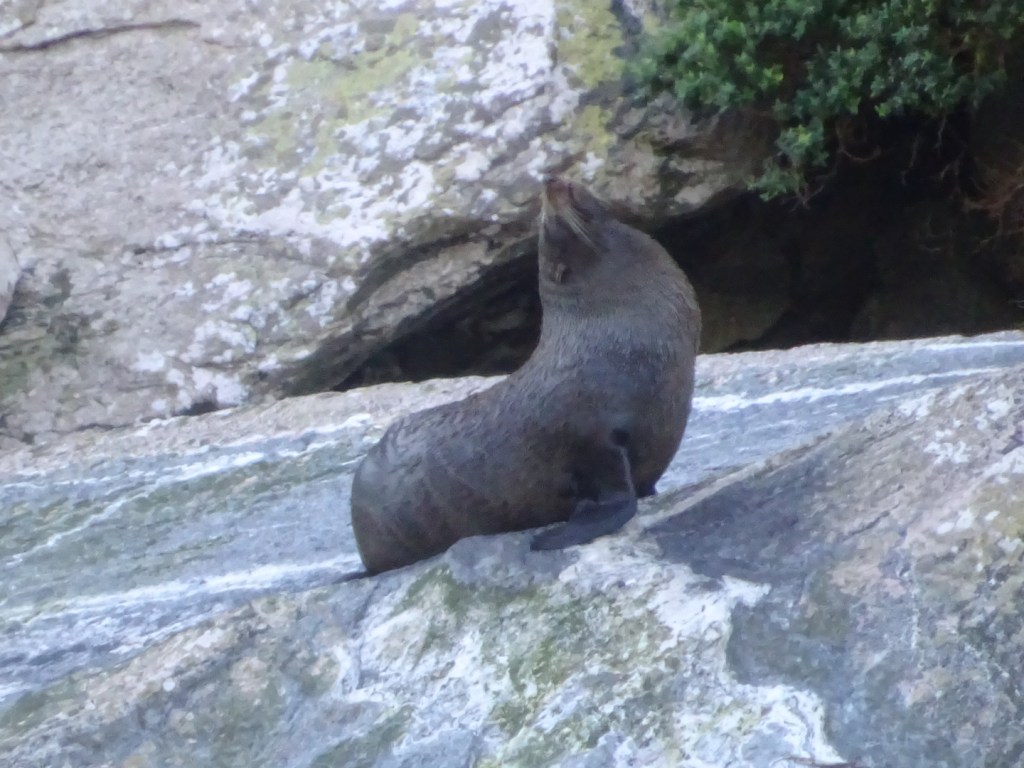
I thoroughly enjoyed all 1 hour and 45 minutes of the Milford Sound cruise itself, as we headed on a return journey through the huge cliff faces on both sides rising to a height of up to 1600m, past some pretty spectacular waterfalls, and to the place where the fjord enters the Tasman Sea. We also spotted a fur seal basking on one of the rocky outcrops, as well as a dolphin in the water that was a bit too fast for my camera. It was all in all, an absolutely awesome day appreciating the sheer beauty and wonder that the South Island is so very famous for.
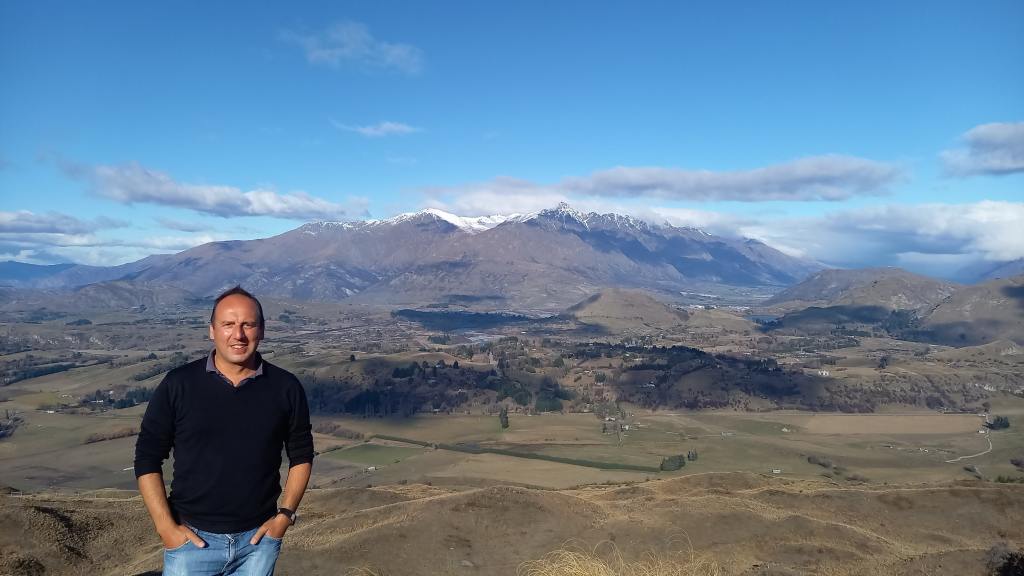
The next day was also a good ‘un! This was my second of two full Lord of the Rings day tours in New Zealand, this time visiting the South Island filming sites, with a great tour group of myself, a Mexican chap, and a newly-wed couple from Malta who were on their honeymoon. The North Island sites seemed more cosy, Hobbit-y places from the first film, while the South Island seemed home to the more rugged and windswept places from the second and third films. We visited the LOTR filming locations for Ithilien, Dunharrow, Isengard, Lothlorien, the Ford of Bruinnen, and my favourite – The Argonath on the River Anduin, along with the location for Beorn’s House in the second Hobbit film. In real life, these were around the small settlements of Glenorchy and Paradise at the north end of Lake Wakatipu, and Arrow Town just outside of Queenstown. Paradise was also the filming location for the very dark and highly unsettling “Top of the Lake” Kiwi-noir drama series directed by Jane Campion. We found out at the Argonath location that one of our tour members, the Mexican dude, had a large tattoo of these mighty statues on his arm. We all just had to have a picture taken with him, his arm and his tattoo at this location!
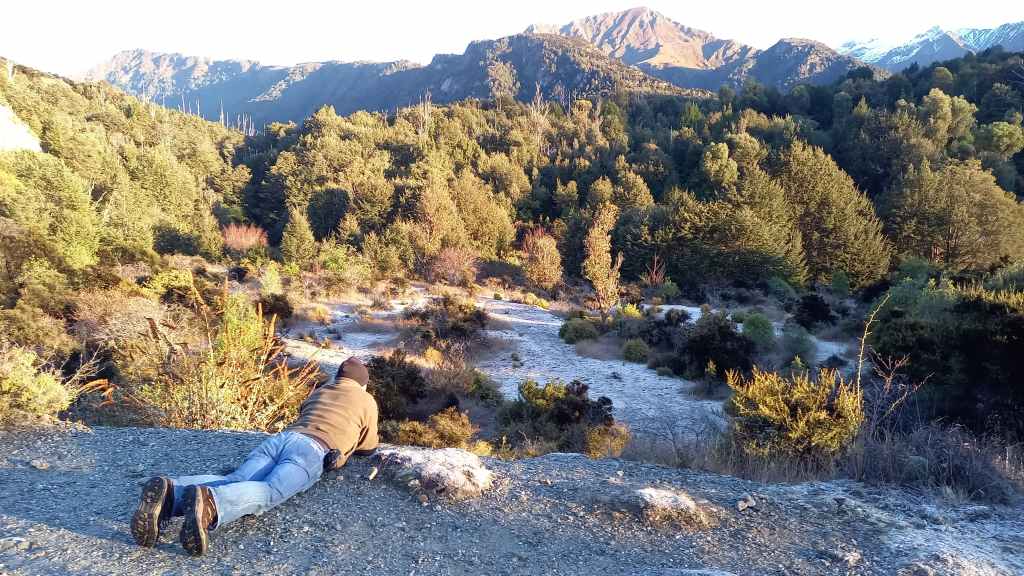
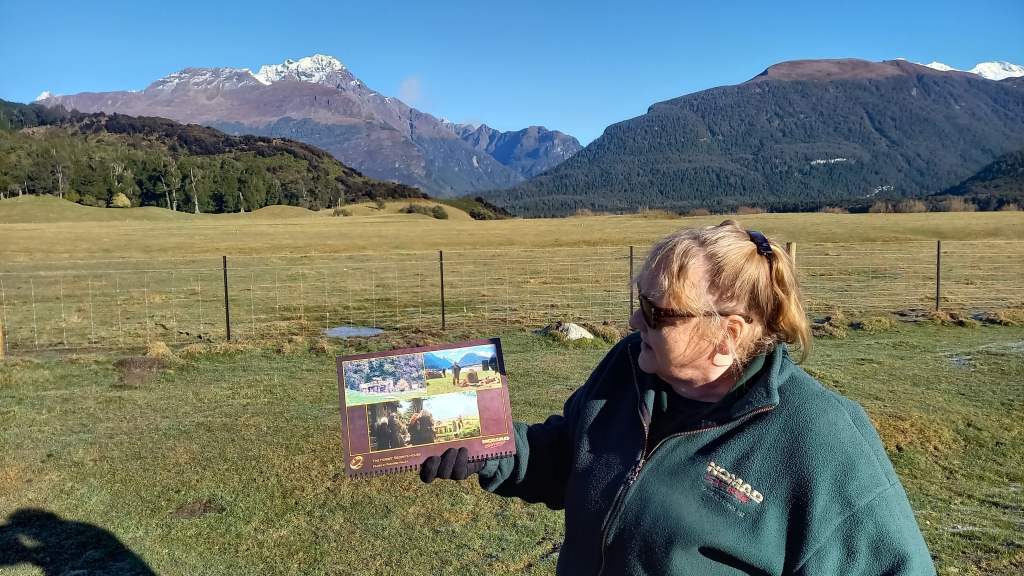
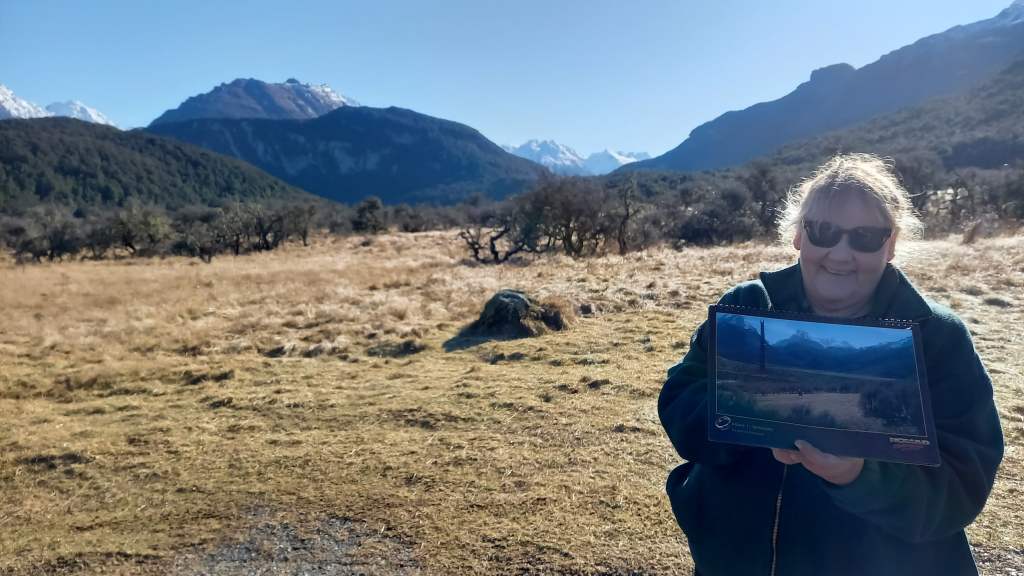
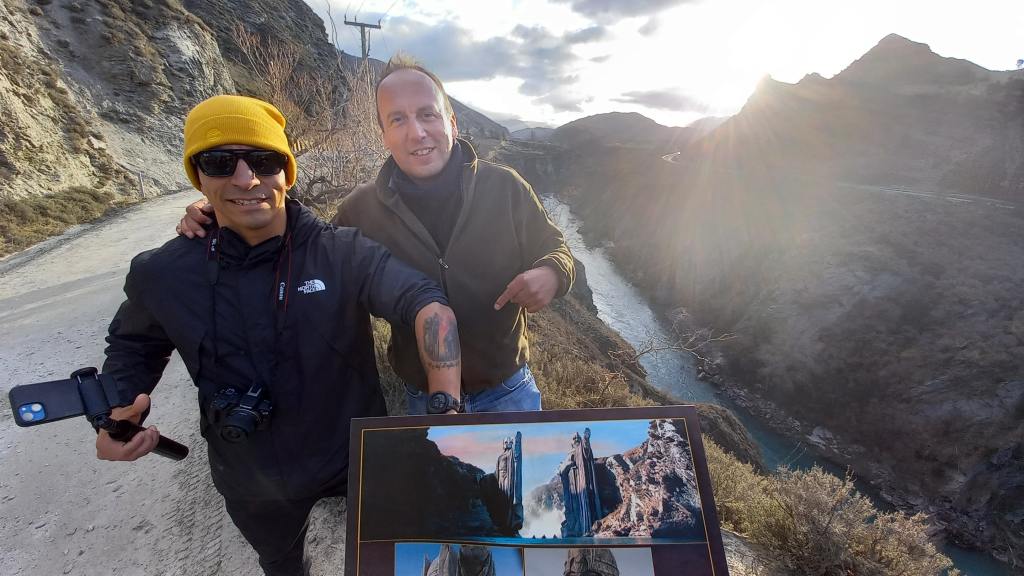
Kawarau Gorge on the Kawarau River, near Queenstown.
The tour was in a 4WD vehicle, and we travelled along some amazing roads otherwise inaccessible to the average rental car, including the spectacular Skippers Road with some pretty hair-raising drop-offs which have apparently caused some members of previous tour groups to cry! We were also able to literally travel along the Arrow River itself, which runs through the former gold-mining hub and awesomely-named Arrow Town, which has today become a seriously gentrified posh place with more than its fair share of gold and jade shops. So along with the LOTR filming locations, our guide did a brilliant job in also explaining to us the history of the area since the gold rush era of the 1860s onwards. We even did a bit of gold panning which I’d never done before, and I found four specks of the precious metal! I took them home with me in a small petri dish, but by the time I arrived back in London the water they were held in had drained away and the specks were nowhere to be seen! I’d lost my fortune…! I also bought on this day a tiny, jade kiwi figure, as well as a mini Frodo Baggins figure to unite with my earlier purchase of Samwise Gamgee – the two of course just have to come together, and I felt Sam would have liked that!
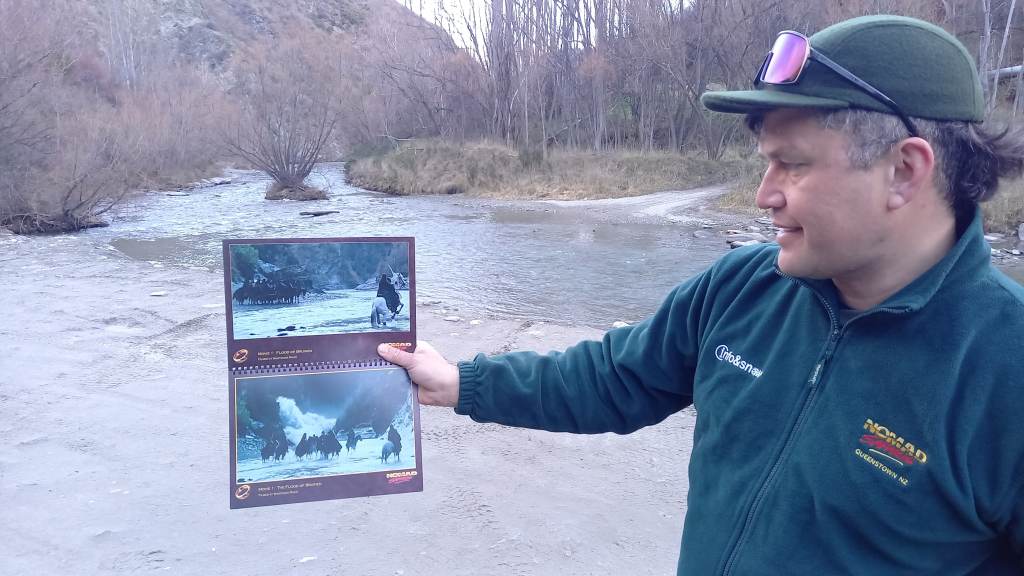
This is actually the Arrow River in real life.
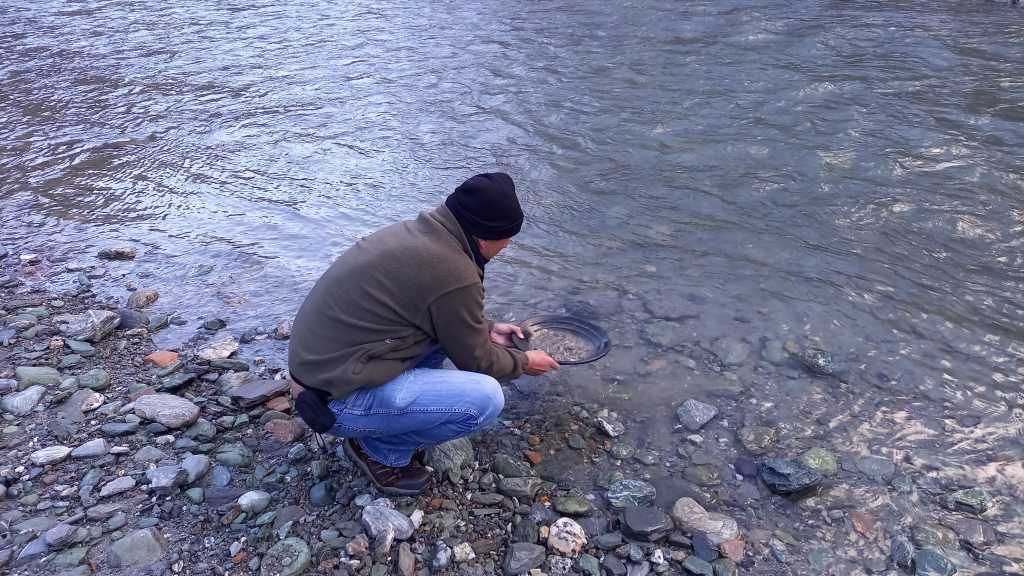
While Queenstown itself hadn’t really been my cup of tea, rather a circus of tourists which is really expensive, I had really enjoyed spending time around the place, exploring the sheer beauty of this wild and rugged South Island landscape.

The next day I was continuing my journey onwards and upwards through the Southern Alps, heading to Lake Tekapo and Mt Cook. I continued to be really excited, and will write up about that in my next.

 Alex Waring's Travel Blog