
15th December 2025
Hello and greetings from Jerusalem! I never thought I’d ever be saying that! I’m spending three nights here as I sightsee in and around this holiest of cities. It’s nice to be in the same bed for more than one night, after five nights in a row of sleeping in five different places! I’m staying at a cosy homestyle Bed and Breakfast run by an American-Israeli lady from Los Angeles, with just me, and her fellow American-Israeli friend also from Los Angeles, staying in the other room here. It’s a kosher place, and I’ve learned so much about being kosher simply by following all of the (many!) instructions for using the kitchen.
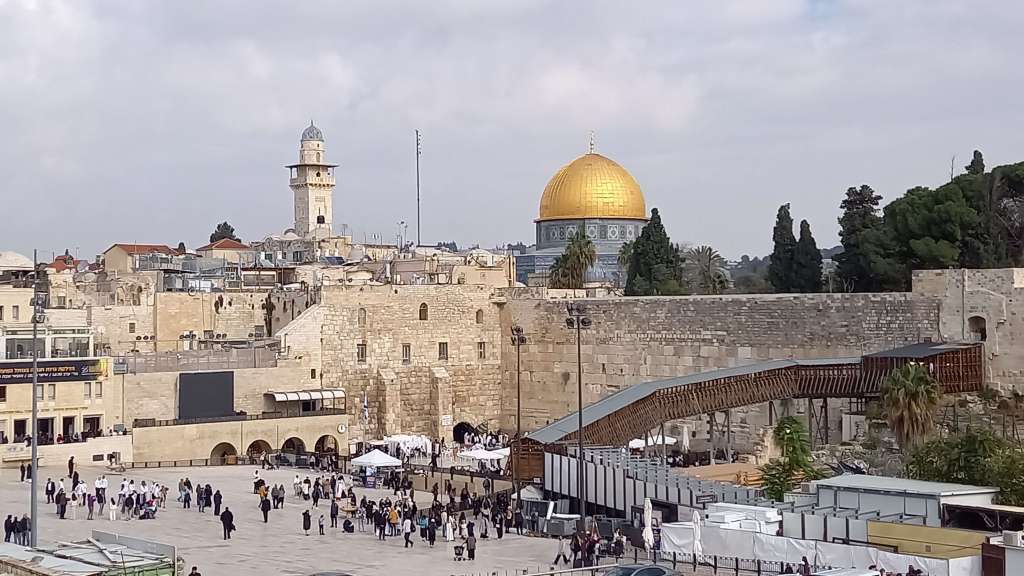
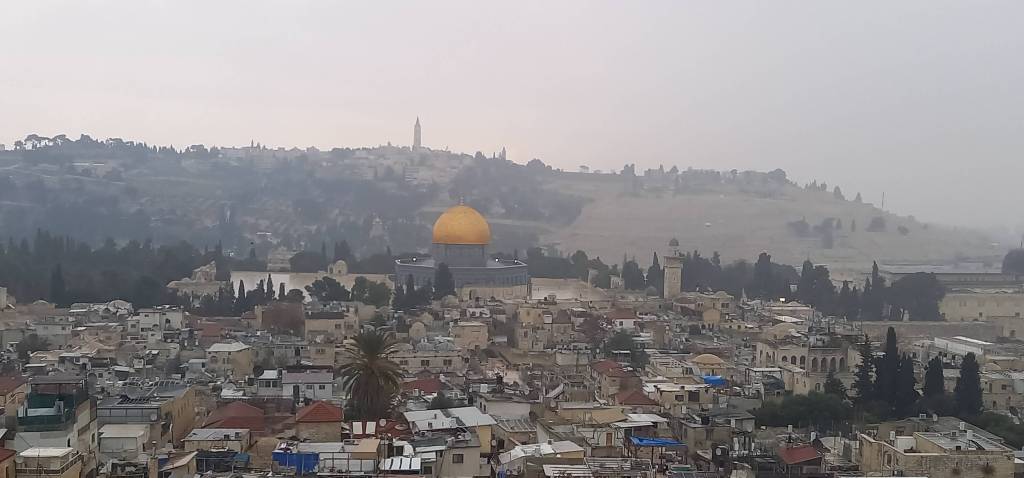
with the Dome of the Rock Mosque in the Background, the third holiest site in Islam
Kosher for Jewish people simply means “acceptable”, and while mostly referring to food, it can also refer to other things in Jewish ritual life. For something to be kosher, it needs to follow Jewish law as listed in the Torah, or the first five books of the Old Testament of the Bible. Interpretation can vary depending on the Jewish tradition, but the classic non-kosher foods for Jewish people are pork and shellfish. Here in my BnB, it referred to the kinds of plates, dishes and cutlery that I could use for the types of foods I was using, as well as the sink I could wash them up in. I was careful to follow the instructions I was given.
Jerusalem is pretty much the holiest place in the world really!
After the crazy drive through Jerusalem the evening before, I was very glad to be having two driving-free days as I parked her up on the rather congested street outside. The place is around half-a-mile south of Mt Zion, on the southern end of Jerusalem’s Old City, and thus very convenient for my full day of sightseeing on my first full day in town.
It was an absolutely fascinating, spiritually-charged day, going from Jewish to Muslim to Christian places of worship within just a few steps. Jerusalem is holy to all three religions, and I don’t think I’ve ever had such a spiritually-fueled day before, filled with much emotion throughout. I started at the nearby Mt Zion to visit the tomb that is believed to be King David’s. That felt really special, as King David has very much been a hero of mine, with his faith, courage and song-writing talent, as well as his acceptance of his own flawed human nature. After some peaceful contemplation time there, I was shouted at by a very rude, 20-something Ultra-Orthodox Haredi Jew who seemed to think I’d gotten a bit too close to him. Well, he didn’t actually look at me or shout directly at me, but as he was chanting his way through his scriptures with his head down in front of him, he suddenly shouted really loudly when I sat down next to him. Perhaps he was blown away by the intensity of the passage he was reading, but judging by the reaction of those around us, including a group of kippah-toting school children who found it hilarious, it was almost certainly aimed at me.
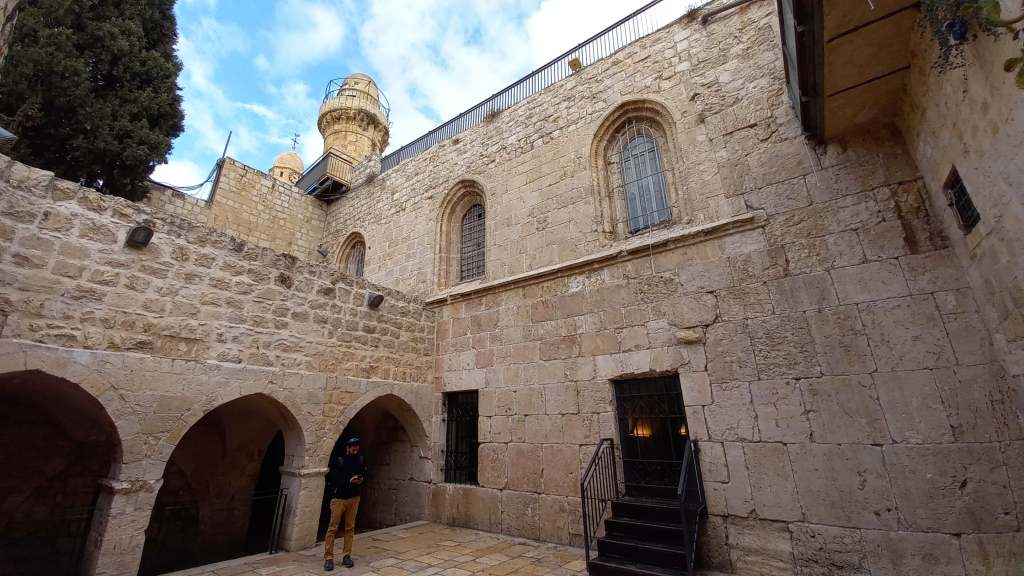
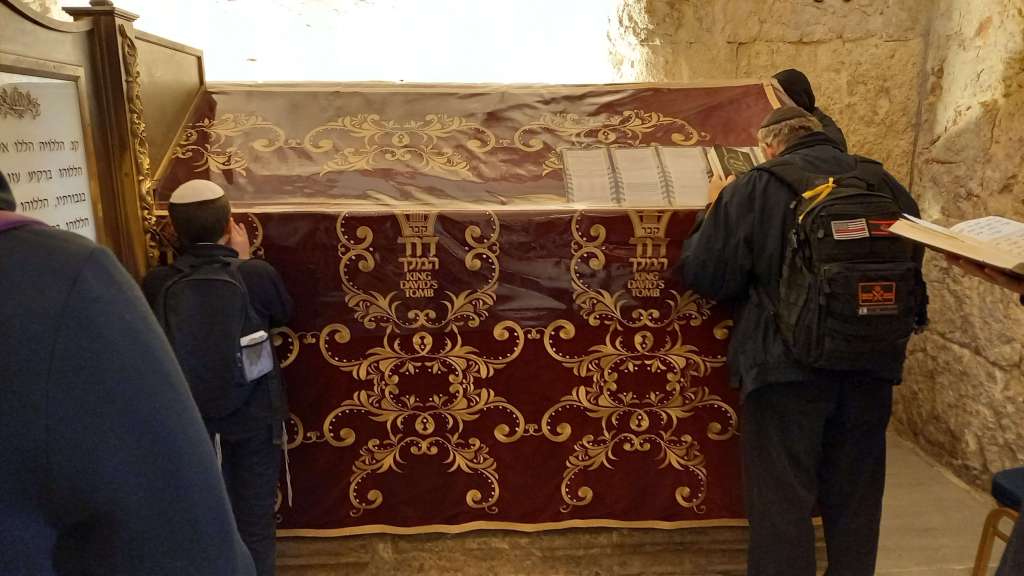
I understand there is controversy surrounding this particular community of Jewish people held by both secular and religious Jews alike. They are criticised for not integrating into Israeli life, the men not holding jobs but receiving benefits from the state while they spend their lives studying scripture, the women having to find employment as well as look after the house and their many children, and neither being eligible to be called up for military service while pretty much everyone else in Israel, both male and female, are. With their population growing faster than any other group in the country, I can only see this animosity increasing.
Rather than reacting to this overtly energetic young man, I instead followed Jesus’ advice of turning the other cheek which was better than many other responses I felt like doing, although it does make me feel slightly better now to say that this dude was seriously one of the ugliest people I’d ever seen…
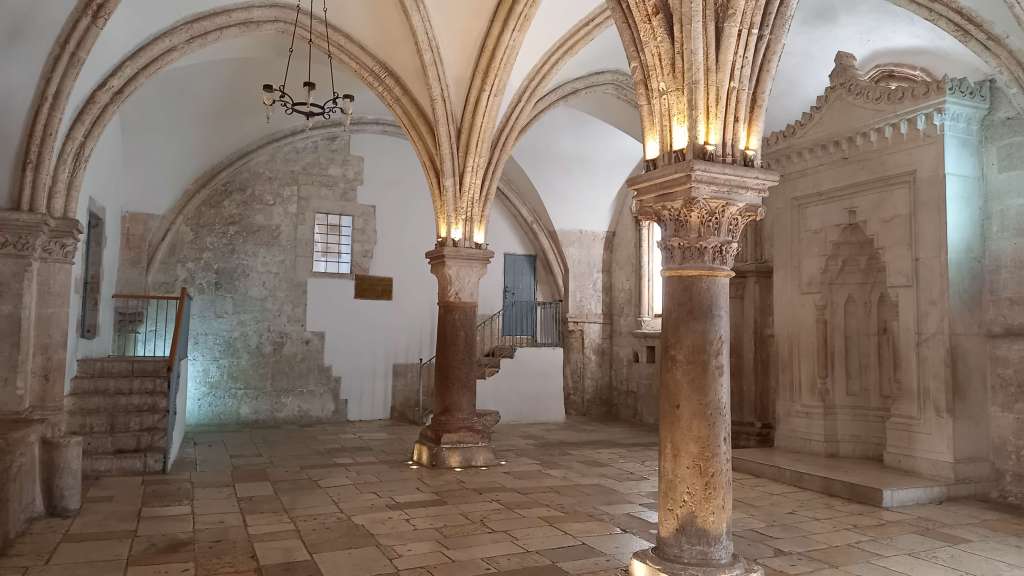
or that of the descent of the Holy Spirit upon the disciples at Pentecost
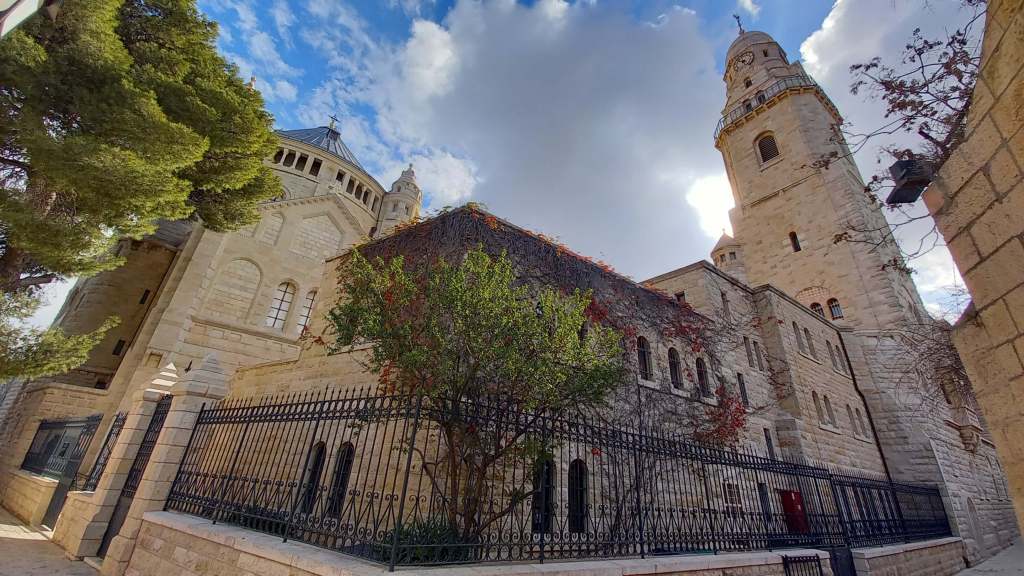
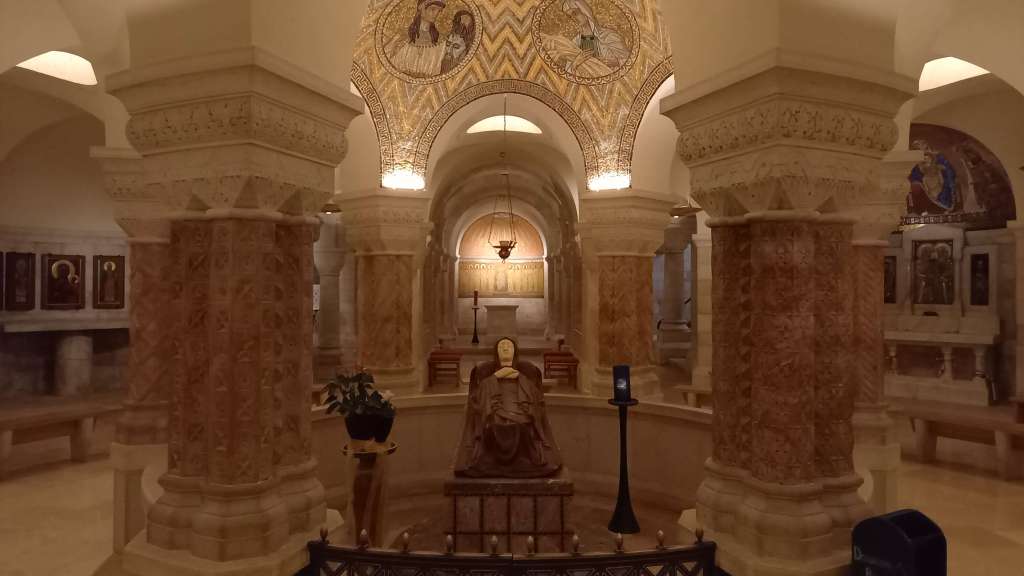
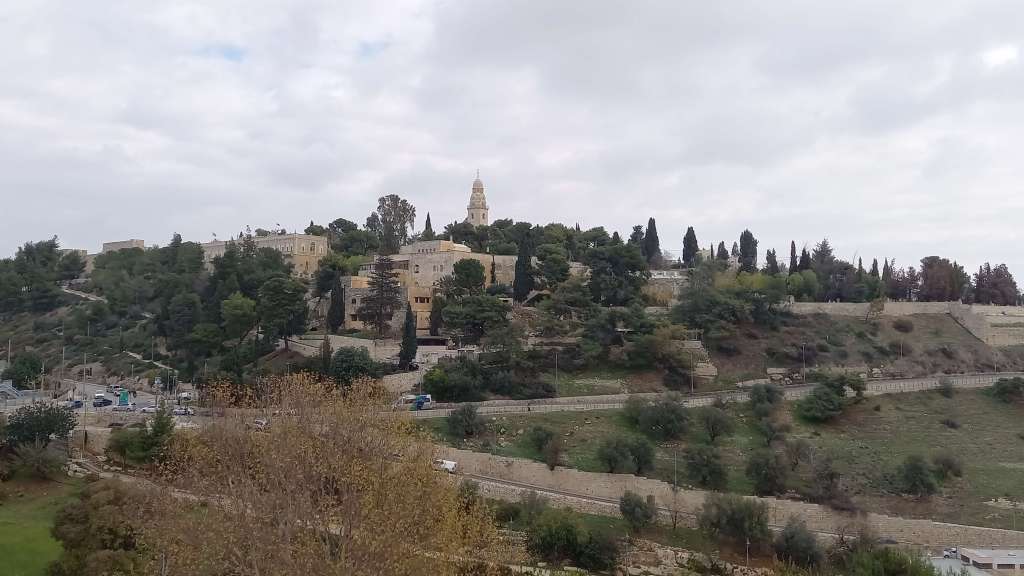
I also visited the Room of the Last Supper, in a room above the tomb of King David, believed to be either the room where Jesus had, well, his final supper with his disciples before his betrayal and subsequent aftermath, or where the Holy Spirit is said to have descended upon the disciples during Pentecost, causing them to speak in tongues and become ready to continue Jesus’ mission after he had died. I then headed to the Roman Catholic Dormition Church nearby, built on the spot where Mother Mary is believed to have passed away. This place became a haven for me later, more on that below.
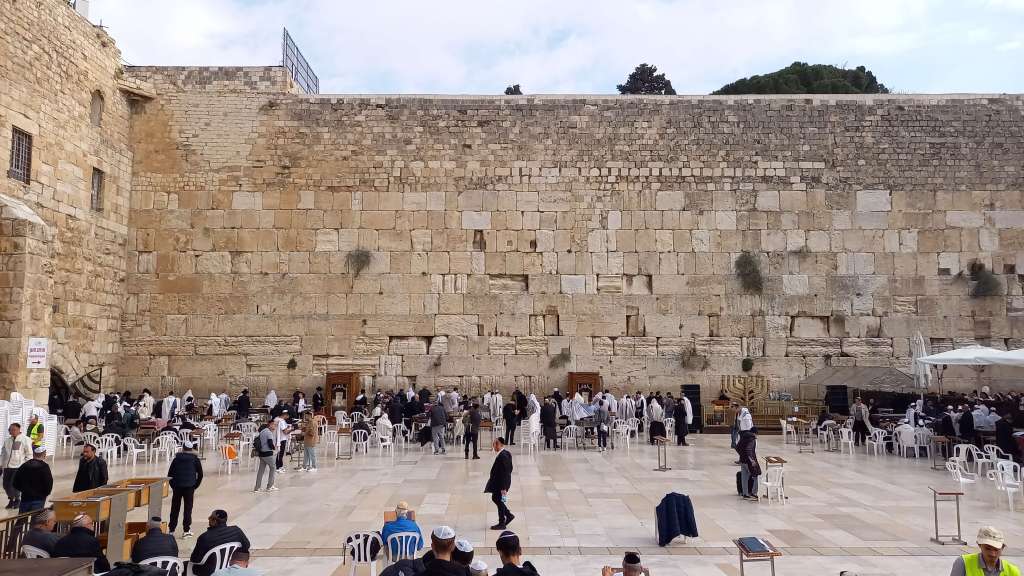
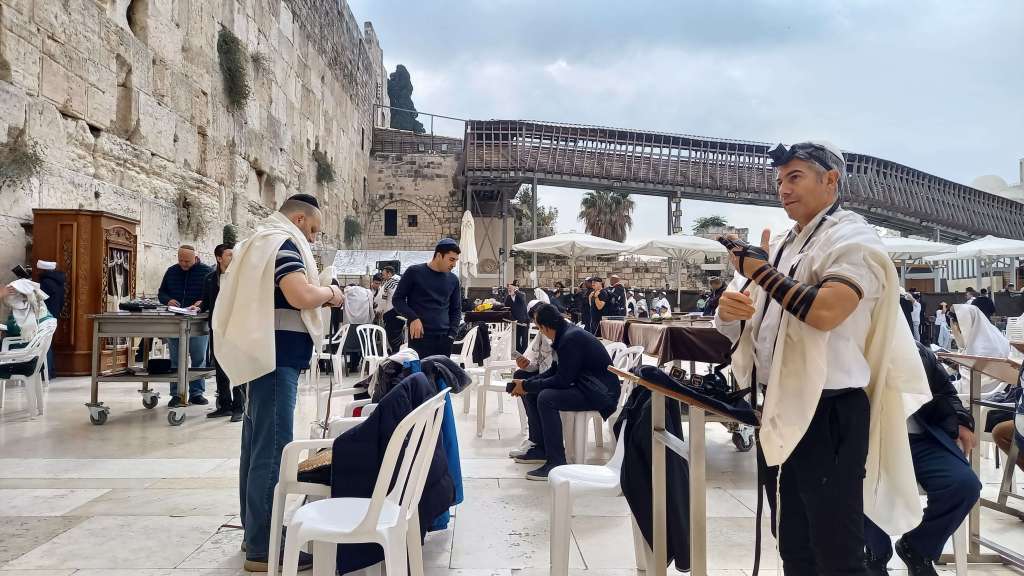
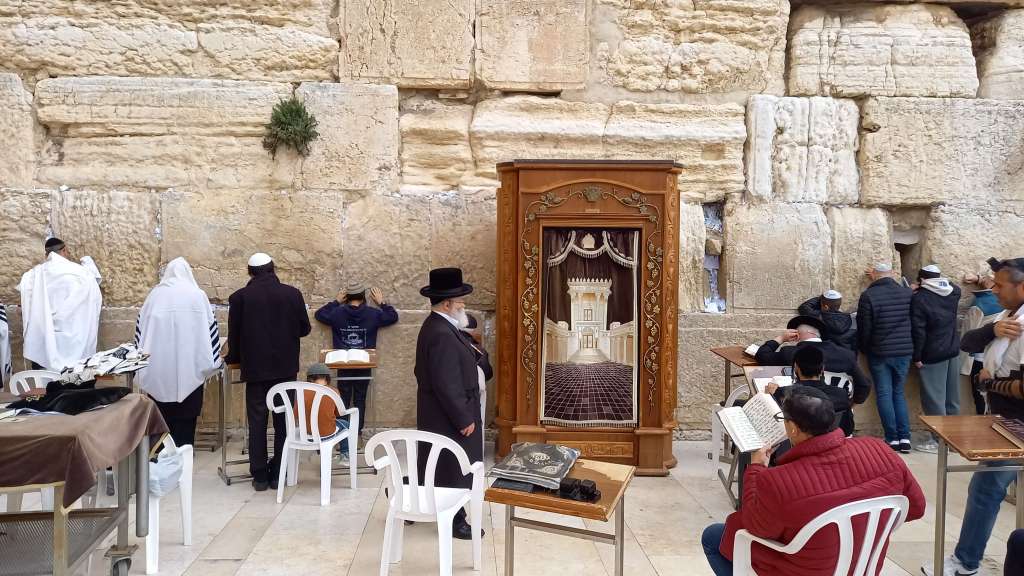
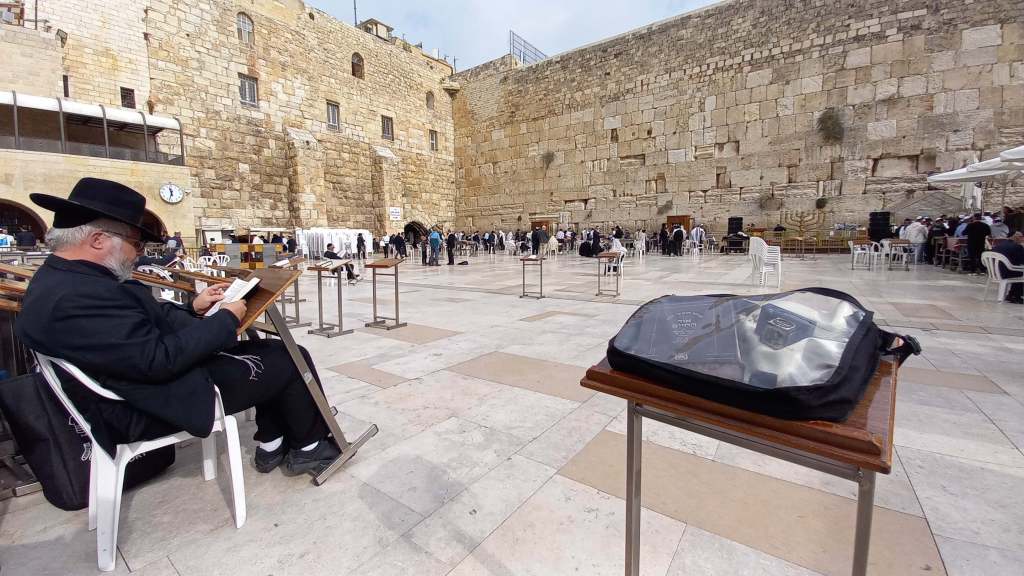
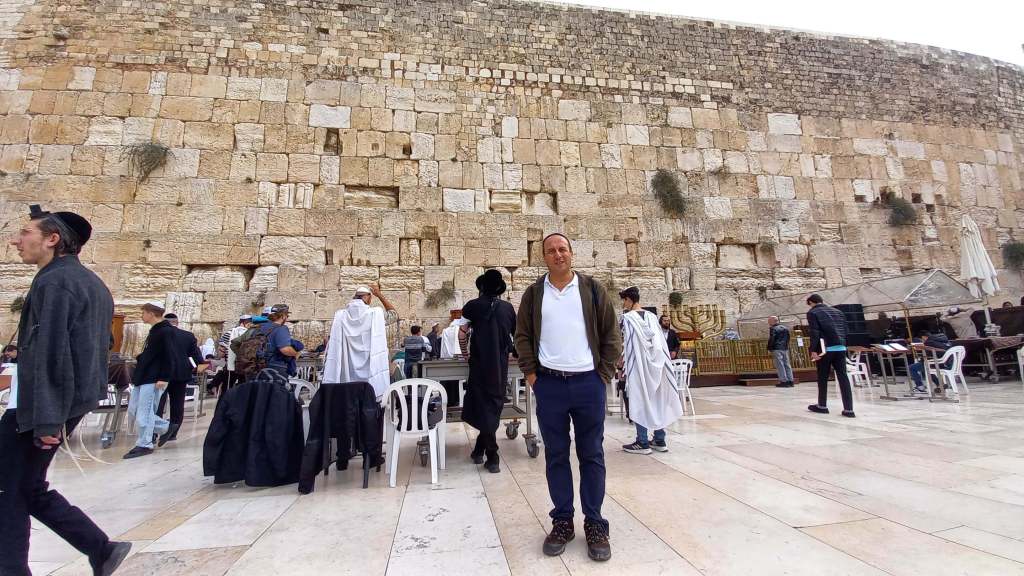
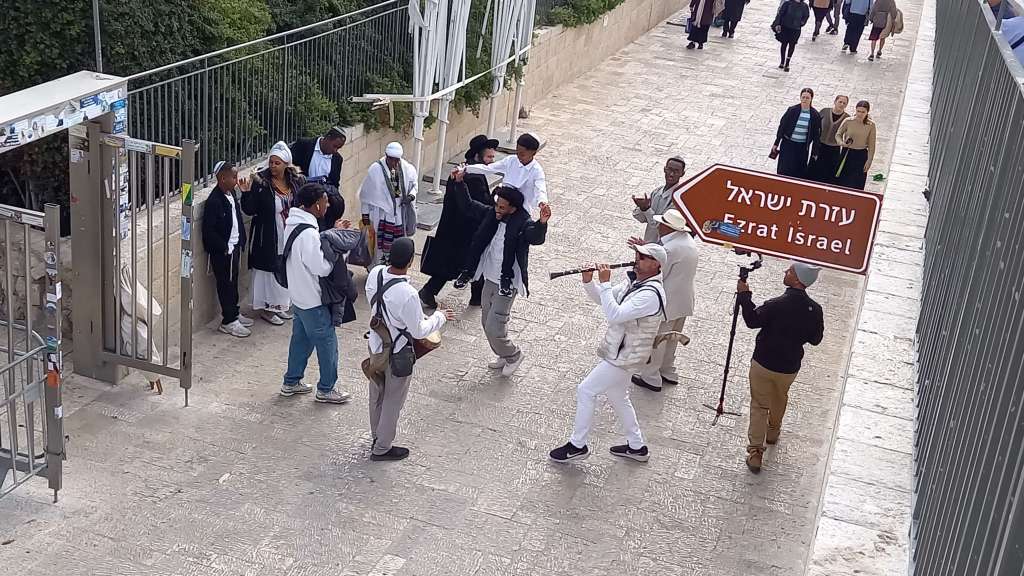
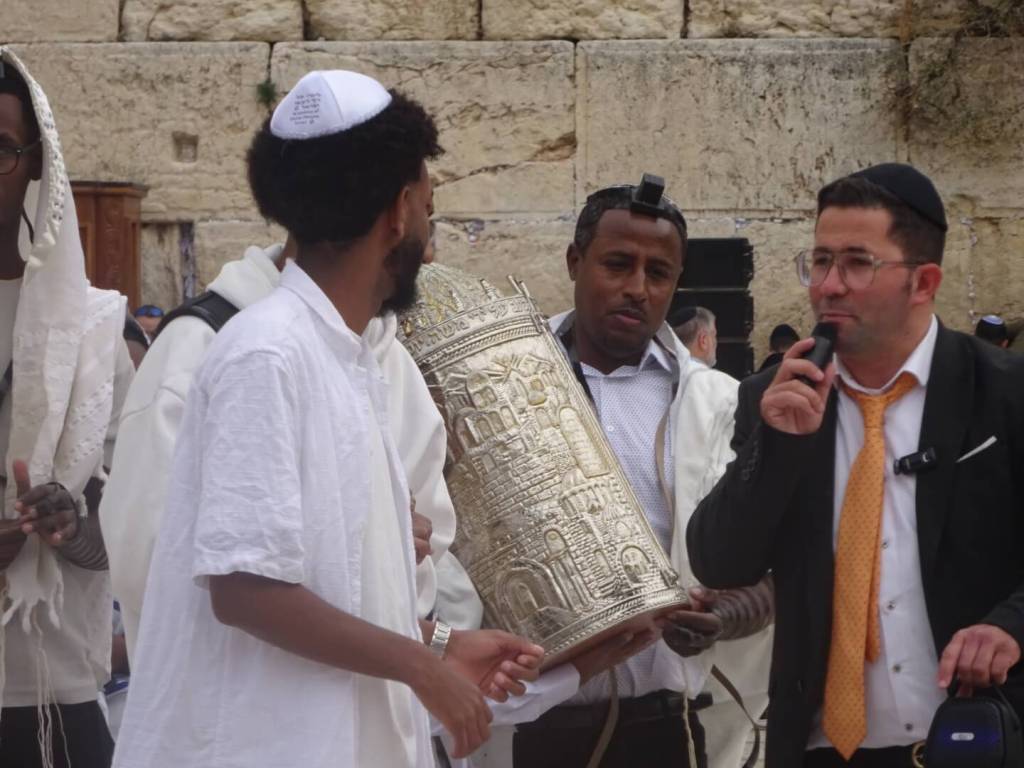
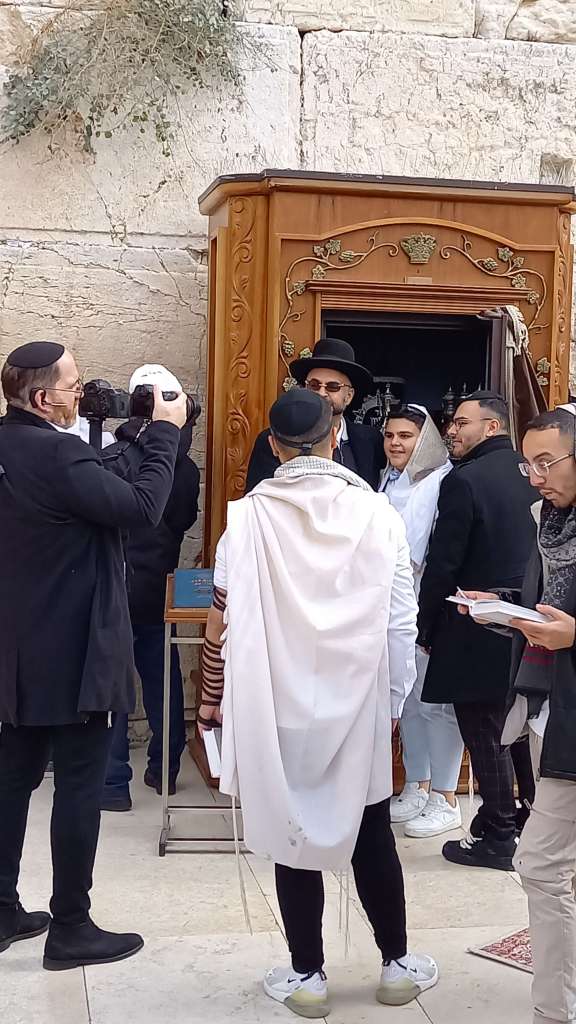
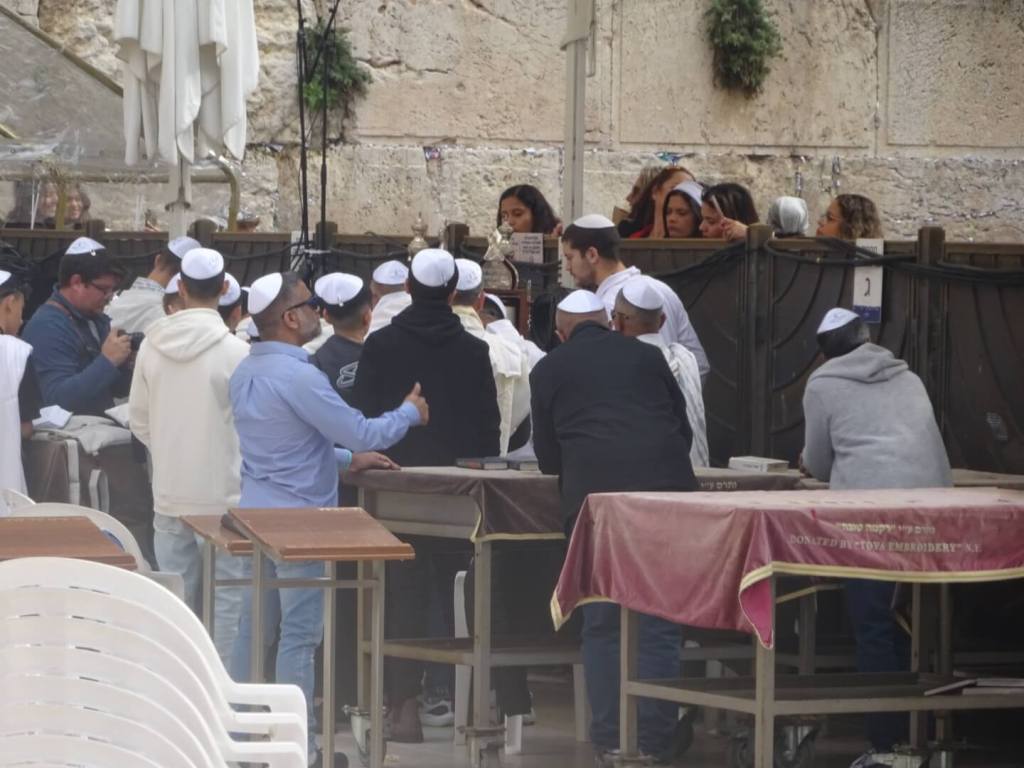
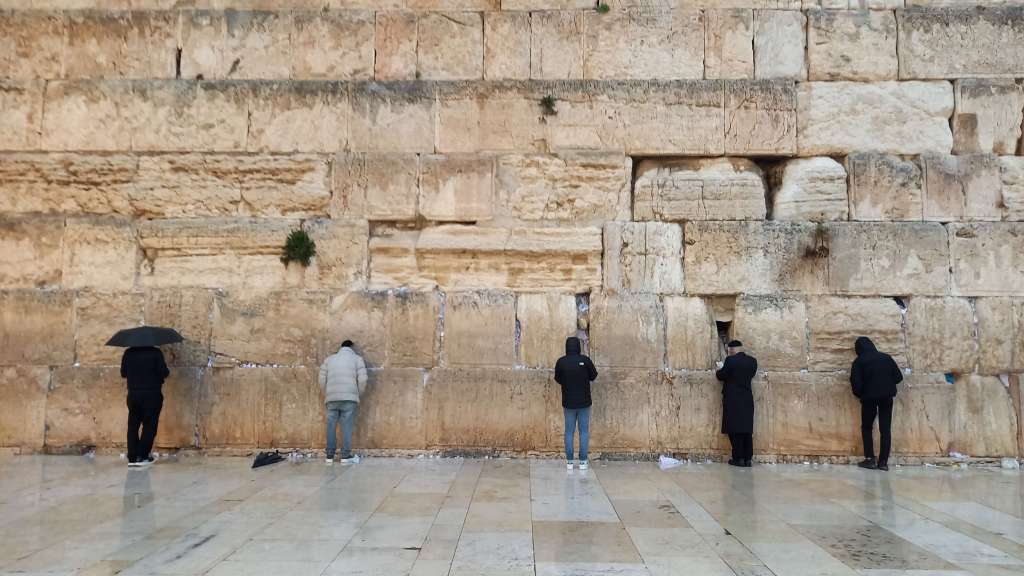
Next up, I was so very excited to see the Western Wall, absolutely charged with energy which I could feel, and I sat there just absorbing the scene for a good while after I’d touched and prayed at this last remnant of the Second Jewish Temple after it was destroyed by the Romans following the Jewish Uprising of 70AD. The scene of hundreds of Jewish people praying, segregated with men to the left and women and children to the right, was just incredible. Many of the men on my side wore the tallit prayer shawls with tassels on the bottom, along with the obligatory kippah which I was also wearing out of respect. Some of them were also sporting a black camera-shaped box on their forehead containing the words “Hear O Israel…” from the Hebrew Bible, and long black straps wrapped around their left-arm (right-arm if they are left-handed), called tefillin and as commanded by one of the 613 mitzvot, or commandments, when praying to God. Occasionally, a large Torah scroll was taken out of one of the many “Arks” in front of the Wall itself, often by a 13-year old boy, of which there were many clearly having their Bar Mitzvahs on this day, the Jewish turning-of-age ceremony. These took place on tables alongside the divide separating the men and the women, so that the women in their party could observe from platforms on the other side. I was particularly drawn to a Bar Mitzvah taking place with a family of Ethiopian Jews, forming around 2% of the population of the vastly multi-cultural country of Israel today. They are said to be descended from the relationship between Solomon and the Queen of Sheba, and here I really loved seeing the women throwing sweets every now and then over the proceedings on the men’s side. They were clearly having a good time! It was so fascinating for me to just sit and watch the whole spectacle of everything going on. I could have stayed there for much longer, but my sightseeing plans for the day were calling me on.
Next up was something that involved some amazing timing – a visit up to the top of the incredible Temple Mount, the central-most point in the city and one of its highest points. It is considered the holiest site in the world for Jews, the location of the ancient Mt Moriah upon which Abraham nearly sacrificed his son Isaac, and from whence came the religion of Judaism – a people and a nation as numerous as the stars in the sky and grains of sand along the seashore, descended from Father Abraham, dedicated and devoted to their faith in God.
While Abraham and his family thence settled in Beersheba to the south, by the time King David came along around 800 years later, Mt Moriah had been built upon by the Ammonites to become the fortified city of Jerusalem. David famously conquered it by infiltrating the water tunnels bringing fresh water into the city, and founded it as the first capital of the Israelites, to unite the disparate and sometimes bickering 12 tribes into one central point for the worship of God. He brought the Ark of the Covenant which contained the Ten Commandments to the city, and his son King Solomon built the First Temple of Jerusalem in which to house it, at the top of the very same Mt Moriah where Abraham is said to have nearly sacrificed his son, and upon which the religion of Judaism was born.
Within this First Temple was the holiest place in the whole wide world for the Jews – a room called, for obvious reasons, the Holy of Holies. It was in this room that the Ark of the Covenant was kept, separated from the rest of the Temple by a curtain, and only the High Priest could enter this room, and only annually on the Day of Atonement. After the First Temple was destroyed by the Babylonians around 400 years later and the Jews forced into exile by the Rivers of Babylon, they returned not long after to build the Second Temple of Jerusalem, in the same location, on the Temple Mount. While they re-built the room of the Holy of Holies, the Ark of the Covenant had gone missing in the meantime, and has never been found again since (except by Indiana Jones of course in “Raiders of the Lost Ark”). However, and as mentioned previously, the Romans then destroyed the Second Temple following the Jewish Uprising of 70AD, leaving only the Western Wall standing, and sent the Jews away. It is also known as the Wailing Wall, where Jewish people also mourn the loss of their Temple.
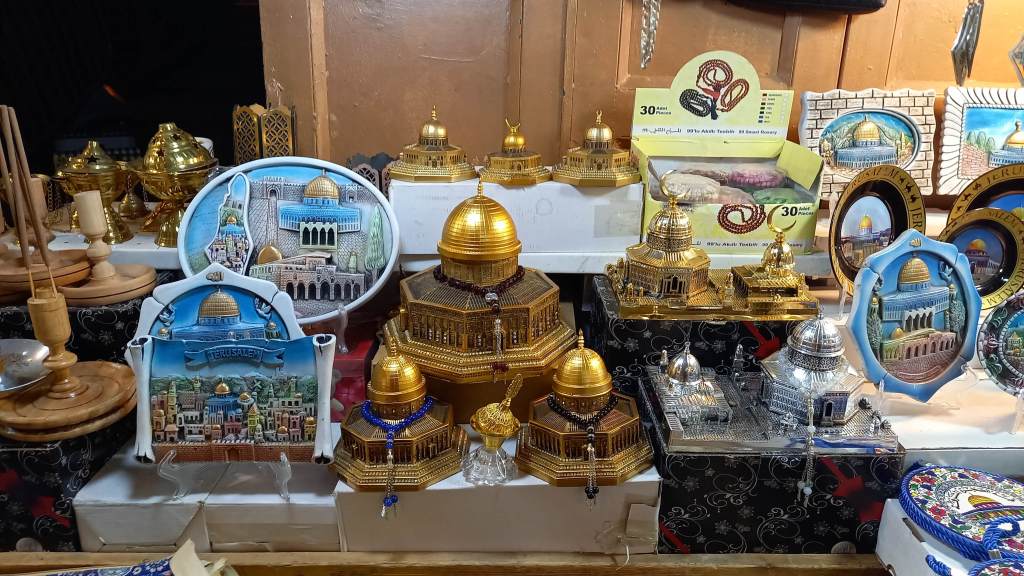
Around 600 years later came Muhammad from Arabia to the the south with his new religion of Islam, and having arrived in the very spot of the original temple is said to have ascended to heaven there. On this journey which lasted a single night, he is believed to have met with previous biblical prophets, and returned with the instruction that his followers should pray five times a day. Only around 70 years later, some of the first Muslims under the Umayyad Caliph based in Damascus built a mosque upon this site, whose original structure, while having been renovated over the years, still stands there today. For obvious reasons the Jewish people have not re-built a Third Temple on the site, and devote their worship instead to the Western Wall of the Second Temple down below, while the Dome of the Rock mosque built where Muhammad’s ascension is said to have taken place on top of the Temple Mount itself is considered the third holiest site in the world for Muslims after Mecca and Medina.
I wasn’t sure I’d be able to visit the Dome of the Rock and the Temple Mount itself to be honest, as non-Muslims are only allowed up there at certain times of the day, and my guidebook told me to arrive early to avoid being turned away, due to its popularity. I just happened to hear by chance from one of the many IDF soldiers surrounding the Temple Mount on the Jewish side, that the visiting time began in half-an-hour. So I high-tailed it off to the entrance to the right of the Western Wall, and lo and behold saw that I was one of only a handful of visitors and was easily able to get in. The lack of tourism does indeed seem very sad for Israel, but became throughout my time there a real blessing for me, including at this time.
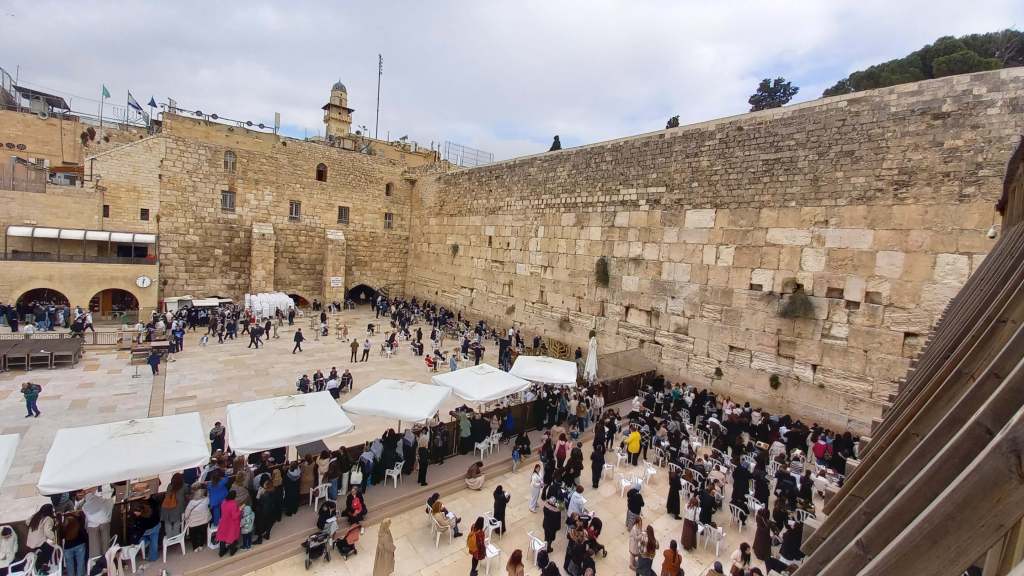

If anyone reading this has ever wondered like I had, what the long wooden tunnel-like walkway is to the right of many-a picture of the Western Wall, it is in fact the only passage by which the non-Muslim visitor can enter the top of the Temple Mount. You can leave by any of the 10 other open gates, but must enter by this one, to have a passport-check and a bit of a briefing as to how to behave up there. You cannot go into either of the two mosques up there as a non-Muslim, but are free to walk around with respect. I was a little nervous I must say, particularly with the amount of armed Israeli soldiers around even up there, but as always in this country – the more security, the better for you.
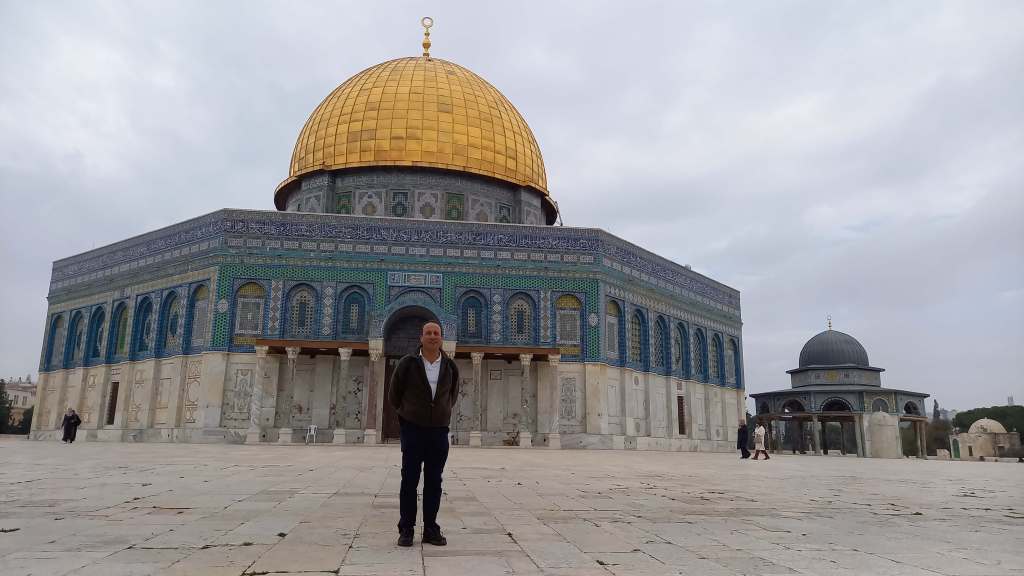
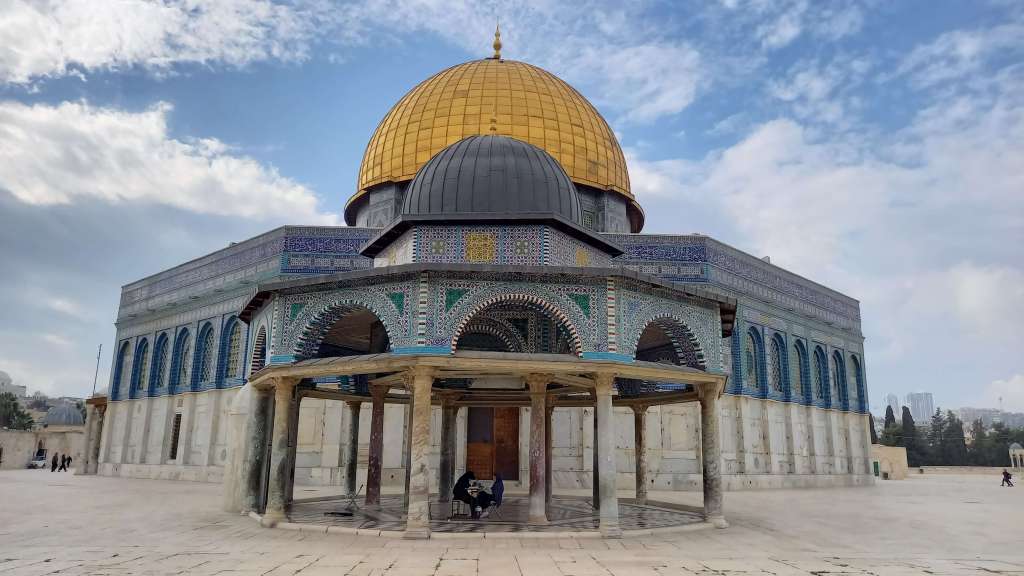
The place was literally awesome, and the Dome of the Rock mosque was incredibly beautiful in its simple and symmetrical perfection. I was pretty much blown away by being able to walk around on this holiest of holiest of places in the whole wide world really, and was drawn in particular to sitting on a stone wall in a corner of the complex to pray. I was absolutely overwhelmed with emotion and energy, as I actually believe I felt the stones of the wall vibrating by laying my hands on them. Just wow.
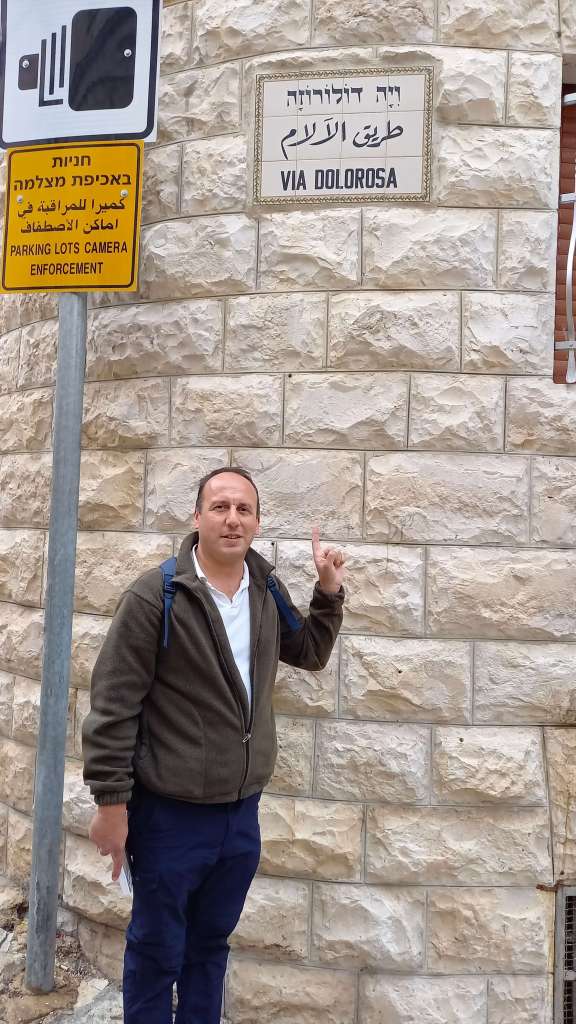
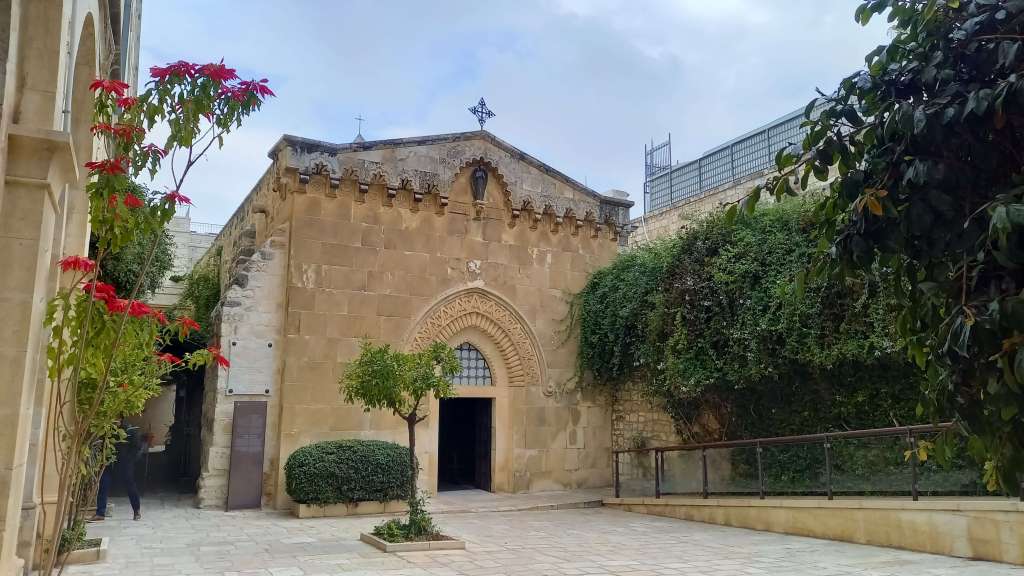
After spending a good two hours up there, reaching the end of the non-Muslim visiting time, and after my fill of Judaism and Islam so far in the city, I was now ready for my own Christianity. I headed to the Lion’s Gate, one of eight gates used to enter the Old City, this one on its eastern edge. It is here that the Via Dolorosa begins, said to be the route which Jesus took from his sentence to Calvary, or Golgotha, where he was crucified. Just like in every Catholic church, there are 14 Stations of the Cross in total along this route, each marking a particular incident which happened on the way to Golgotha. Having done these Stations so many times myself in so many Catholic churches around the world, it felt really powerful to be actually following the same meditative reflections one uses while doing it, but this time in the actual places where they happened. I understand that when tourism is on in Israel, the Via Dolorosa is filled with many groups of pilgrims and can be quite crowded. It was just me on this day doing the route, while the rest of the people in Jerusalem were just getting along normally with their day, hurrying to and fro past me.
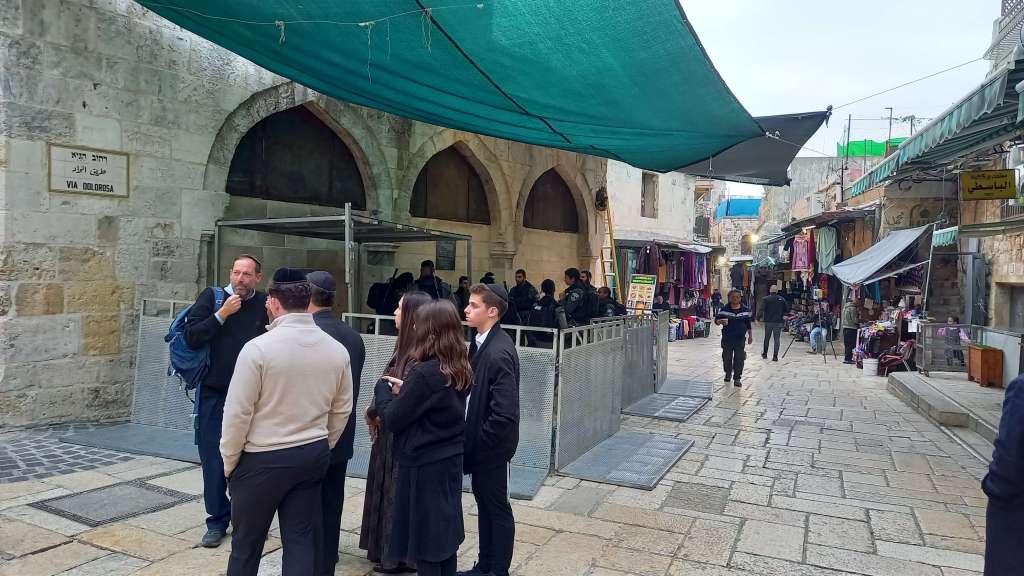
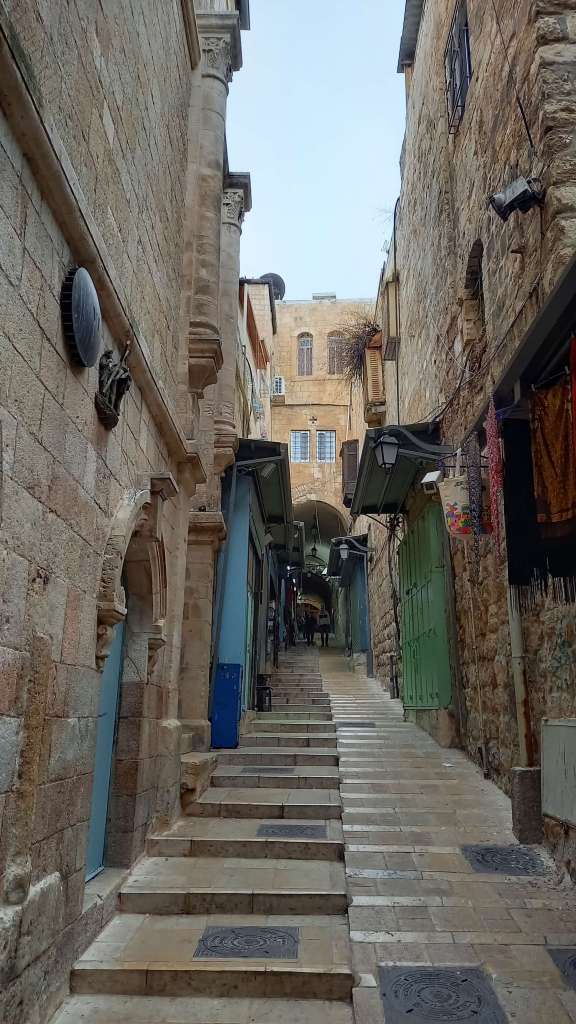
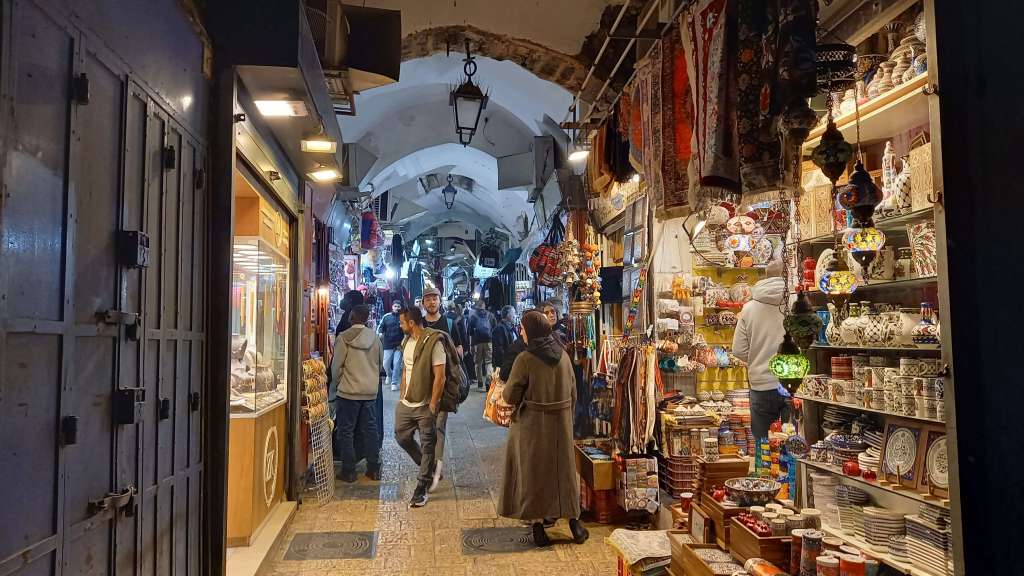
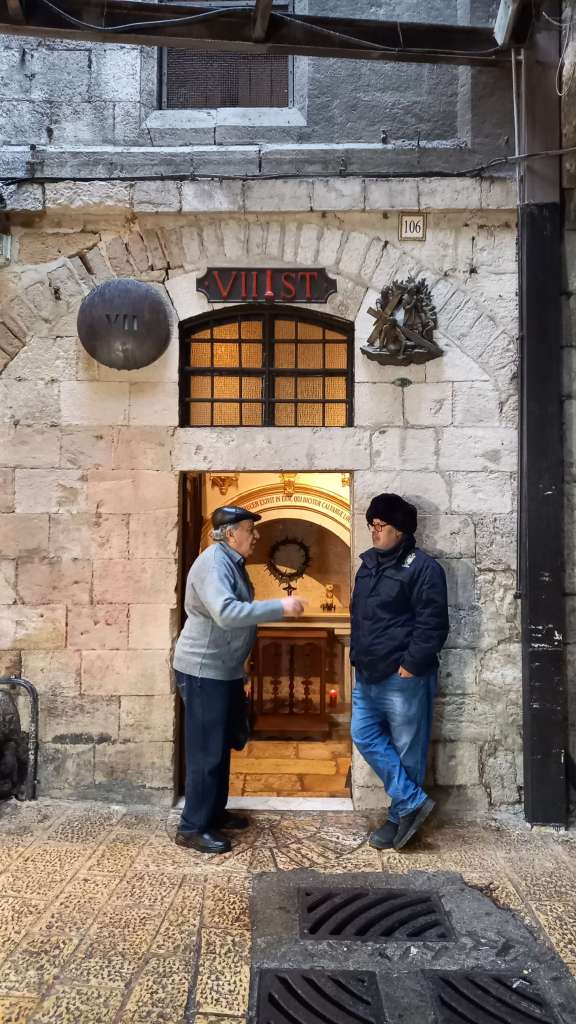
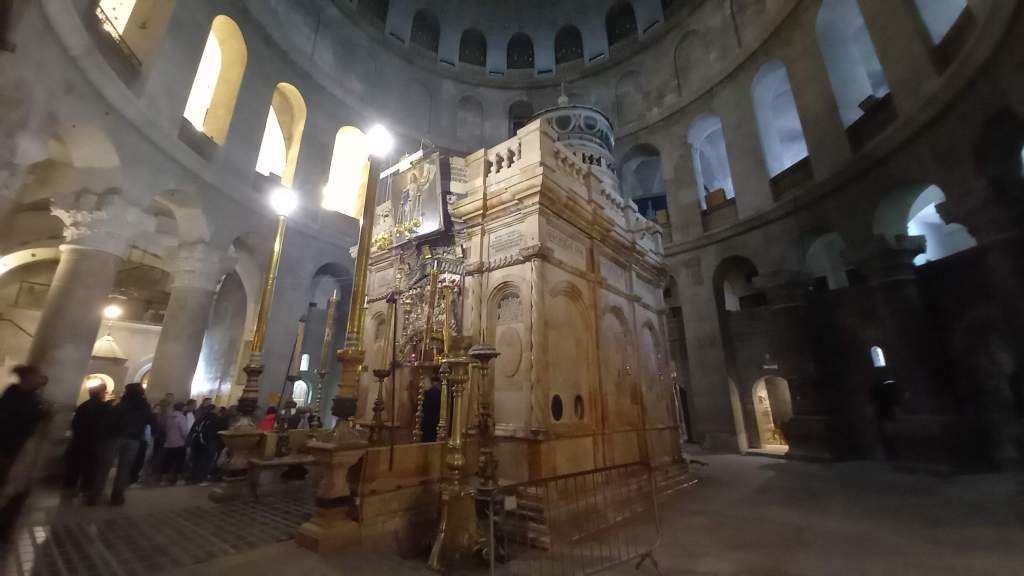
The Stations included the places believed to be where Jesus was scourged, sentenced to death by Pontius Pilate who had given in to the cries of the crowd, made to carry his cross, met his mother Mary, met Simon of Cyrene who helped him carry the cross for a short while, and Veronica who wiped his face with a cloth which is said to have miraculously left his face imprinted on it. There was also the place where he told the women of Jerusalem not to cry for him, but for themselves and for their children, and ultimately where he was crucified and subsequently buried. This is the final Station of the Cross, the 14th one, though on some routes there is also a 15th one marking the culmination of this terrible ordeal in the much more hopeful and jubilatory Resurrection. Both the 14th and 15th Stations are marked here by what is believed by many to be Christianity’s holiest site in the world, the Church of the Holy Sepulchre, dating back to Emperor Constantine’s commissioning of the place in the 4th century, added to by the Crusaders in the 12th century, and today managed by the Greek Orthodox Church.
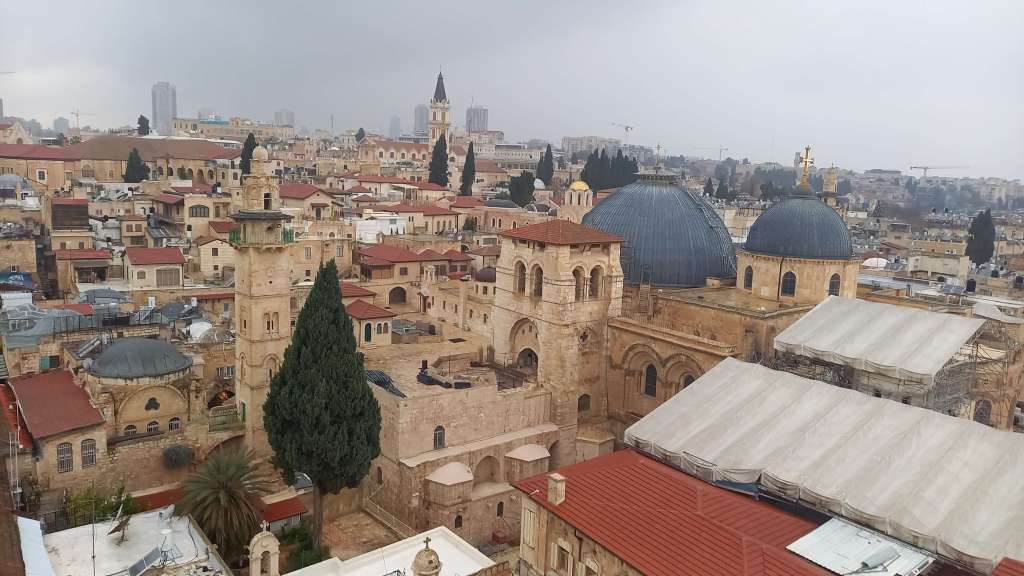
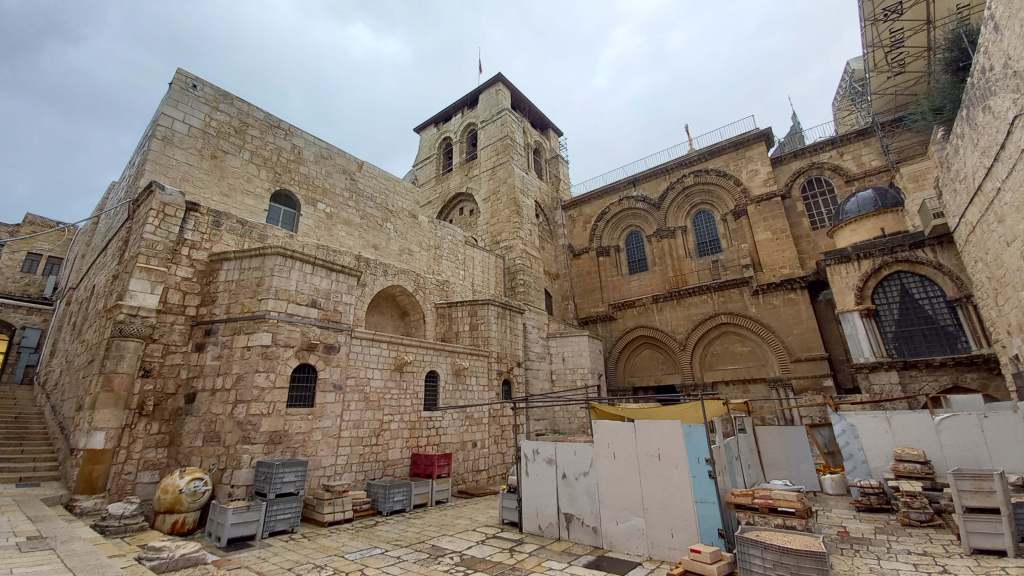
Inside the Church is the Chapel of Calvary over the rock upon which it is believed Jesus’ cross was hung which you can touch, the Stone of Unction where the embalming of his body is said to have taken place, and a small chapel marking the actual place of his tomb. I said prayers in all three places, as well as the Chapel of St Helena, the mother of the first Christian Roman Emperor Constantine, who embraced the religion not long after her son did. She is particularly revered for having said to have found the True Cross near to the location of the Crucifixion, here also within the Church. The story goes that there were three crosses claimed to be the one upon which Jesus died, the true one being shown when a dying woman was miraculously healed when she touched it.
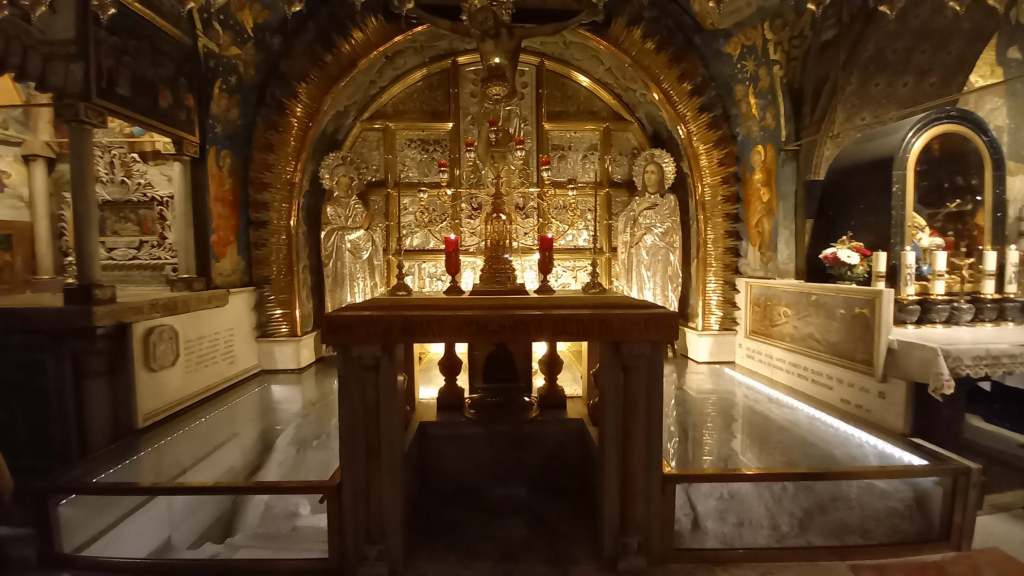

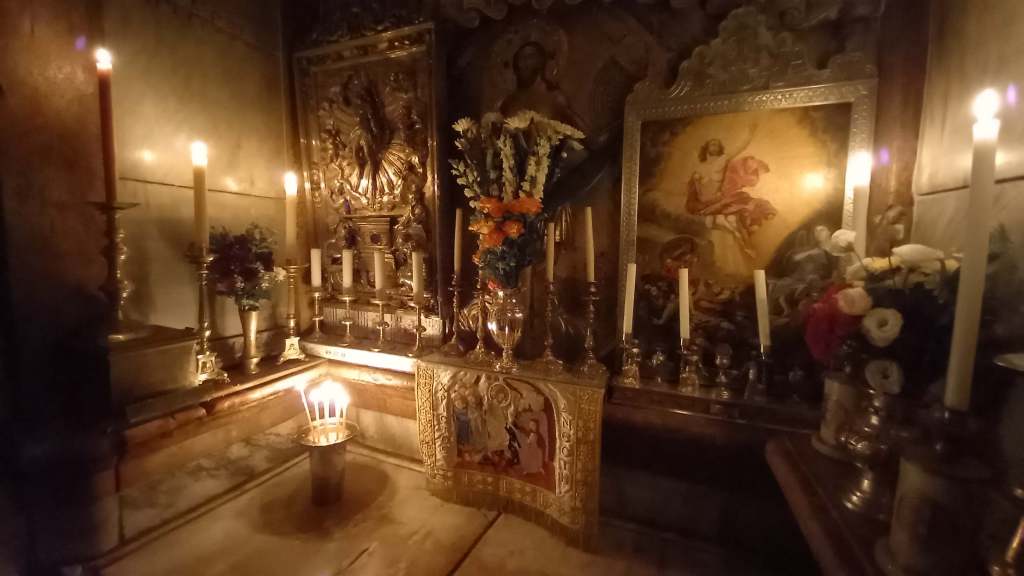
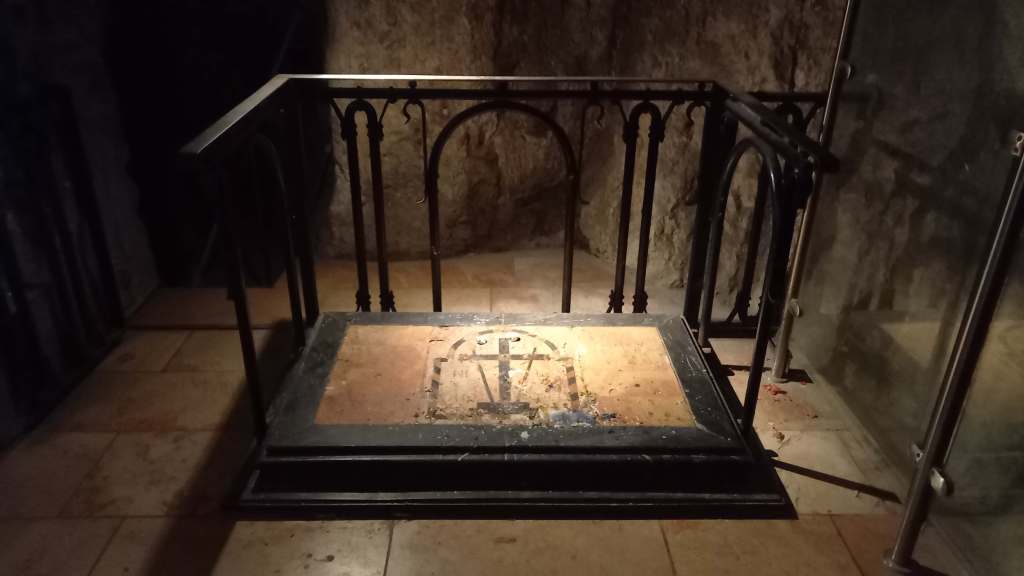
This whole experience was just so incredible for me, following the route where this most famous and saddest of Christian stories took place. I had been right there in those exact same places which I had heard and read about pretty much all my life.
At this stage, I actually felt really overcome and overwhelmed with emotion, and felt called to return to the afore-mentioned Dormition Church, rather than pursue my original plan to visit the nearby Garden of Gethsemane and Mount of Olives. I never did get to visit these two places during my time in Jerusalem, but so be it – I followed where I felt called to go, and found sanctuary there as I allowed my soul to still after such influxes of energy and emotion. I was at peace, and was thoroughly reminded that while I love learning about and experiencing other faiths, beliefs and religions, my heart and soul will always belong to and find solace in the Christian Catholic Church. It was a good lesson I learned on this fascinating, educational and rather overwhelming day in the world’s most spiritually-concentrated place of the Old City of Jerusalem.
I will relate my second full day based in Jerusalem in my next.

 Alex Waring's Travel Blog