19th December 2025
After an absolutely incredible time in Jerusalem and around, I was ready to get behind the wheel again and hit the Israeli road. Filled up with petrol just before leaving the city, and managed to get help from the chap behind me as there was no English at all on the self-service machine. This was the same as back in Eilat on my previous and first fill-up, and I was grateful that the service lady also came out to help me there. The Jerusalem petrol chap was so pleasantly surprised to meet me, asking whether I was Jewish or had family here – my negative responses confirmed to him that he was speaking with an actual genuine tourist again, which seemed to really bring him joy. I felt honoured to hopefully blaze the trail again for tourists to come back, and hope that anyone reading this may feel the inspiration to come and visit.
Once again though, there was absolutely horrendous traffic, even worse than when I had first arrived in Jerusalem. It seemed on this Wednesday evening that everyone and their dog were travelling – the next day began a four-day weekend towards the end of Hanukkah, which could explain. It was pretty much bumper to bumper, albeit at times fairly fast still, during the whole 90-mile journey around the West Bank once more – first westwards, then northwards, and then north-eastwards, from Jerusalem to Nazareth, my next port-of-call. A journey that was meant to take two hours ended up taking four-and-a-half, and I was so relieved to finally make it to the hometown of Jesus – just one of so many overwhelming places to be in this country!
After negotiating the tight, windy and hilly streets of the modern city of Nazareth, I checked into a beautiful convent accommodation there. It was a really tranquil haven in a rather more frenetic city than what I’d been used to thus far. With a population of 80,000, it is Israel’s largest Arab city, and thus has more of the Arabic vibe to it in terms of traffic and music coming from everywhere. With 70% of the people there being Muslim and 30% Christian, it felt like I’d moved on from the majority Jewish part of my journey so far, to experiencing a completely different side of this seriously multi-faceted country.
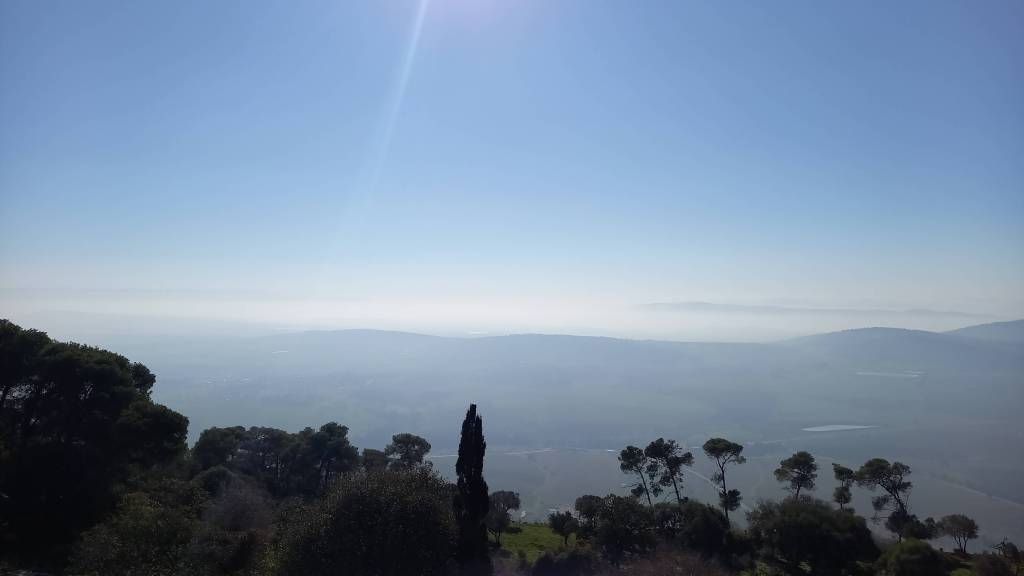
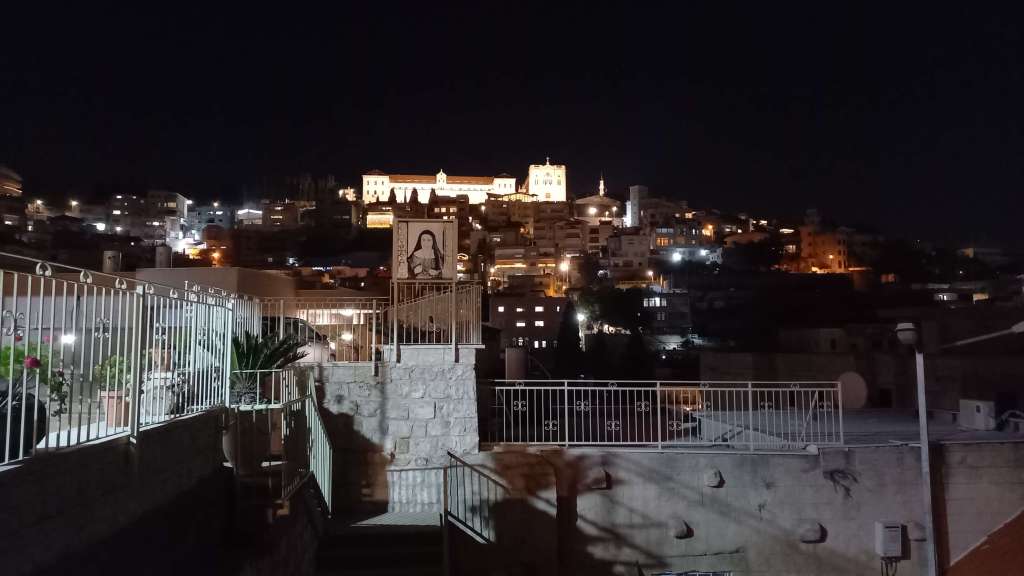
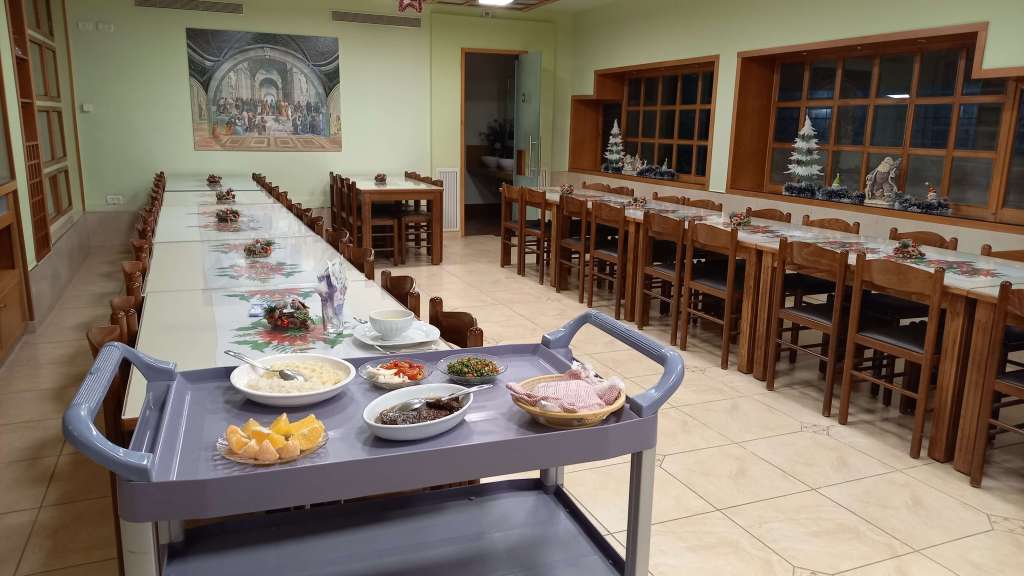
The convent was a delight, and I booked myself half-board there. I felt bad about arriving late for my pre-arranged dinner due to the traffic, but they were very understanding and filled me up a treat with my delicious first meal. I also did a quick tour of the home to around five sisters, and it was surprisingly big and spacious in this rather built-up city, complete with chapel, orange and fruit tree grove, a couple of buildings for the nuns and their guests, and an awesome view over the city below and the surrounding built-upon hillsides. I found myself many-a time during my stay just sitting outside in the peaceful surrounds and gazing over the view of Jesus’ city below me. The founder of the convent and order, Saint Marie Alphonsine of Jerusalem, was apparently visited by the Virgin Mary in the 19th century and told to start educating girls in the then-Ottoman controlled land, where girls were not usually given an education. Canonised in 2015, 182 nuns of the order are now spread throughout the Arab world, from Lebanon to Israel to Palestine, and from Syria to Egypt and Iraq. These are some brave sisters I’d say!
I was the only person staying in the convent for my two nights there. When I asked, apparently visitors are currently few and far between. They have around 30 rooms, which have been empty for over two years now. It was encouraging to hear that things were starting to improve ever-so-slightly, with a group of 30 pilgrims booked in for the end of January, and two priests for a couple of nights before then. Oh, and of course little old me. What an honour, though I also felt sad for them and wondered how they were getting by without this important source of income. As mentioned before in these blogs on Israel, I do hope tourism picks up soon in this country, tourists and normality seem to be so sorely missed here.
The next day was just absolutely incredible! I spent it quite literally walking in the footsteps of Jesus. I have been trying to do this figuratively for most of my life, but today I indeed did it literally! I spent the day exploring the region of Galilee where he spent the majority of his ministry, teaching and performing miracles. This Holy Land is a seriously holy land, and as mentioned much of my experience thus far had been Jewish, but today was definitely spent exploring more of the Christian side of the country. Although in all honesty, the two religions are very much intertwined, with Jesus himself of course being Jewish and considered a great teacher by many Jewish people.
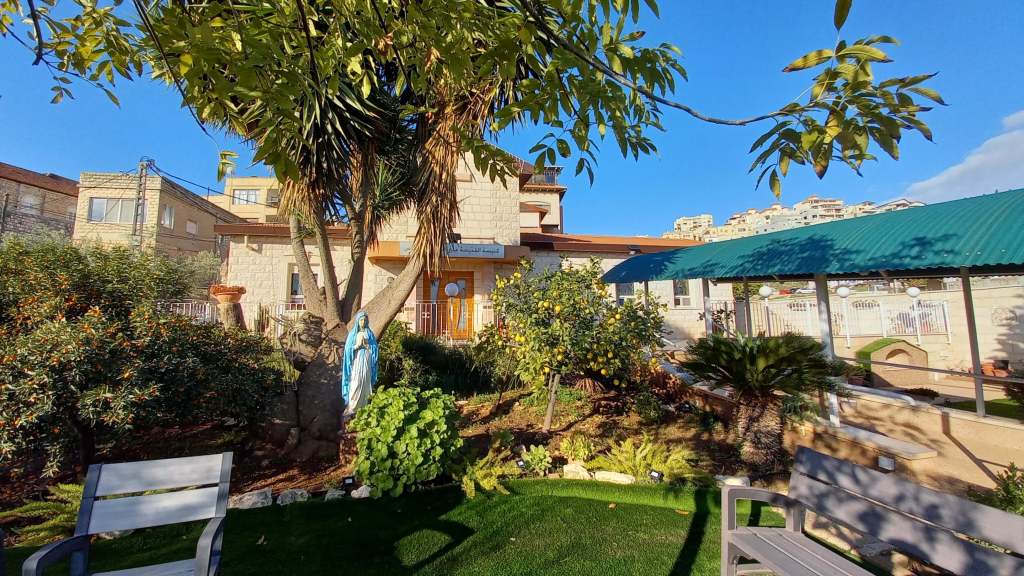
I had an early start, beginning my day with a 6am mass at my convent’s attached chapel, with a local priest, the sisters, a visitor and myself. It was intimate, and I heard mass in Arabic for the first time in my life! It was fascinating to hear the Christian Catholic rites being spoken in Arabic, which is the language more commonly associated with Islam. I then had a very hearty breakfast provided by the sisters, and headed off on my Galilee explorations. Most of my sights visited on this day related to a story from the Gospels, telling the life of Jesus. Since quite a bit of the school subject I teach involves a number of these stories, I was so excited to be in these actual places after teaching about them for so many years! I also feel my lessons will have a more authentic basis to them now, after having spent time myself in so many of these places on this day.
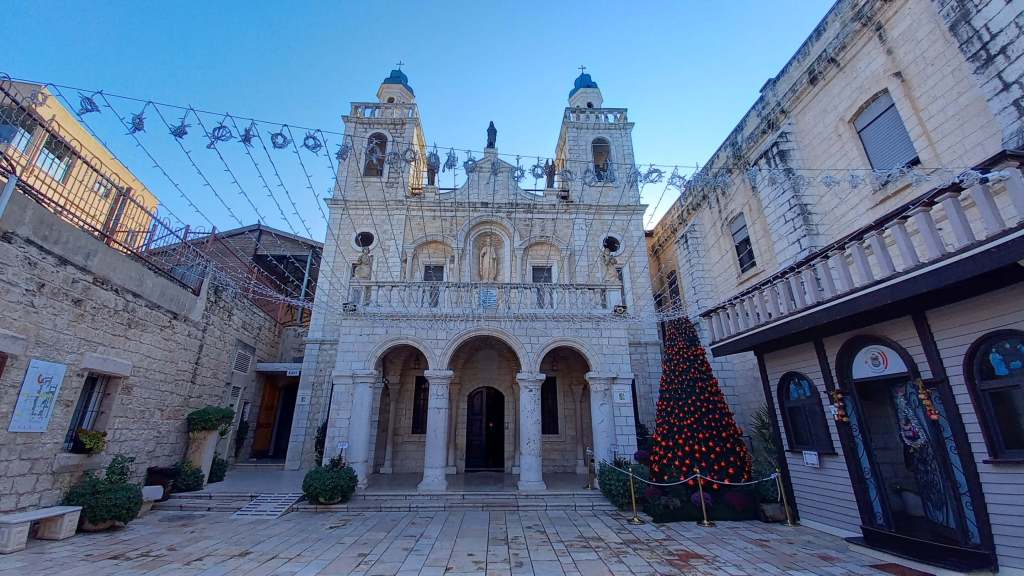
First up was the Cana Catholic Wedding Church, a Franciscan church built upon the said location of Jesus’ first miracle in the biblical town of Cana, or Kafr Kanna as it is known today. This is where it is written that Jesus turned water into wine when the wedding guests had run out of the latter! I love this story, as to me it shows that even Jesus saw the importance of merriment and having a good time in one’s life!
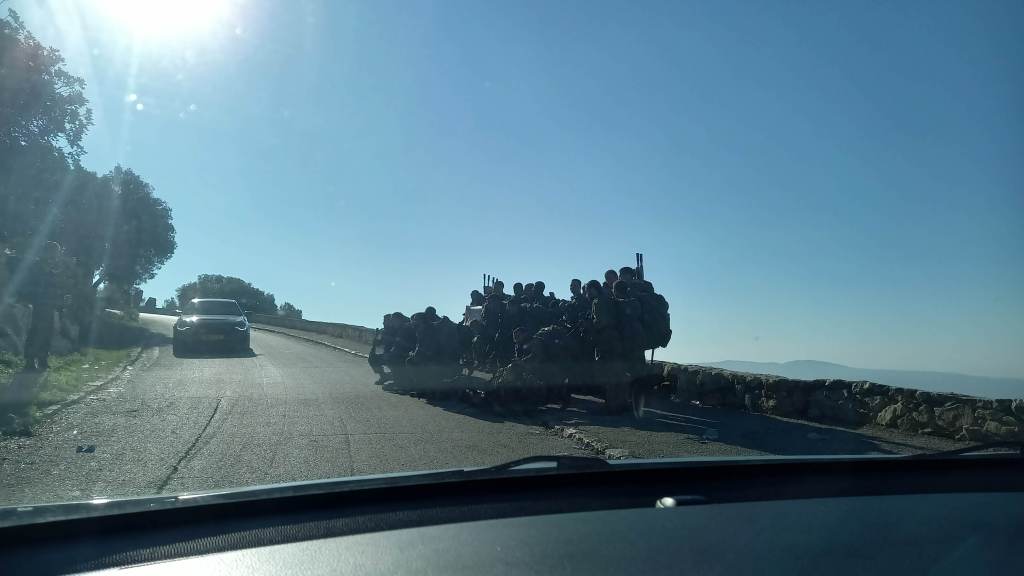
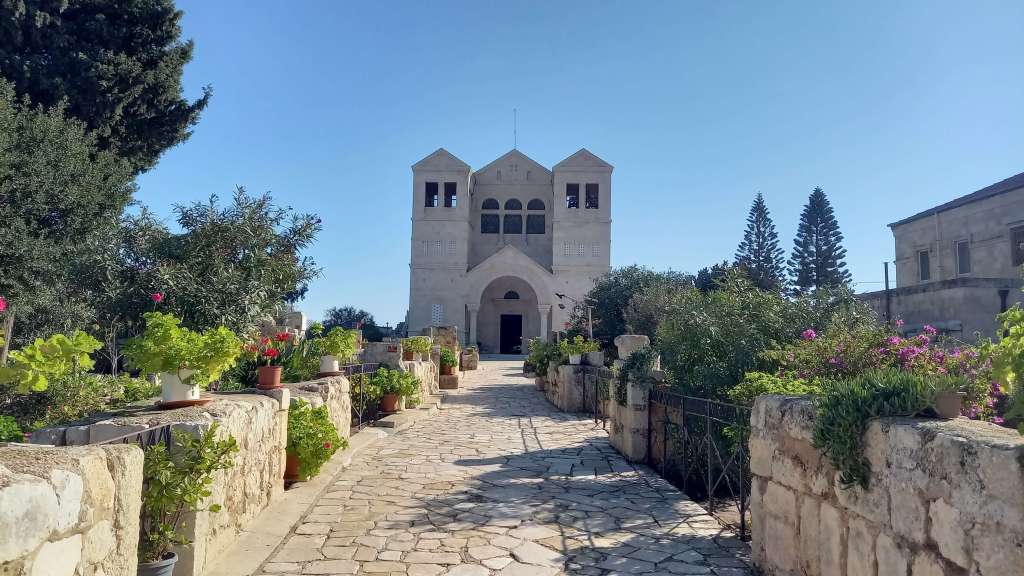
Next was a drive up nearby Mt Tabor, encountering at least a hundred armed Israeli soldiers on their way down as I was driving up. It seemed they were possibly on some kind of training expedition, and while most returned my waves and smiles, it was a little unnerving I must say! Mt Tabor is the place where Jesus is said to have changed into his divine form in front of his disciples Simon Peter, James and John, while Moses and Elijah appeared alongside him. It would have given the disciples a glimpse of who Jesus really was. The Franciscan-run Church of the Transfiguration at the top was beautiful and serene, with awesome views over the region of Galil below, as it is known in Hebrew, and as with many of the places visited on this day, I had the whole place to myself.
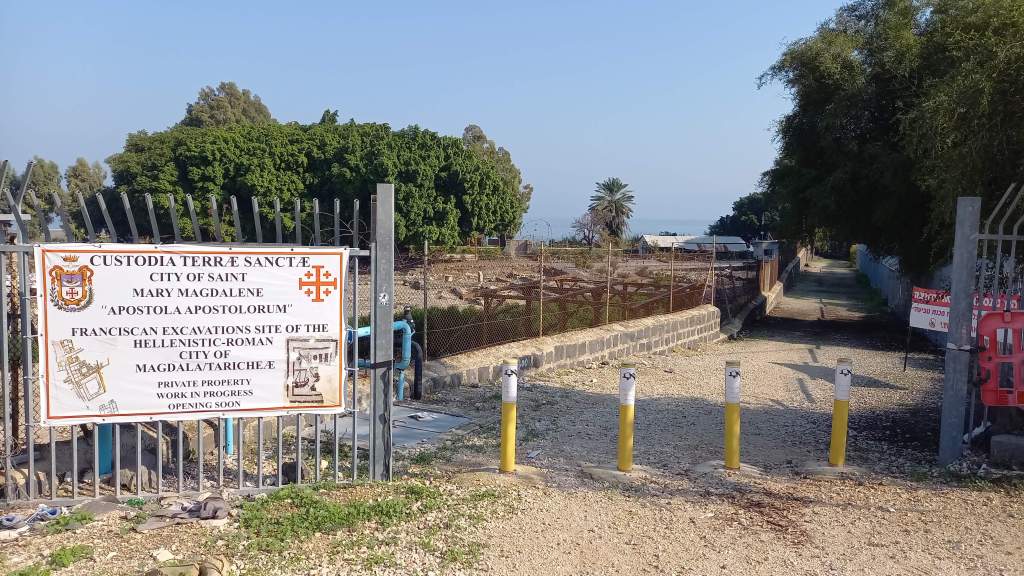
After this I drove to the Sea of Galilee itself, to begin my circumnavigation of this small 64-square mile lake around and upon which Jesus spent much of his time in the Gospels. I drove straight through the region’s main town and tourist centre, Tiberias, as I wasn’t looking for busy-ness or crowds on this day. My first stop was at the ancient ruins of Magdala, to take a few pictures from the outside rather than going inside, though much of it seemed closed for works anyway. This is where Mary of Magdalene came from, one of Jesus’ female followers and the first to have apparently seen the resurrected Jesus.
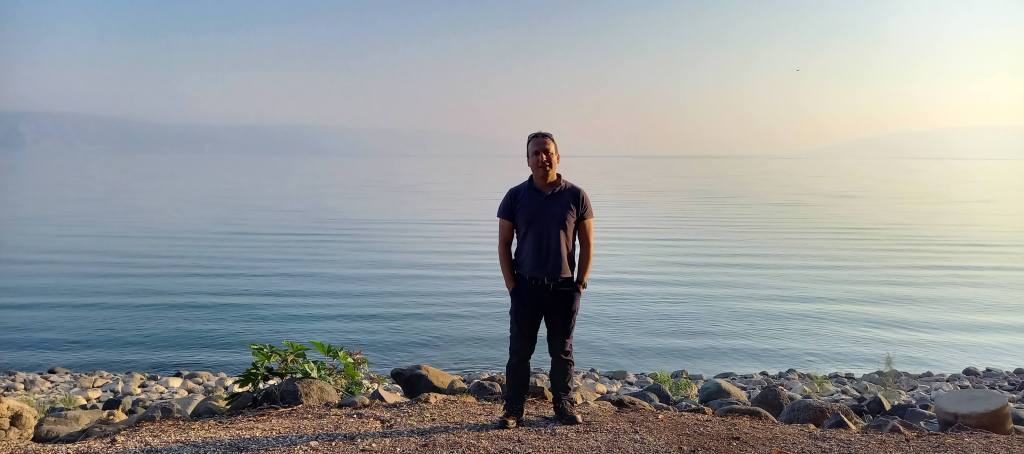
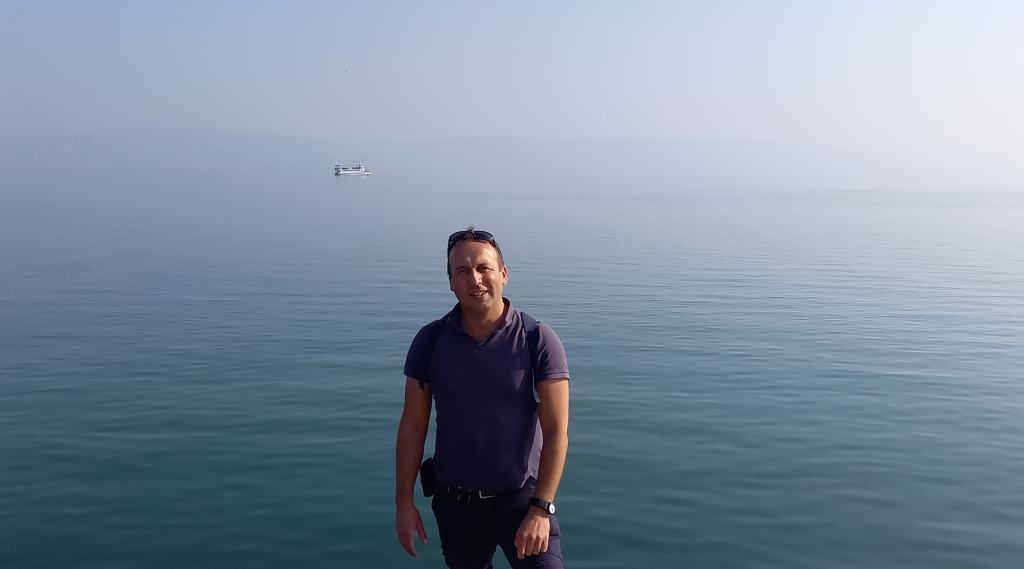
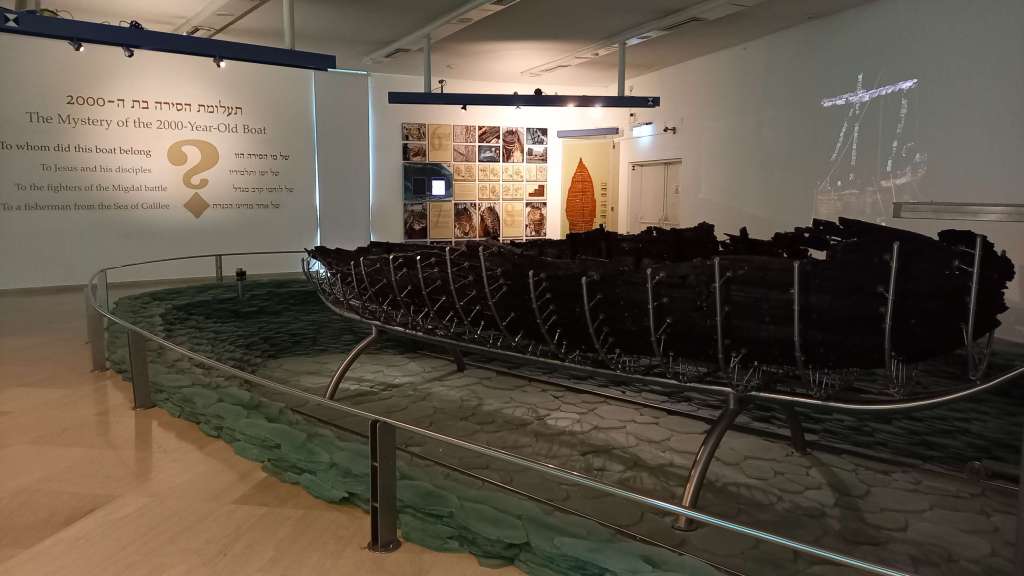
Then it was on to the nearby Yigal Allon Centre, a working kibbutz on the shores of the lake, housing an ancient 2000-year-old Galilean boat only discovered in 1986. I wanted to see what a typical Sea of Galilee fishing boat would have looked like in Jesus’ day, and this was indeed one of them. Who knows, it could even have been the one which Jesus got into when he first met Simon Peter, the one in which he calmed a storm, or from which the disciples saw him walking on water! I had my first views and walk along the shore of this beautiful and highly signficant lake there, and it was just completely mesmerizing. The waters were so still and so blue, reflecting the blue sky above, surrounded by surprisingly green hills. It felt more like being in pastoral lands somewhere in Europe than the mostly-desert of the Middle East. I guess the ancient Israelites didn’t call it the Land of Milk and Honey for nothing, probably comparing this green and fertile little slice of the Middle East to their experiences of desert living and travelling through Egypt and Sinai on their way back to the Promised Land.
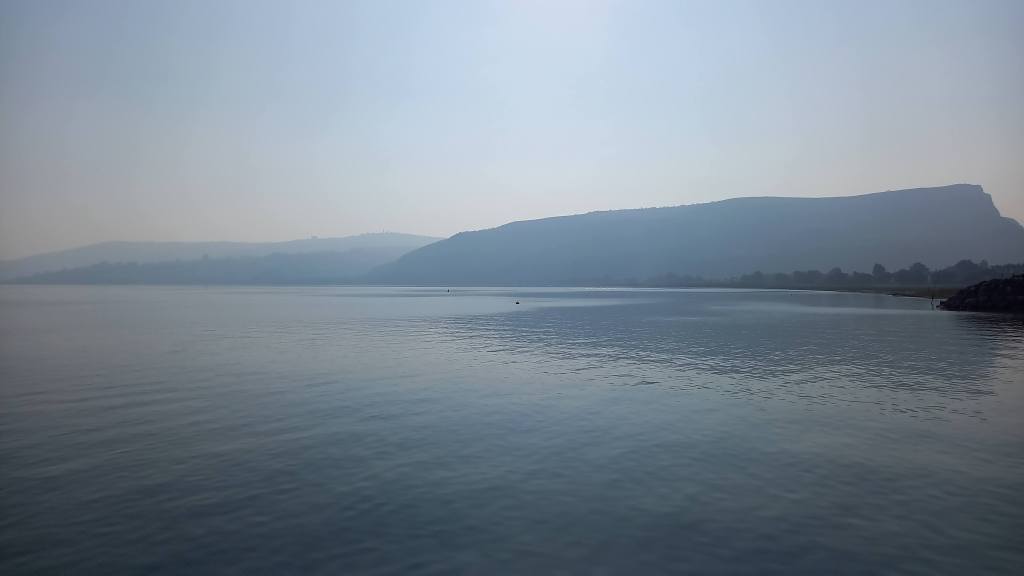
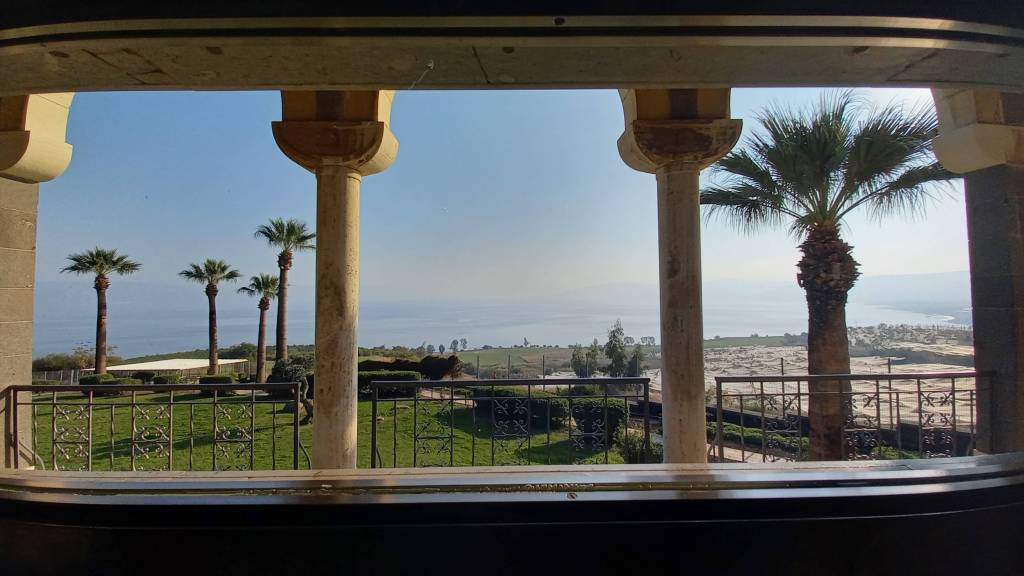
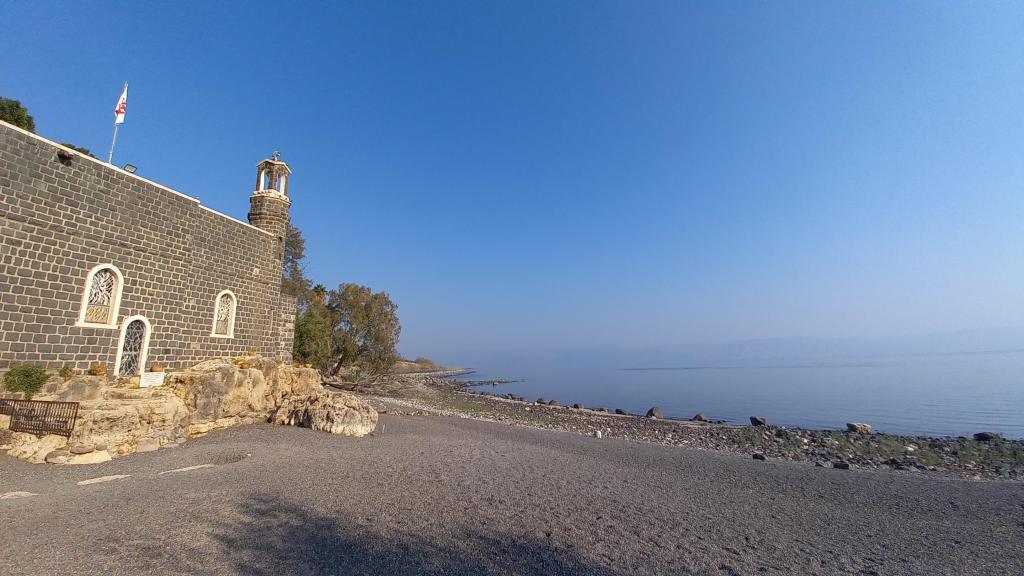
Next was an area known as the Tabgha Churches, situated on the north-west shore of Lake Galilee and whose name derives from an Ancient Greek word meaning “seven springs”. It is composed of two main sights. The first one I visited was the Benedictine Church of the Multiplication of the Bread and Fish, built around an altar itself constructed atop a rock said to be where Jesus fed the five thousand with just five loaves of bread and two fish. After, the Franciscan Church of the Primacy of St Peter a short walk away, built upon a rock where Jesus is said to have shared food with his disciples and named Peter as his successor, the rock upon which he was to build his church. Alongside this small Church are a series of ancient steps whence Jesus is said to have called his first disciples, the fishermen Simon Peter, Andrew, James and John, to become Fishers of Men – I love that! There were once again great views there over the still waters of the lake.
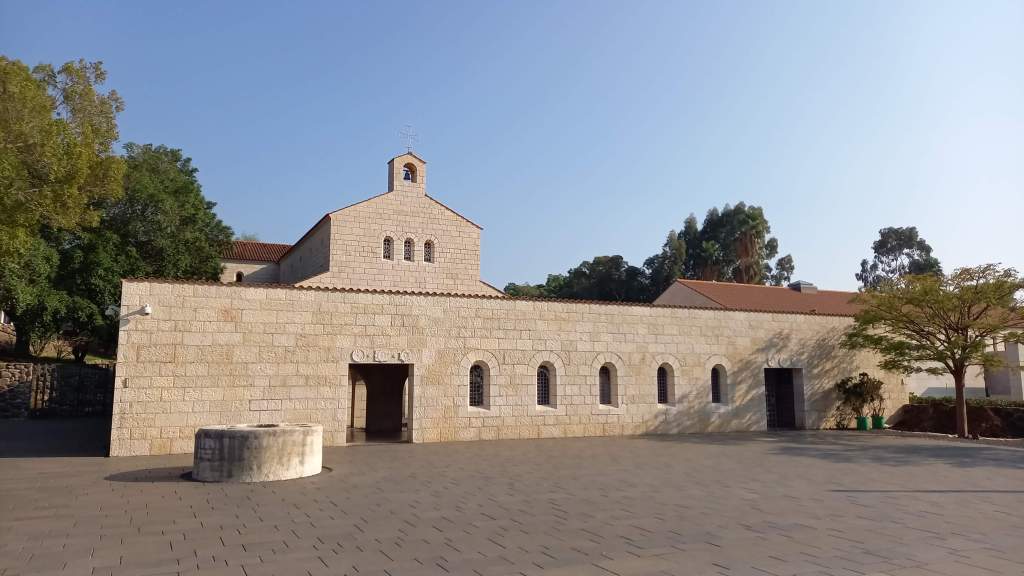
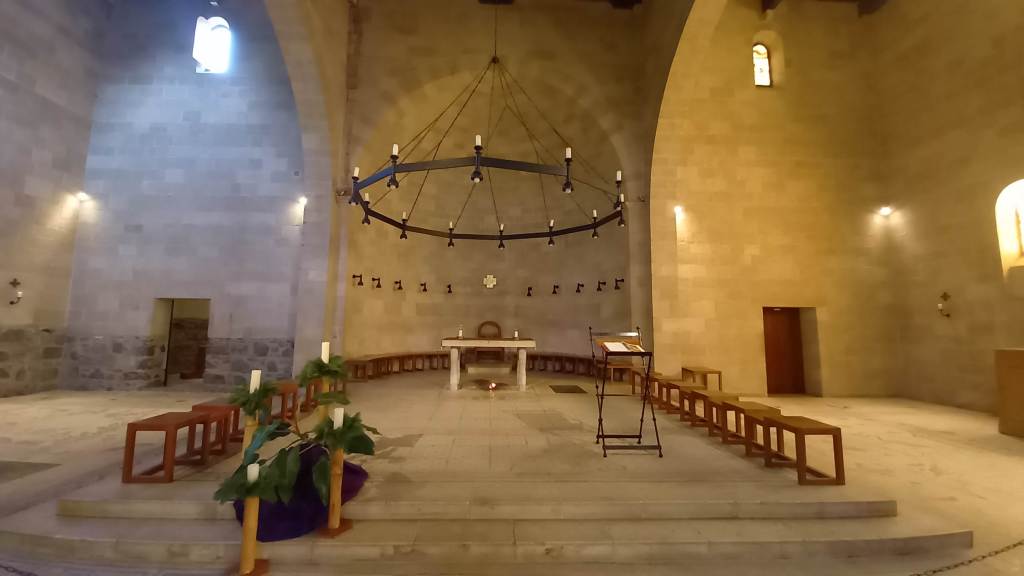
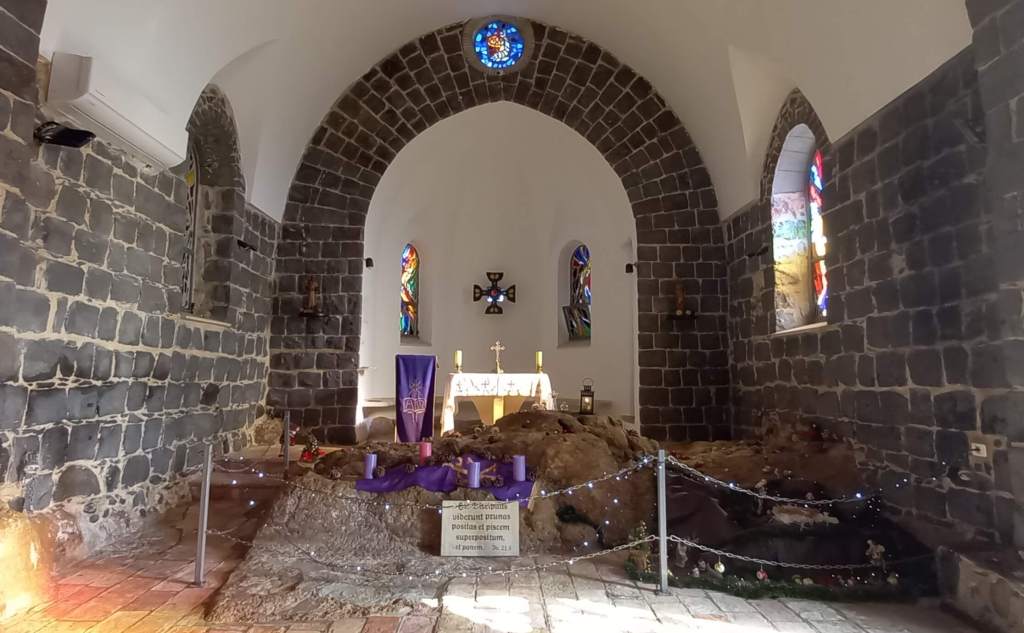
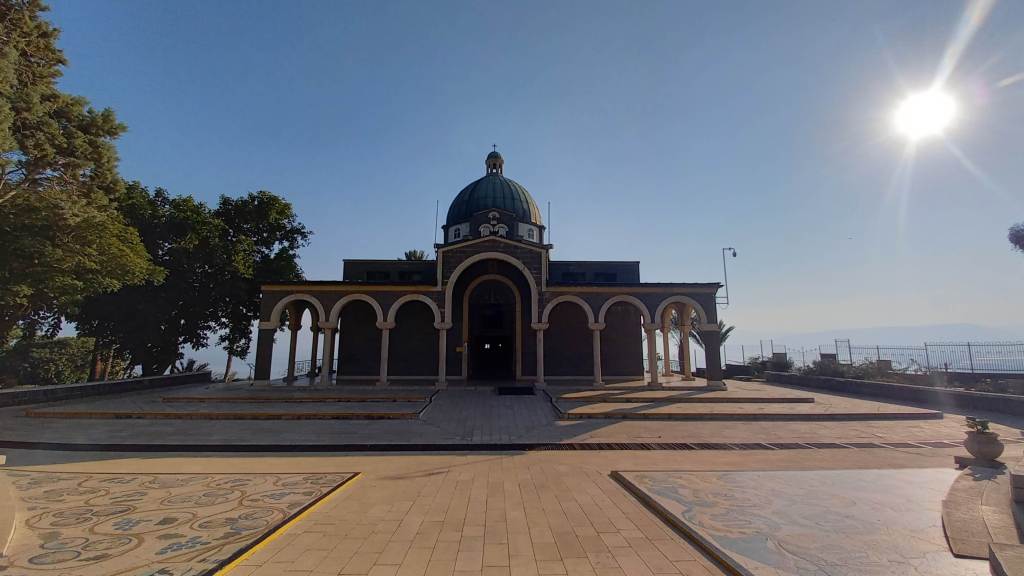
I then drove up to a nearby hilltop church called the Church of the Beatitudes, said to be from where Jesus preached his very famous Sermon on the Mount which is believed to be a comprehensive summary of the principle foundational teachings of Christianity. Famous Christian phrases such as “turn the other cheek”, “love your enemies” and “the blind leading the blind” originate from this Sermon, as do the “beatitudes” which proclaim who the blessed ones are: blessed are the peacemakers, for they shall be called sons of God; blessed are the poor, for theirs is the Kingdom of Heaven.
I then drove back down again onto my final stop for the day, Capernaum! Jesus is said to have stayed there at the house of his disciple St Peter, and thus many stories from the Gospels happened there, including the healing of the paralysed man, the healing of the Centurion’s servant, and arguably one of his greatest miracles, the bringing back to life of Synagogue leader Jairus’ daughter.
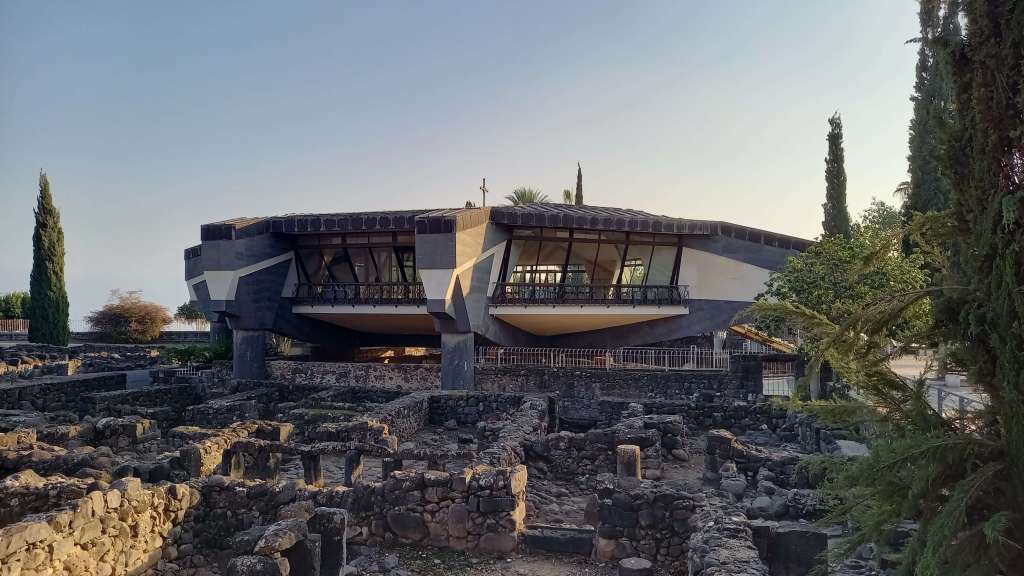
Capernaum felt special – on the one hand, just another ruined Roman town, one of many I’ve visited in my lifetime, but on the other, the actual home of Jesus himself, who of course once lived in a Roman town. Once more there were stunning views over the tranquil shores of Lake Galilee, as well as the remains of an ancient Synagogue that Jesus is said to have preached from. Perhaps the most incredible sight there for me was the rather incongruous UFO-shaped St Peter’s Church, architecturally built to hover over the remains of St Peter’s house and Jesus’ temporary lodgings below, which could be seen through an open glass window in the middle of the church floor. I don’t think I’ve ever seen a church, or even a building, quite like it.
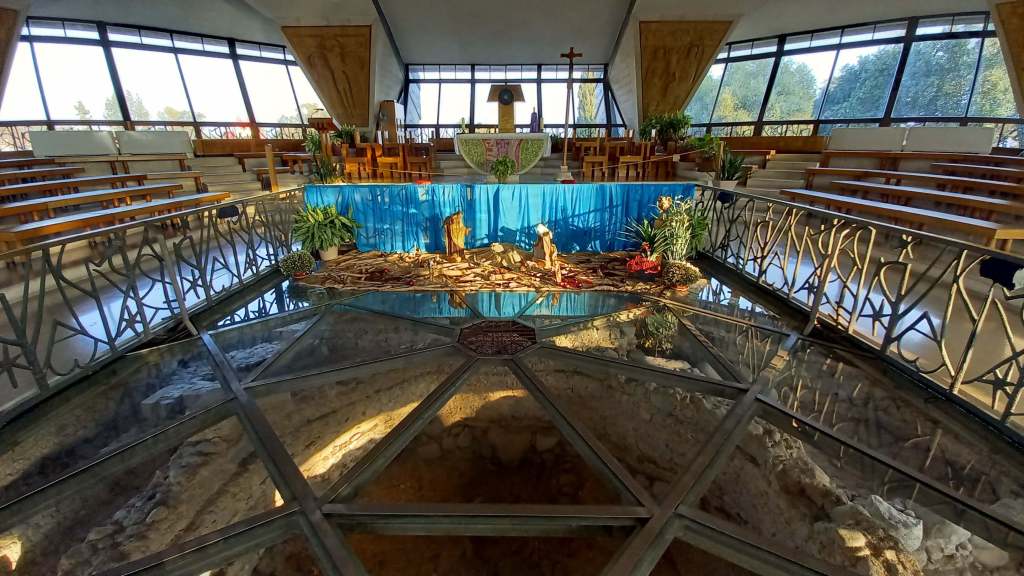
I imagined that during tourism times, Capernaum and the church would be filled with visitors, hundreds and thousands of Christian pilgrims. Both here and at the Church of the Beatitudes, there were several gathering places with simple seats and benches around altars, set aside for visiting church groups with priests to conduct their own services there. None of course were in use, and I shared Capernaum with at most five other people.
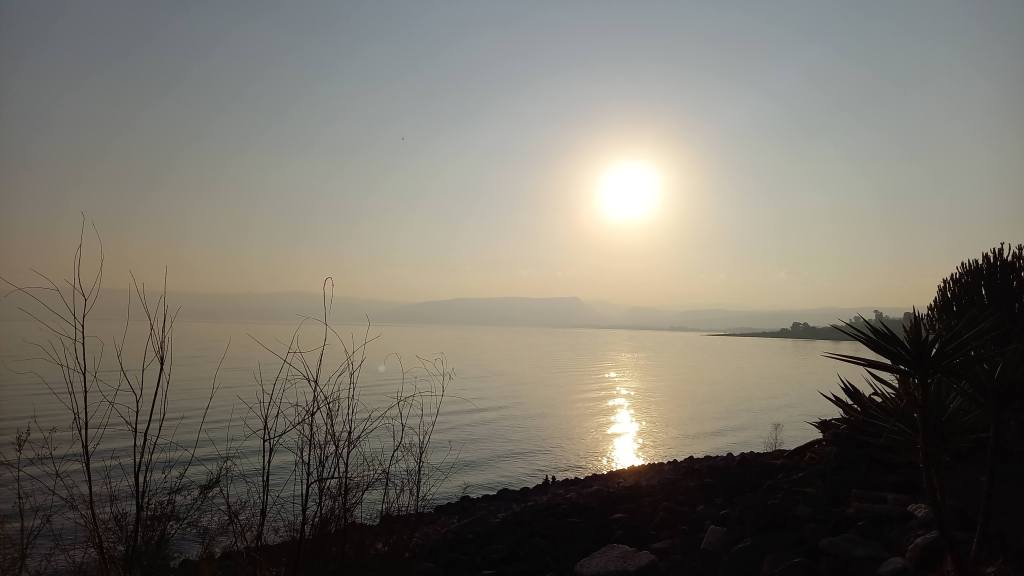
Heading back to Tiberias to complete my clockwise circumnavigation of the Sea of Galilee, I picked up one of them – a fellow traveller, a fascinating Jewish lady from South Africa currently living in Israel, to take her back to the town faster than if she had waited for the bus. It was great to talk with her, and we shared so much in common it was amazing – her mother came from Sheffield, and we both studied at the University of London at the same time, amongst other things including a variety of shared beliefs and opinions on the world today.
As we rounded the lake, I stopped by at a location on the lesser-visited, both in Jesus’ day and today, east side of the waters. This was at the Kursi National Park, which was closed as it was past their opening times, but I still wanted to take a quick look-see and a picture, as it is the place where Jesus is said to have healed a local man named Legion, or Mob. Thus called as he had so many demons inside of him. Jesus cast the demons out, who entered a nearby herd of pigs, who then went crazy and jumped off a cliff to drown in the Sea of Galilee. Rather strange, this is actually one of my favourite stories in the Bible. I imagine it must have been pretty intense to witness at the time, but honestly speaking it does sound rather hilarious now…
Dropping the South African lady off in Tiberias, I continued alone back to Nazareth, for some more delicious Arabic food prepared by the nuns. They certainly didn’t let me go hungry there, and I was thinking they may have to roll me away the next morning! It was then a chilled evening with that awesome view once more over Jesus’ hometown, stars in the sky and lights-a-twinkling, after another absolutely amazing day in the holy land of Israel.
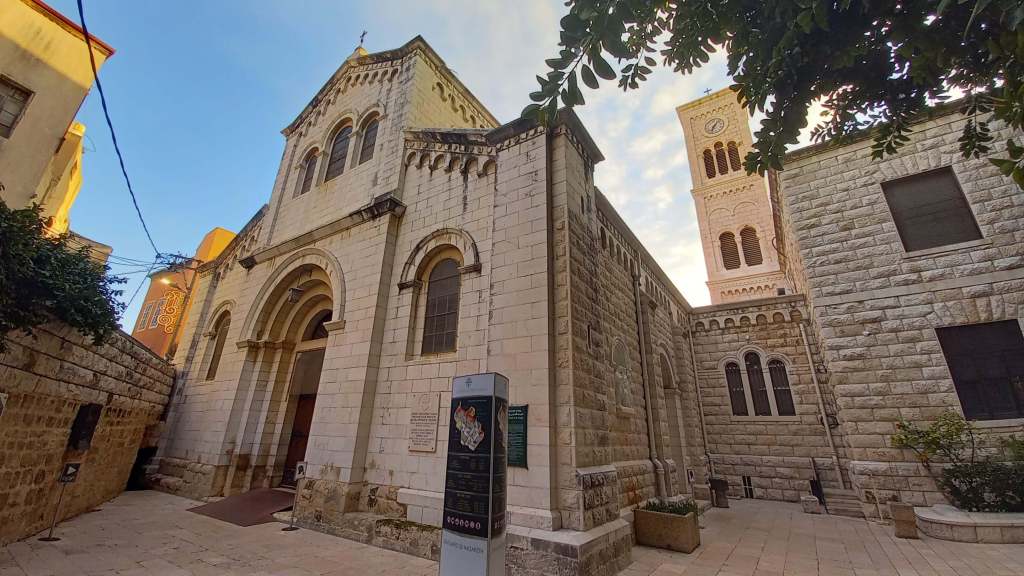
Before checking out of the convent the next morning, I awoke early again to attend the 7.15am mass down in St Joseph’s Church in the old town of Nazareth. It was a short ten minute walk downhill, and the city was glowing, bathed in the beautiful dawn light which accentuated the sandy colours of the buildings. St Joseph’s Church is said to have been built atop Joseph’s carpentry shop, where undoubtedly Jesus would also have learned this trade before he began his mission. This was another mass in Arabic, which I found just fascinating.
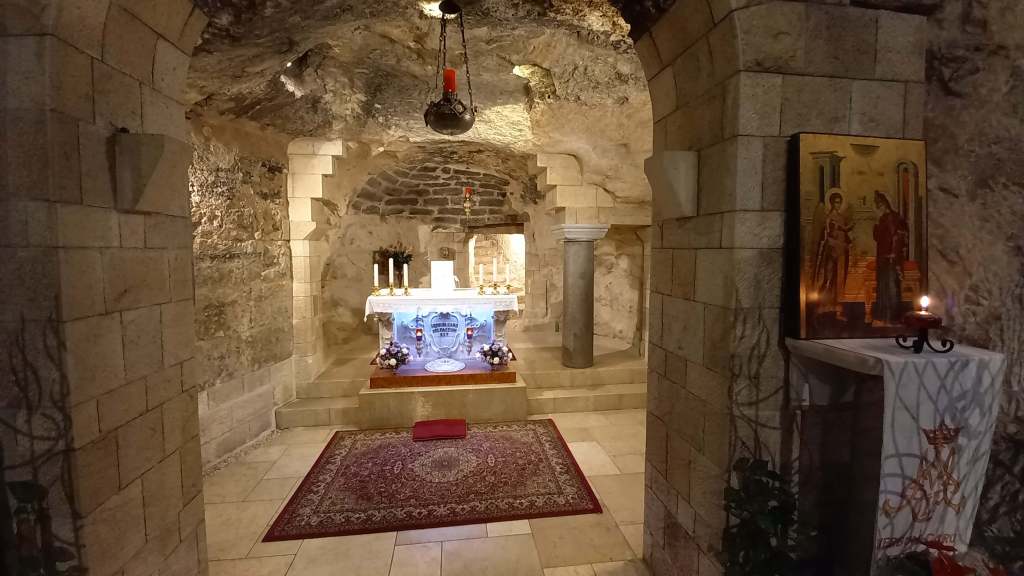
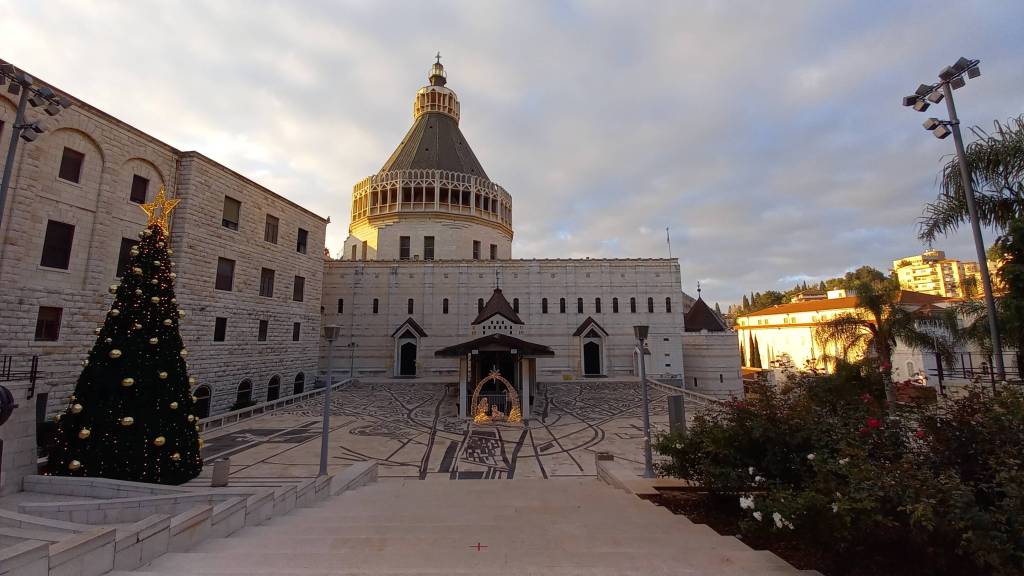
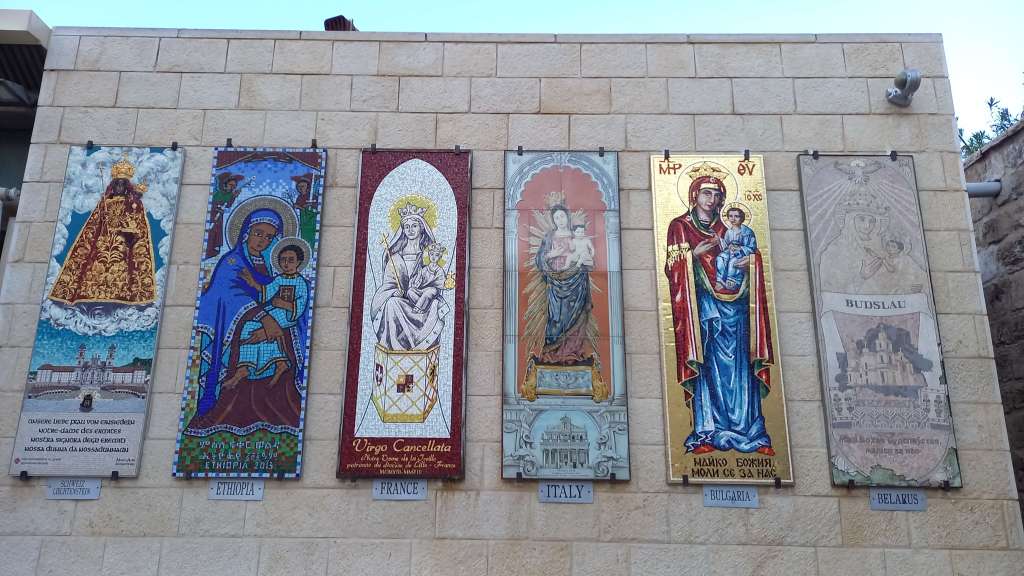
I then explored the magnificent Basilica of the Annunciation nextdoor, and the Grotto below where the annunciation is believed to have taken place. This is when the Angel Gabriel appeared to Mary, to tell her that she was to become pregnant by the Holy Spirit, and which she accepted. While loving being in once again such a spiritually significant place for my faith, I just marveled at all the many, stunning and unique architectural styles of the churches throughout the Galilee region. There is clearly some money being pumped in there. A key feature of this one were the dozens of very unique mosaic panels depicting Mary and the baby Jesus in so many different styles displayed all around the basilica and its grounds, clearly reflecting the great variety of the 50 or so countries from which they were donated. What a universal religion, and it does my heart good to see so many diverse peoples and communities throughout the world share this common faith and its beliefs.
After the steep uphill walk back through the narrow alleyways and steps of Nazareth, and another filling breakfast at the convent, I packed my bags and resumed my road trip again. I was sad to leave such a special place, and those sisters had certainly looked after me! I was not so sad to leave the roads and driving of the rather chaotic modern parts of this city behind.
I had had an incredible time in the Galilee, visiting places where stories which are engrained into me through my childhood, Christian life and faith, and school teaching, actually took place. As mentioned before, literally walking in the footsteps of Jesus.
After Judaism, Islam and Christianity, I was now heading to the more secular side of Israel – to Tel Aviv, its metropolis, the economic and political powerhouse of this remarkable little country. I was also planning to stop off in a few places along the way, and will relate these final few days in Israel in my next.

 Alex Waring's Travel Blog