15th February 2026
It seemed I had hardly returned from Israel and Hamburg, before the February half-term arrived and I was off on my holidays again! This time I was heading to my last country in Europe. Yes sir, I have now ticked off every single one of the 44 European countries with this my visit to the latest addition of Moldova! As my brother told me, I have now completed my Europe jigsaw, and have also reached country number 104!
My flight there was good, from Stansted Airport with Moldovan budget airline HiSky, though in fact we were flying with an aeroplane leased from SkyUp. SkyUp is actually a Ukrainian budget airline, but since February 2022 no commercial flights have been able to operate to, from or within Ukraine for obvious reasons, and in fact a number of Ukrainians now travel to Ukraine via neighbouring countries such as this route to Moldova. What struck me the most was the friendliness and chilled vibe to the Moldovan passengers, and I understand that many of them would also have been Ukrainian people going home by connecting to overland buses from the airport to the cities of Odessa and Kiev. There only seemed to be one other British chap, and I quickly realised that I was travelling off-the-beaten track, although the dearth of any travel guides to the country in finding pre-trip reading already made me aware of this – my favourite kind of travelling, yay!
My day tour guide the next day in fact told me that there were an increasing number of travellers like myself now flying these increased routes to Moldova due to the Ukraine war, and thus one of the unintended side-effects of this protracted conflict has been increased international tourism to Moldova. This last year he said has been the biggest year for tourism in the country, and it seems it may soon take off – as usual, I’m glad I visited before it does!
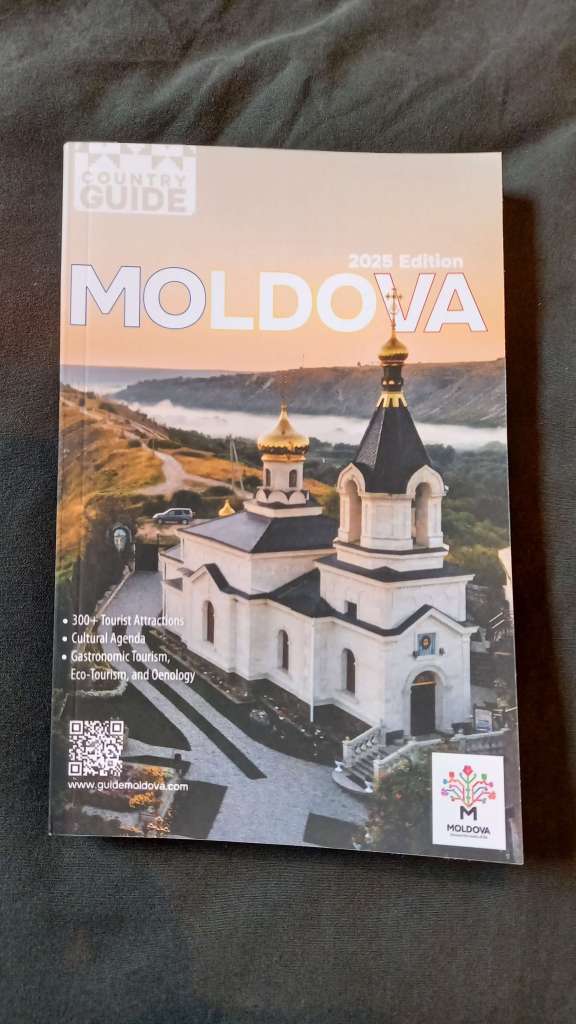
To be honest, and along with a great many people reading this I’m sure, I knew very little about Moldova, Europe’s least-visited country, before my trip. Sandwiched between Ukraine and Romania, it seems to be influenced by both. Moldovans are a mix of Romanian more olive-skinned people and Slavic East European people. And I don’t think I even knew it existed as a country until maybe 20 years ago, when I first noticed it performing in the Eurovision Song Contest! It seems to have produced some really cool songs over the years, by the way (check out Natalia Gordienko and “The Sax Guy”, for instance). I had tried to learn some Romanian on DuoLingo before my visit, but quickly learned whilst there that my pre-existing knowledge of Russian would more than suffice during my week there.
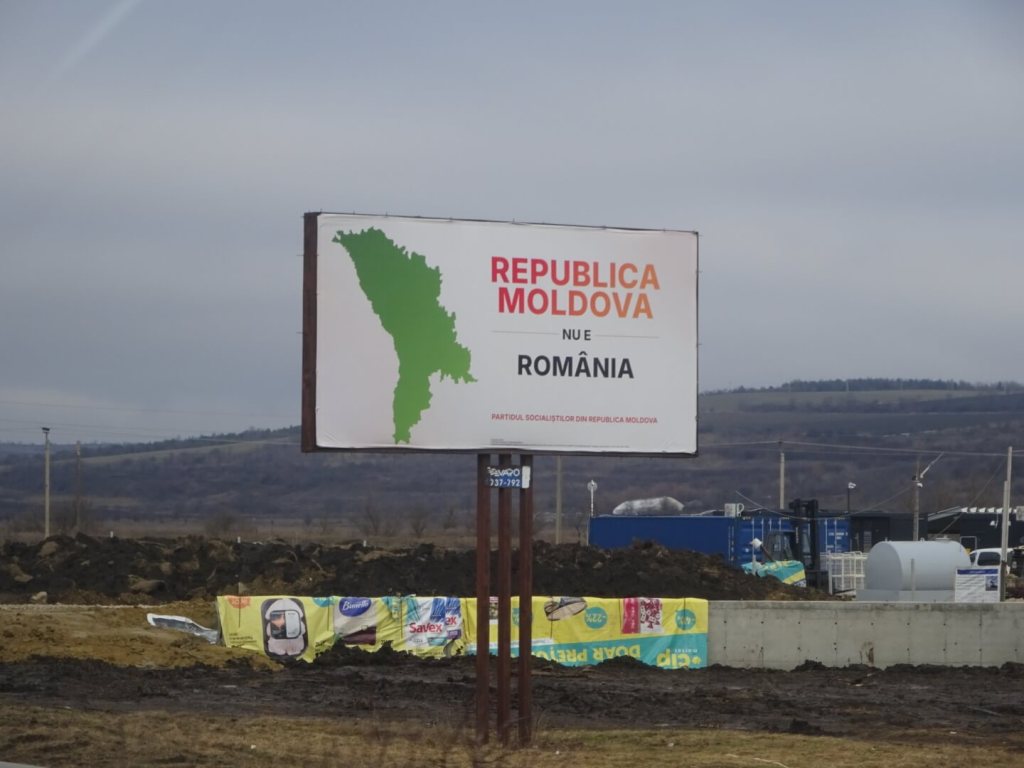
The country has historical ties with Romania as it was once a part of “Moldavia” from the 14th century until 1812, one of the three historic principalities along with Wallachia and Transylvania that today make up this modern state. In 1812, Russia annexed the eastern part of Moldavia between the Prut and Dniester Rivers, at the time called Bessarabia. After World War I in 1918, Romania re-claimed this small portion of land. The Russians reclaimed it again in 1940 during World War II, and joined it with the Soviet Union as the Moldavian Soviet Socialist Republic, one of the USSR’s 15 SSR’s. After the Soviet Union collapse in 1991, it gained its independence, which was followed swiftly by a civil war with the pro-Russian Transnistrian region east of the Dniester River, more on that below. Transnistria is now a self-governing autonomous territory, as well as a separate TCC territory. In the south there is also Gagauzia, the country’s other self-governing autonomous territory with Orthodox Christian people of Turkic origin, which doesn’t owe its existence to a civil war, and is also not a TCC territory. It’s a complicated little place, whose history I only really learned during my visit.
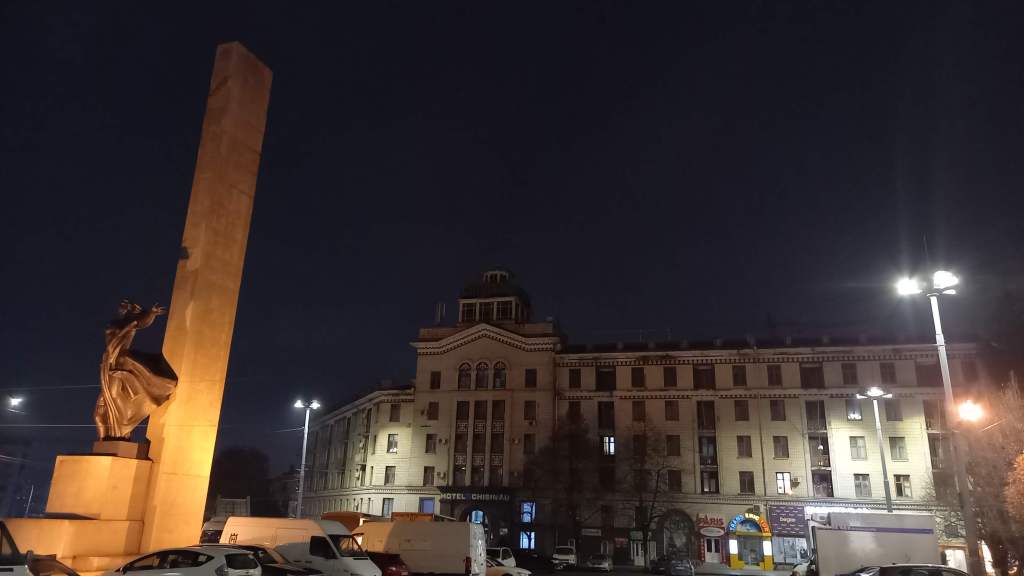
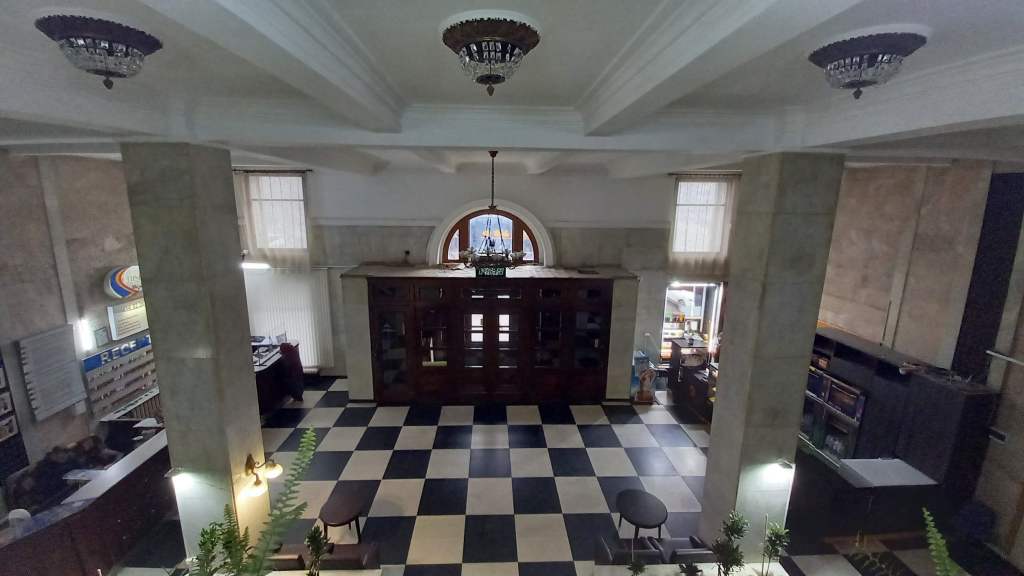
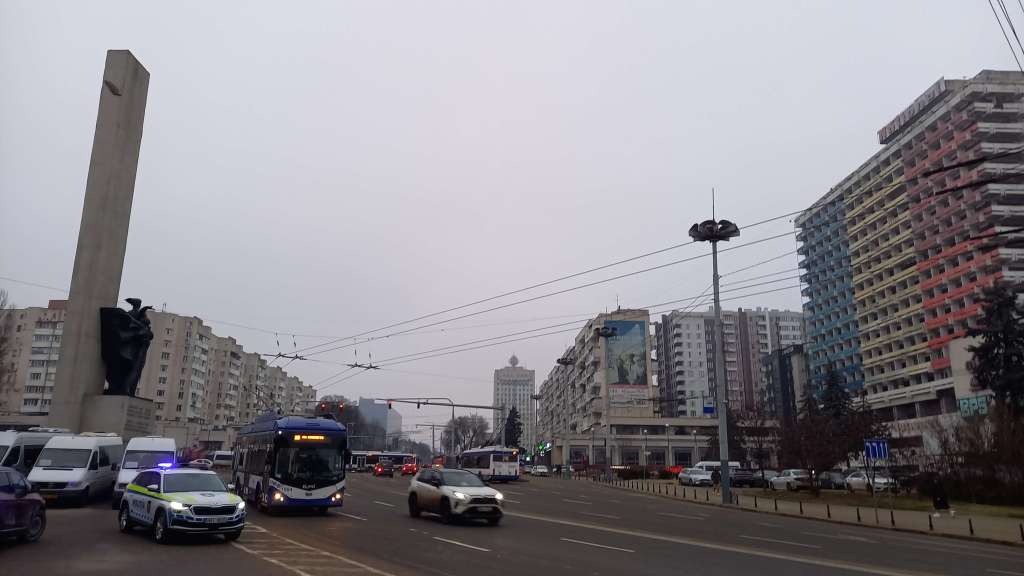
Landing at Chișinău Airport, the air felt immediately frigid at 3°C. Though I was pretty fortunate, as a couple of weeks earlier it had dropped down to -16°C with freezing ice making everywhere pretty much impassable for several days. Passport control was a breeze, and I took the number 30 trolleybus into town – 6 Moldovan Lei, around 25p…! I had a feeling this country would be fairly cheap to travel in, and I wasn’t wrong! I got off at the Ciuflea Monastery stop, to be explored later in the week, and checked in at the seriously old-school Soviet-era Chișinău Hotel just nextdoor. Oh the memories from my time living and travelling in Russia from 2001 to 2002! I loved the place! From the older part-surly part-friendly gentleman on reception, to the huge reception lobby and marble staircase, the carpeted floors, old furniture, bathroom from the last century, and even a box-style, non-flatscreen TV with no working channels, just that fuzzy screen you used to see on them in the old days! The lights were off in half of the corridors across its five floors of rooms, and while I must admit it did feel rather spooky, the place still had a really cosy feel to it and I loved my time there. I stocked up on a few supplies at the very convenient 24/7 mini-supermarket down below, had noodles and olives for dinner, and called it a night. I was so excited to be here, and very content indeed – country number 104, and Europe complete!
For my first two full days on this trip, I was based out of Chișinău and did two separate full day tours to places nearby – I left the exploration of the main city until later on in the week. Both day trips were just fantastic! First up, a jaunt north of the capital to take in some really unique sights up there. It was with a really positive and energetic driver-guide, with my tour mates being a couple from Slovakia and two ladies from Croatia living in Sweden. All were really friendly. We visited the Curchi Monastery, Old Orhei, and the Cricova Wine Cellar.
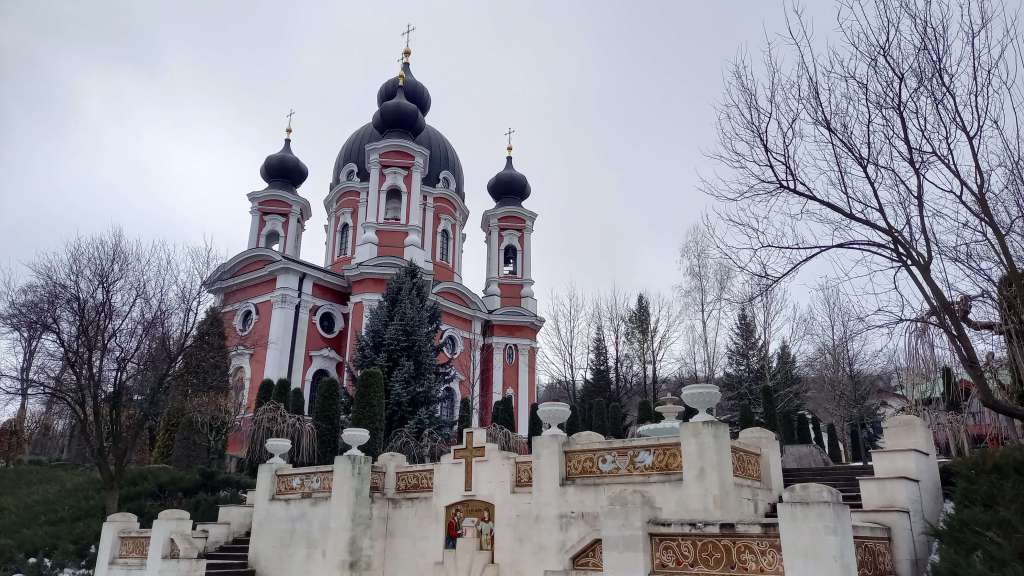
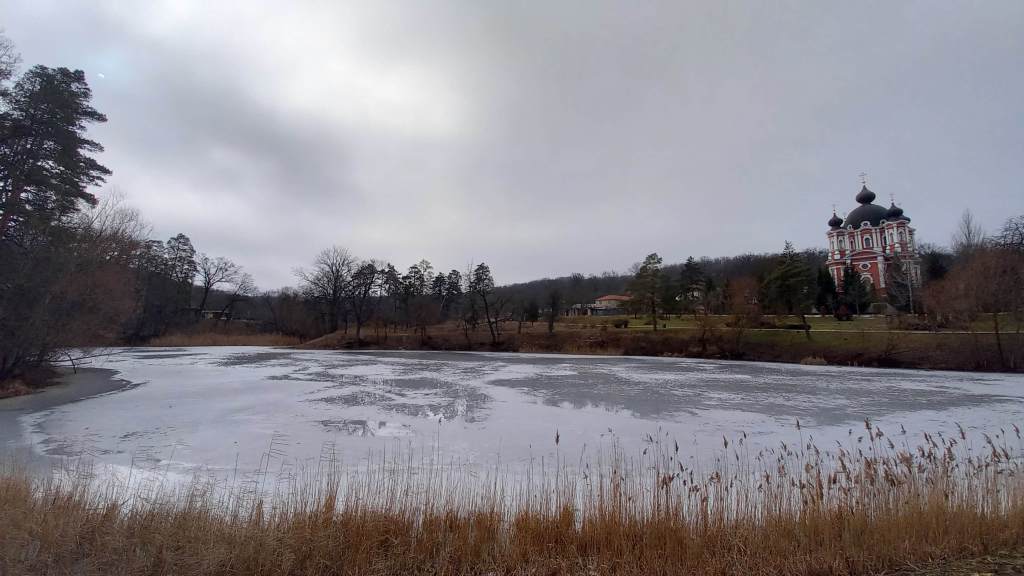
First up was the delightful Curchi Monastery. While the temperature was just above zero, the small lake over which the Monastery looms was still iced over, and with a bit of snow here and there, it made the place seem so magical. I learned lots about Orthodox Christianity from our guide, including that it is believed a sin to sit down during the three-hour services they have, and the few seats that are available are only for the old or sick – call me old, sick or a sinner, but I’m sitting down dude! I also learned that the icon on the right of the row of icons at the front of every Orthodox Church is dedicated to the patron saint of that Church. Here it is Stefan cel Mare, or Stefan the Great, who is awarded that honour, and travelling through Moldova for the whole week I quickly learned that this saint-prince is pretty much the country’s greatest hero – and every country of course needs one!
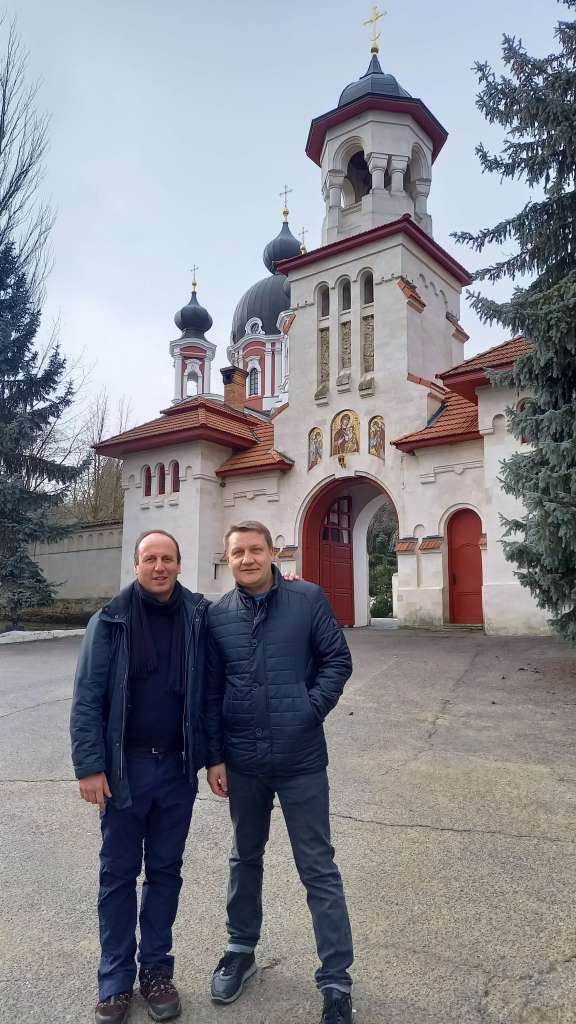
Stefan cel Mare lived in the late 15th century and became a powerful leader of the principality of Moldova, but was only canonised by the Romanian Orthodox Church as recently as 1992. He defended the Christian faith against the invading Ottomans, and is said to have built this monastery along with 42 others throughout the country, each one built after winning one of his many battles. He was also the cousin of notorious Vlad the Impaler, prince of neighbouring Wallachia, and of course the figure behind the legend of Count Dracula. We were told that the more recently-built 19th century main cathedral of the Monastery complex was built by the same architect as the one who had built the Winter Palace in St Petersburg, Russia. While the similarity was indeed notable, a quick Google search later showed me that this wasn’t the case, and I came to wonder how much of what we were told on this day was really that accurate… Ah well, I guess this is how legends are born.
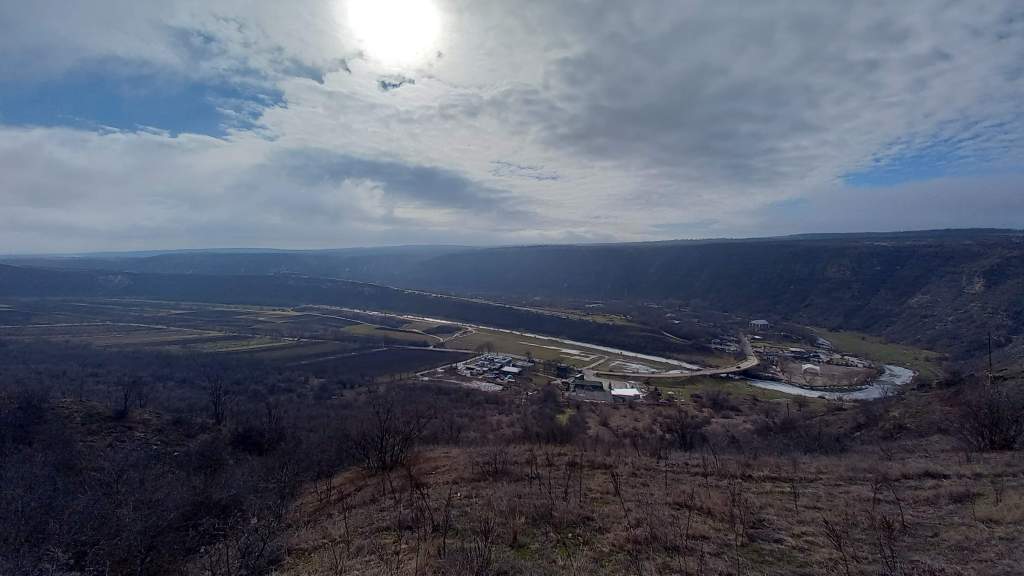
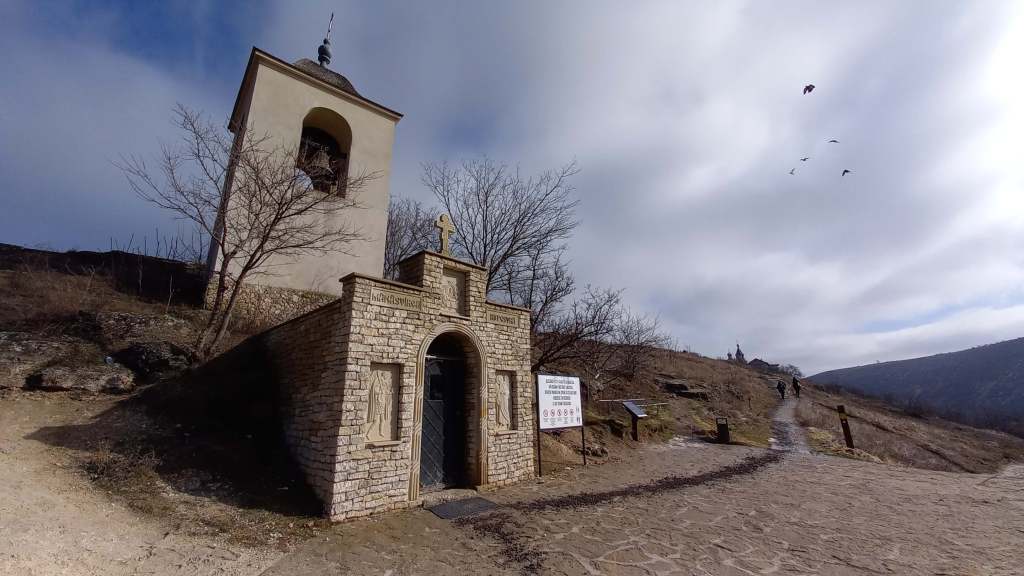
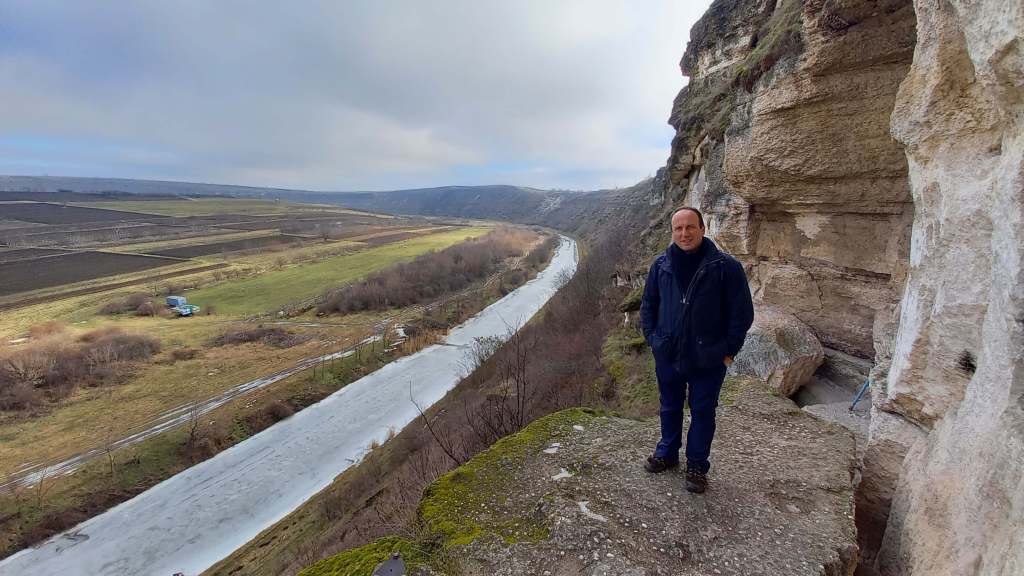
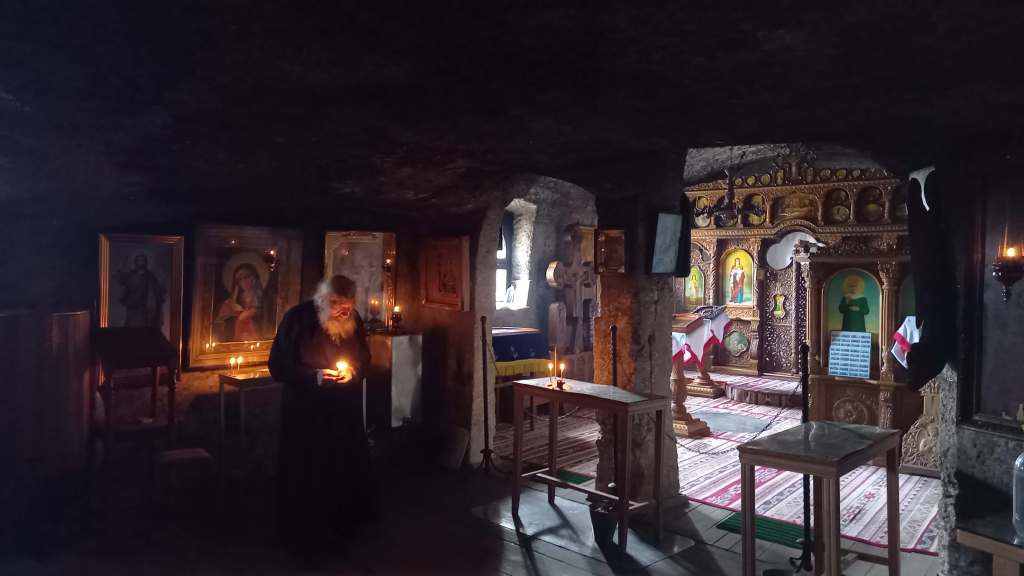
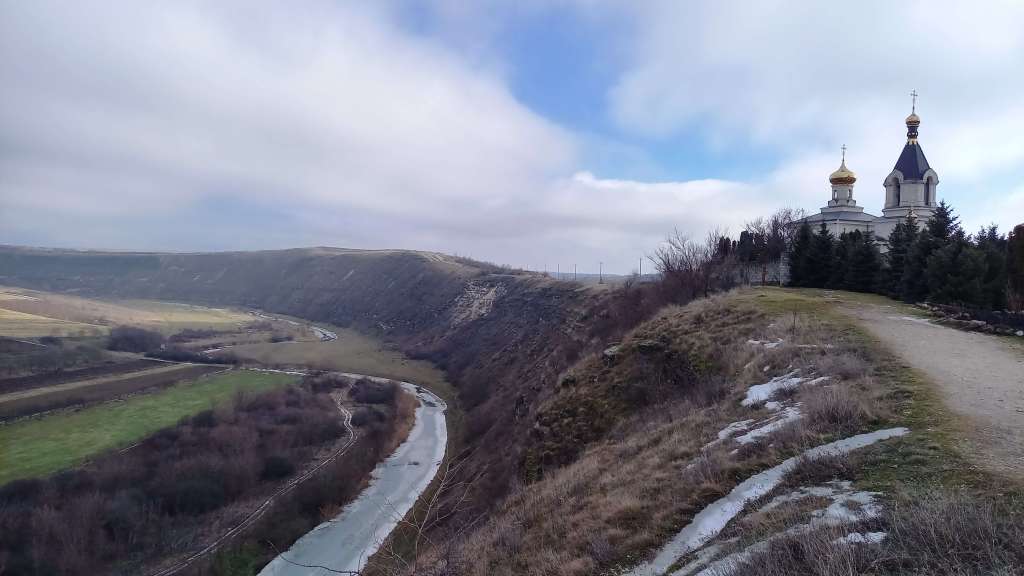
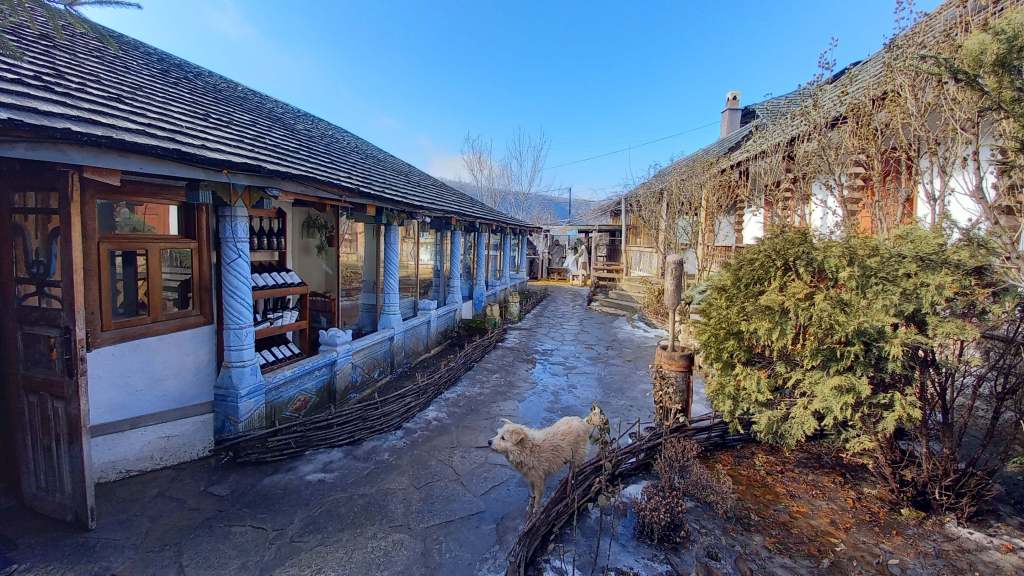
Next was Old Orhei, an absolute delight. Set in a natural fortress-like area of natural protection with looming canyon walls rising up over a river acting as a natural moat below, the 14th century village became a good defensive spot built by the Hungarians to protect initially against the invading Mongols and later the Ottomans. The name Orhei is actually Hungarian for fortress. Today it is a delightful little village to visit as well as the hub of the surrounding Orhei National Park, home to an interesting ethno-museum, and lots of lovely cottages often painted blue. We climbed to a cave monastery dug into the rock face overlooking the protective River Raut below, one of several which were built between the 13th and 19th centuries at a time when the Orthodox Church was persecuted by the invaders, and the monks and peoples sought refuge in them over the years. Today, one of the cave monasteries is still inhabited by a hermit monk, whose cave-home and attached chapel we were able to walk through as well as admire its seriously amazing view over the canyon and river from his “balcony” on the other side. This overlooked the sheer cliff face, which was actually the original entrance to the caves via a series of rock-hewn steps later destroyed in a 19th century earthquake. I bought a very small Orthodox cross from the monk, who seemed a peaceful soul. Though he did quite notably shout at another visitor to remove his hat while inside, I imagine he’s still generally a peaceful soul. We followed our visit with a delicious lunch in a lovely local homestyle restaurant, I had borscht soup and porjoale meatballs.
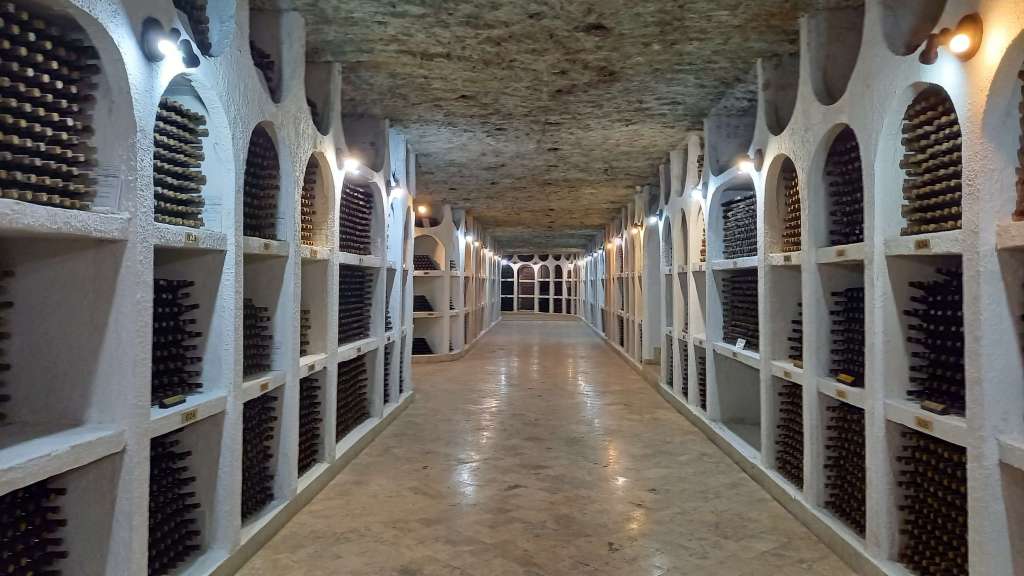
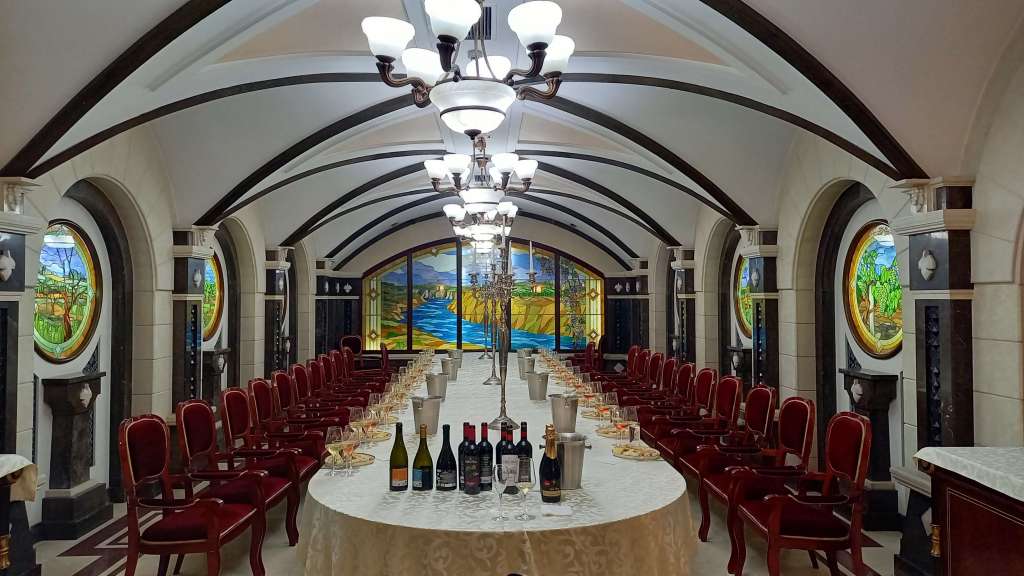
Finally for the day, we headed to the fantastic Cricova Wine Cellar. It was quite the tourist attraction, with toy trains transporting visitors through some of its staggering 110km of underground tunnels under the town of Cricova and its vineyards, which house the wine barrels, bottles and wine-making process. Apparently 30,000 bottles are produced a day during the season! Moldova has a huge wine industry, which used to provide 50% of the Soviet wine supply, but now seems to send its bottles more westwards. While now it was cold during winter, the climate is perfect for wine-growing in the summer, and the land lush, fertile and well-watered. In fact, I learned that wine is so important in the country that it doesn’t count as alcohol! Yes, you cannot buy alcohol (read spirits or even beer) in the country between 10pm and 7am, but you can still buy wine!
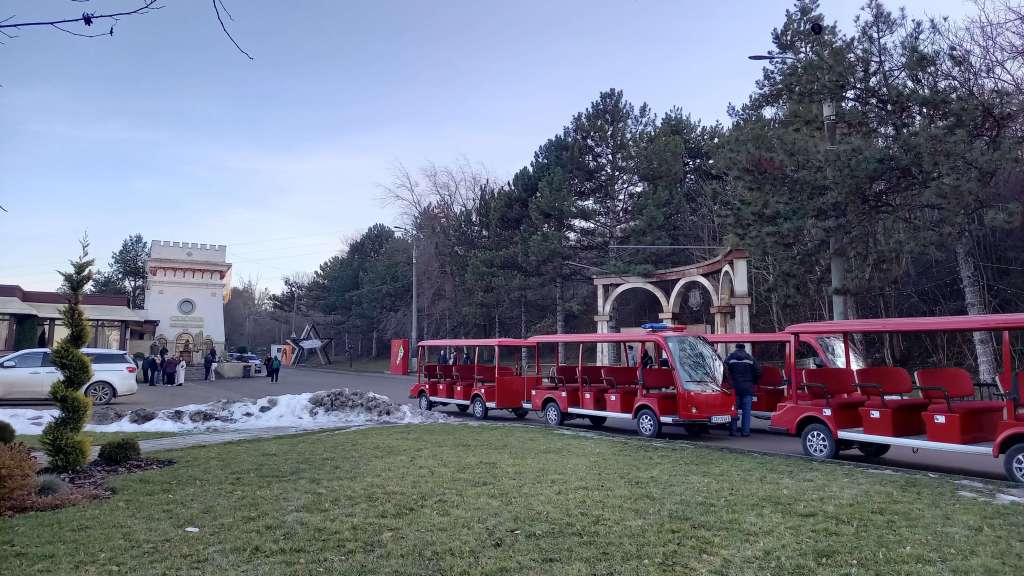
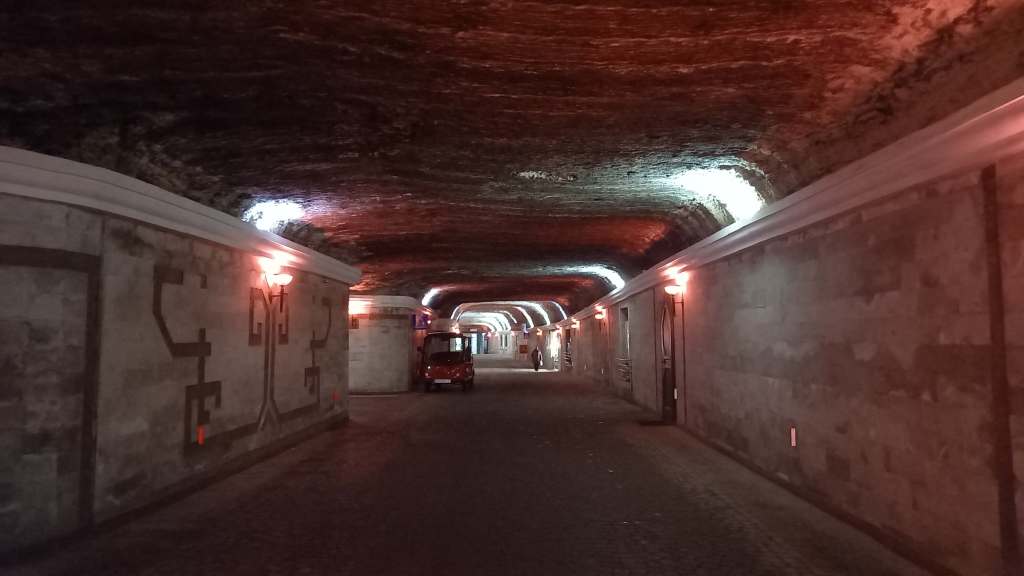
The tour was excellent, the best wine tour I’ve ever done, and we joined the English-speaking tour group boarding a toy train through the tunnels, seeing the barrels, bottles, machines, its special “Collection” wines costing up to $10,000 a bottle, a cinema with an informative short film on the place, a glass of sparkling wine and one of mulled wine, and finally the shop. There I bought a bottle of “Divin”, the Moldovan word for brandy, literally meaning “Heaven” – I couldn’t argue with that! It kept me company on my travels that week. As Louis Pasteur apparently said, a bottle of wine is equal to a book of philosophy – I’m with him on that one! The place was heaving on this day due to it being Valentine’s Day, which they seem to make a really big fuss of in this country, with lots of hearts and cutesy decorations everywhere, and many couple-visitors.
After bidding farewell to my fantastic tour companions and my equally-fantastic tour guide, I was dropped off again back in my hotel for a nice evening in in my very comfortable and functional Soviet-era room, with brandy and noodles for dinner – lovely!
The next day was absolutely amazing, and probably my favourite day on this trip. I did another day tour, and this one to the east, across the Dniester River, to the fascinating non-country of Transnistria. It is in fact known locally as Pridnestrovie, while the former name for it is forbidden in the territory as they equate it with the condescending way the rest of Moldova looked down on its quest for independence during the 1990s. The self-proclaimed territory dates back to March of 1992. Having a pro-Russian, Russian-speaking majority following the break-up of the Soviet Union, as Romanian-speaking Moldova proclaimed independence, Transnistria tried to cede from the newly-formed country of Moldova. Moldova was having none of it, and civil war ensued for just under five months, before the Russians stepped in. They have been there ever since as peacekeepers following the ceasefire agreement of July 1992, though Transnistria has never been recognised by any other country, even Russia itself. Fascinatingly, the two similar breakaway territories of Georgia, Abkhazia and South Ossetia, are the only places that recognise Transnistria, and the recognition is mutual. Many, including myself, look to see what may happen here when the Russia-Ukraine war is over, but for now on this day, it was a seriously fascinating, seriously friendly place.
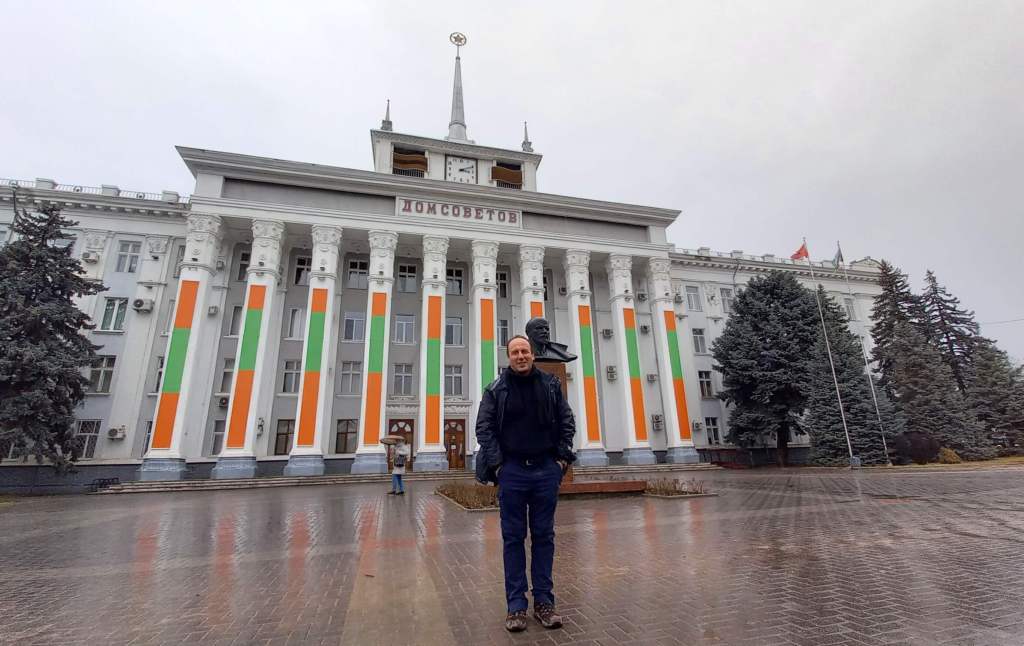
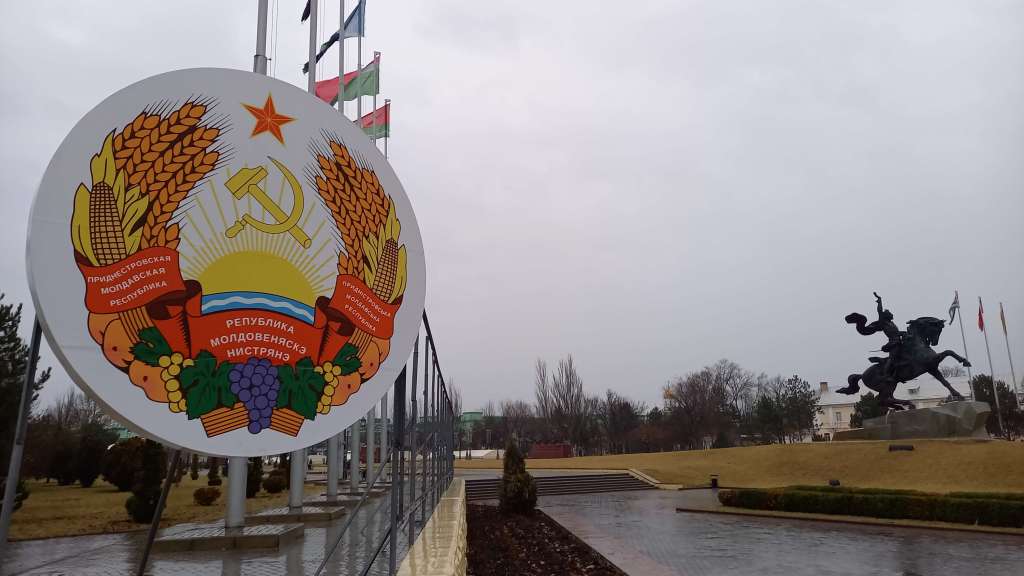
Said to be very much like life and times in the Soviet Union, it also reminded me very much of my year living in Moscow 25 years ago and travelling through Russia. At the time, Russia was still reeling and recovering from the turbulent 1990s, and little had changed since the times of communism. I remember Russia being tough and brutal, and Russians hardened and cold until you got to know them, particularly over a vodka, when they became deep, meaningful, and potentially a friend for life. Transnistria felt very similar, though the main difference was that here the people were already just seriously friendly, without even getting to know them. Another difference since Soviet times is that religion and the Orthodox Church have come to play a much more significant role in life there than it would have done in the days of the USSR, when the church and churchgoers were often persecuted.
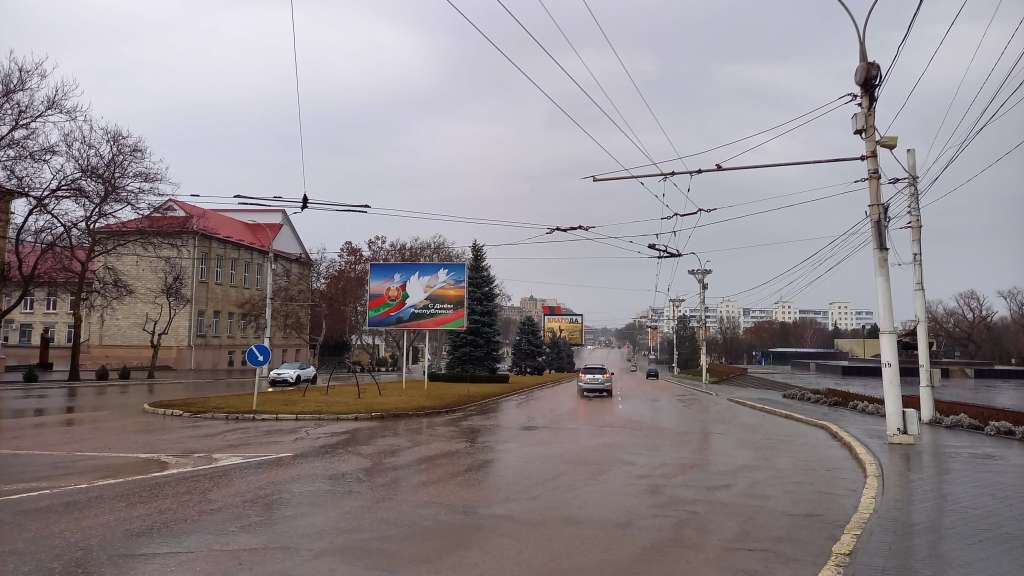
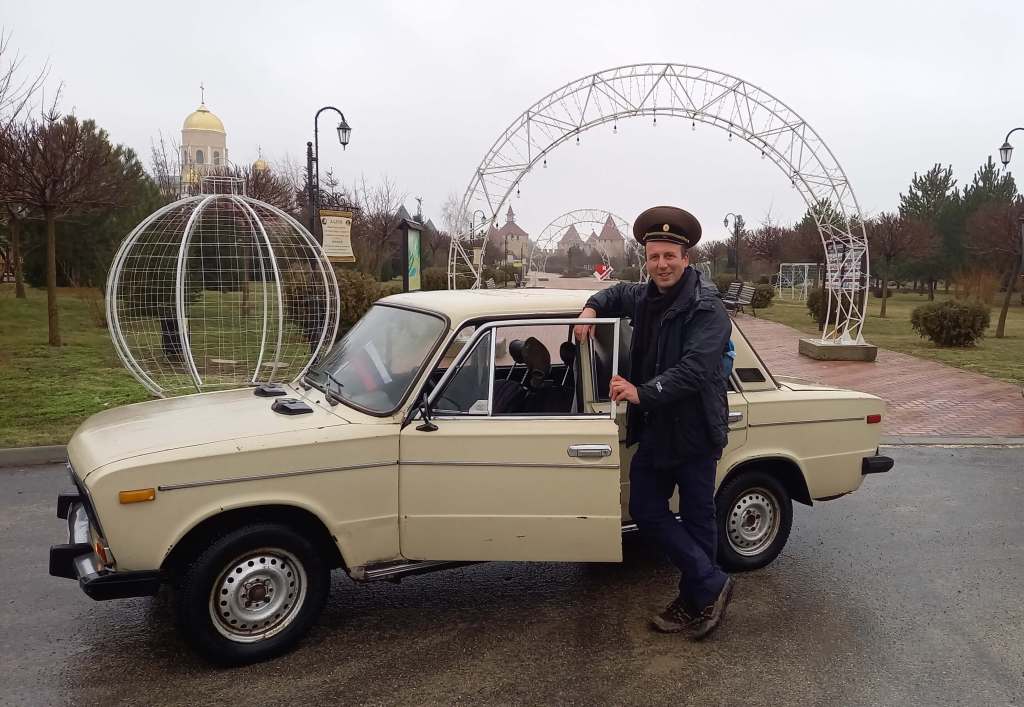
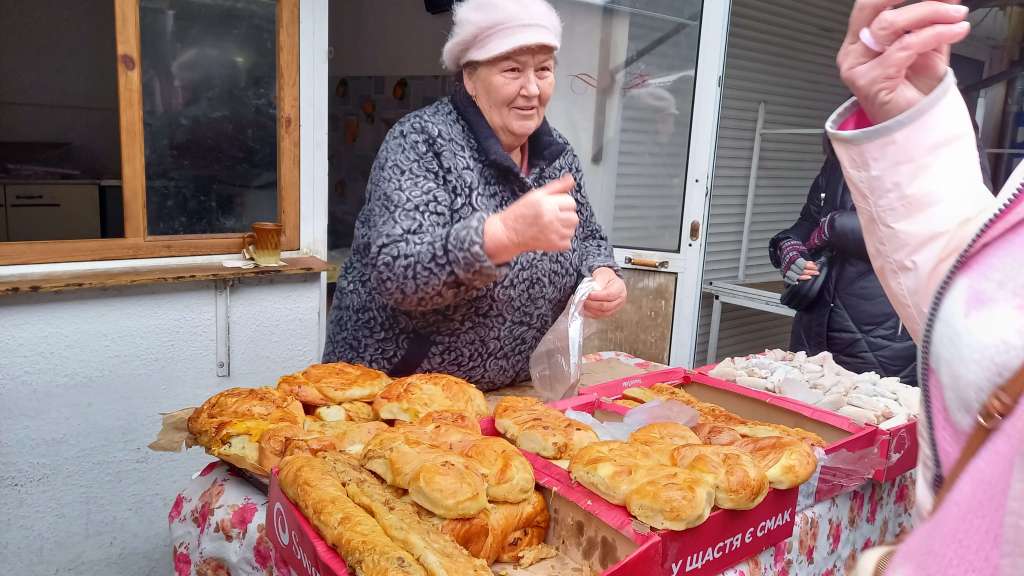
Shops, markets, really old and rickety trolleybuses, babushkas (albeit friendly ones!) and Lada cars a-plenty! The place also had its own currency of Transnistrian roubles, even some plastic coin roubles they once created a few years ago until it was found that they were easily lost.
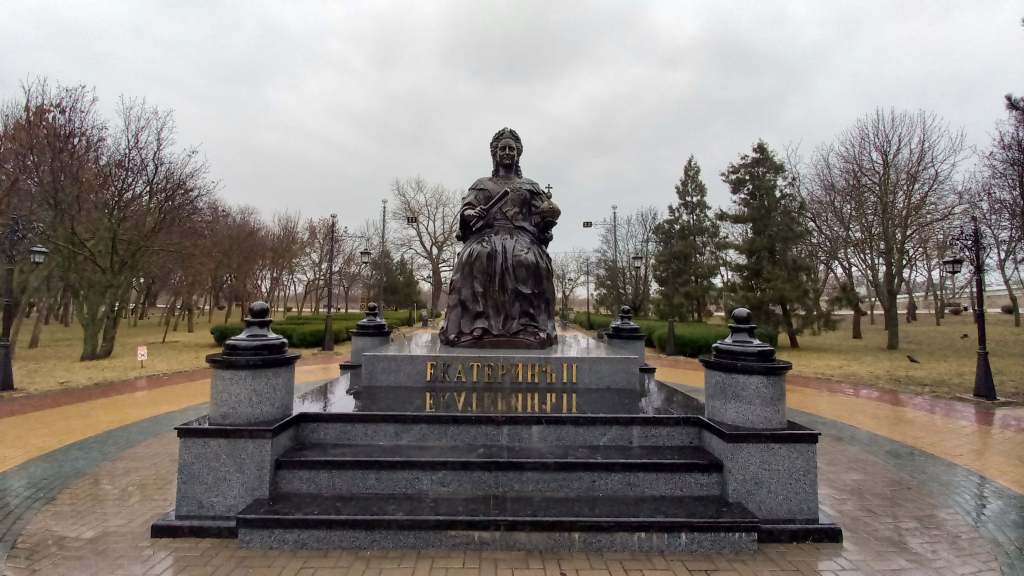
I must admit I was a tad nervous about visiting, as the UK Foreign and Commonwealth Office advises against all travel there. I wasn’t nervous for my safety. The travel advice only seems in place due to there being no access to UK consular assistance whilst in the territory, and it was this along with my travel insurance potentially becoming void due to it being on the FCO’s red list, which made me just a tad precarious. Still, I feel it had to be done, and whilst not a UN country to tick off my list, it was still very much a TCC territory, and absolutely fascinating.
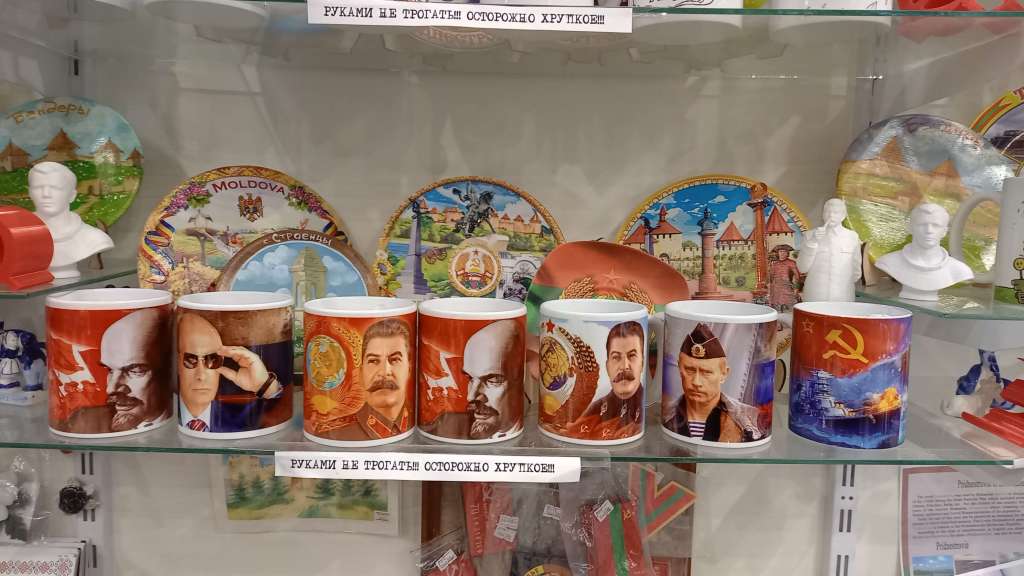
I was picked up again in my hotel lobby, this time by a friendly Russian-speaking driver from the town of Bender, or Tighina, just inside Transnistria. We then picked up an older American couple living in Germany, and I became the de facto translator which I loved! After about an hour’s drive eastwards over some seriously pot-holed roads, we headed through border control with our passports, fortunately with tourist cards to go inside them rather than stamps from an unrecognised country which could invalidate one’s passport. In Bender, we were then handed over to an English-speaking guide. In fact, this was a young 21-year-old French guy living there, doing an online degree, while working as a tour guide and living in this fascinating place by himself. Quite something for such a young chap, and to be honest he reminded me of myself at that age, living first in Paraguay for a year and then Russia, although perhaps even more adventurous than I was!
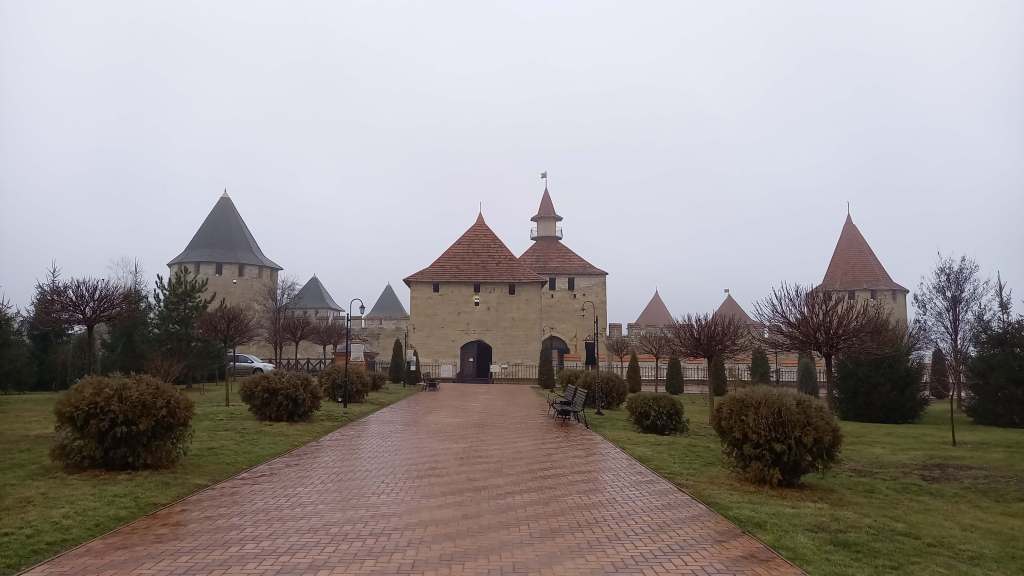
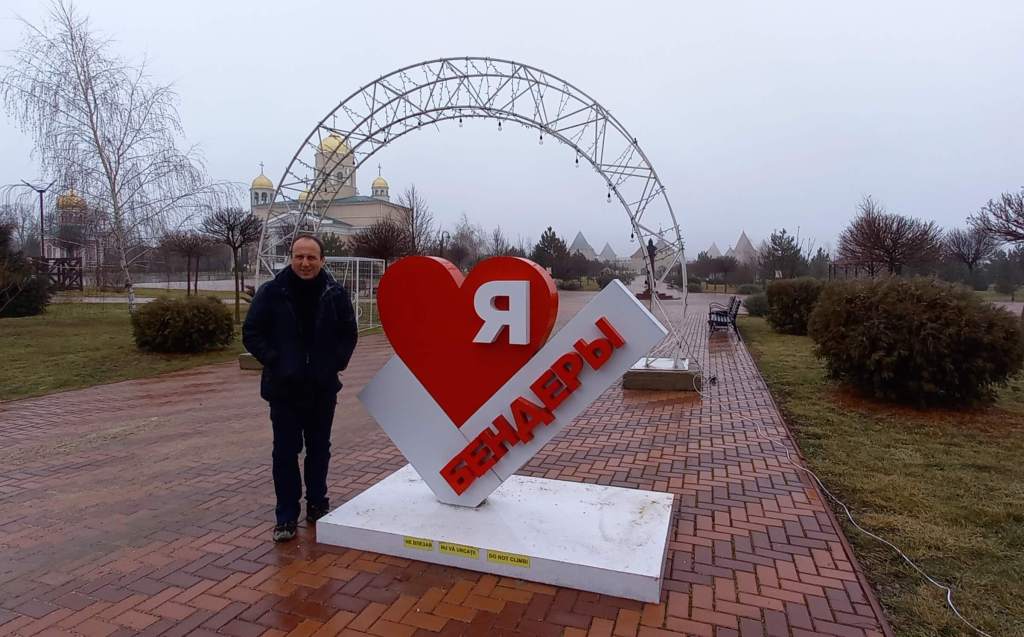
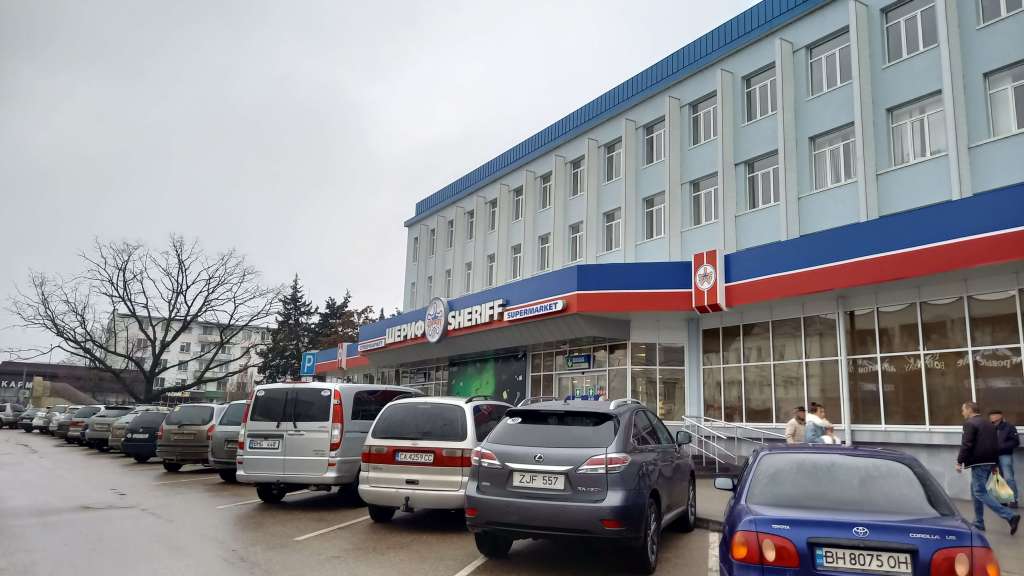
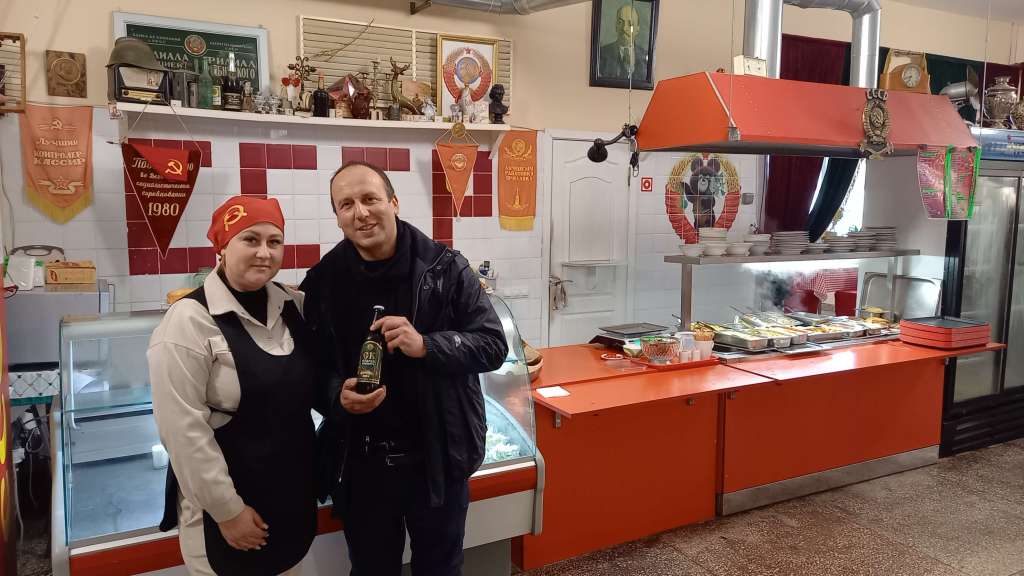
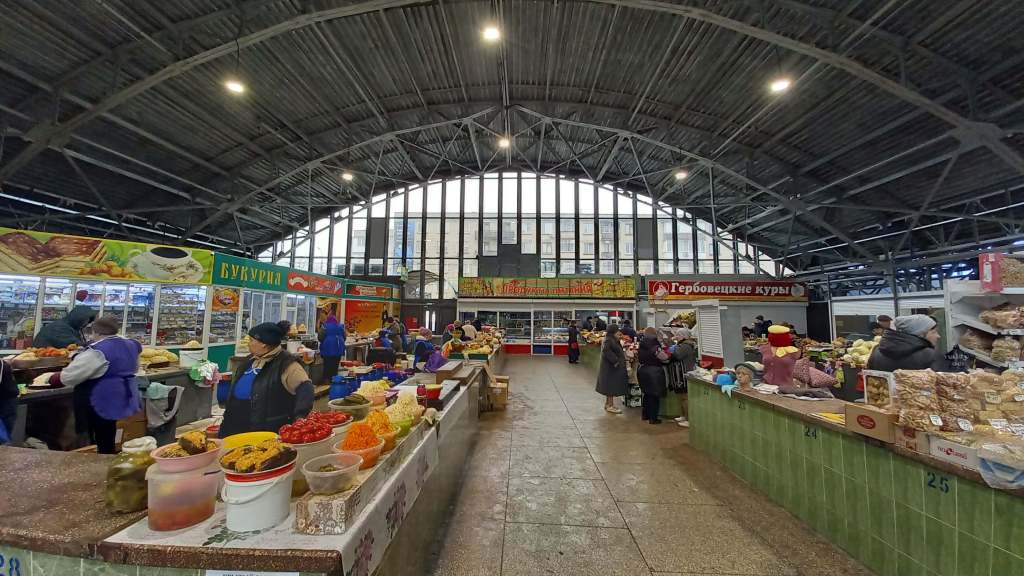
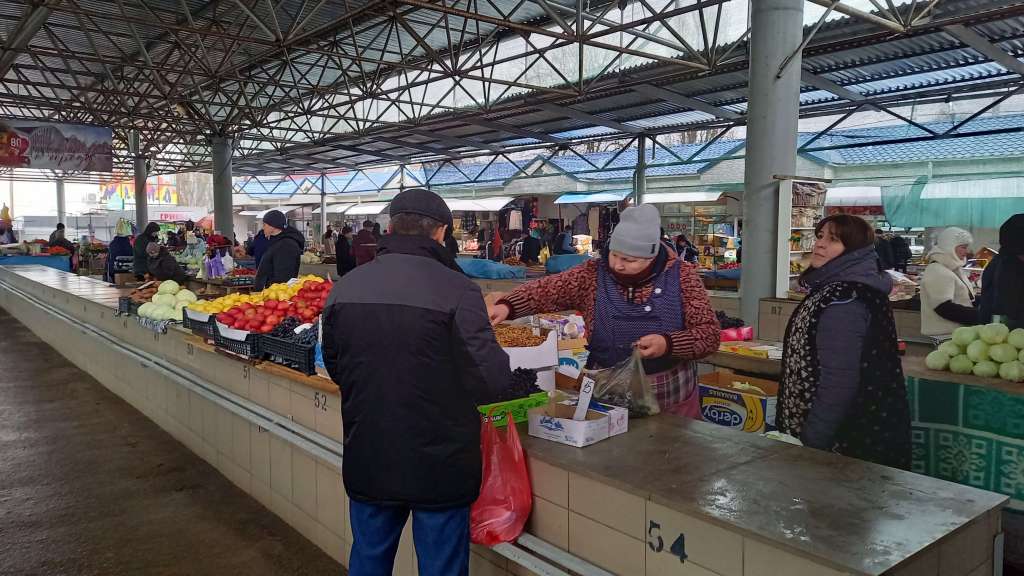
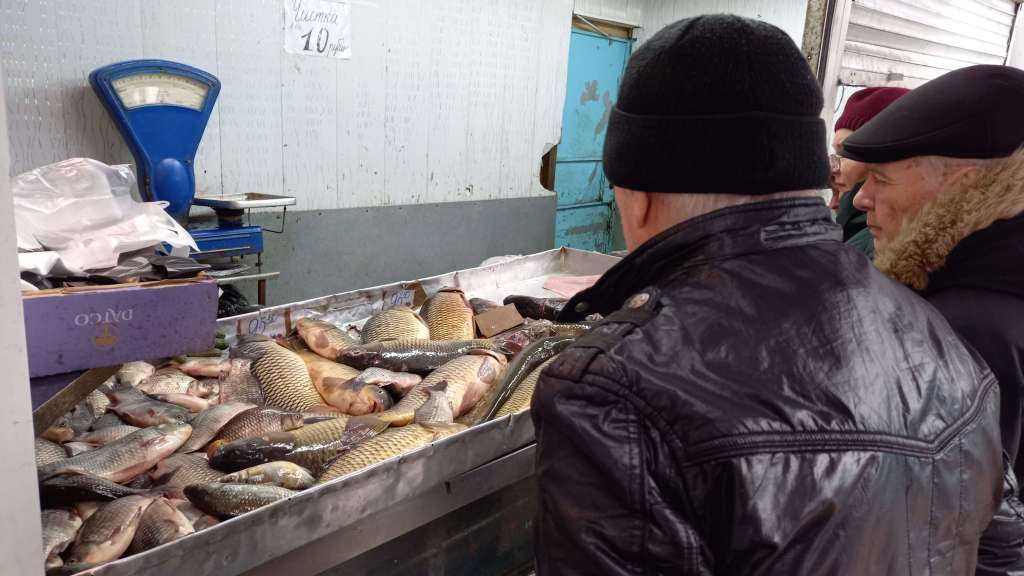
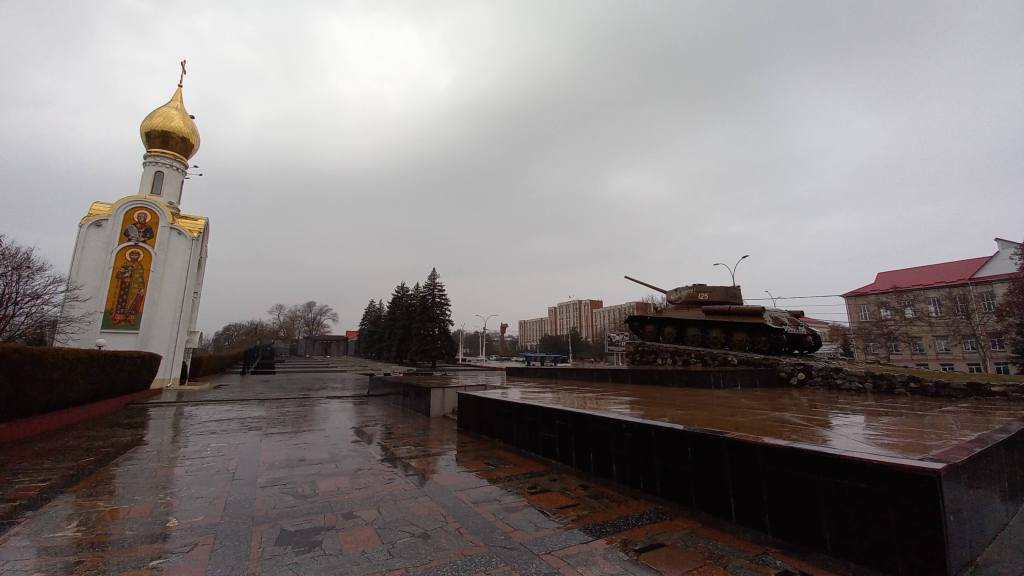
We first visited the large and attractive Bender Fortress, built in the 16th century by the Ottomans to defend against the Russians, on a site originally built upon by none other than Stefan cel Mare himself. The Russians then took control of the fortress in 1812 when it annexed the country, as mentioned earlier. Nearby was the Bender Memorial, dedicated to those killed during the brief civil war, and proudly displaying a tank that the Transnistrian side had used. After this we headed to the absolutely fascinating Bender Central Market, which to me was the biggest throwback to my time in Moscow during this wonderful day trip. The independent market stalls brought back so many memories, and the people were actually friendly, compared to your average Russian market back in the day. Our guide told us about the local monopoly company called Sheriff, owning 80% of the companies in the territory, and whose name is omnipresent throughout, from supermarkets to banks to even a huge sports stadium where FC Sheriff famously beat Real Madrid 2-1 in a 2021 UEFA Champions League match. Upstairs in one of the market buildings was the most amazing little Soviet-themed joint, where we stopped for a Staraya Krepost (Old Fortress) beer and admired the fantastic display of pre-1990s USSR nostalgia, including old TV sets, records and posters.
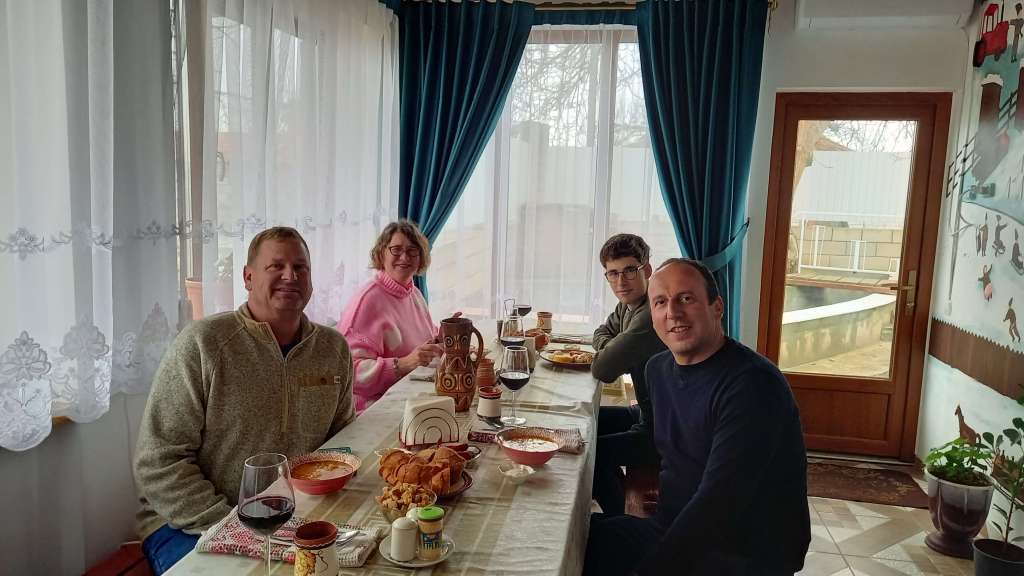
We then headed towards a Bulgarian village between the city of Bender and the Transnistrian capital of Tiraspol called Parcani – apparently there are quite a few Bulgarian villages in this part of the world. We were heading for lunch at the lovely rural home of the tour agency’s manager, a delicious three-course meal cooked by our host’s Mum, washed down with copious amounts of wine and brandy – I was really quite merry for the rest of the day, especially after the beer already had earlier.
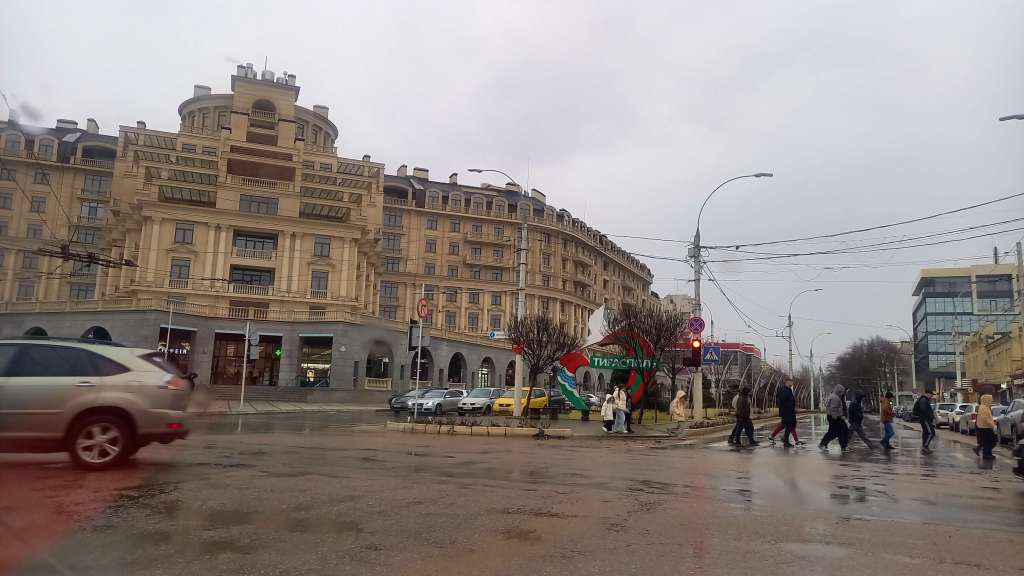
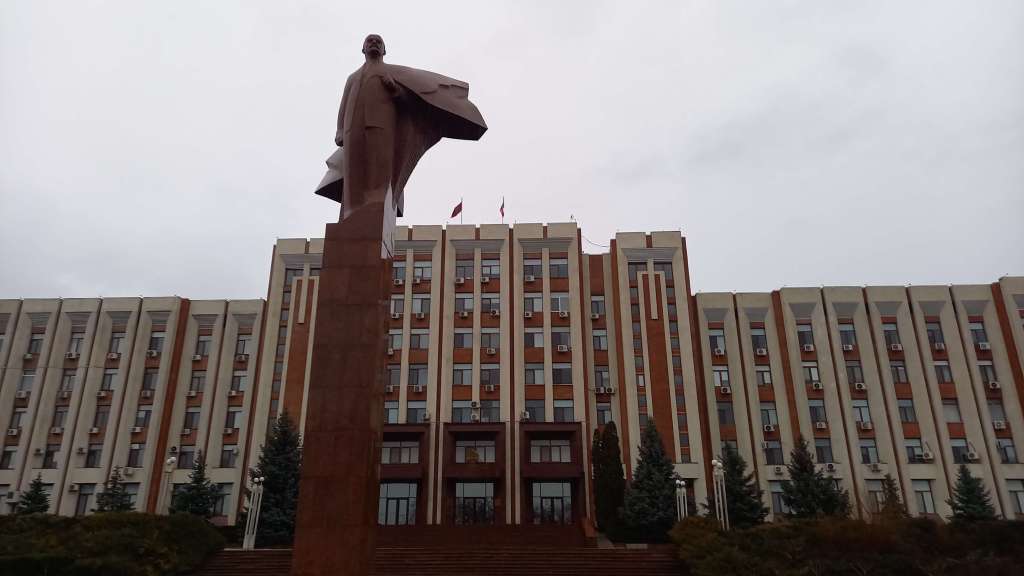
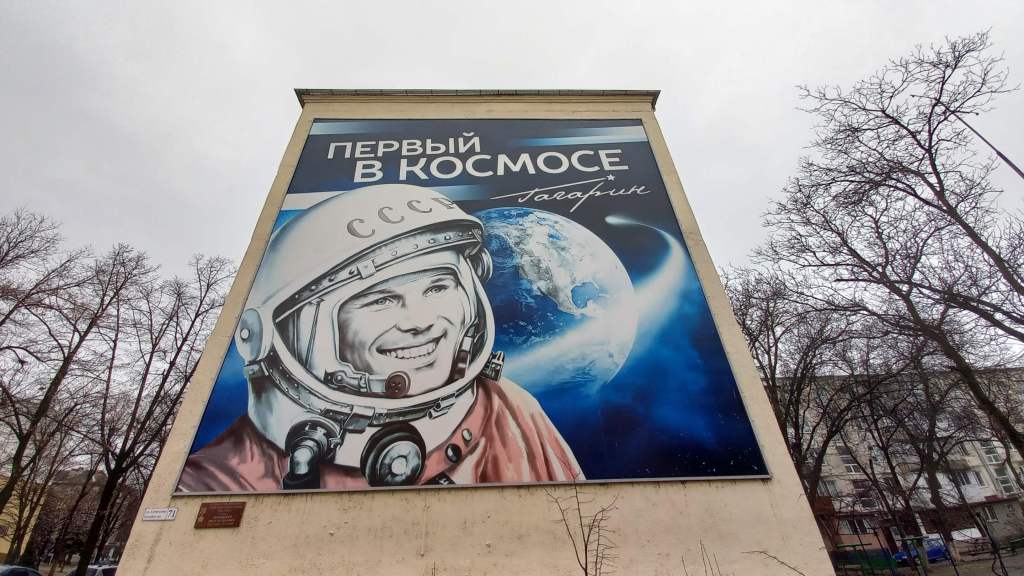
Finally we headed on to Tiraspol, the afore-mentioned capital of the “country” and also its largest urban centre, with a population of around 130,000 people. It is also home to some fantastic brutalist communist architecture, two Lenin statues, and another war memorial on the banks of the Dniester River itself. By now it was throwing it down with rain, but we continued our tour. We also took in a large Yuri Gagarin mural, considered a Soviet hero of course being the first man in space and beating the Americans to it in 1961, but somehow missed out on the city’s famous Harry Potter statue – they are apparently huge fans there!
It was an amazing day, touring an amazing and truly fascinating little place, and ahhh, the memories! Soviet communism nostalgia at its finest!
We were handed over back to our Russian-speaking driver again, to drive through the pouring rain that day back to Chișinău and my hotel once more for the evening, back to even more Soviet-era nostalgia!
The next morning I was heading for a deep and independent dive into the north of Moldova which I was looking forward to, but more on that in my next.

 Alex Waring's Travel Blog