
8th April 2026
What an amazing couple of days, and what an amazing trip! The fun and fascination on this Deep South Road Trip for me was just relentless. I left NOLA (New Orleans, Louisiana) and decided to add on a visit into nearby Cajun Country, up the Mississippi River and deep into the heart of the state of Louisiana, around the city of Lafayette. I wasn’t originally intending to dip into this part of the Deep South on this journey, and it involved quite a bit of driving between the sights. But I often figure when I’m in different parts of the world, that I’ll probably only be in that part once, so it would be good to fit in what I can. I certainly did this on this day! I left my New Orleans motel at 7.30am that morning and arrived in my next motel for the night in Vicksburg Mississippi at 8.30pm – a long day of driving indeed, but it was so very worth it.
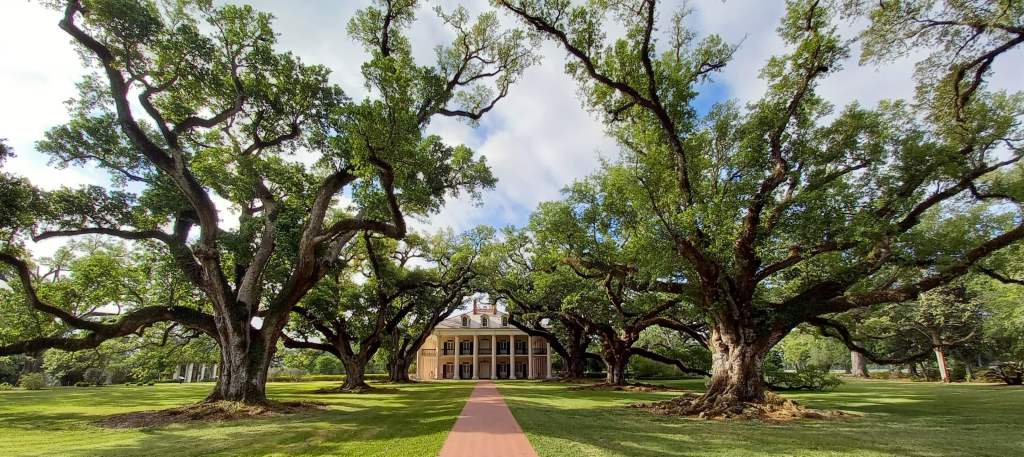
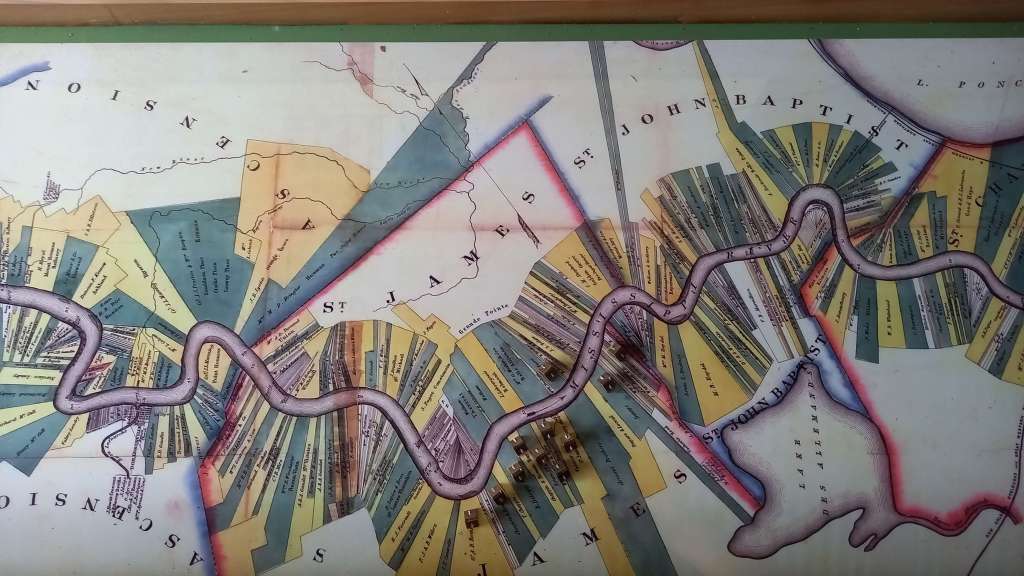
My first stop was at the delightful Oak Alley Plantation, one of several 19th century plantations lining the banks of the Mississippi between New Orleans and state capital Baton Rouge, along the famous 120-mile Great River Road. There are a number which have been restored for visitors, and after a search online, I found this one which tickled my fancy.
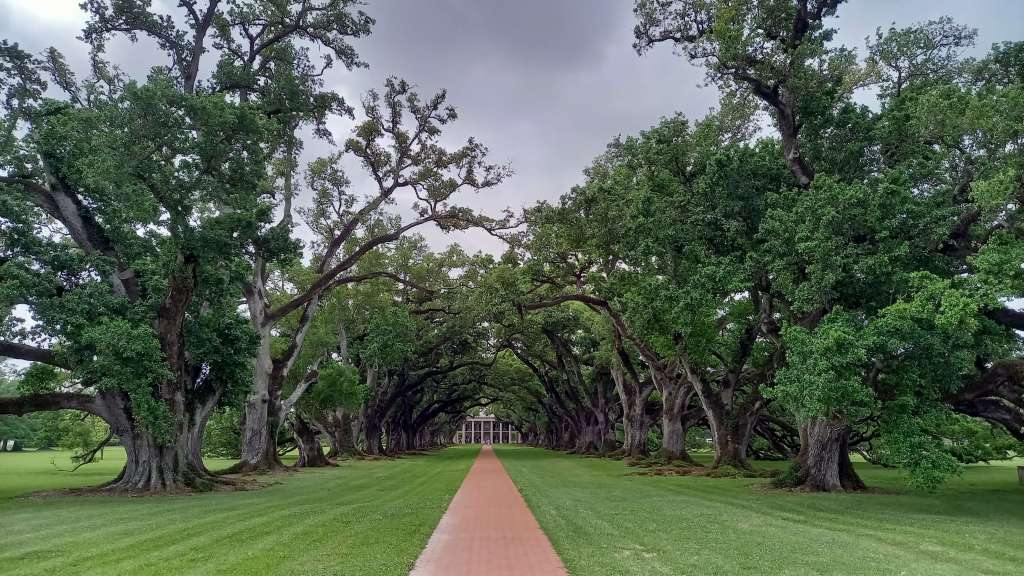
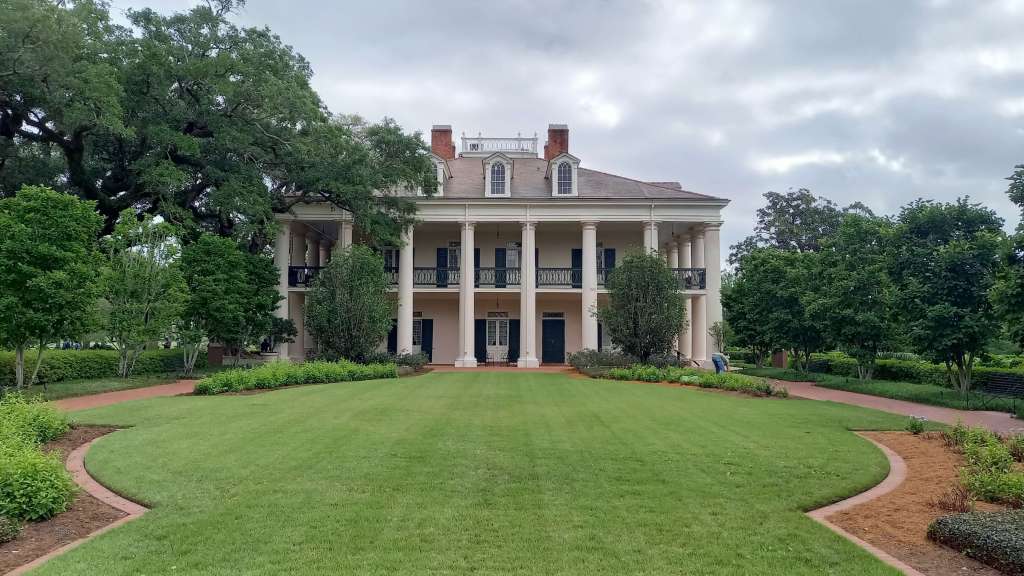
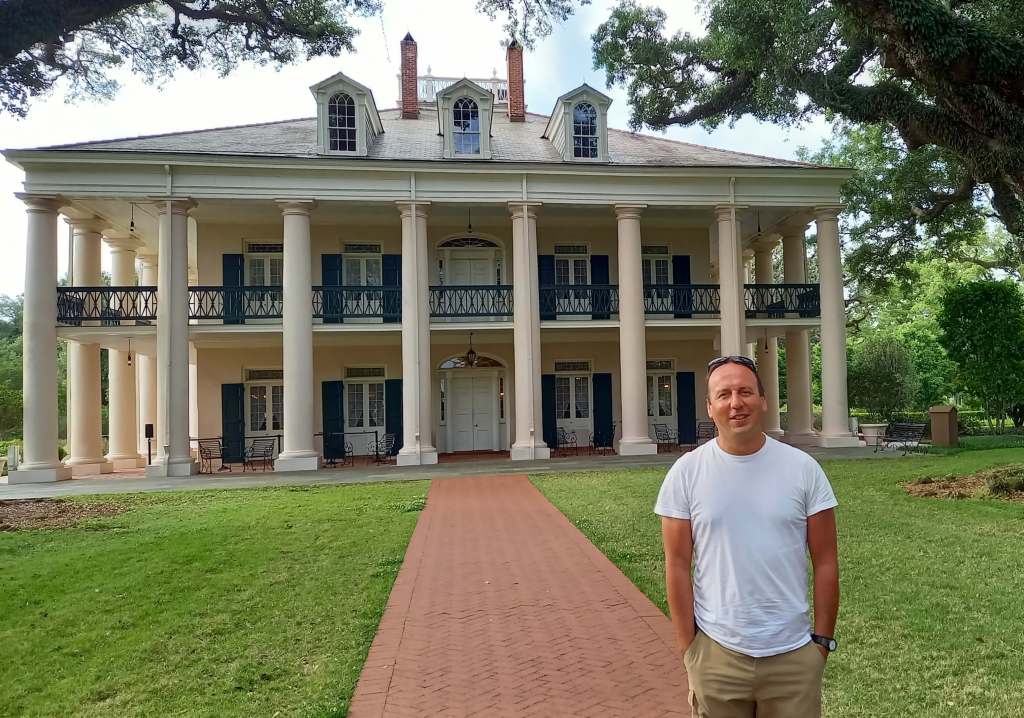
Built by the Roman family of French origin in the 1830s, the plantation pulled out all the stops in the wow factor for me. I took a guided tour of the beautiful house, its exquisite gardens, and the stunning “alley” of oak trees lining the road from the river to the “Big House” from which the plantation got its name. The family must have led quite the life, and it was quite sad to have seen them falling on hard times after the death of the head of the house, Jacques Roman, in 1848 at the tender age of 48. When his wife Celine took over, she lacked the required management skills and spent lavishly. After a long period of disrepair, most notably following the plantation’s auction in 1866 following the end of the US Civil War, the Stewart family took over operations in 1925 and improved its success. When Josephine Stewart passed away in 1972, she bequeathed the property to the Oak Valley Foundation and it was opened to the public. I got a real sense of the good times of the antebellum period walking around the house and grounds, and my childhood readings of Mark Twain’s two classics and other similar Deep South stories travelled in the air for me there.
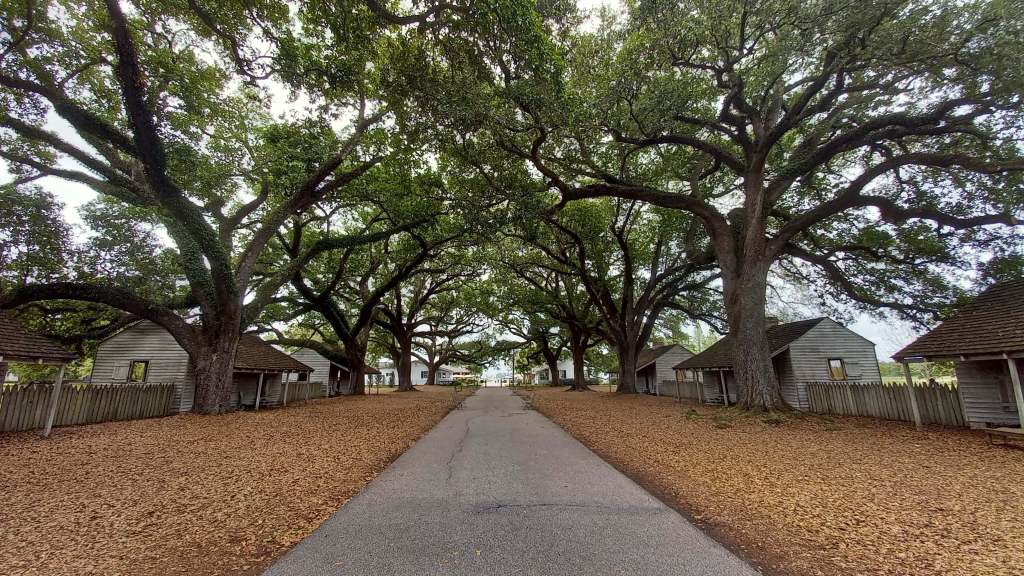
In addition to the stunning grounds, the Oak Alley Plantation also has a reconstructed slave-dwellings area onsite, which was highly sobering to say the least. One cannot appreciate and understand the grandeur and success of the place in the 19th century without being shocked and appalled by the slave-based foundations upon which such plantations were built. I thought they did this section of the visit well. You could wander around the slave dwellings and read captions on exhibits showing what life was like for those whose freedom was denied down here. What was particularly sobering for me was how the children of the slave women were considered property of the plantation owner, and I also felt troubled by lists of the slaves’ names printed alongside their job and their monetary value. Young female slaves were considered valuable as they would be able to bear more children and thus more “property” for the owners, and there was a significant difference between the lifestyle and conditions of the so-called “house-slaves” versus the “field-slaves”.
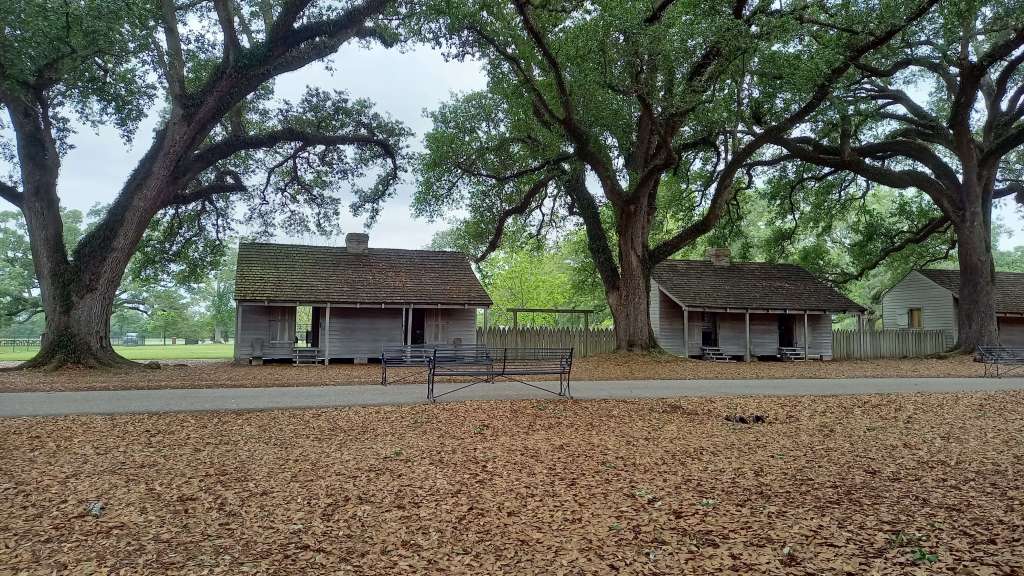
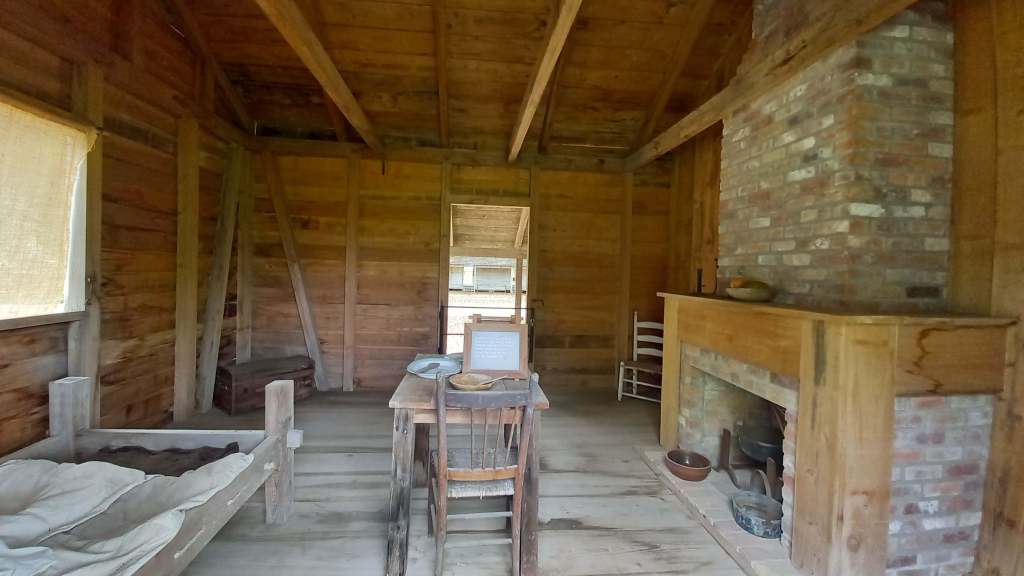
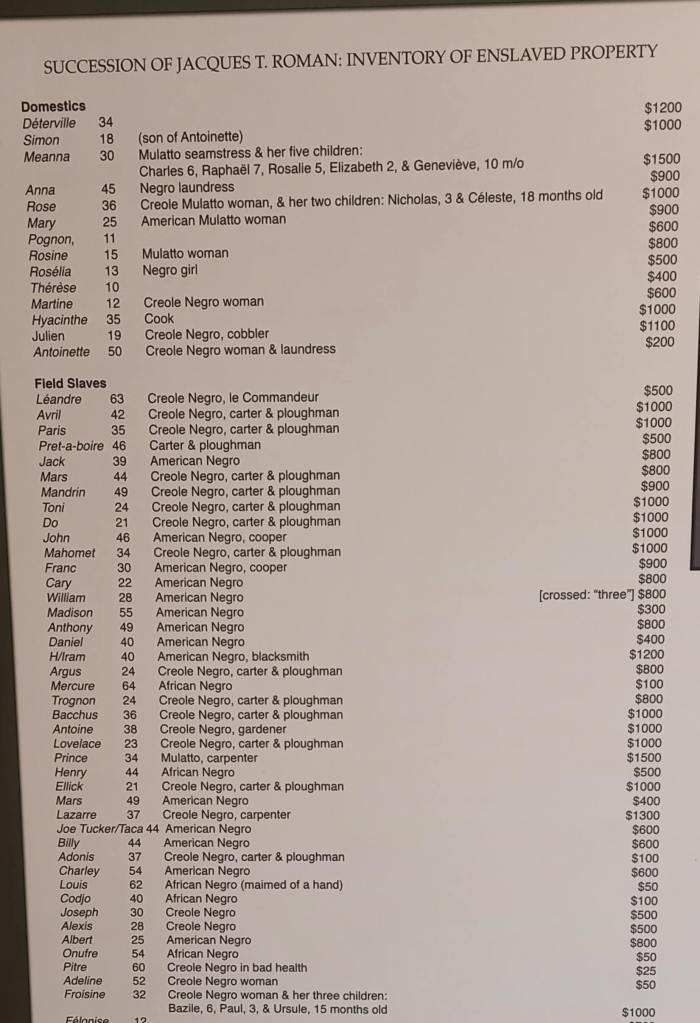
It was a visit of mixed emotions for me. Beauty and grandeur on the one hand, suffering and inhumanity on the other. I thought the place presented this well, and I came away with a much greater and more profound understanding of these darker days of American history.
Next up was a drive deep into the heart of Cajun Country. As mentioned, this part of Louisiana is centered around the city of Lafayette, and is so-named after the British banished French settlers, called Acadians, from Nova Scotia in the mid-18th century. They were seen as a threat to the British Colony during the French and Indian War (1754 to 1763) in which the French of Quebec were assisted by the Native American people for dominance in this part of present-day Canada. Many of these banished Acadians ended up in this part of Louisiana between 1764 and 1785, which at the time was French-ruled or at least was welcoming to the French. I only learned after this trip that the word “Cajun” in fact came about as a simplified local term for “Acadian”! Fascinating, and I imagine many people reading this didn’t know this either!
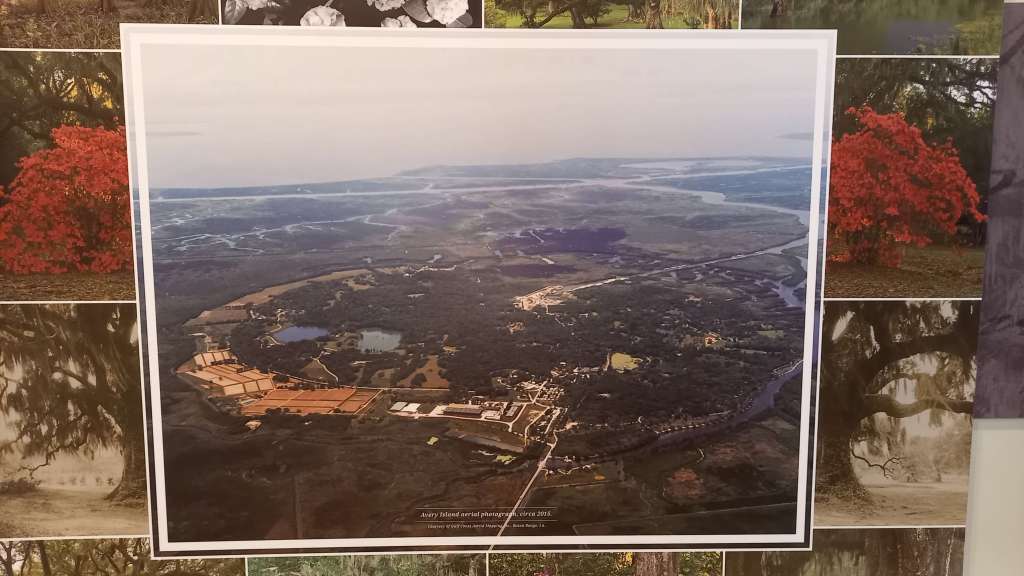
I was heading to the absolutely brilliant Tabasco Factory on world-famous Avery Island, which although far from the sea is still in fact technically an island as it is encircled by swamps, bayous and marshes. The drive there was fascinating, and at times felt slightly more European than most of the rest of America I’d been to. The decisive factor was that the central part of most settlements was dominated by an ornate Catholic church, often with gothic-style architecture and striking bell towers. This was different to the rather more bland, newer Baptist ones in other parts around here.
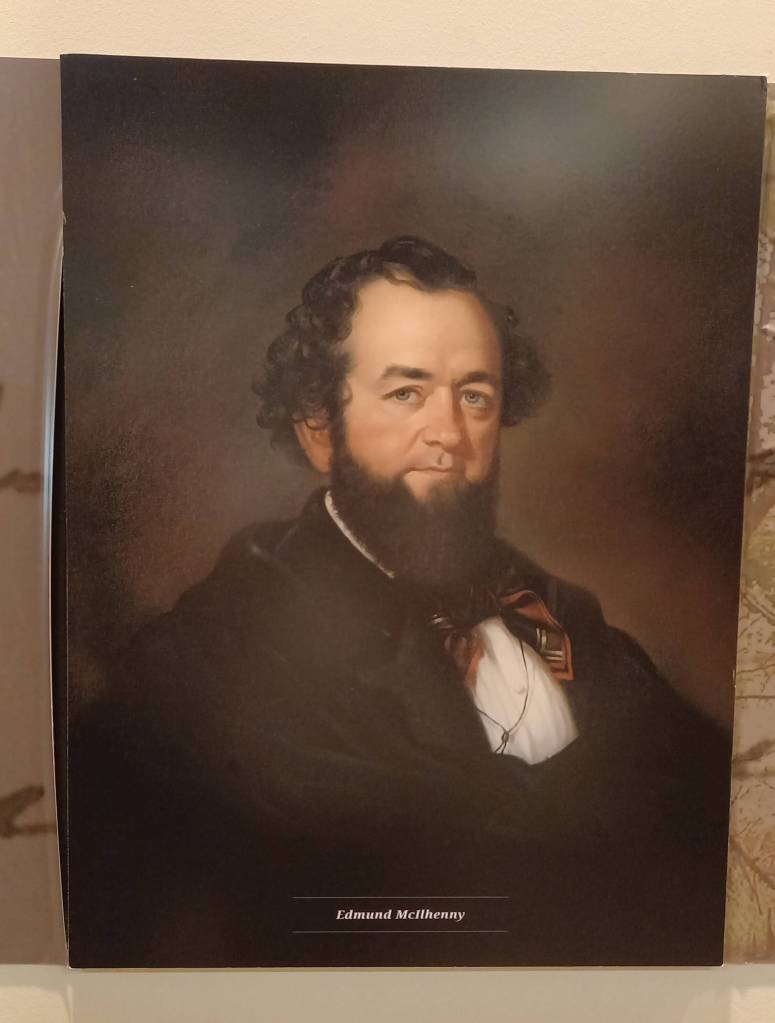
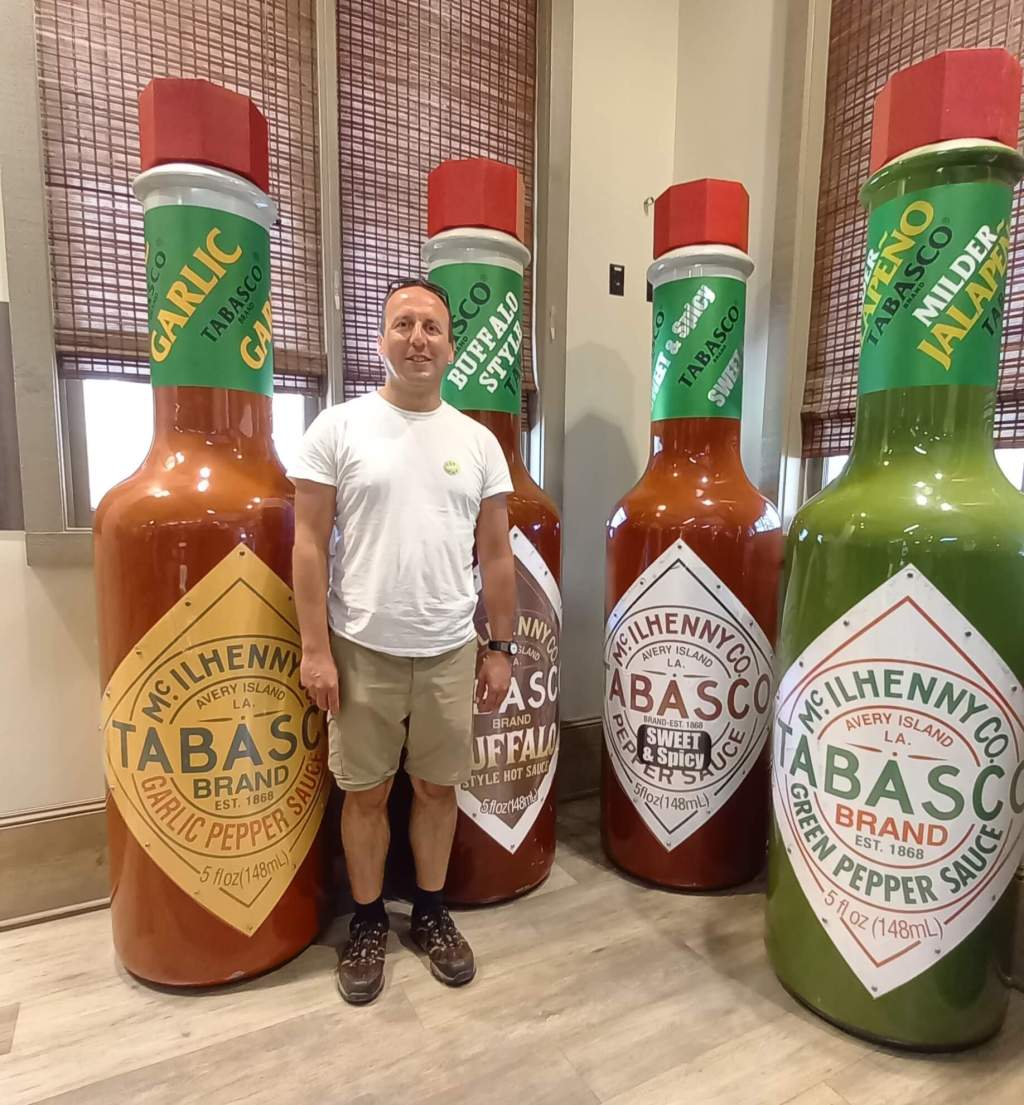
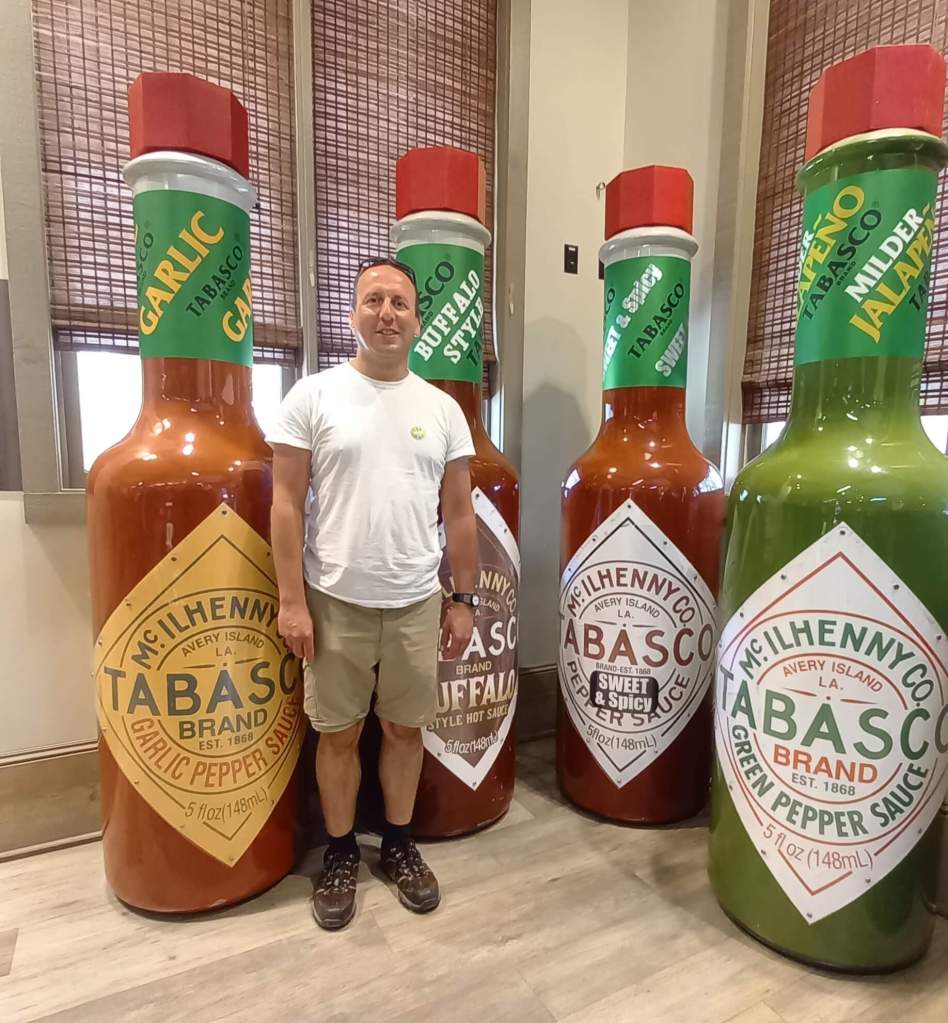
I, like many others I’m sure, came to hear of Avery Island as it is imprinted on each and every bottle of probably Louisiana’s most famous export – Tabasco sauce! Reminiscent of course of the local spicy Cajun cuisine in which chili peppers are a vital ingredient, I was excited to be visiting the home of one of my favourite tabletop accompaniments.
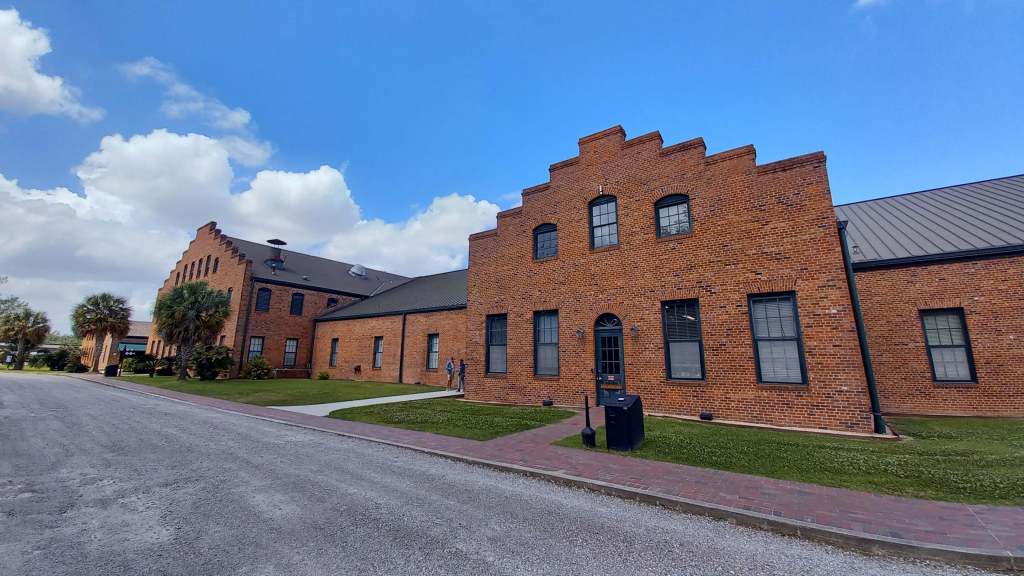
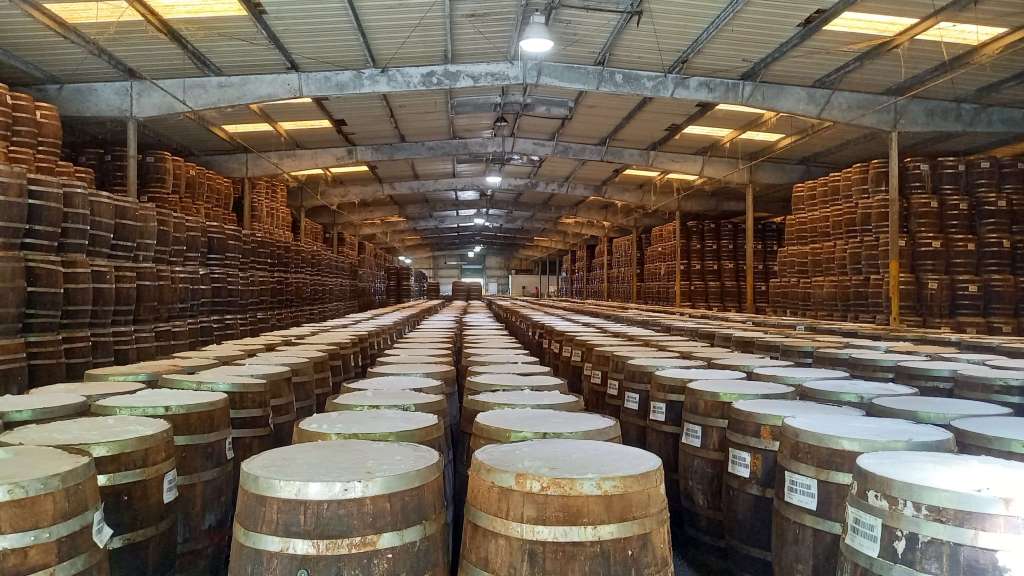
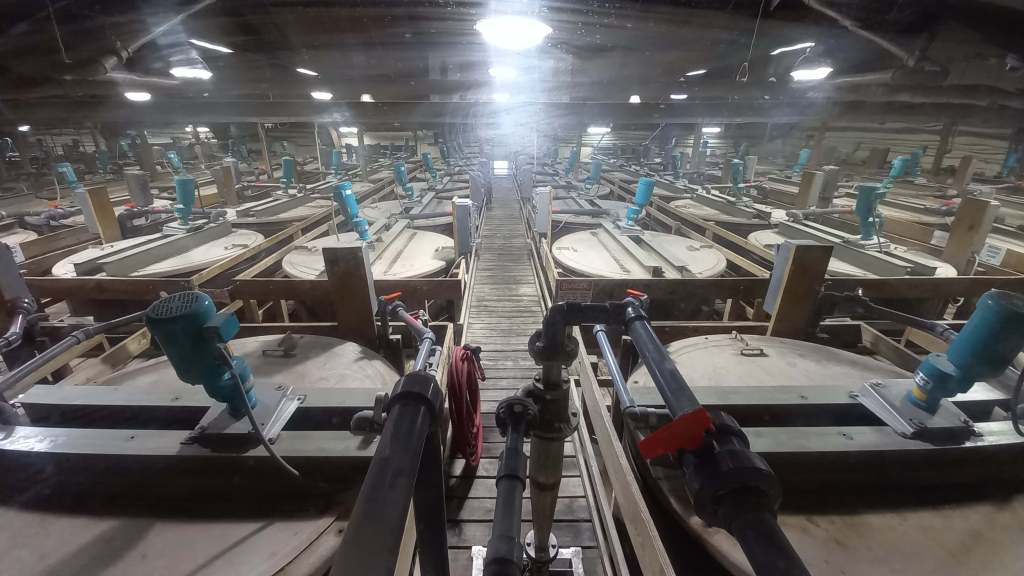
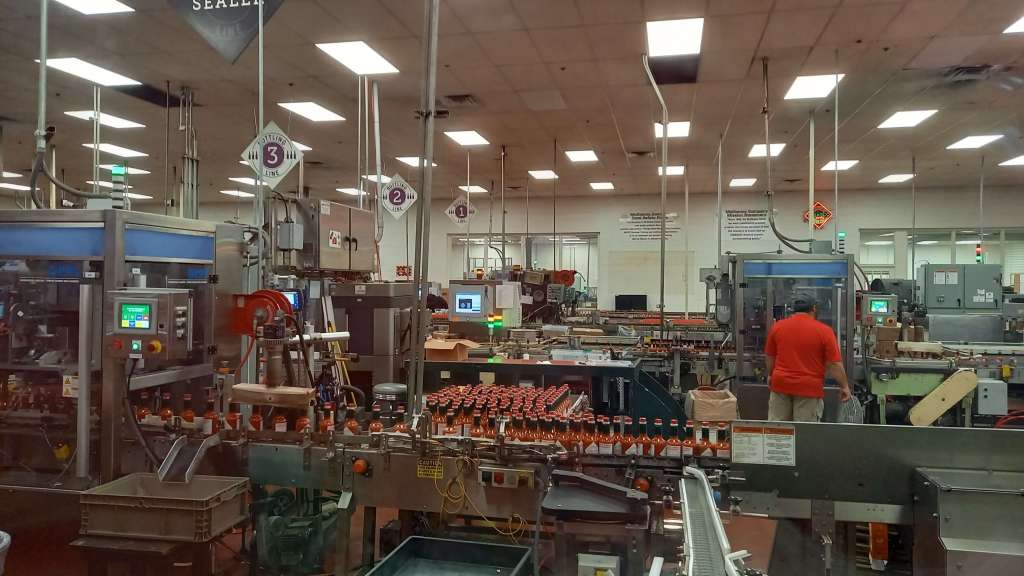
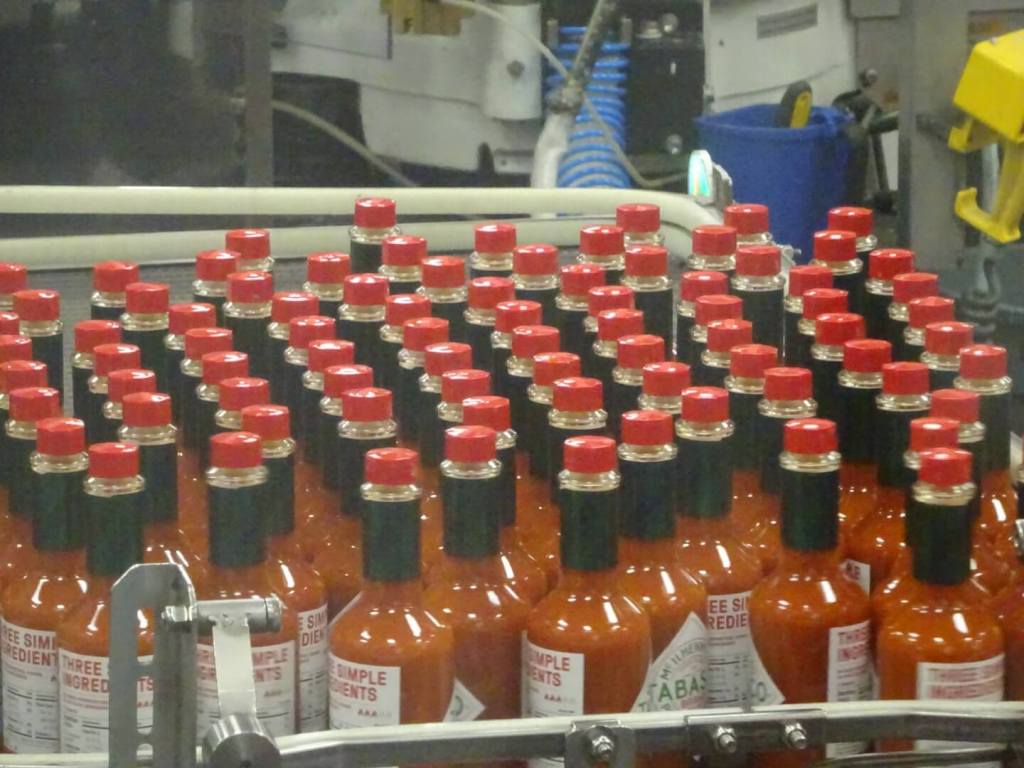
I started my visit at the brilliant Tabasco factory itself, in which every single bottle of Tabasco in the whole wide world is bottled – I find that just incredible! The visit is self-guided, and involves visiting its barrel storage, brewing vats and bottling plant, culminating in a tasting bar of 14 different varieties of this famous Louisianan hot sauce. They ranged from mild and delicious Raspberry Chipotle, to the devilishly spicy Scorpion Sauce, and the best way to sample them was to use the little pretzel-sticks also offered there. The lady at the bar told me the taste of the Scorpion Sauce would remain burning in my mouth for a full 15 minutes afterwards, and she wasn’t far wrong! I was sweating by the time I had finished my tasting session, but it was absolutely delicious, and I can still taste my time there now!
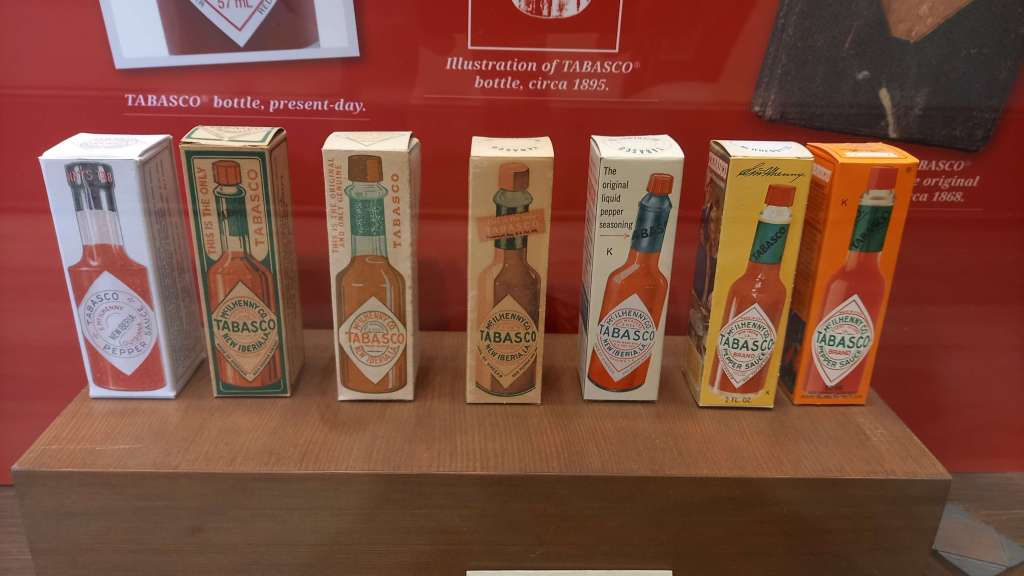
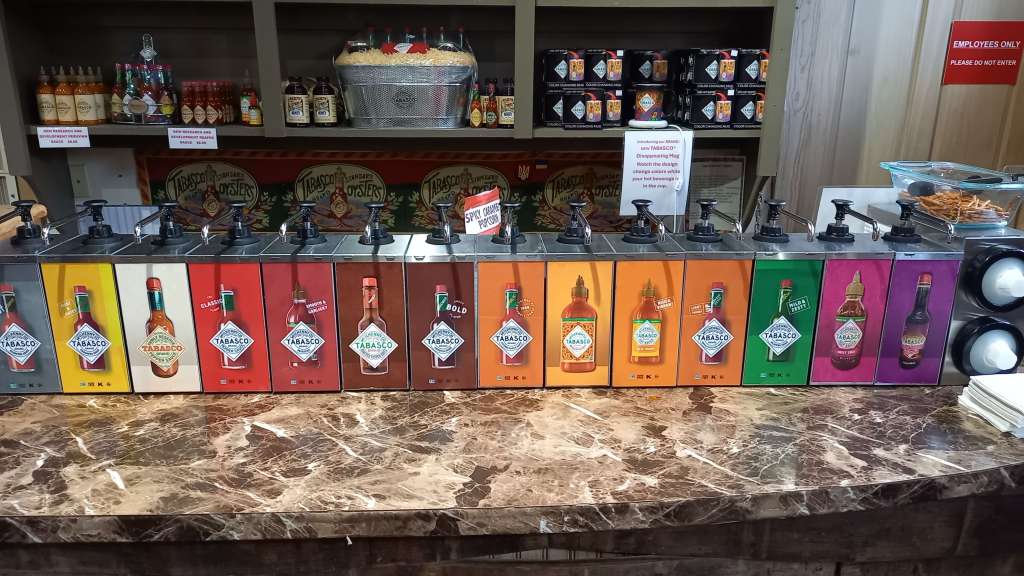
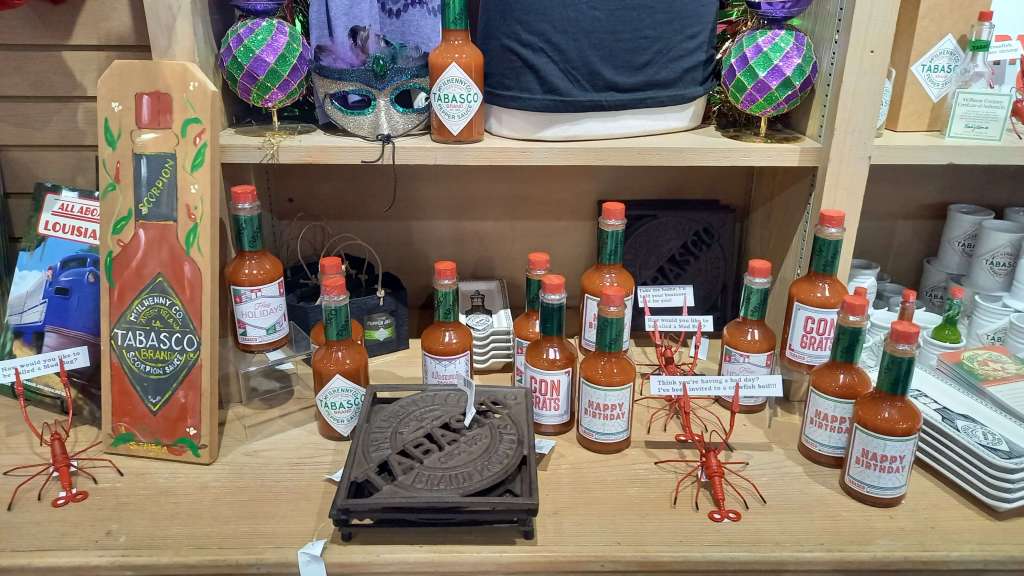
The second part of my visit involved a visit to the adjacent Jungle Gardens. The McIlhenny family who founded the company, begun by Edmund McIlhenny in 1868, seem really good, entrepreneurial people, but also philanthropic and admirably nature-oriented in their mission. In 1895, McIlhenny created a private bird sanctuary on his “island”-estate, alongside his pepper plantation there, which in 1935 he expanded into a botanical and swamp garden opened to the public. It can be walked around, but most people including myself do the self-guided circular driving tour, with several stop-offs along the way.
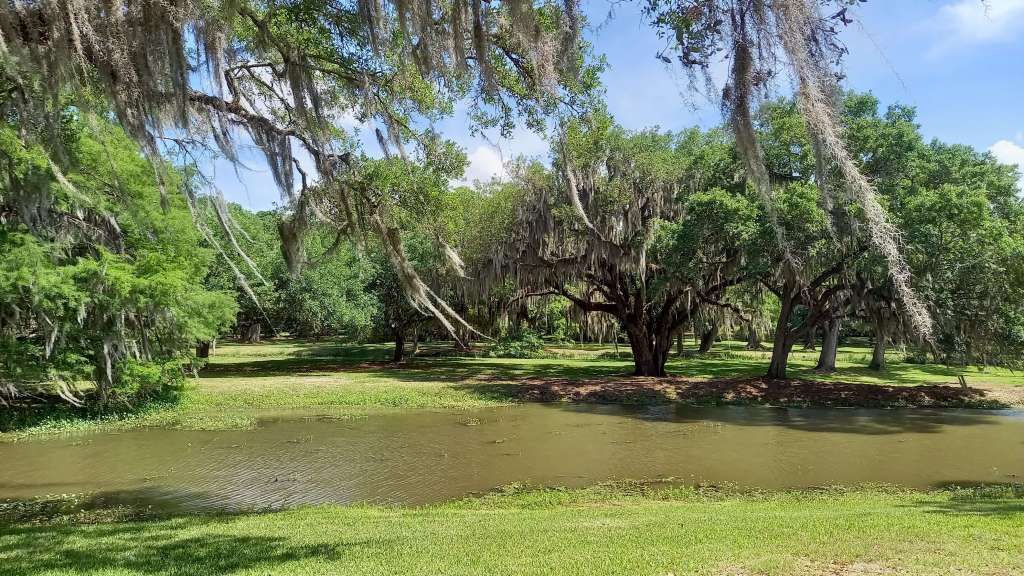
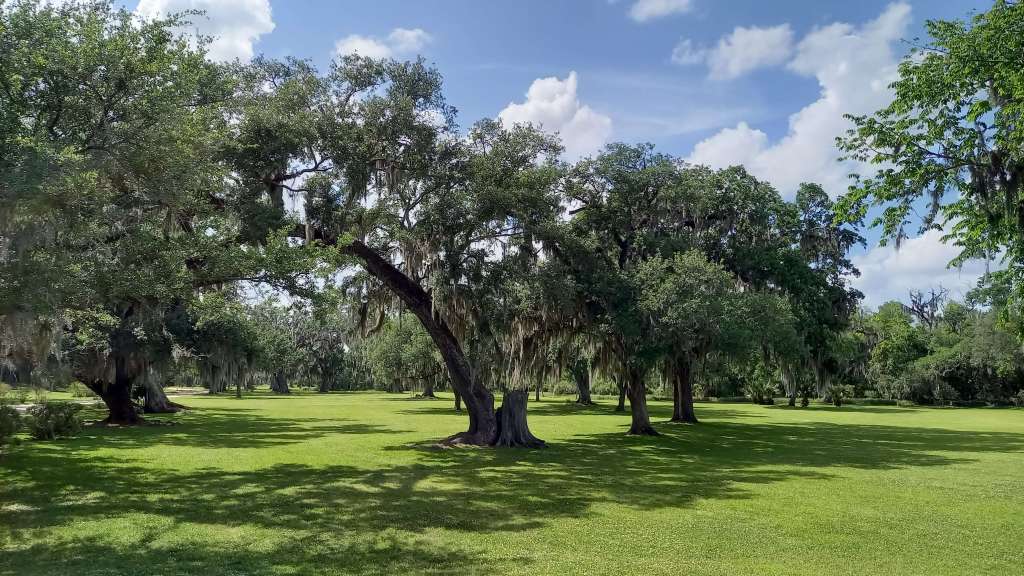
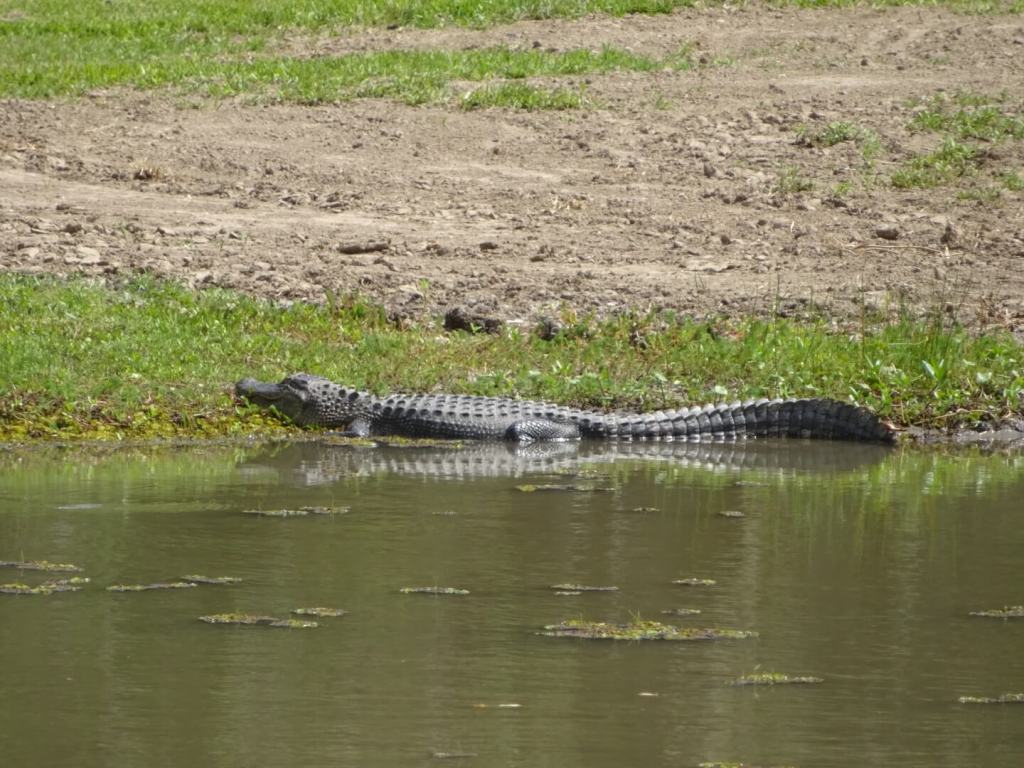
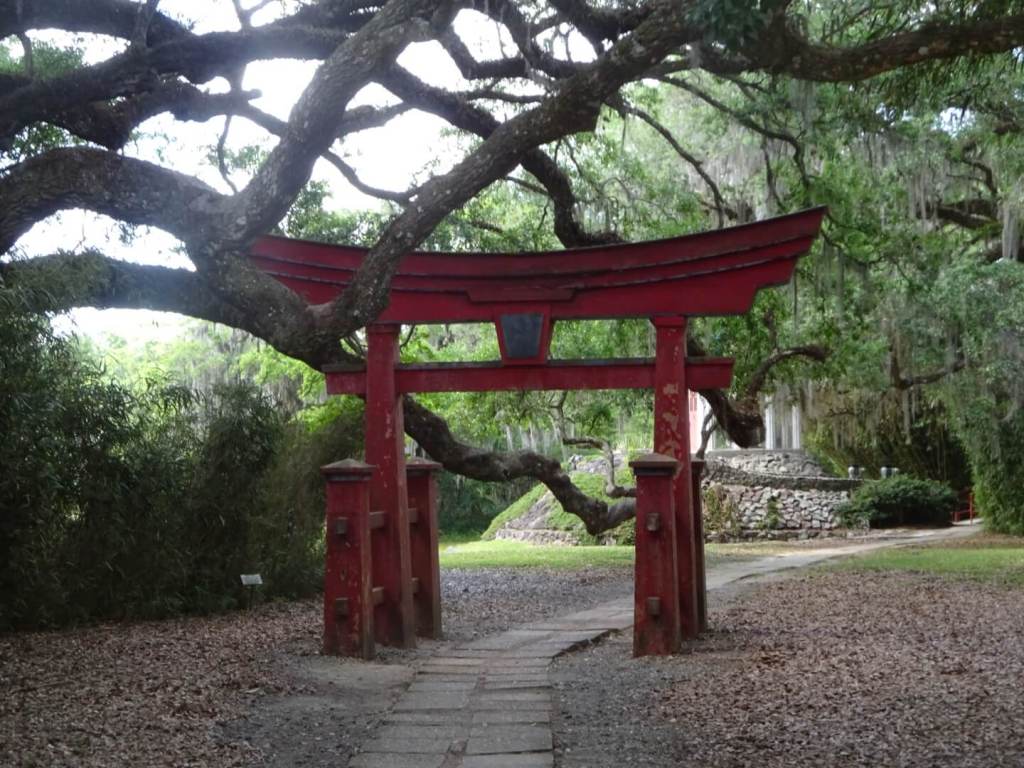
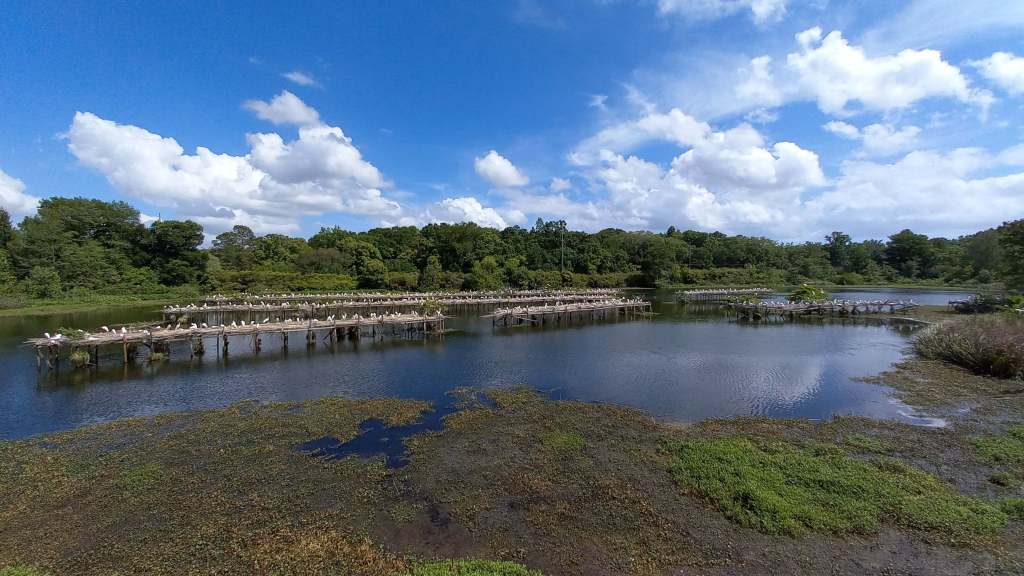
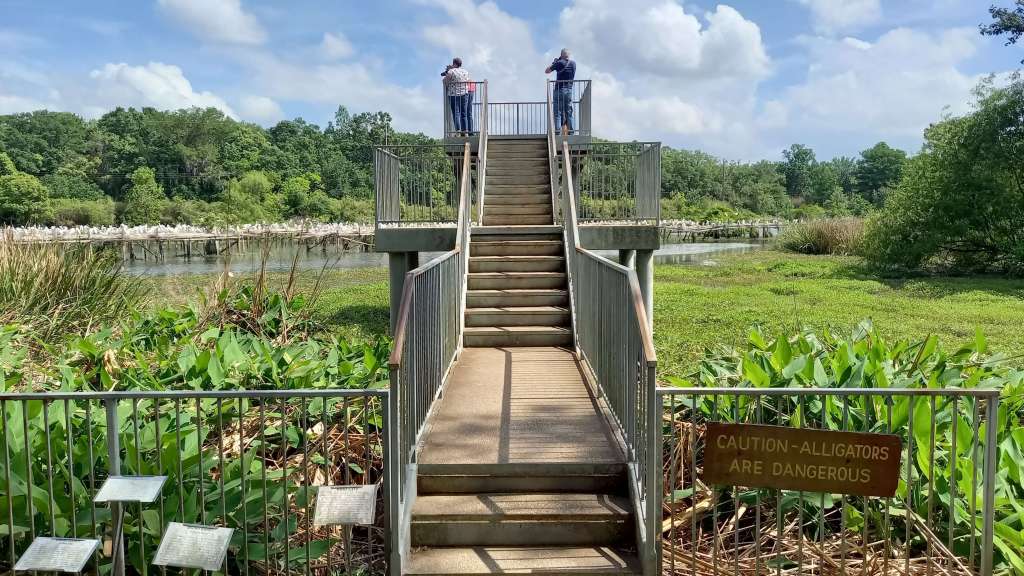
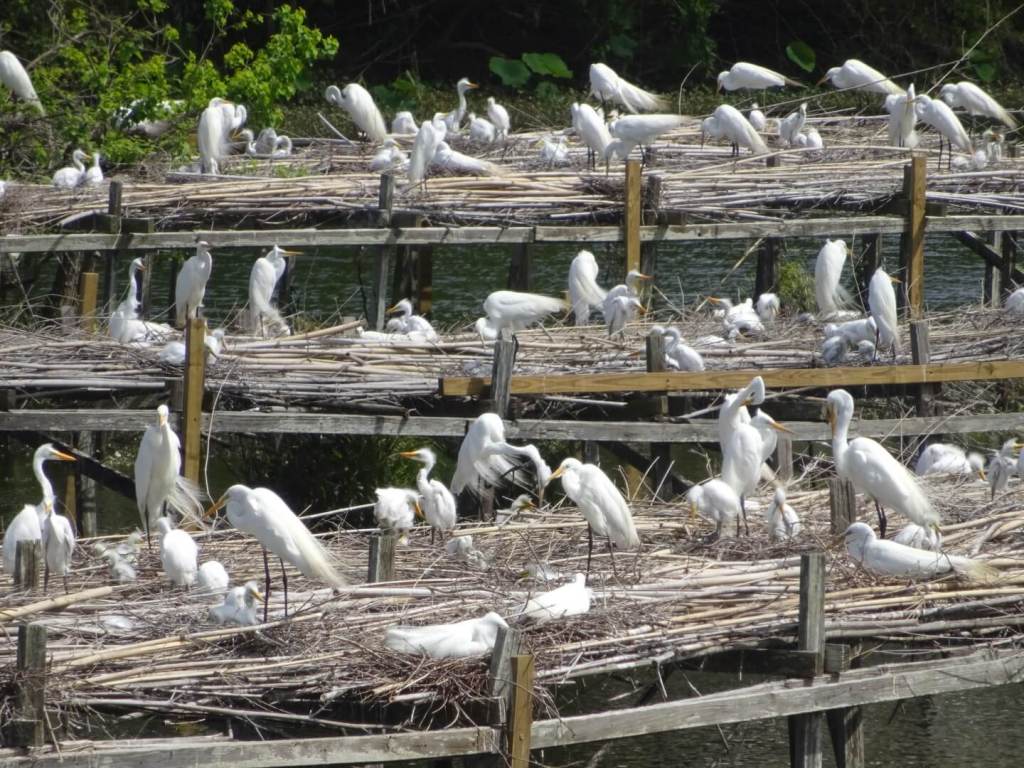
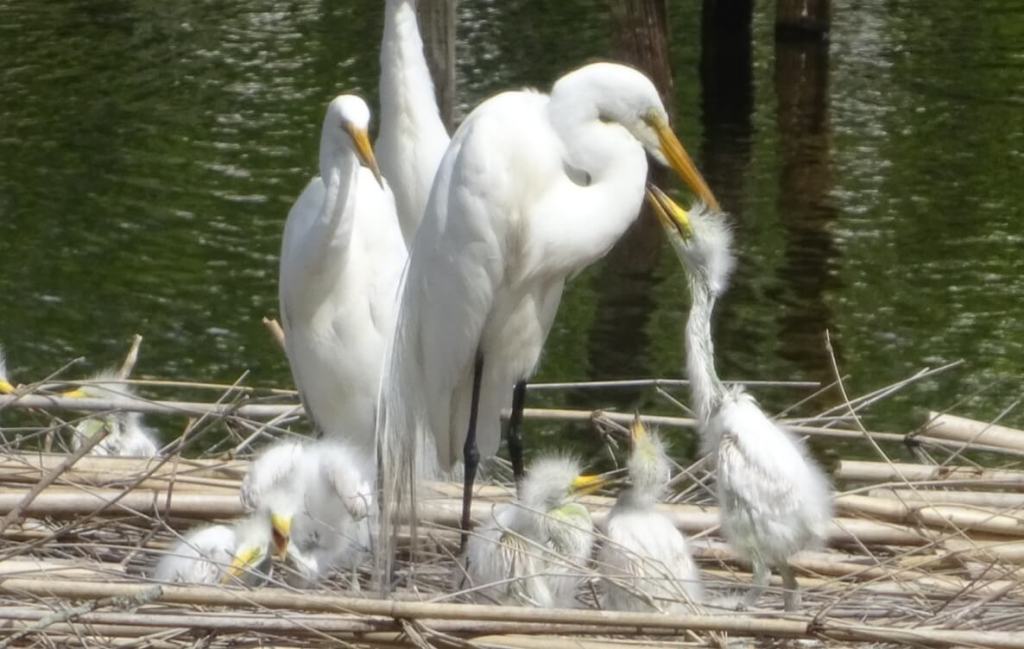
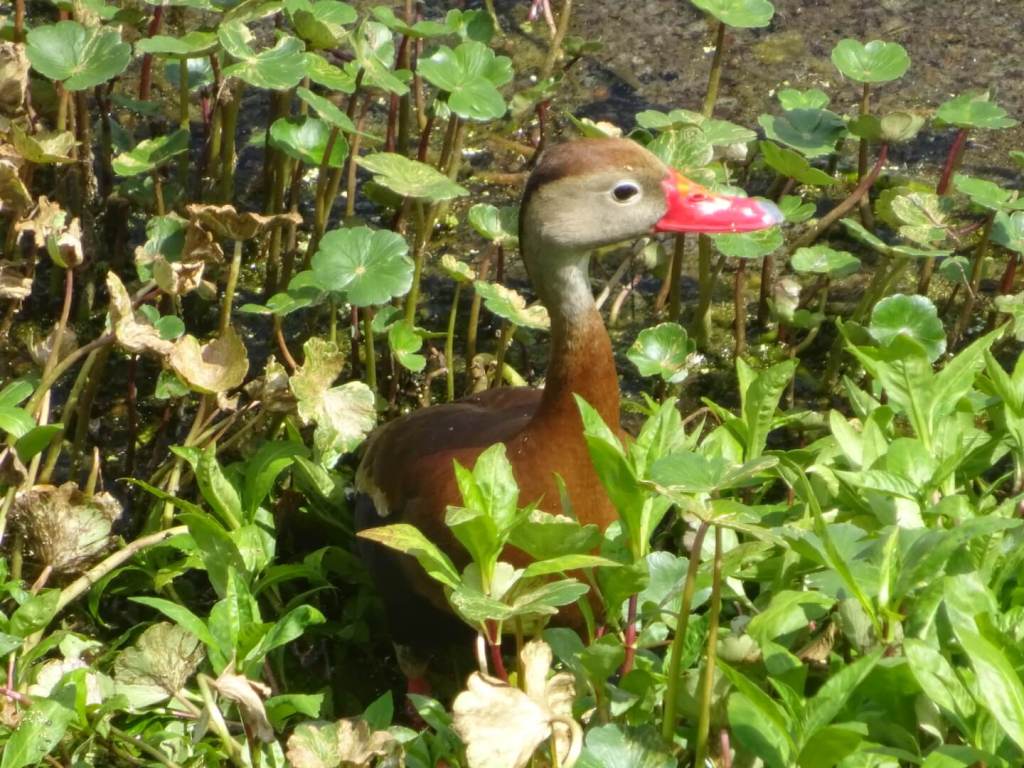
I thoroughly enjoyed my little exploration of this beautiful slice of Louisianan countryside. It was filled with gorgeous Spanish moss trees, waterways, and quaint little features including a Buddha Temple, Bamboo Groves and landscaped Venetian Gardens. I also spotted an alligator at one of the stop-offs, and my favourite just has to be the original private bird sanctuary now named “Bird City”. Fascinatingly, Edmund McIlhenny was able to bring the native snowy egret bird population back from the brink of extinction, using an idea gained from a British colonial officer’s experiences of an Indian Rajah’s outdoor aviary used to attract bountiful birdlife out there. Avery Island’s snowy egret population has increased from the original 8 wild hatchlings reared there in the original 1895 sanctuary, to the 100,000 that nest and hatch their eggs there every year. What an awesome example of conservation and environmentalism from a time when man’s God-given duty seemed to be more to dominate and subdue the earth than to protect it!
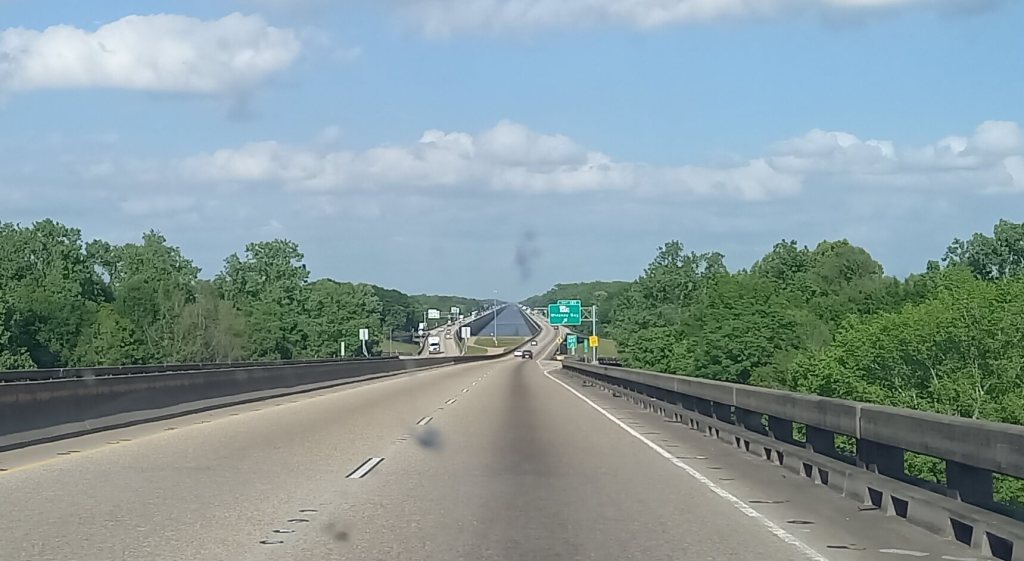
My next drive was amazing, but rather long at nearly five hours. I headed first through nearby Lafayette, capital of Cajun Country, stopping at a Domino’s Pizza for lunch which would also become my dinner heated up in my motel microwave that evening! I found the people there strikingly friendly, maintaining noticeably long eye contact which I admired. My route then took me along a very straight 30-mile section of the Interstate 10 freeway literally built on concrete stilts over the lake and swampland area of Atchafalaya below, towards the state capital of Baton Rouge, and through this rather quaint-seeming city. I then headed north over the state border back into Mississippi again, through its rolling rural hills, and finally for the evening my motel in Vicksburg on the left bank of the Mississippi. It was a rather later arrival, and after a whisky and my re-heated pizza, I called it a night, excited to be exploring again the next day.
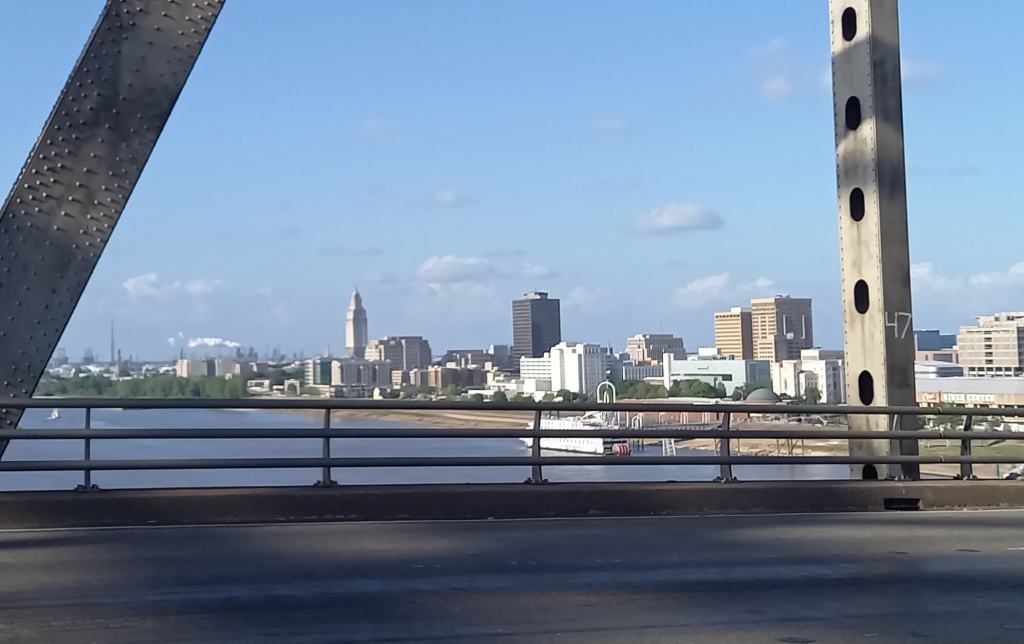
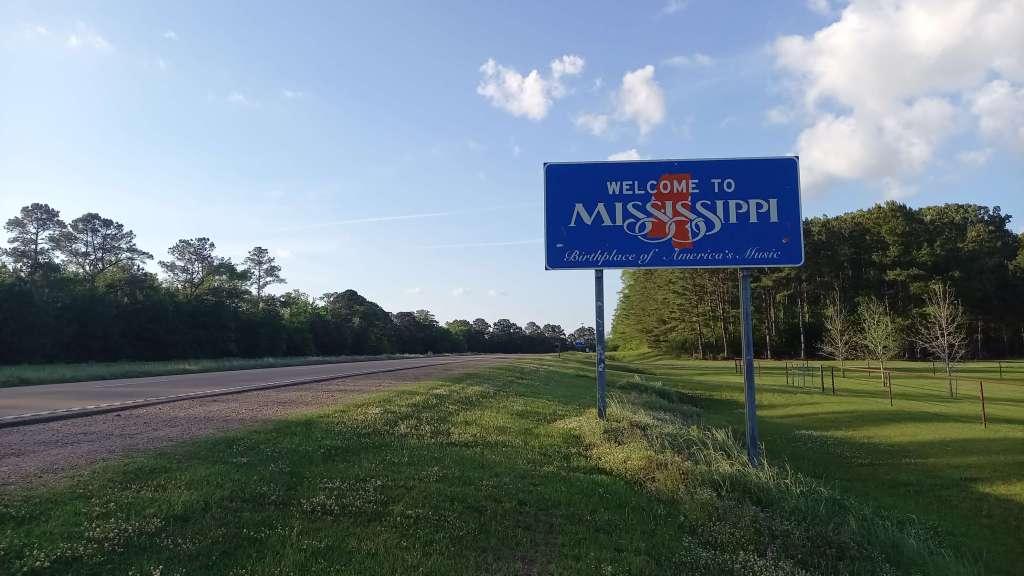
Another fairly early start the next day, I was really packing the sights in on this trip! Bidding farewell to my comfortable and friendly motel in Vicksburg, which felt a darn sight safer than my one back in New Orleans, I drove on to my first stop for the day – the Vicksburg National Battlefield! I was so pleased that my “America the Beautiful” pass got me in for free, and it had been a great investment bought in Death Valley this time last year – this was the seventh US National Park it got me into, and thus saved me a fortune with its $80 price! I was so dismayed to find out upon my return home that the price for non-US residents has now gone up to a whopping $250, while the US-resident version remains at $80. Ah well, it won’t stop me visiting these incredible US National Parks at least.
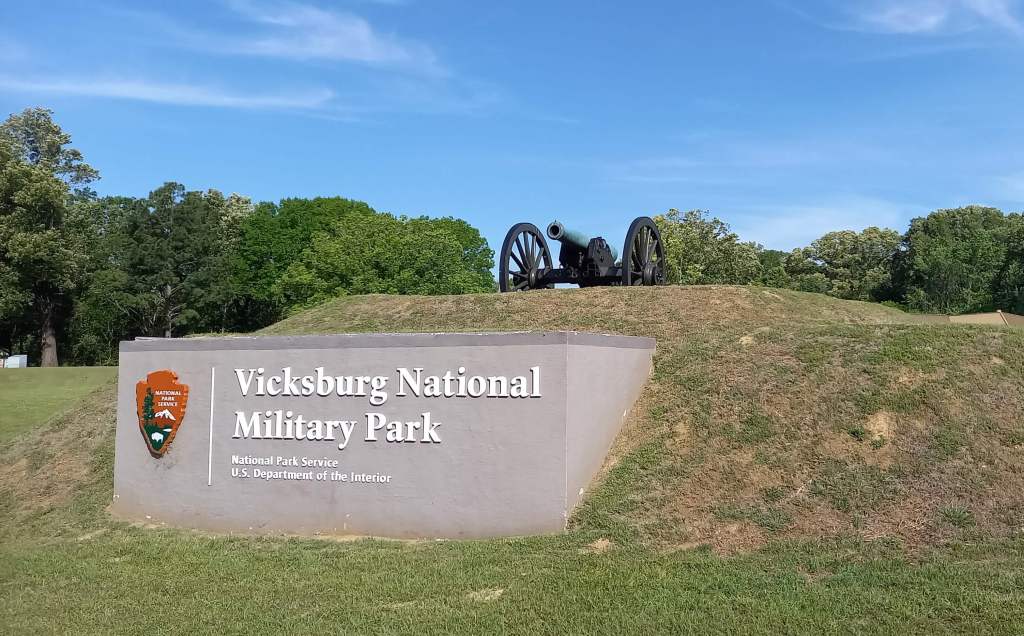
The visit began with a really emotional video introducing this most famous of US Civil War battle sites, up on a par I believe with Gettysburg, Pennsylvania. The short film brought home to me the suffering on both sides of the conflict, and I was glad that the Confederate soldiers and side were equally remembered there as the Union. This was evident both in the telling of the stories here, and also with the memorial sites throughout the battlefield to soldiers both from southern as well as northern states. I do not judge, I wasn’t alive back then, they all had their reasons for fighting, and many wouldn’t have chosen to. I saw suffering, loss and grief on both sides.
Before visiting the battlefield itself, I bought a Confederate soldier’s hat in the souvenir shop, which I had been meaning to do since buying a Union soldier’s hat back in Utah last year. I must admit I felt a bit awkward doing so to be honest, as I’m not sure how Confederate soldiers are viewed in the country nowadays – whether “the enemy” and thus evil, or with respect, I’m not sure. After all, the victor writes the history books.
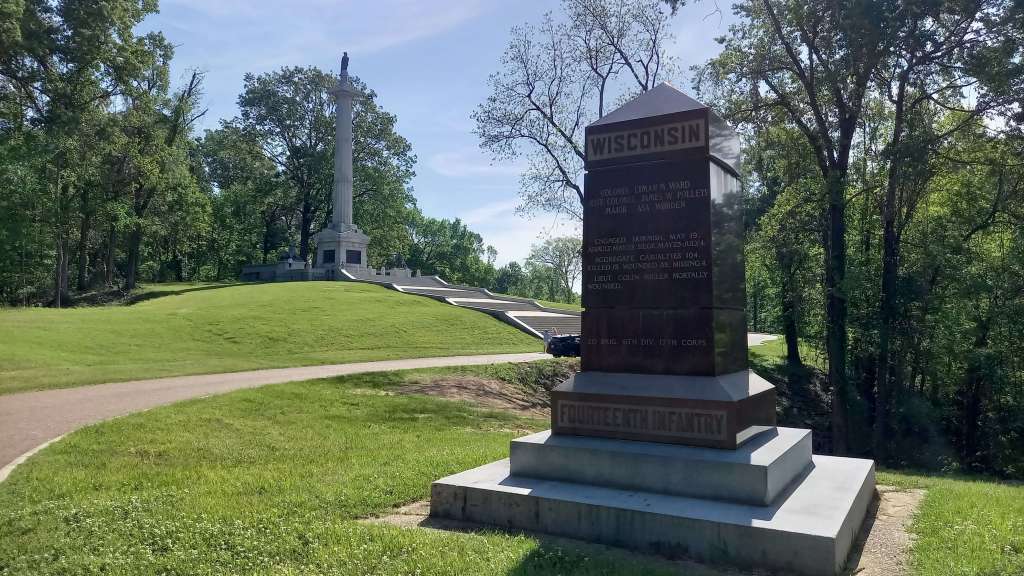
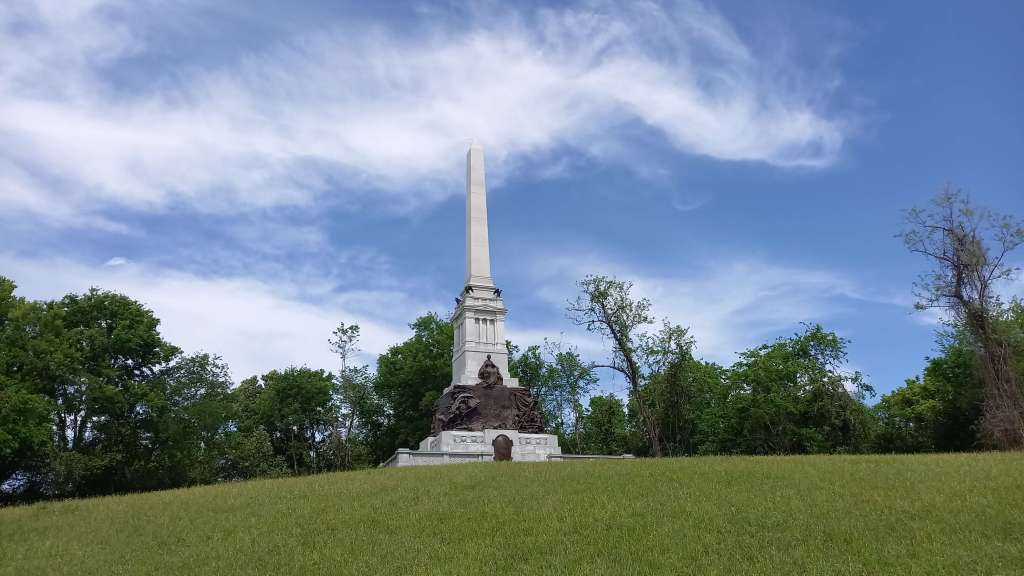
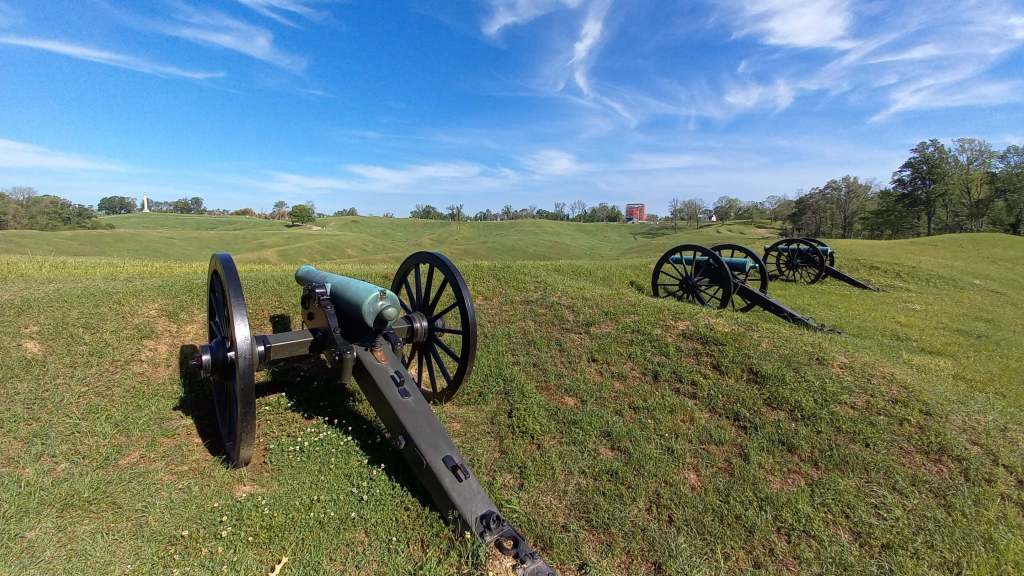
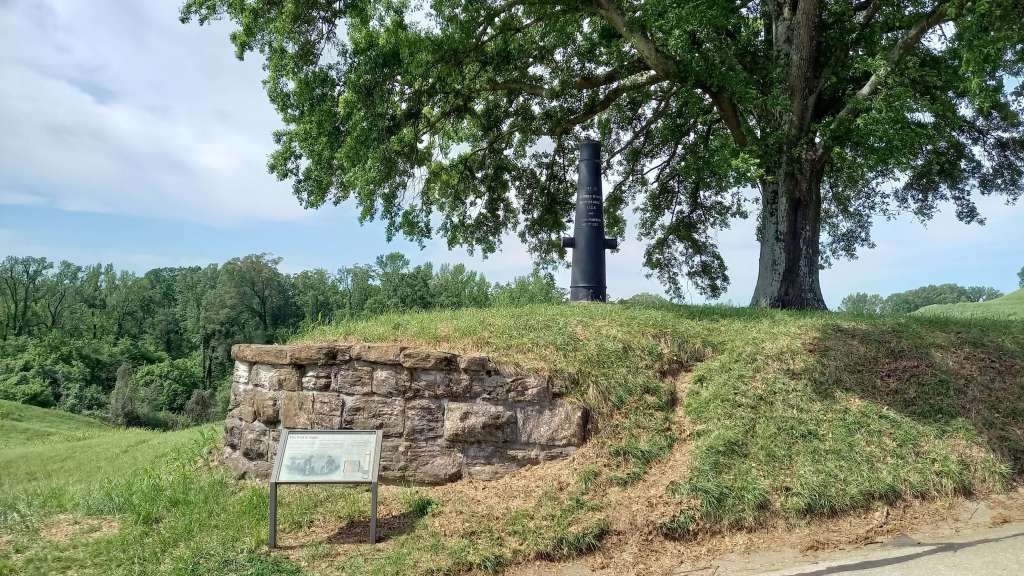
What followed was another great self-guided driving tour around the key sights of the battlefield, including many memorials, monuments, cannons and reconstructed trenches. The Siege of Vicksburg was a key turning point in the US Civil War, in which Union soldiers lay siege to this strategic town on the banks of the Mississippi River which supplied the whole Confederate effort. The siege lasted 47 days in total, with great suffering as one can imagine in the civilian part of the town. In total around 1,500 Union soldiers were killed and 3,700 wounded, with around 3,000 Confederate soldiers either killed or wounded. The Confederates surrendered on 4th July 1863, making it a key victory for the North during the War – it disrupted the South’s supply line from the south, and split the Confederates between the east and the west of the river. Abraham Lincoln called Vicksburg “the nail head that holds the South’s two halves together”, and thus the North’s victory here was pivotal.
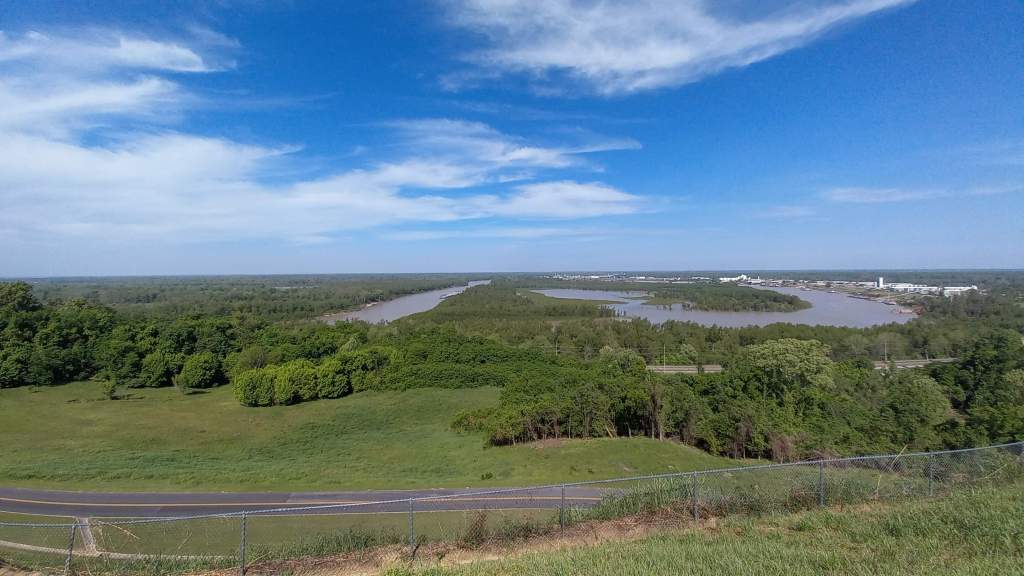
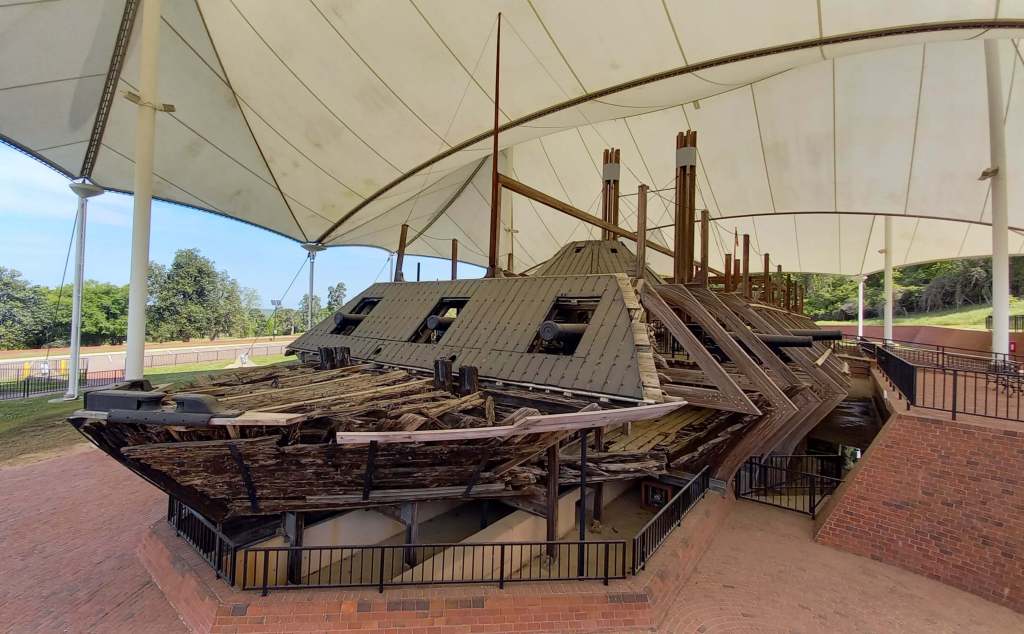
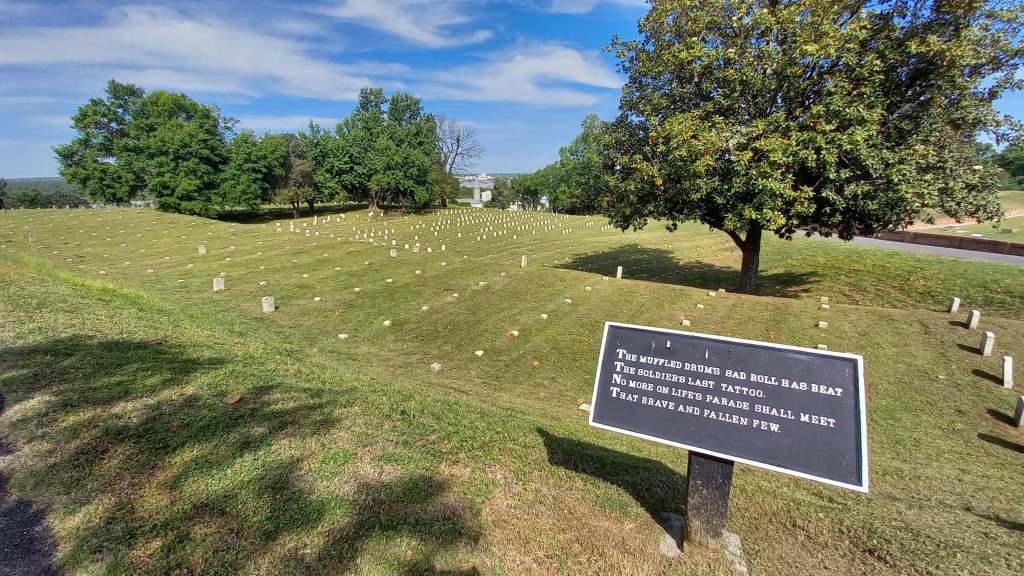
I enjoyed the driving tour around the key sights and stopping at various points. Highlights included the 100m high lookout built on a natural bluff overlooking the Mississippi River, from where the South was able to protect and control this vital supply line within its hinterland – naturally a fort, called Fort Hill, had been built on the top. Other highlights were the poignant Vicksburg National Cemetery, final resting place for 17,000 Union soldiers, and the fascinating USS Cairo ironclad gunboat which was explorable both inside and out! This Union vessel was sunk by the Confederates in 1862, and remained at the bottom of the nearby Yazoo River until it was raised and restored in 1964. It was absolutely fascinating to walk in and around the decks and corridors of this fascinating Civil War relic.
I also met with a great man on my rounds, a Baptist pastor, three times in total. During our final meet I felt our encounter was meant to be, as we happened to properly get talking this time at the Surrender Monument, the very location where Union Major General Ulysses S. Grant met with Confederate Lieutenant General John C. Pemberton on 3rd July 1863 to agree the Confederates’ surrender terms. On a more mundane level, I had been wondering myself that morning whether to visit the State Capitol Building, the William J. Clinton Library and Museum, or the Little Rock Central High School, when I arrived in Little Rock, Arkansas that afternoon. I would only have time for one proper visit before all their closing times. It turned out that this pastor used to minister in a Little Rock Baptist Church attended by Bill Clinton and his family, whom he knew personally and spoke fondly of (at least of Bill and Chelsea…). I saw it as a sign, and I knew where I was heading next.
But of course, more on that in my next!

 Alex Waring's Travel Blog