
27th July 2026
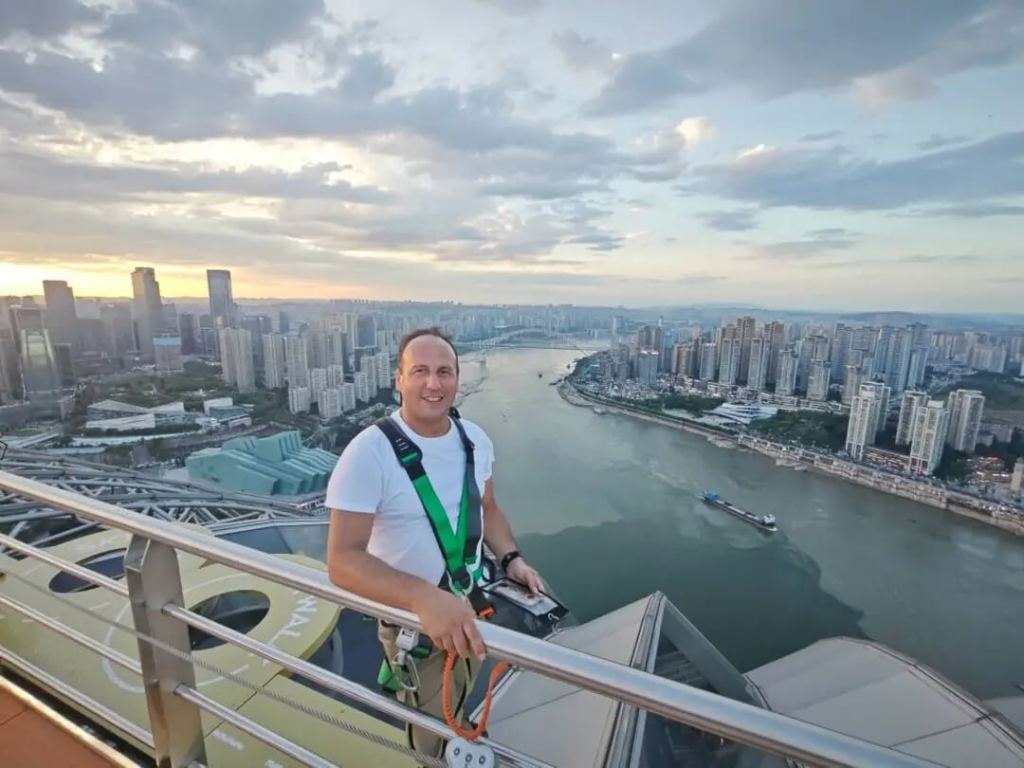
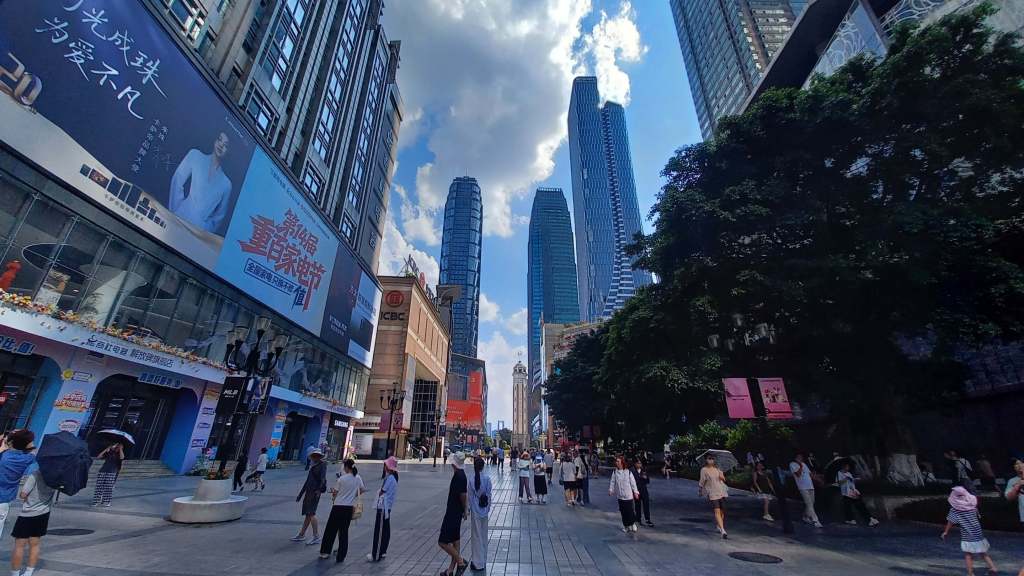
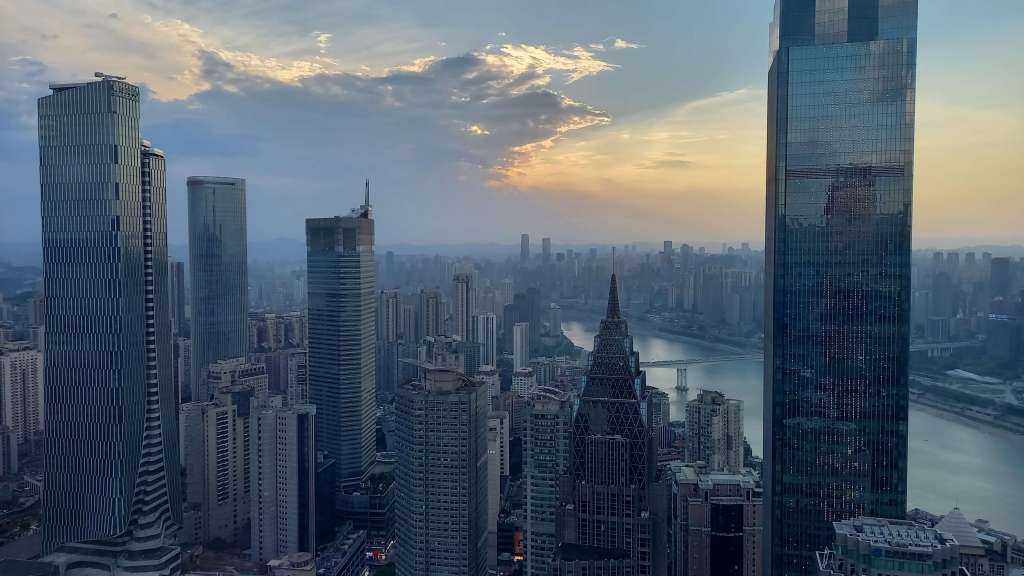
Greetings from quite possibly the least-known unbelievably attractive and unique city of Chongqing. It’s an absolutely incredible city which I’ve wanted to visit since I first read about it back in my China 2002 travels. With many nicknames, including “Blade Runner City” and “Cyber Punk City”, I’d call it myself China’s answer to New York’s Manhattan.
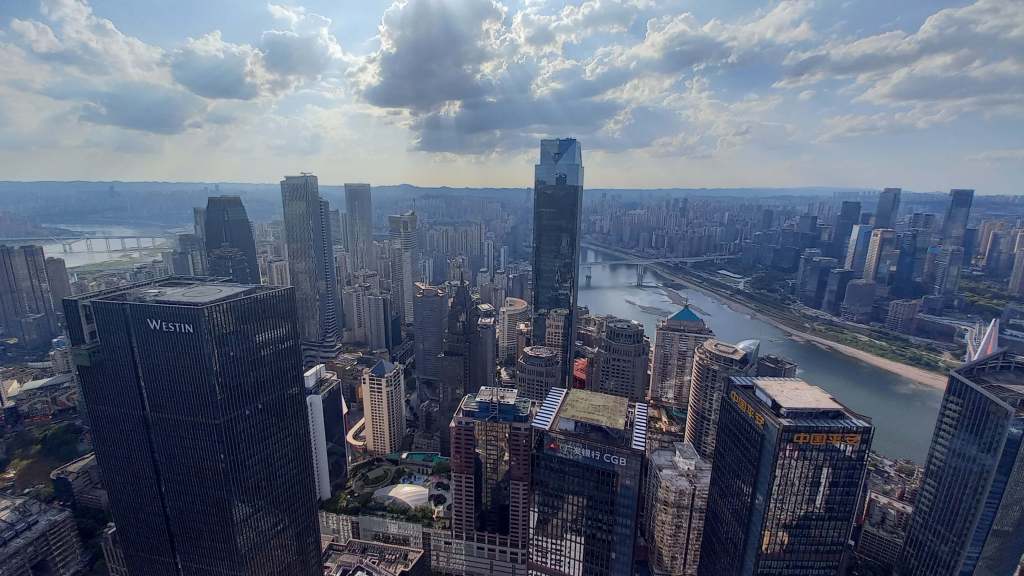
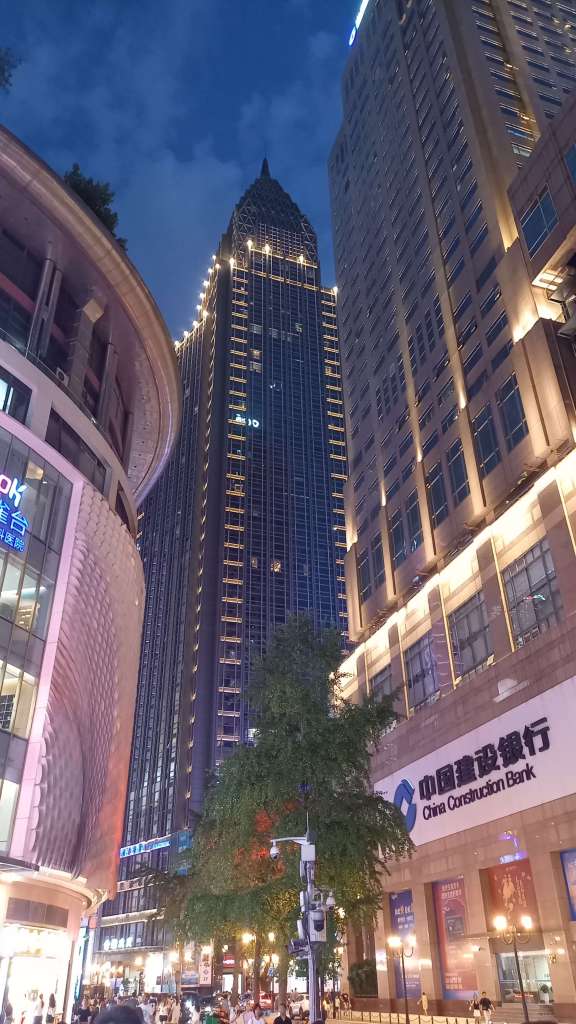
The city centre is similarly located on a peninsula at the confluence of the mighty Yangtze and Jialing Rivers, and is absolutely filled with gleaming and towering skyscrapers, as are the hilly areas on the opposite banks of both rivers. Walking down its central streets feels just like walking the skyscraper valleys of downtown New York, but of course with a Chinese feel, and the serious 40°C heat of an inland Chinese summer. I’ve been absolutely captivated by the place since arriving.
After saying goodbye to my gorgeous boutique hotel with the gorgeous view (for the price of a budget hotel) in Guilin, I boarded a four-hour bullet train north to Chongqing. My antiperspirants survived the bag inspection this time, but I’m afraid my recently-bought bargain-priced Scotch didn’t fare so well. In order to reduce my weight carried, I decantered my litre of whisky from its glass bottle into two 500ml plastic bottles. It seems as though liquids not in their original bottles are another one of China Railway’s no-nos though. The security found one of them and I reluctantly turned it over, but fortunately they didn’t find the other, and I wasn’t about to declare it… It could have been worse I guess.
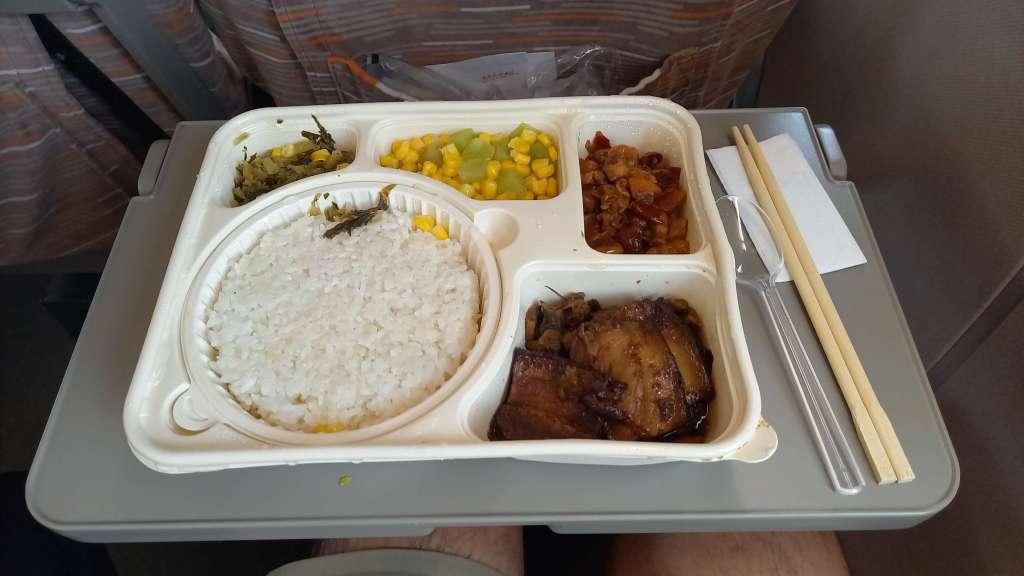
Once on the train, I kept my second class seat this time rather than requesting an upgrade to first class like last time, as the whole 16-carriage train was completely filled to the brim – there were no seats spare anywhere, and some people were standing. It was actually fine, my neighbours were quiet and chilled, and the views form my window seat were just incredible. On this journey through China’s rugged heart, there seemed to be more tunnels and flyover concrete bridges than actual normal rail track on land itself. These Chinese engineers, and just China in general, are just something else! In between tunnels, there were glimpses every now and then of remote rural mountain valley villages and paddy fields. I also had an onboard hot lunch – food on these trains are plentiful, and most passengers seem content with their pot noodle offerings, as hot water on tap is also plentiful. I went for a set meal – Pork in Plum Sauce, with lots of little compartments of rice, vegetables and spices. Although it was rather spicy, it was absolutely delicious. I just loved the food throughout my travels, and the tastes – they really set my taste buds a-tingling.
Arriving at massive Chongqingxi Station, I took a Didi, to of course my Ibis Hotel there – I was beginning to miss them! This one was right in the heart of the city centre, in the middle of the Chongqing action, and my room was on the 13th floor of one of the city’s numerous skyscrapers. I could see the city’s famous 228m New York New York building, modelled in Art Deco style after Manhattan’s skyscrapers, just across the road from my room. It was great to be right in on the action, and still have a peaceful and cosy Ibis Hotel room to come back to in the evening.
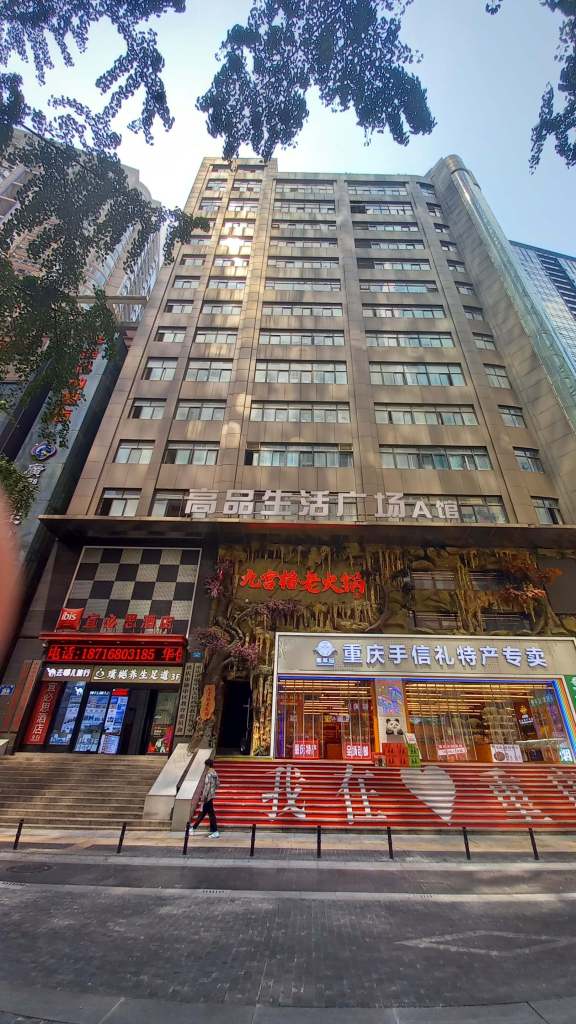
After a short rest, my sightseeing began. And boy was it hot! Chongqing is famously one of China’s hottest cities, and there’s a local phrase saying that the weather is hot, the food is hot, and the women are hot (not in the “ooh-la-la” sense, but in their fiery temper apparently…!!) It was around 40˚C throughout my time there, and it was rather noticeable! I was glad to have been able to keep my antiperspirants…!
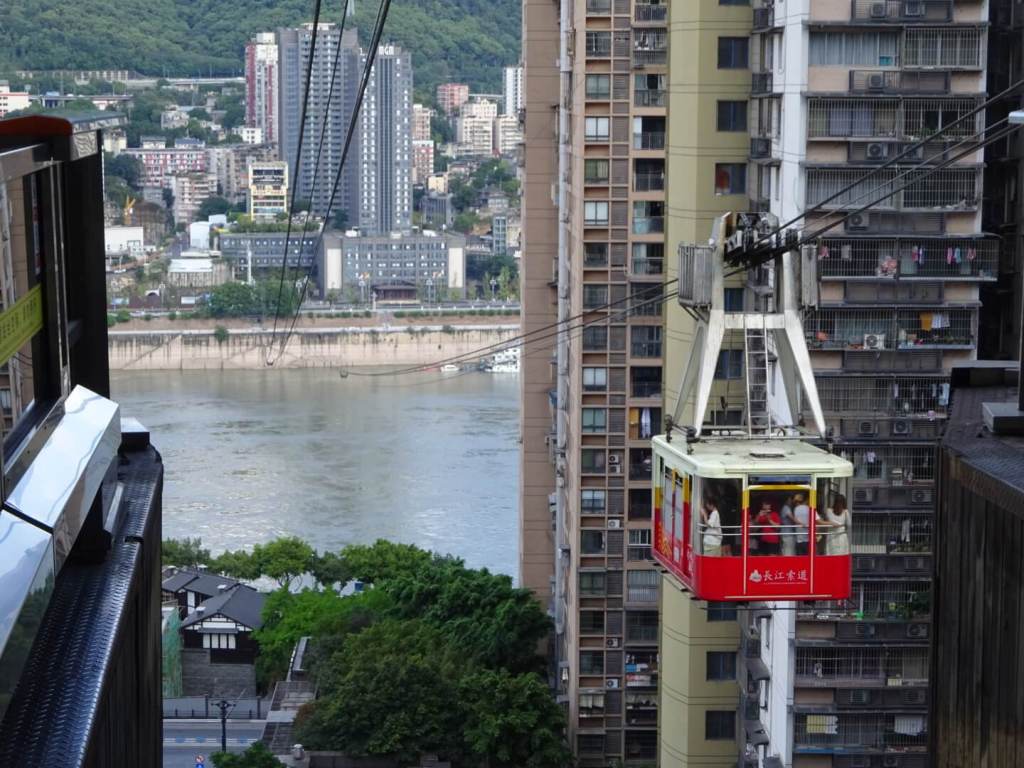
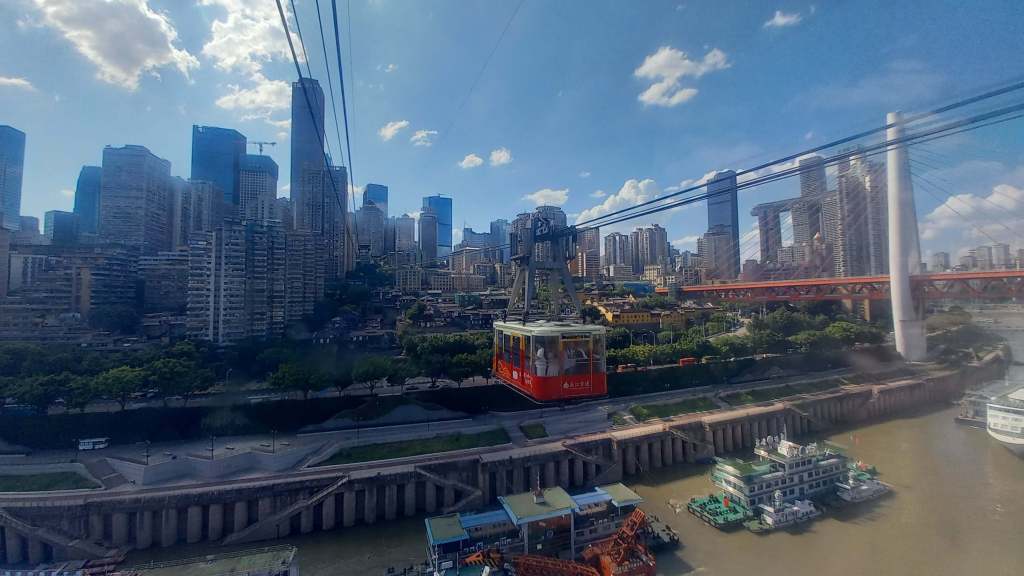
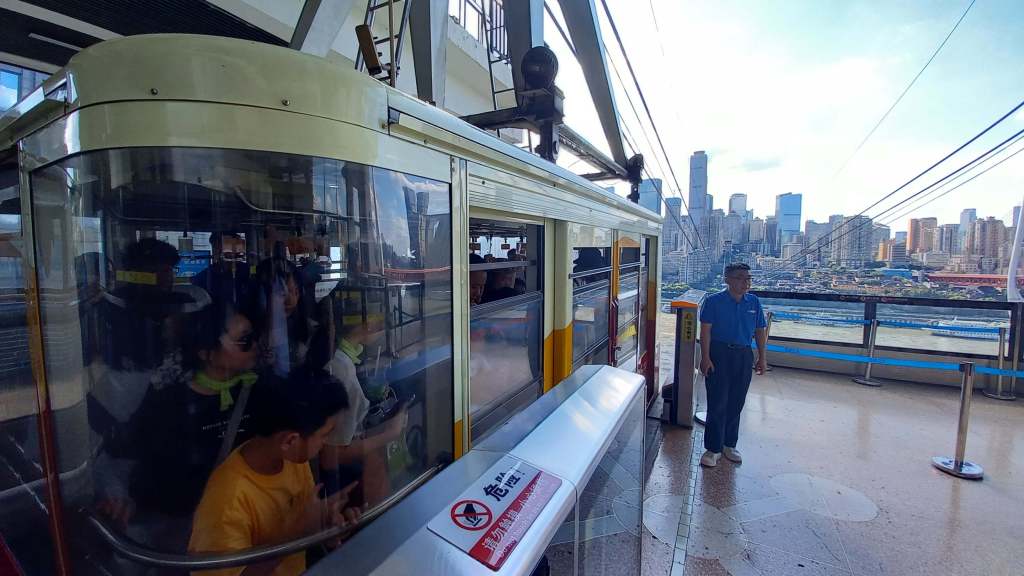
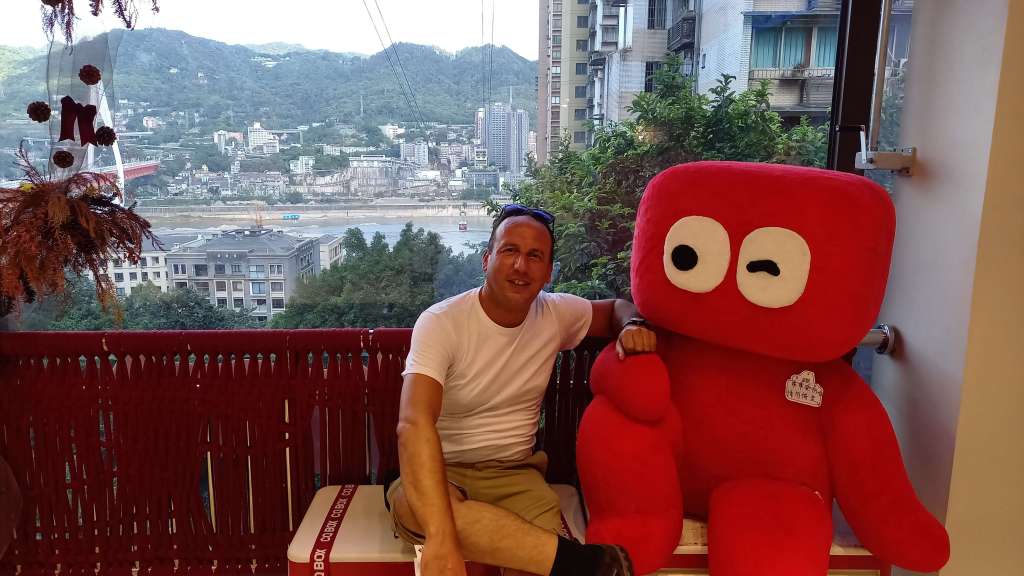
First up, the city’s famous Yangtze River Cableway to the opposite bank and back again. Originally built in 1987, it was apparently once a commuter trip into town from the opposite bank of the Yangtze River in the Longmenhao Residential District. Now it is very much a tourist hotspot, and understandably so. The city views were incredible. Skyscrapers were just everywhere, in the midst of this confluence of two mighty rivers, and there was hilly ground as far as they eye could see. Chongqing is described as a “highly vertical mega-city”, and the buildings and roads are a complex of multi-layered architecture built into steep mountains and river gorges. The cable car was the perfect way to see it all from high in the sky, over the Yangtze, and admire the views all around. I lucked out on my way there and back to be honest. Going there, there was no queue, and there were only around ten of us in the car. Coming back there was a massive queue, but for some reason when I showed my ticket I was escorted to the front of the line – I wasn’t complaining. The car going back was understandably filled to the gills though, and there must have been around 50 of us squeezed in. Fortunately I was first on, so went straight for a window view – I wouldn’t have appreciated an armpit view on the way back…!
While many describe Chongqing as the “largest city in the world”, with 32 million residents, this is not quite reflective of the size of the actual urban metropolitan conurbation itself. Chongqing Municipality covers 32,000 square miles, an area the size of Austria, to include its 32 million people, and thus this gives it the nomenclature of “largest city in the world”. However, much of this municipality land is in fact rural, and the urban metropolitan centre itself is only around 2,100 square miles and is home to around 10 million people. Thus, calling Chongqing the world’s largest city is quite common, but to my mind is not entirely accurate.
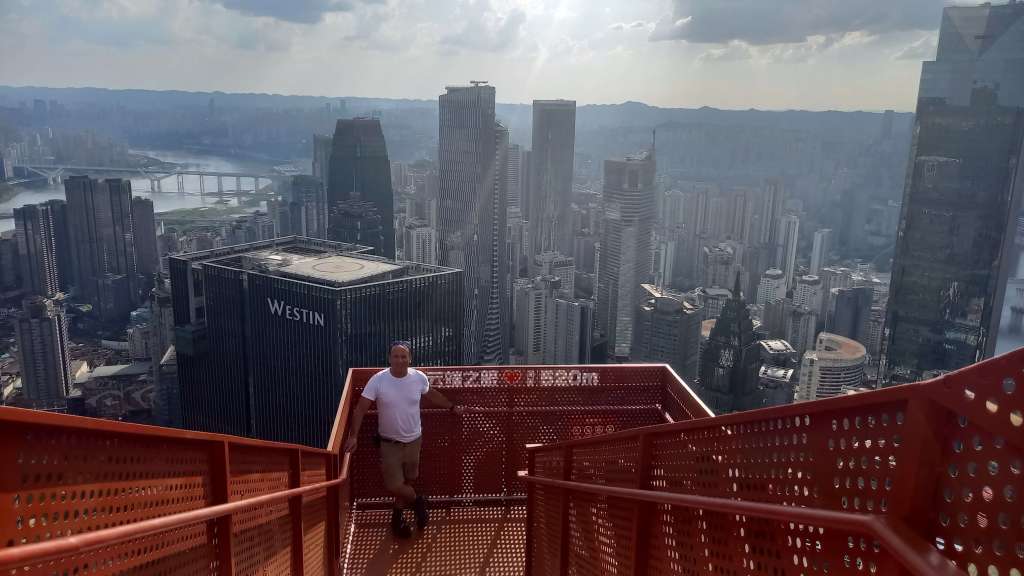
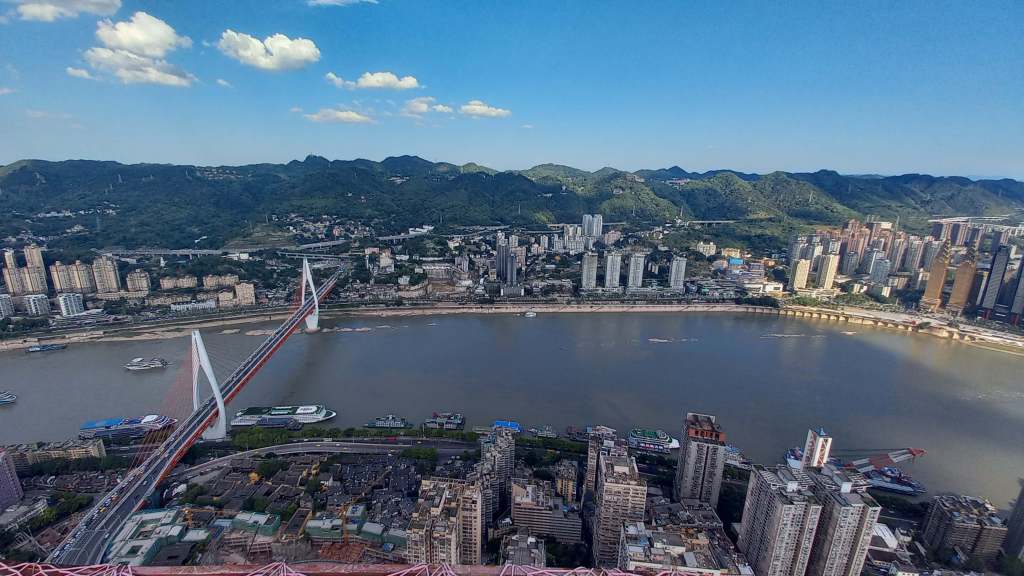
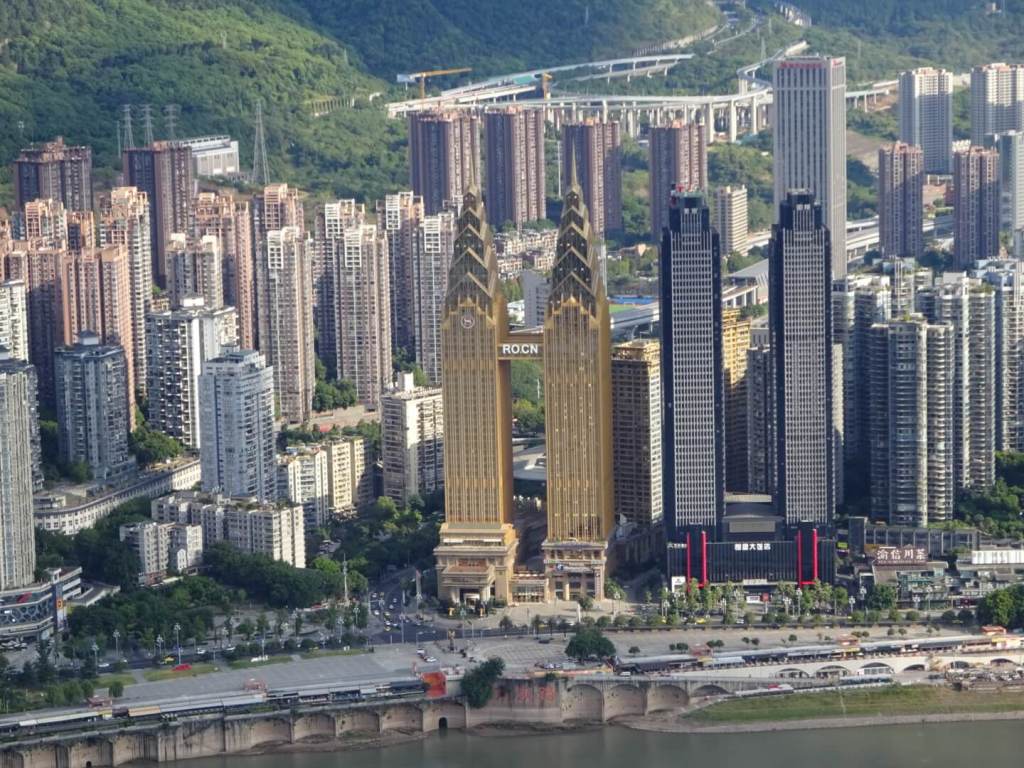
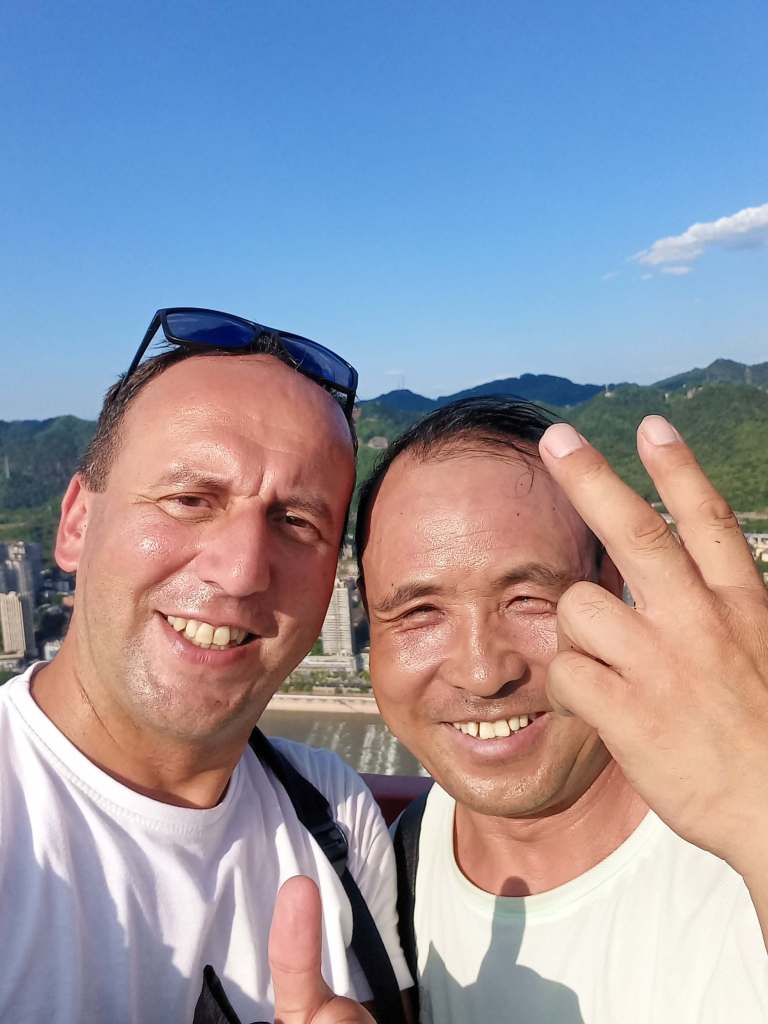
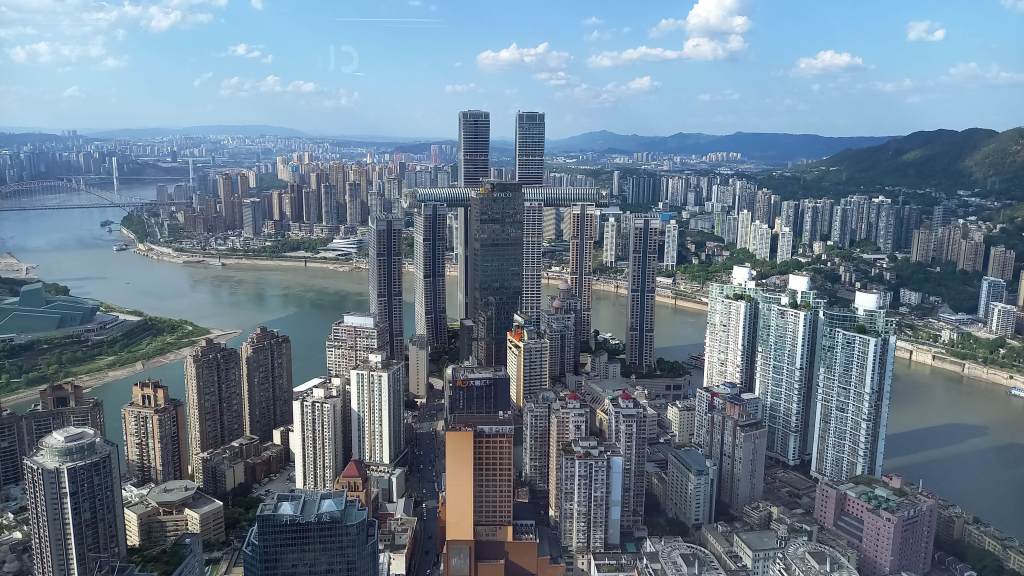
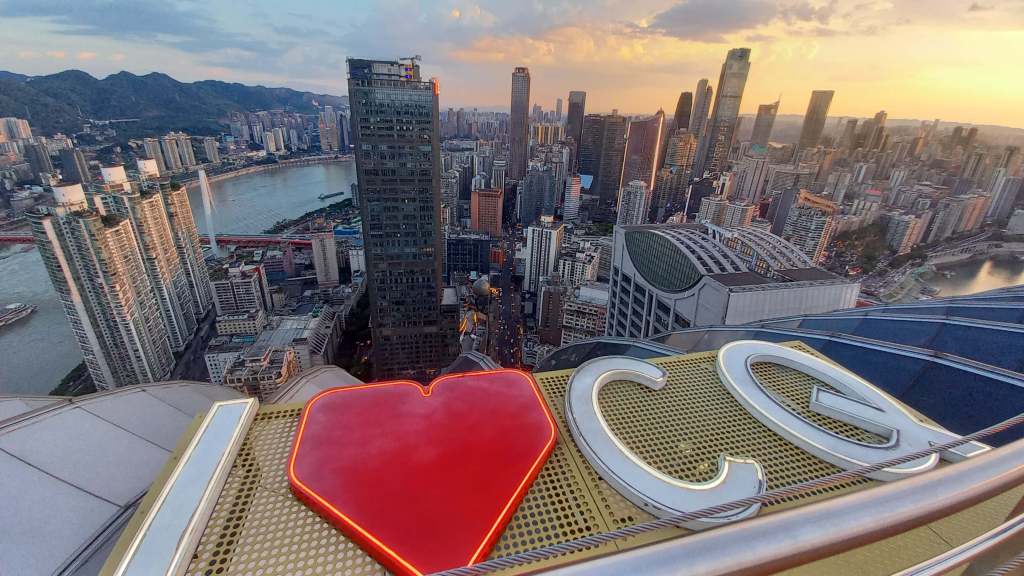
More views were had at the nearby 520m high Chongqing Cloud Eye Observation Deck on the 67th floor of the United International Building, and subsequently the massive shopping, residential, office and hotel complex called the Raffles City Chongqing. Here, I inadvertently signed myself up for its “Skywalk” by asking for a ticket to the building’s highest point. Had I known that this would have involved a vertigo-inducing rooftop walk using a harness and attachment to a metal rail running all along a rooftop connecting the tops of four of the Raffles City skyscrapers and back again, I’m not sure I would have chosen to do it! In fact, I was glad I didn’t know, as I absolutely loved it! I did it during the time of sunset, and the views were just incredible. The outdoors experience of it all wearing the safety harness, strapping myself to the metal rail, and enjoying the cooling wind up there made it really very special. I finished my time after the Skywalk on the building’s viewing deck, called the Exploration Deck, watching the countless gleaming skyscrapers start to light up as dark set in, with some of them flashing in different colours. There was also a glass floor up there, which was certainly vertigo-inducing, and a swing which swung riders over the edge of the building and back again – I left that one out of my visit…!
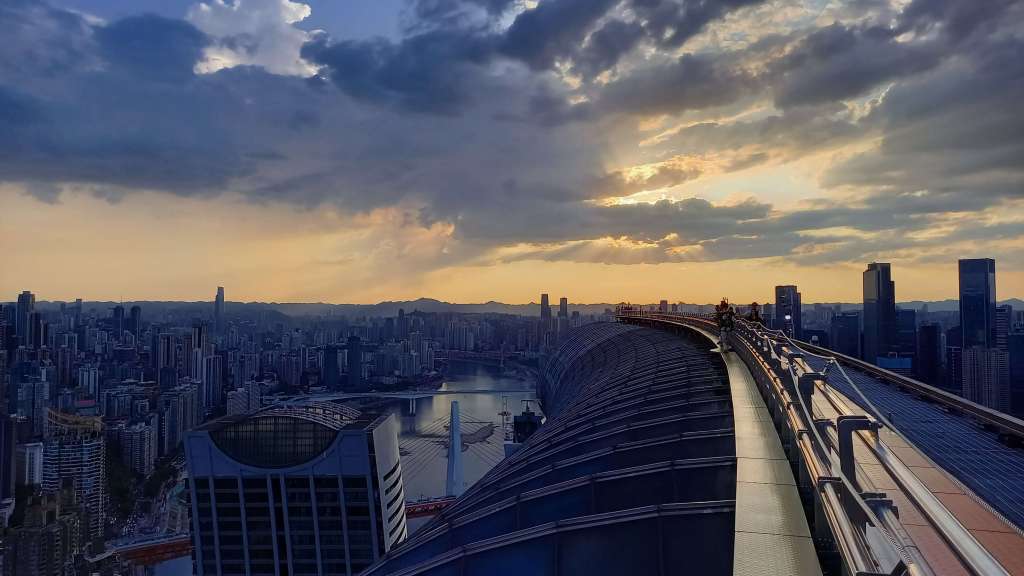
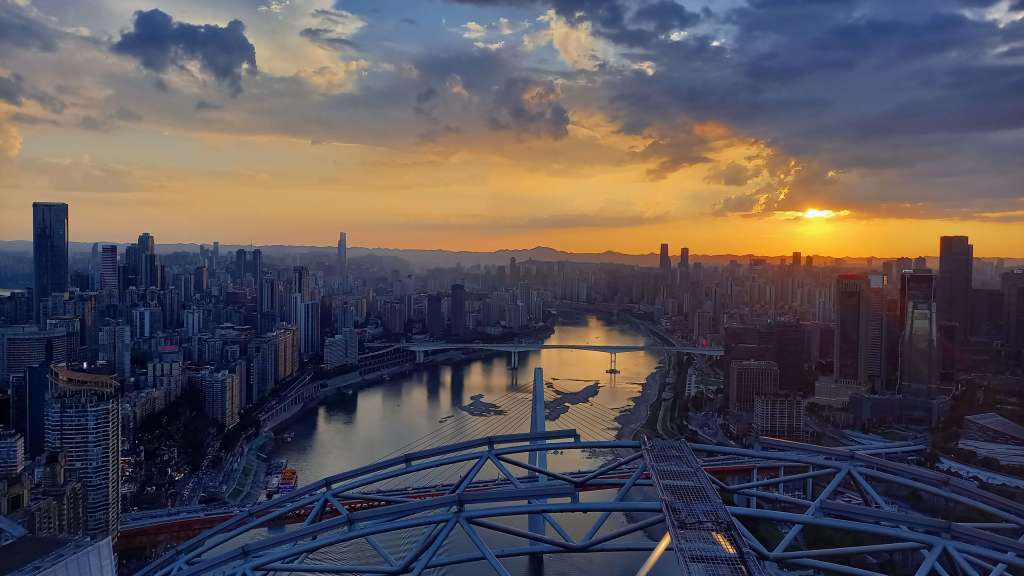
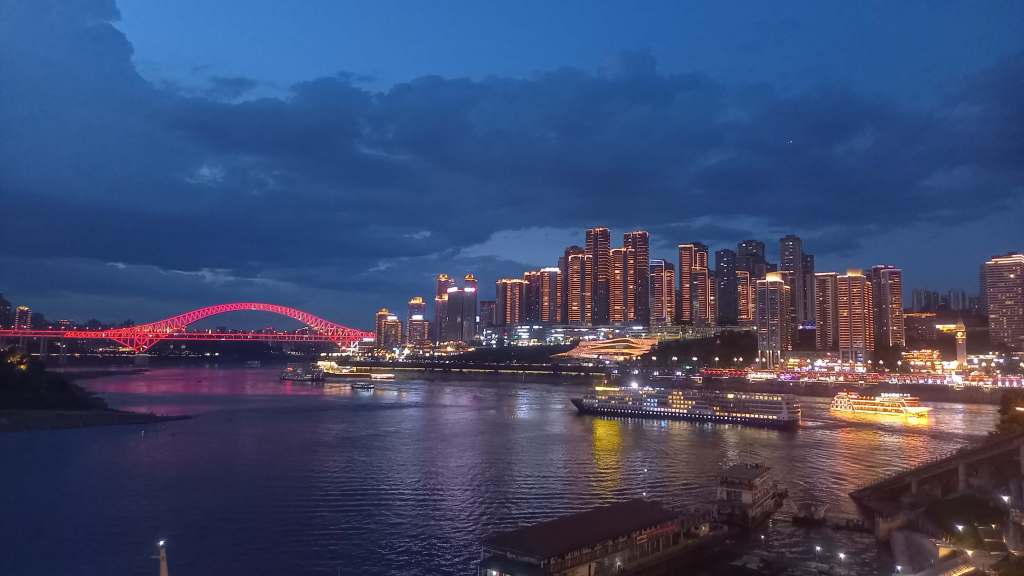
Finally for the day, I headed back to my hotel for the evening, after what had been just an incredible introduction to this incredible city. More to come the next day!
Indeed, the next day was certainly another incredible one, and I still couldn’t quite imagine how this Chinese Manhattan came to be, slap bang here in the middle of China. But here it is!
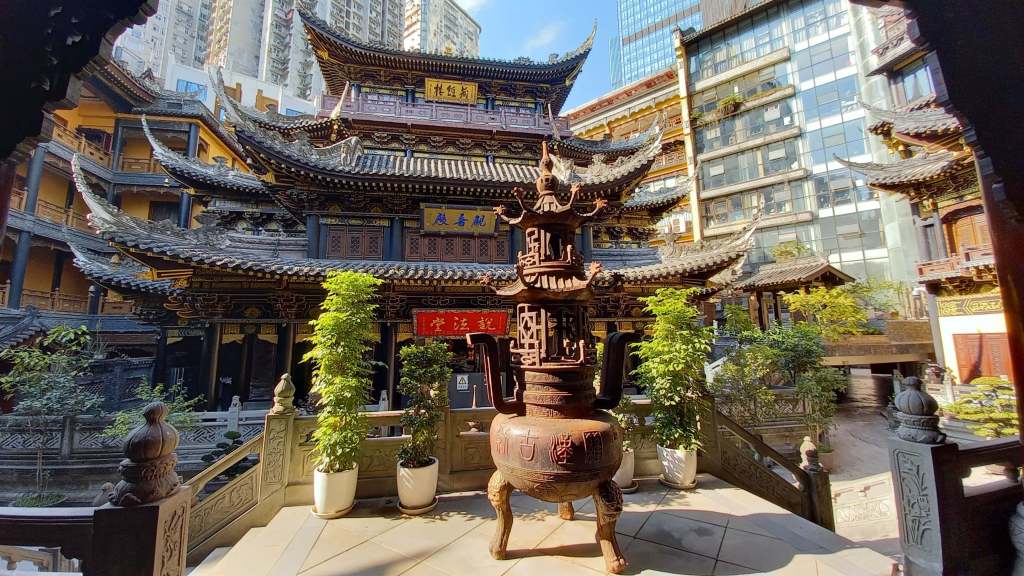
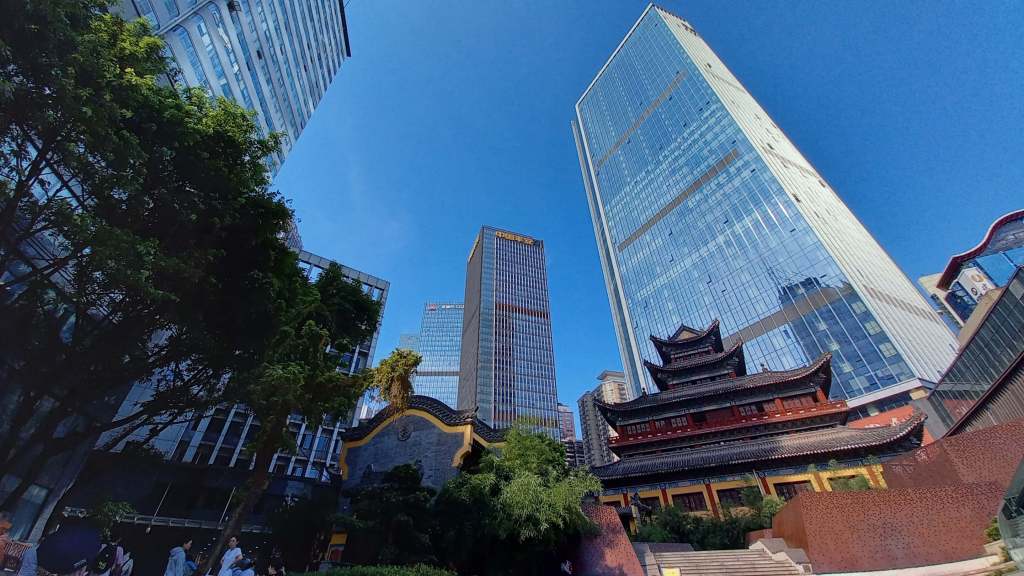
Despite the modernity, the Luohan Temple dates back 1000 years and sits right in the middle of all the gleaming skyscrapers, rising up like modern bell towers fringing this ancient building. I made this place my first visit for the day, as it was just around the corner from hotel, itself right in the middle of everything. Also known as the Arhat Temple, its most famous sight is “The Hall of 500 Arhats”, filled with 524 life-size statues of Arhats depicting various people throughout history who have achieved the state of Nirvana by following the teachings of the Buddha.
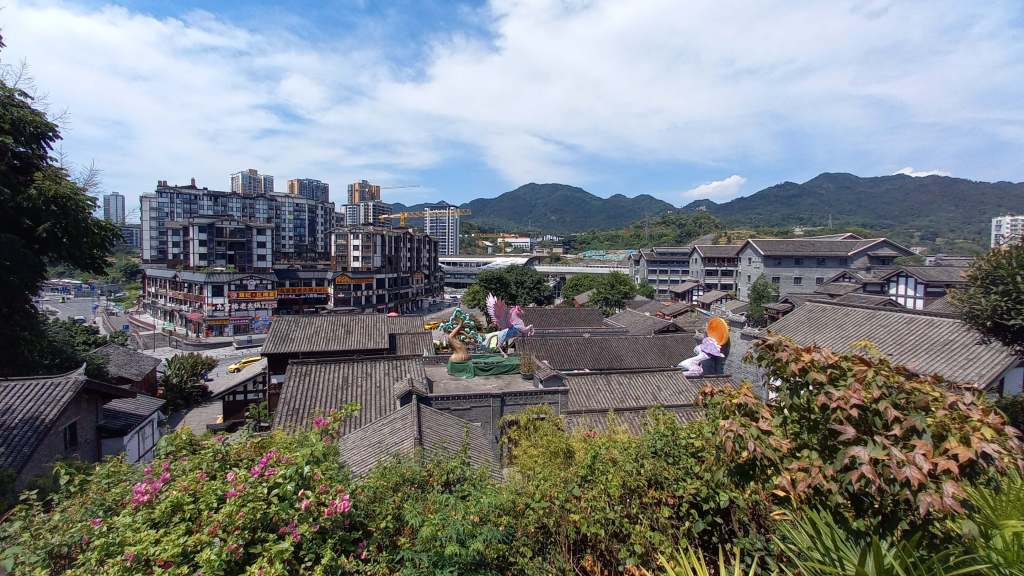
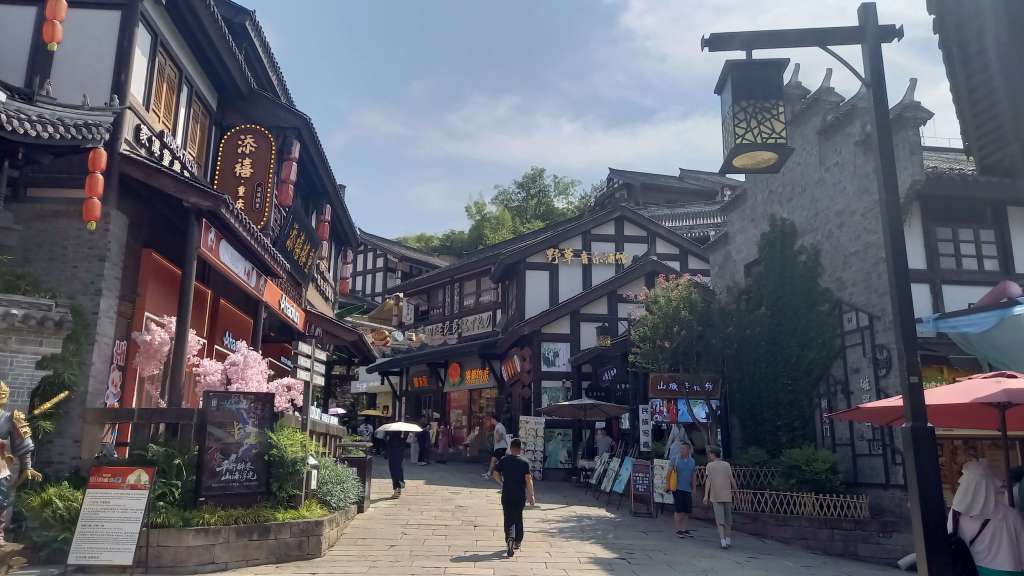
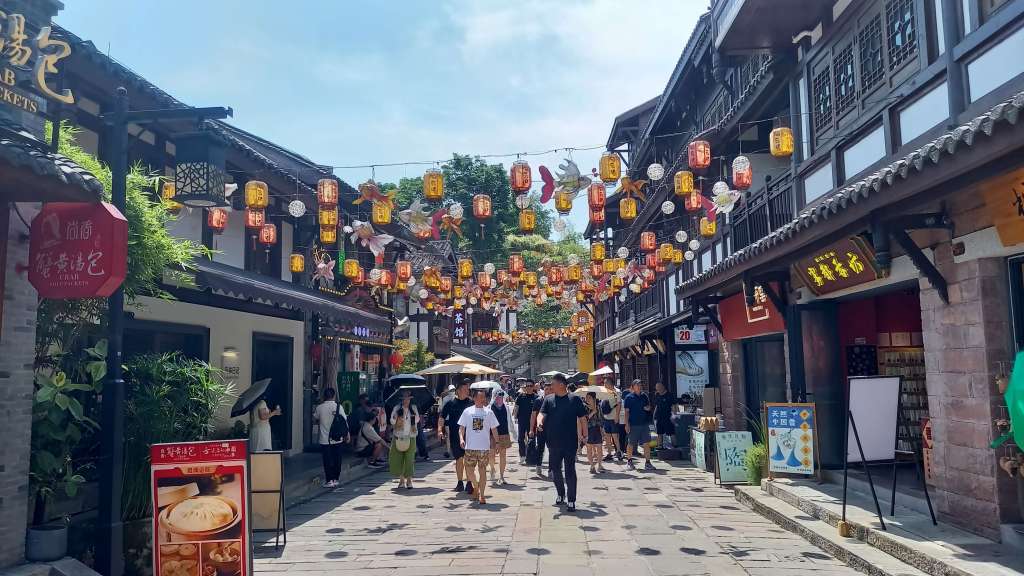
I then took the Metro way out west, to the distant suburb of Cikiqou, also known as “The Old Chongqing”. This place was a delight to explore, with lots of little streets connected by alleys and stairways, all filled with souvenir shops selling all kinds of Chinese curiosities, from medicinal products to cute (or “ke’ai” in Chinese), “Hello Kitty” type products. It wasn’t quite so busy as I had imagined, probably because it was still in the early morning, but it was certainly boiling! Ducked into a “Dairy Queen” for an ice-cream and air-conditioned recovery in the middle of my visit.
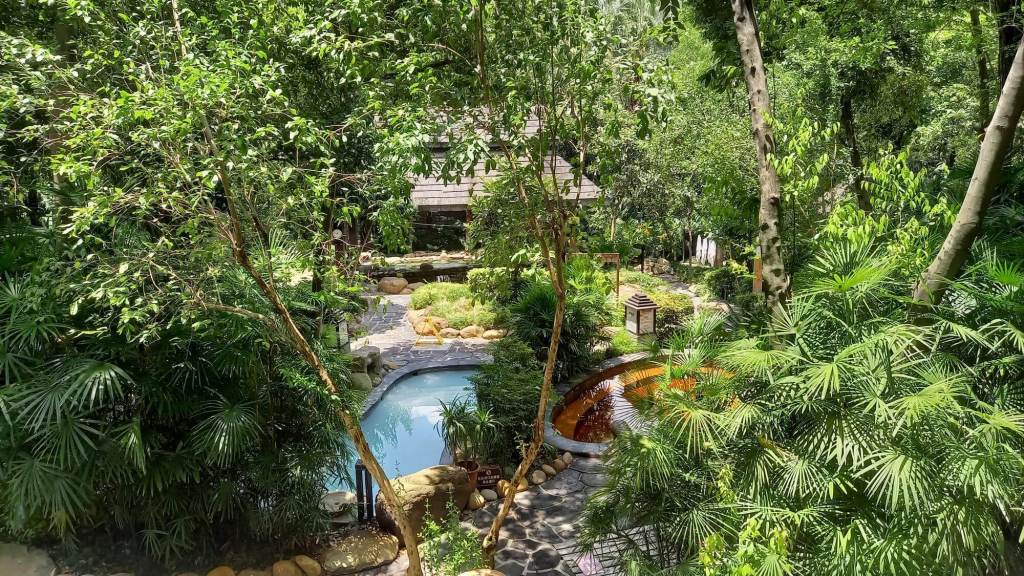
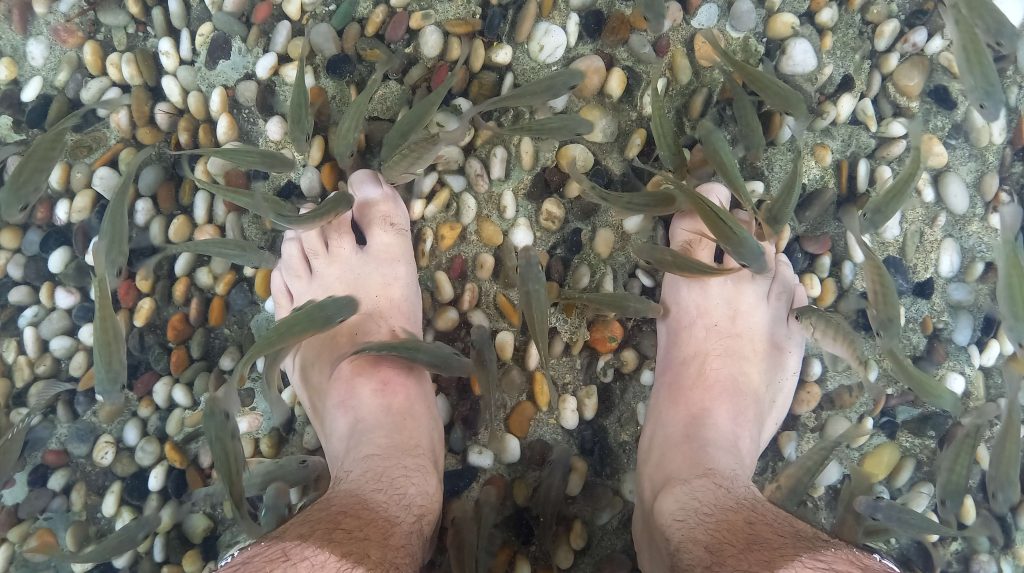
Then took a taxi to the highlight of the day for me, the Ronghui Hot Springs – a glorious collection of pools taking advantage of the Chongqing region’s natural thermal spring waters. There were at least 20 different pools of varying temperatures, also with varying ingredients including lots of herbs, and even coffee, white rice, and red wine, which were my favourite! I also loved the two feet-nibbling fish pools, one with baby fish and the other with bigger ones. The latter was the next level up for this highly unusual experience which I’d never done before, and which I was glad I tried.
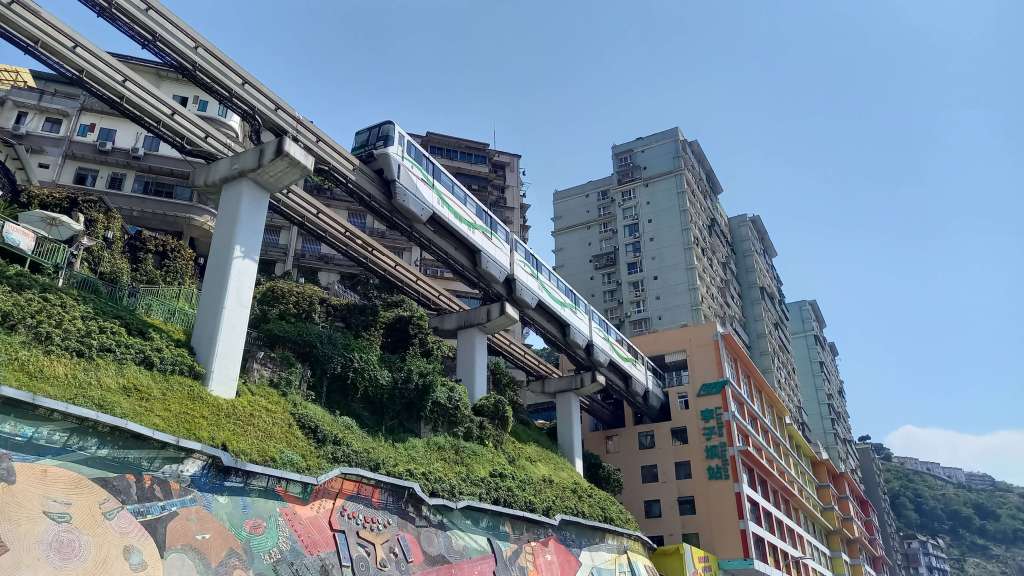
Then to the very popular Liziba Metro Station, in which one of Chongqing’s 14 tube lines enters and exits a station on the 11th floor of an apartment building. After joining the throngs to take photos of the trains entering and exiting from the outside, I took the same Metro line back into town again, which not long after exiting the 11th floor of a building later went underground – such is the mania of this multi-layered city for which it is famous. My Lonely Planet describes wandering around Chongqing “like a real-life game of Chutes and Ladders”, which of course translates into proper English as “Snakes and Ladders”! I couldn’t have agreed more.
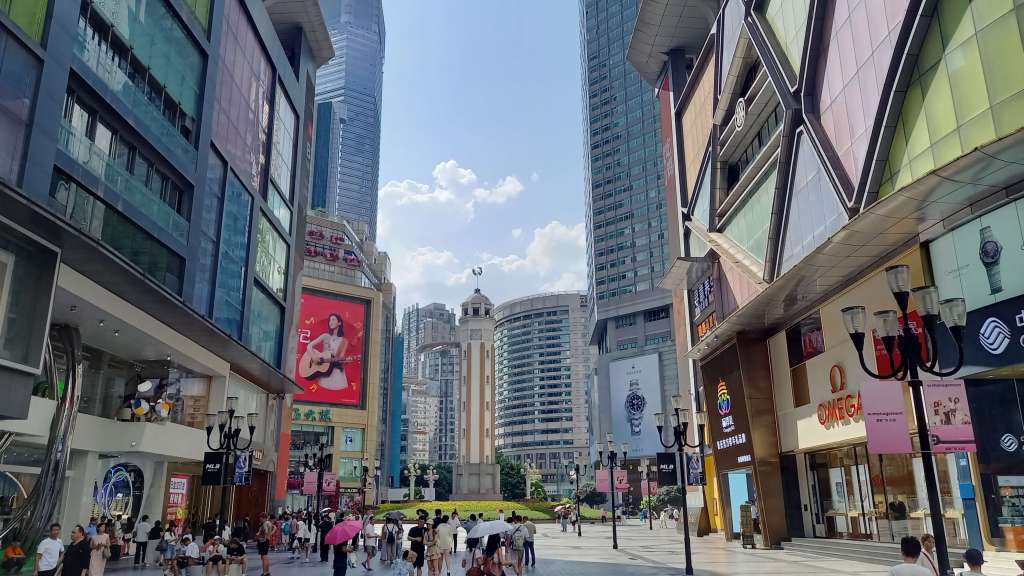
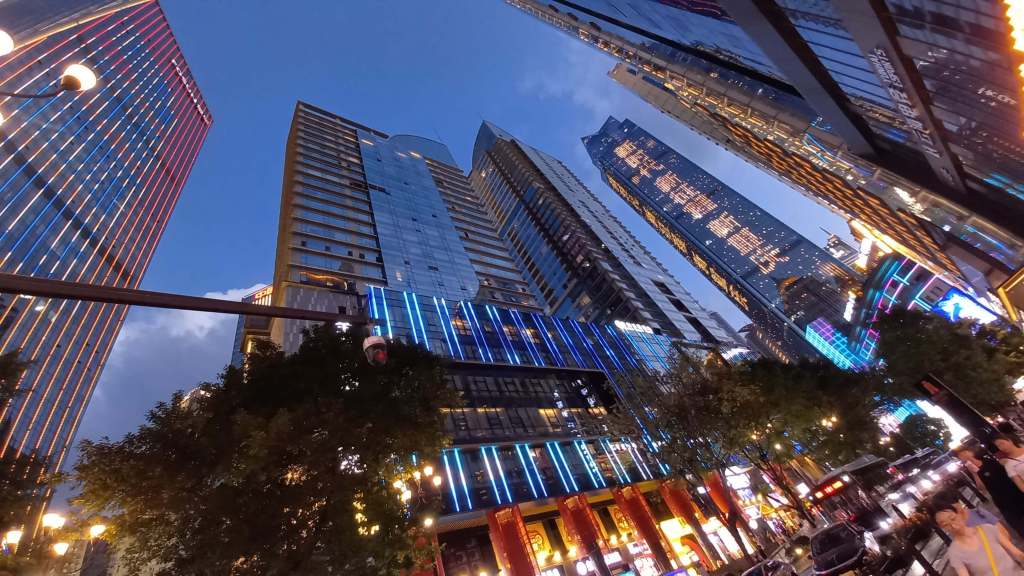
On the way back to my hotel for a short afternoon rest before dinner, I dropped by “Times Square”. Literally called this, it is indeed akin to its New York counterpart, with its huge neon displays surrounded by gleaming skyscrapers, but just here in the middle of the boiling Chinese summer heat! It is also centered around one of the city’s most famous historical landmarks, the Jiefangbei Clock Tower. Also known as the People’s Liberation Monument, it was initially built in 1940 to inspire Chinese resistance against Japanese occupation during World War II. Following Japan’s defeat in 1945, it was renamed to commemorate China’s victory at the end of the War. I hadn’t known it until my visit, but the city of Chongqing was heavily bombed by the Japanese during WWII, as it served as the country’s wartime capital for the Chinese Nationalist government, away from the more easily-targeted east coast cities.
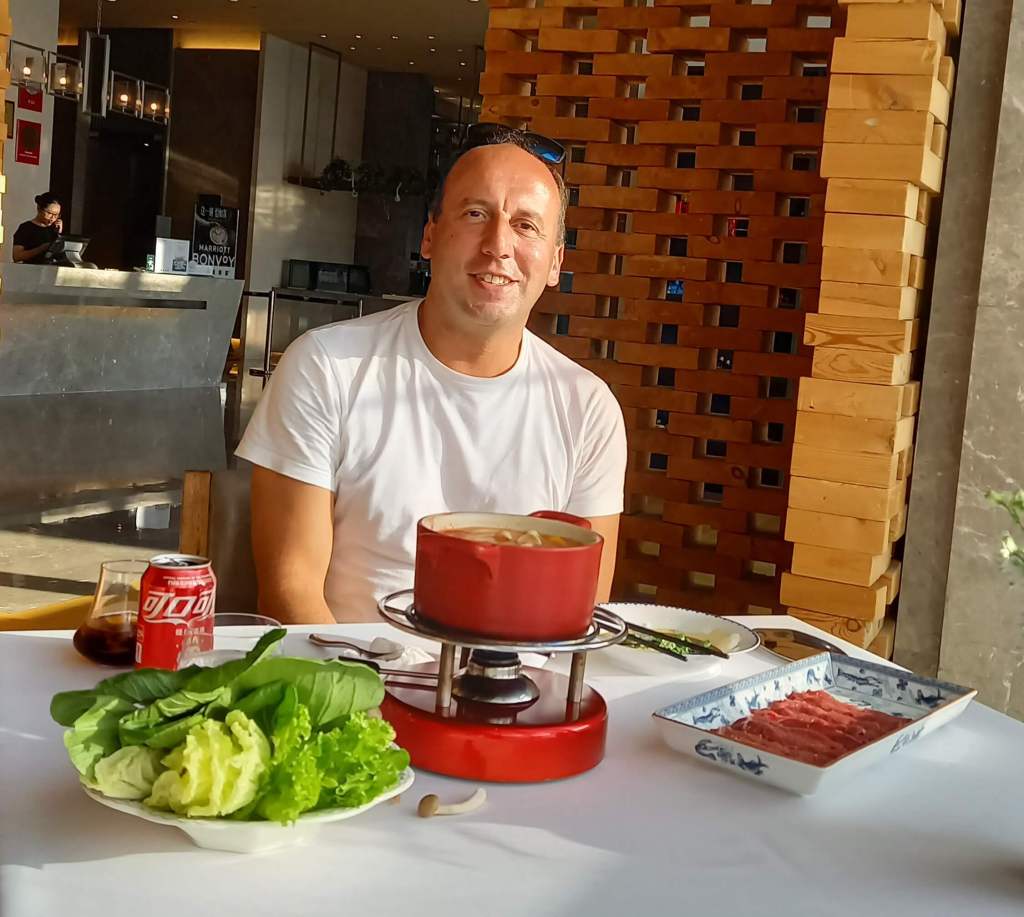
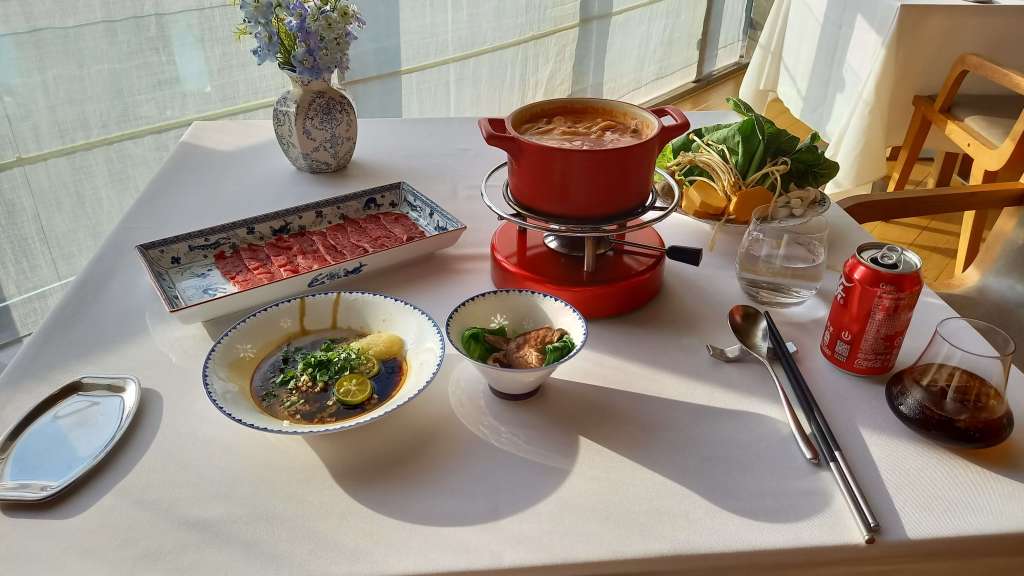
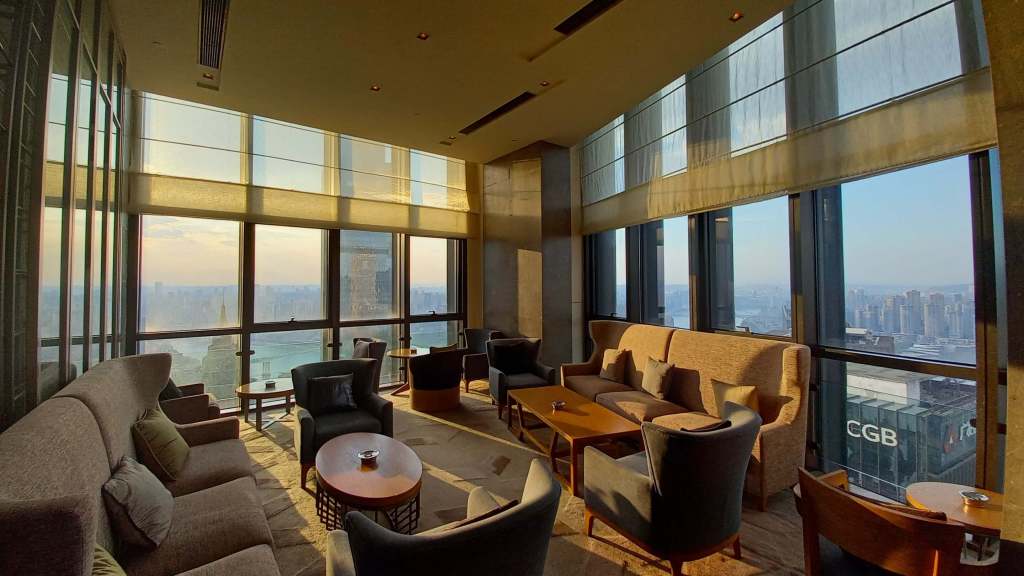
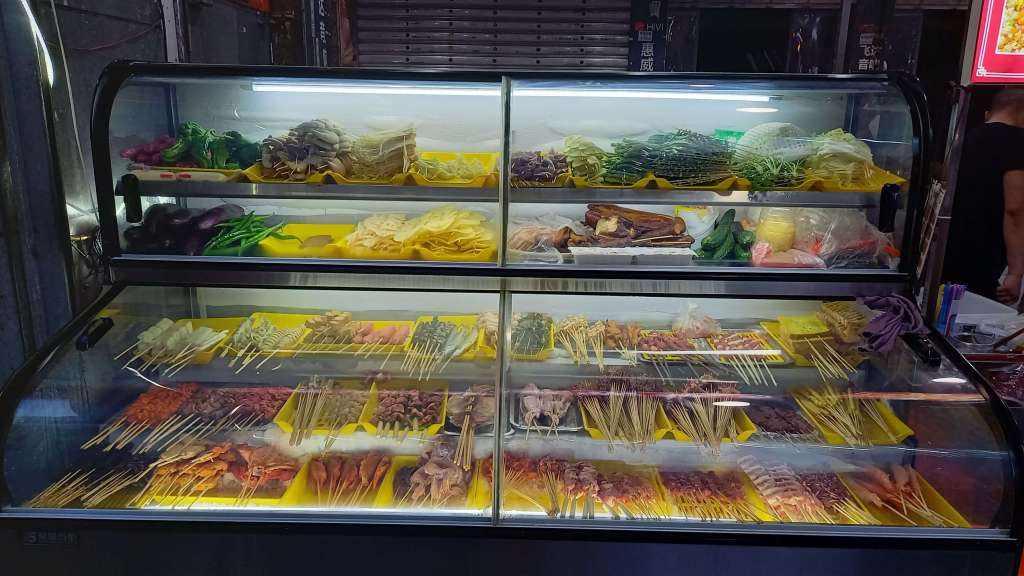
I don’t normally have a rest in the afternoon on my travels, but I was heading out to dinner that evening! Rare, as I normally have a self-made dinner in my hotel room when I travel. On this evening though, I was off out to try Chongqing’s most legendary dish, the super-spicy, even fiery, hot pot. Considered a warming meal by the locals in the winter, they still go at it in the boiling hot summer, which I’m not sure as to why! I had booked a table on the 50th floor restaurant of the nearby Westin Hotel, with more sublime views over the city. Although I do like spicy food, I wasn’t sure about risking my delicate stomach on this famous Szechuan dish, so opted for the tomato-based non-spicy version. It was actually very pleasantly non-spicy, and I was surprised as when a westerner asks for “non-spicy” in these parts, food is still pretty darn spicy for the western palette! My waitress brought out a pot of tomato broth which was heated underneath by a gas flame. I then dipped in my pieces of beef, vegetables and mushrooms to be cooked, before enjoying wholeheartedly this veritable mini-feast. The restaurant also had a wonderful “cigar room” on the 51st floor above, which I visited for an after-dinner smoke. It was very much like an old gentleman’s club with city views, and was a perfect evening retreat for this (fairly) old British gentleman.
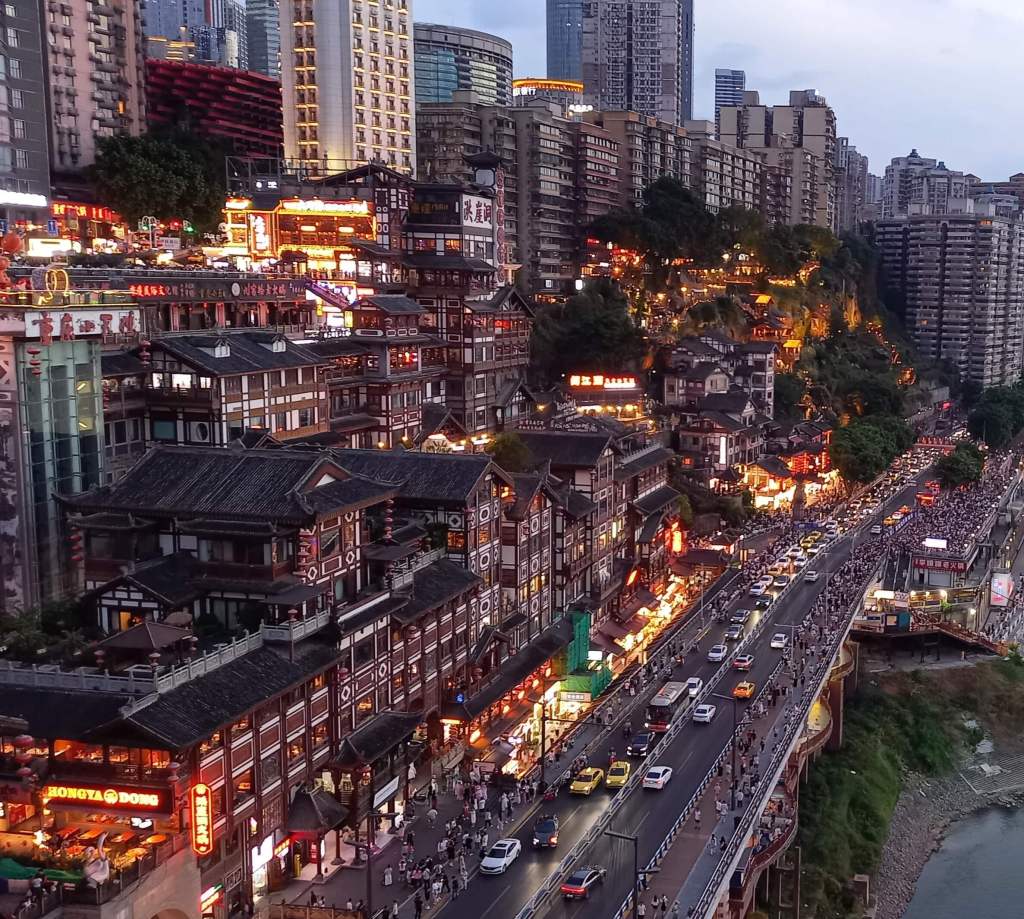
Finally I headed to perhaps the city’s most famous attraction, the Hongya Cave. A stunning 11-story architectural gem built into the city’s northern cliff face over the Jialing River, it is said to resemble the castle from “Spirited Away”, especially when lit up at night. I visited and stayed long enough to get a feel for the place and to get a photo or two, but it was absolutely not my cup of tea at all. With less people I would have loved it, but it was probably the busiest place I have ever been to in my life, and actually felt dangerously overcrowded. Goodness knows what would happen if there were an emergency in there. I scarpered not long after, took a few photos from the equally intensely-crowded Qiansimen Bridge nearby for a good view of it from above, and made it through the still-busy but much more manageable rest of the city back to my hotel. Chongqing really does come alive after the sun goes down, as the intensity of the day’s heat is over and people start coming out of their air-conditioned hotel rooms for dinner. This was my time to head back into my own air-conditioned bliss on the 13th floor of the Ibis Hotel, for a very chilled evening in.
I absolutely loved my time in this unique gem of a city, quite possibly the most amazing city that no-one’s ever heard of! Goodbye Chongqing, “Manhattan of Middle China”, you have been amazing – blooming hot, but amazing!
The next day I was starting my three-night Three Gorges Dam River Cruise downstream to Yichang – I was so excited!


