
25th July 2026
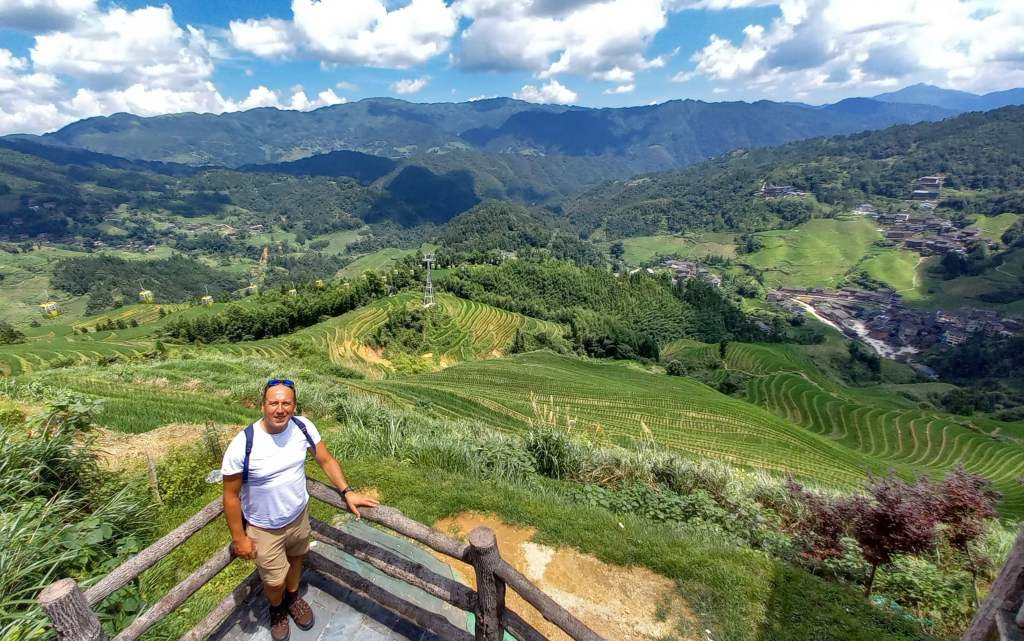
Hello and greetings from absolutely delightful Guilin!
When one thinks of a typical Chinese rural picture, I imagine most people will come up with this place. While Guilin itself is still a fairly sizeable city of around two million people, it feels a bit more sedate than Guangzhou or Shanghai, with its city centre filled with lovely lakes and rivers, and it is surrounded on all sides, 360°, by gorgeous, forested limestone pinnacles rising straight up out of the green, watery landscape. As mentioned, it is a place one generally associates with the Chinese rural scene, and it is just gorgeous!
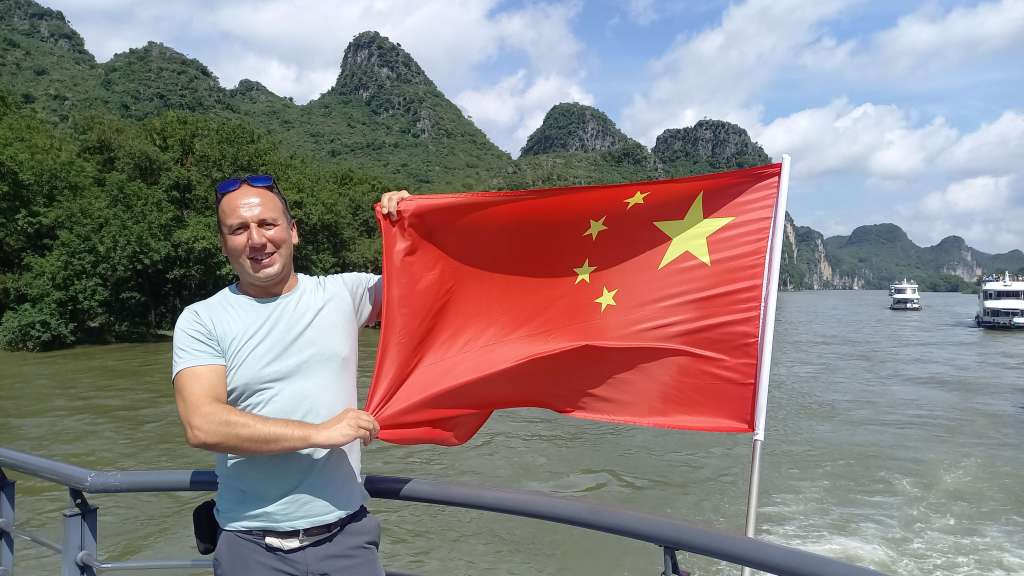
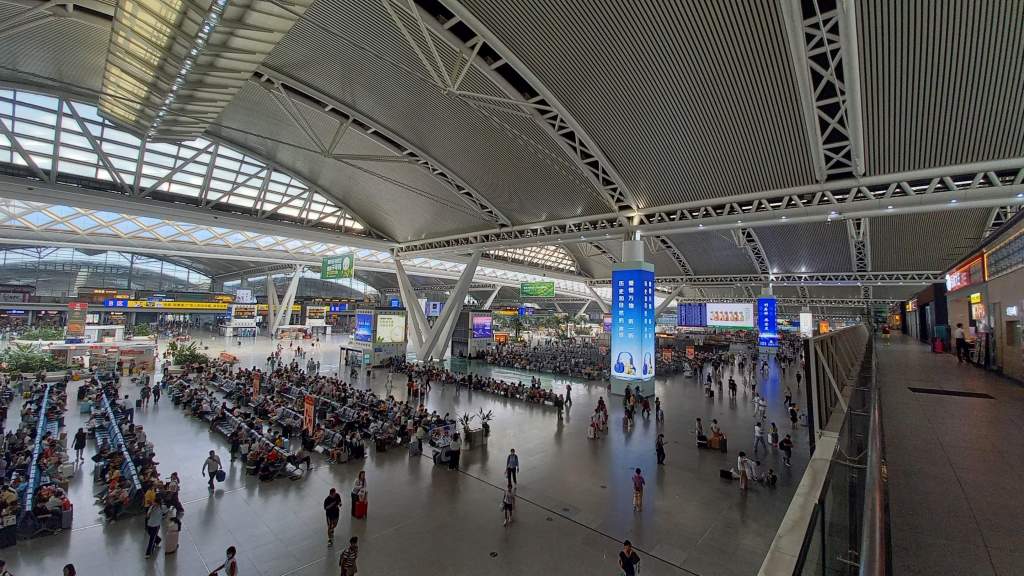
I was using the city for three nights as a base to explore the surrounding area, after having arrived there in style on another high-speed, or bullet train, from Guangzhou. Gosh, it was an amazing experience! I feel my high speed train experience on the island of Hainan was a little baby step before this one. While Haikou Train Station felt bigger than most other stations back in England, it only had six platforms compared with Guangzhou South’s 28! The station concourse itself was absolutely humongous, and I’ve never seen anything like it! As mentioned in a previous blog, if one wants to get an idea of how advanced and developed China has become over recent years, one only has to look at its massive and rapid high speed rail development throughout the whole country. When I first came to China 24 years ago, there were only slow trains with hard seat, soft seat, hard sleeper and soft sleeper options. To get from anywhere to anywhere else significant usually involved an overnighter, and with a bit of advanced planning you were able to get the sleeper. My 2002 Lonely Planet listed the Guangzhou to Guilin rail journey as taking 15 hours – on this day I made the journey in just two…!! The maximum speed of my high speed train back in Hainan was an impressive 195kmph, while here it reached 292kmph. Now that is development…!
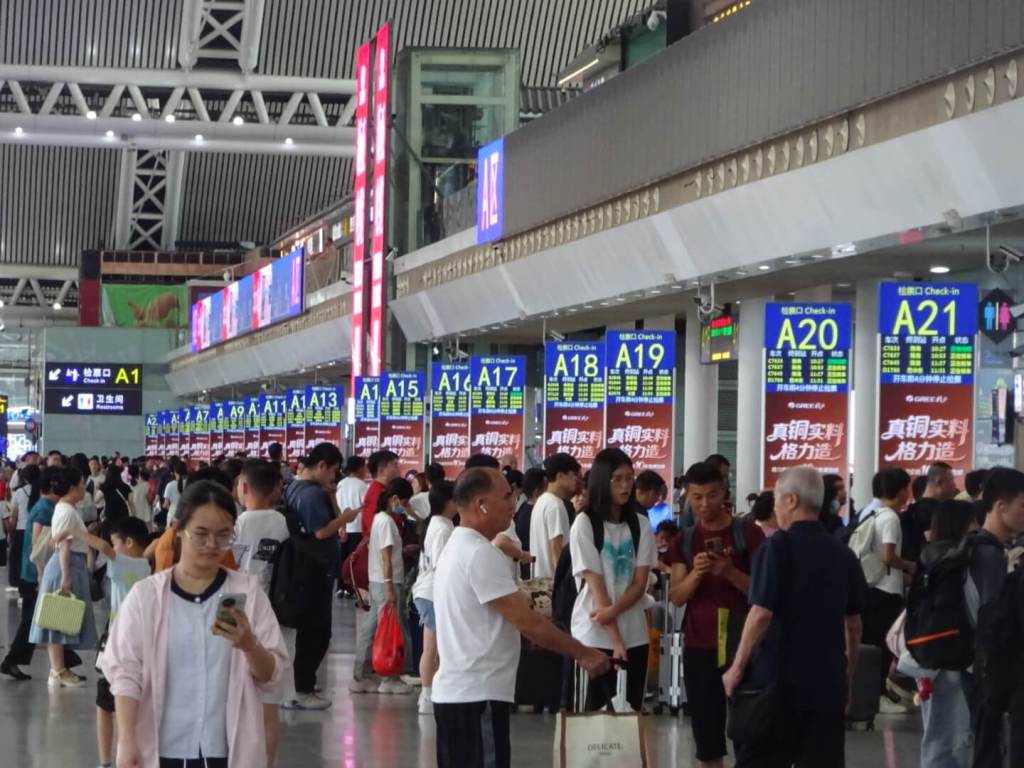
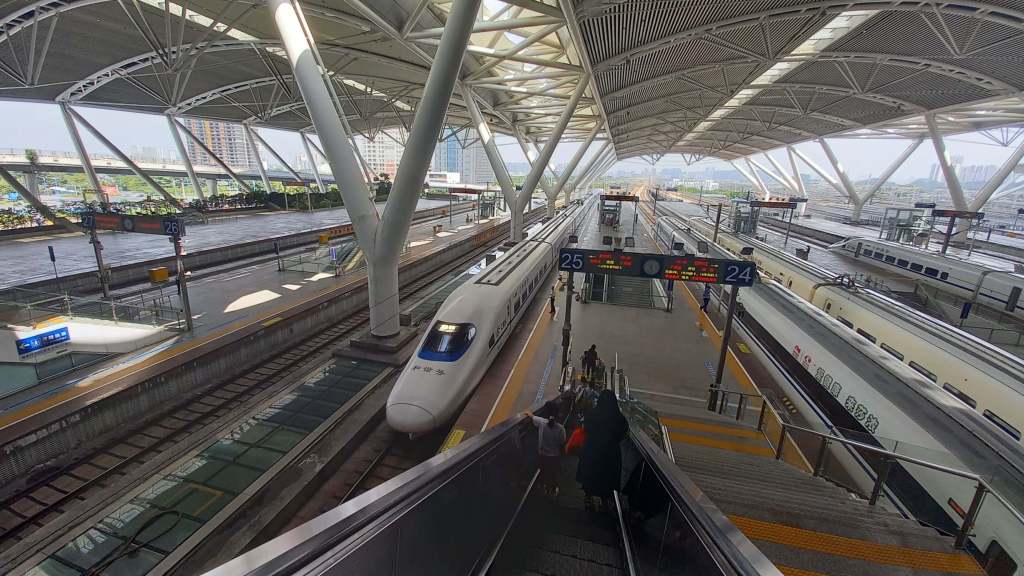
I was a bit miffed though that the baggage security on the entrance into Guangzhou South station took my two antiperspirant sprays, as they were 250ml and thus over the 150ml limit for sprays apparently. I always take antiperspirant with me from the UK whenever I travel, as you can’t always buy it in other countries, while deodorant just doesn’t do it for me. After a mild panic that my trip would be a rather smelly one, I easily bought two more antiperspirant sprays in Guilin in 150ml cans, and felt quite a sense of relief that I’ll be continuing to smell good still…!
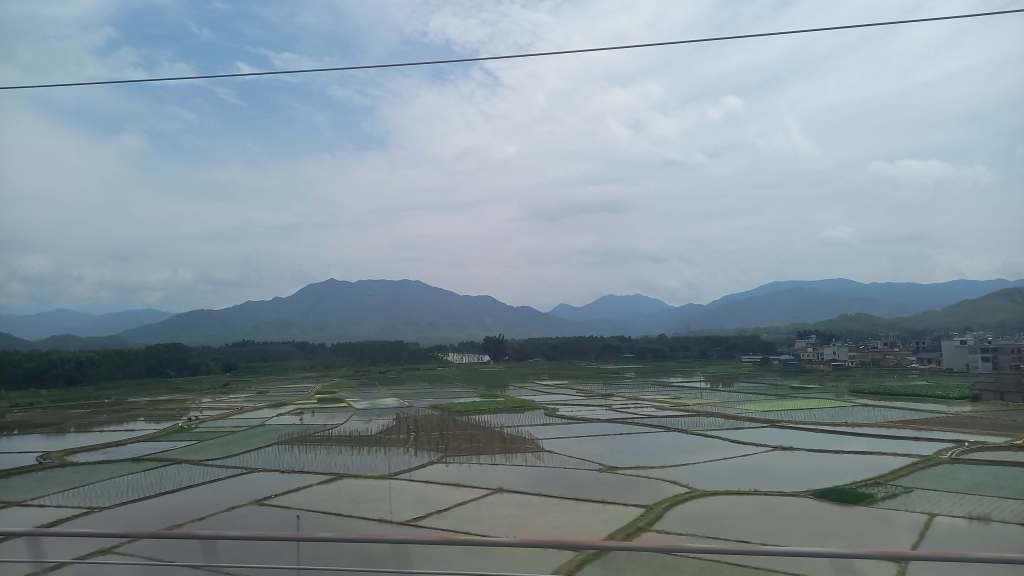
The journey was lovely. I had initially booked second class as trip dot com had told me there was a waiting list for first class when I first tried to book. This second class car was busy, but walking to the first class carriage I saw that there were only four of the 30 or so seats taken, so I wasn’t sure what happened then. Most other trains I later travelled on, both first and second class were pretty much maxed out, and I imagine this was because I was travelling during the busy summer tourist season. I was thus on this occasion able to speak to a conductor and purchase an upgrade to move into first class, which I was really happy with. The carriage was quieter, and I had a bigger seat, with more legroom, a greater recline, foot rest, and free water and snacks, while marveling out the window not just at the speed, but also at the size of the gigantic Guangzhou urban conurbation which took a while to get out of, and then the gorgeous rural scenes of rice paddies and those forested limestone pinnacles which began appearing around an hour out of the city.
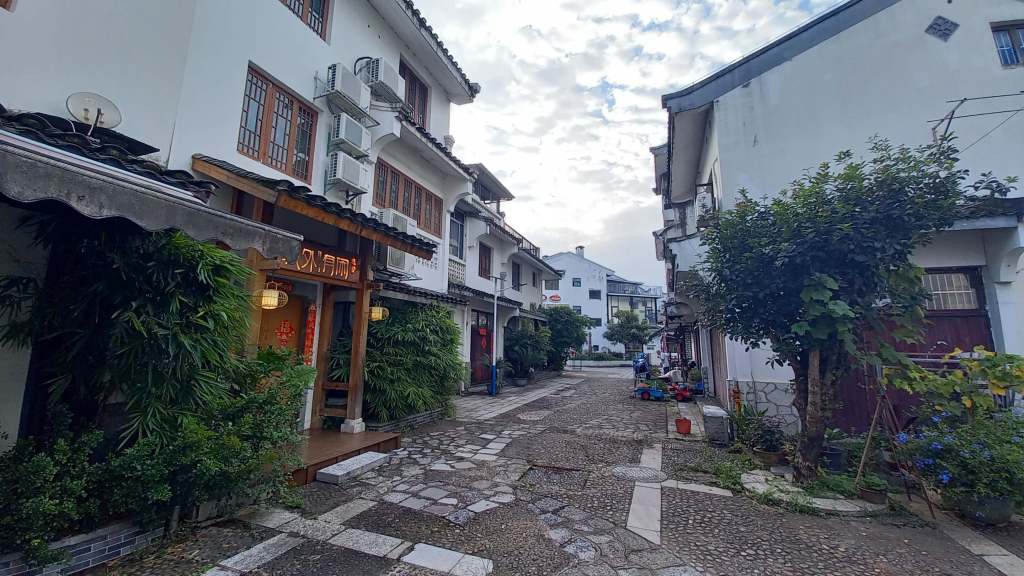
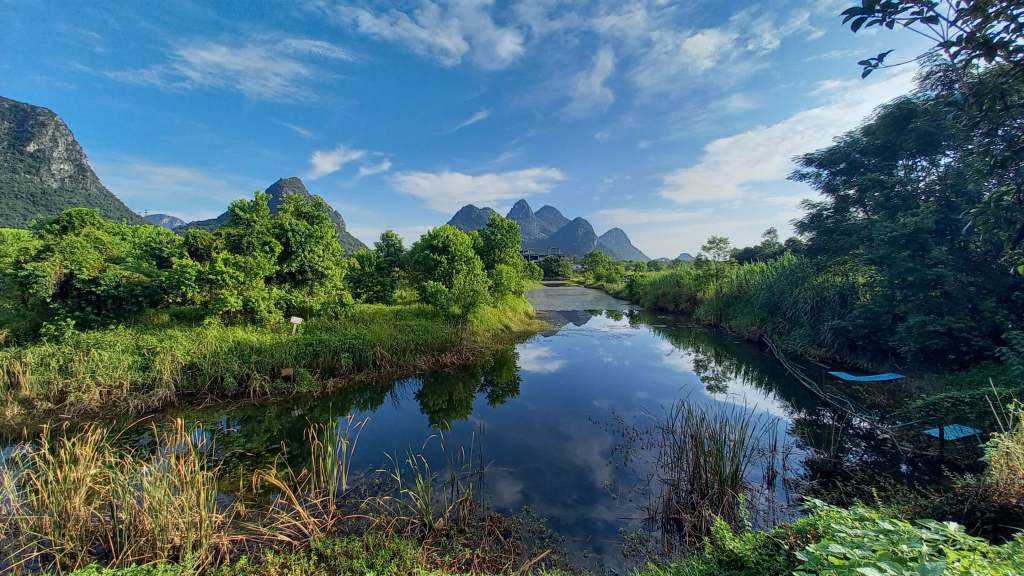
There were no Ibis Hotels in Guilin, so I booked myself into the most delightful of accommodations instead. This was a Chinese-style inn on the edge of the city, in a very quaint and rather upmarket little village called Lujia, just across a wooden bridge over the Taohua River flowing through the city. The village is bordered on one side by this lovely waterway, also known as the Peach Blossom River, and on the other by a gorgeous series of limestone pinnacles rising up high over green fields. My room was on the third floor with a windowed balcony, upon which I could sit with a traditional Chinese tea table, teapot, cups and tea leaves, and a stunning view towards these pinnacles. The manager had even arranged a free pick up for me from Guilin North train station, complete with a driver with my name on a board. I feel I landed myself a real gem here!
Despite its seriously tranquil and lush location, it was still only a short and cheap Didi taxi ride away from the centre of Guilin with its tourist attractions, so after a short rest, I headed there to explore. I loved it!
First up, my taxi dropped me off at really busy Elephant Trunk Hill. This is a limestone pinnacle by the Taohua River in the middle of town, so-named as it resembles the body of an elephant with its trunk protruding down into the water, with a rock arch between the trunk and the body. It was very attractive. The place was absolutely heaving though, and it is very much the city’s star attraction.
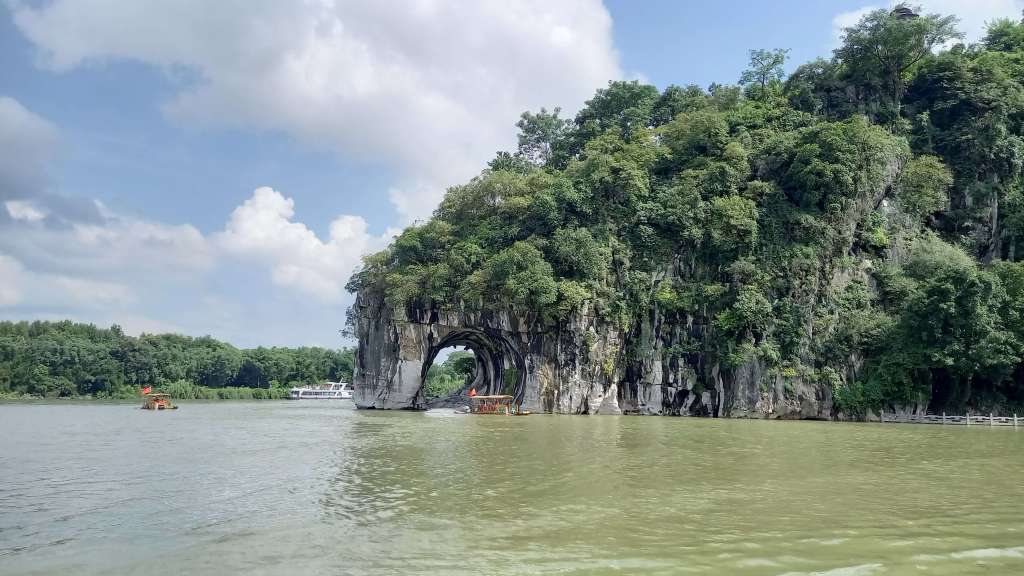
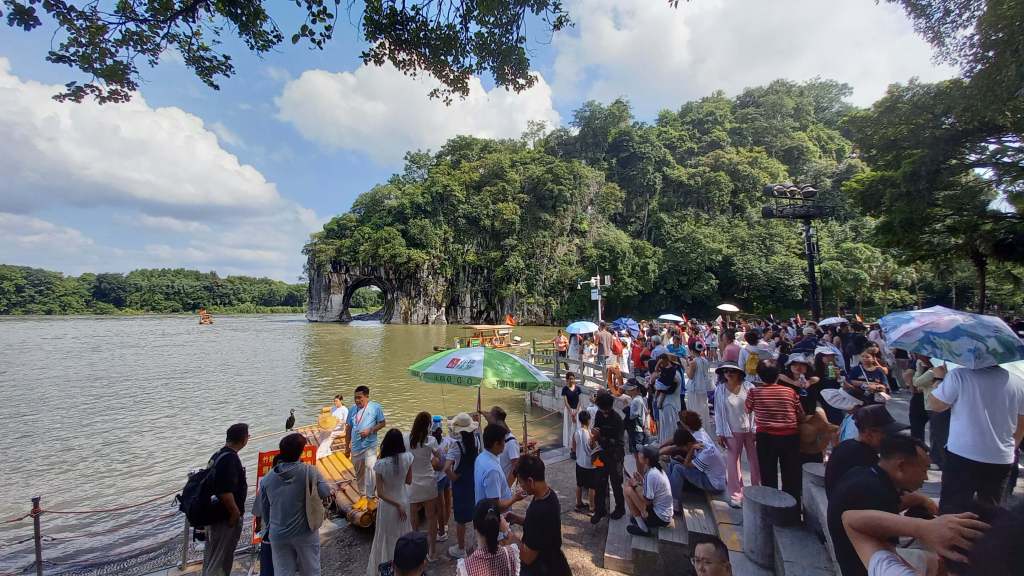
From there, it was a short walk to the nearby 8th century Tang Dynasty-era Sun and Moon Pagodas rising majestically out of the lovely Rongshan Lake. To my utmost surprise, it was so quiet there, and I was pretty much the only visitor during my hour-long visit. What a stark contrast to Elephant Trunk Hill just next door, and this made it even more attractive to my mind.
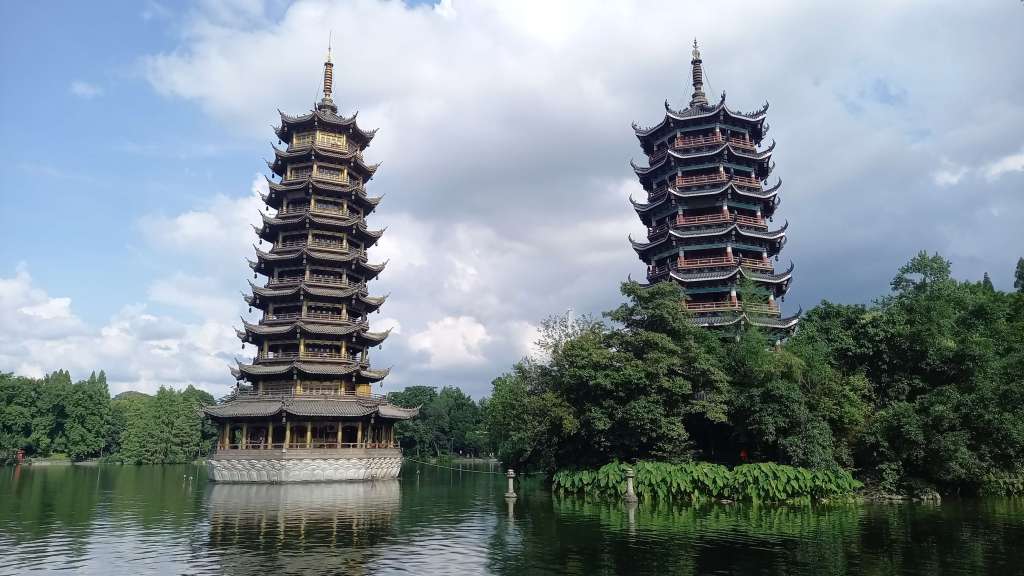
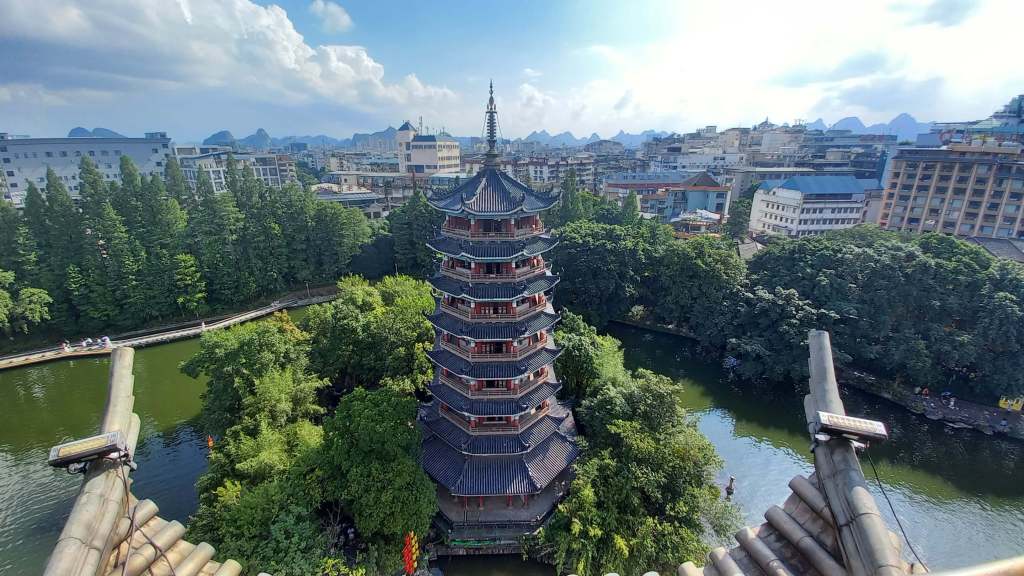
The 35m-high Moon Pagoda sits by the side of the lake, across a small causeway you can walk across, and involves a climb up 135 steps to reach the top. Conversely, the 41m-high Sun Pagoda rises up out of an island in the middle of the lake itself, and is reachable via an underground tunnel from the Moon Pagoda. This one though has the added luxury of a lift inside to take you to the top – what a relief, as I’m not sure I could have done another 135 steps up and down in that heat. It was also air-conditioned in there! I felt truly spoilt. And the views over the lake, the city, and the 360° limestone pinnacles all around were truly incredible.
Finally for the day, I enjoyed a lovely wander along the city’s busy Zhengyang Pedestrianised Street, filled with all sorts of quirky shops galore. It was here where I delighted as previously mentioned in stocking up on my antiperspirant spray cans once more – it is sometimes just these little things in life! As with Japan, pedestrianised shopping streets in China are just fascinating to explore, with as many quirky people, some dressed in very unique clothes, as there are quirky shops. I finished the evening with a bit of quiet time of contemplation in the city’s lovely Catholic Cathedral of St Thérèse of Lisieux in town (one of my favourite Catholic saints by the way), before taking a Didi to enjoy the evening admiring the stunning sunset view over the greenery and pinnacles from my seriously delightful Chinese inn room. Ah, the travelling life really doesn’t get much better than this!
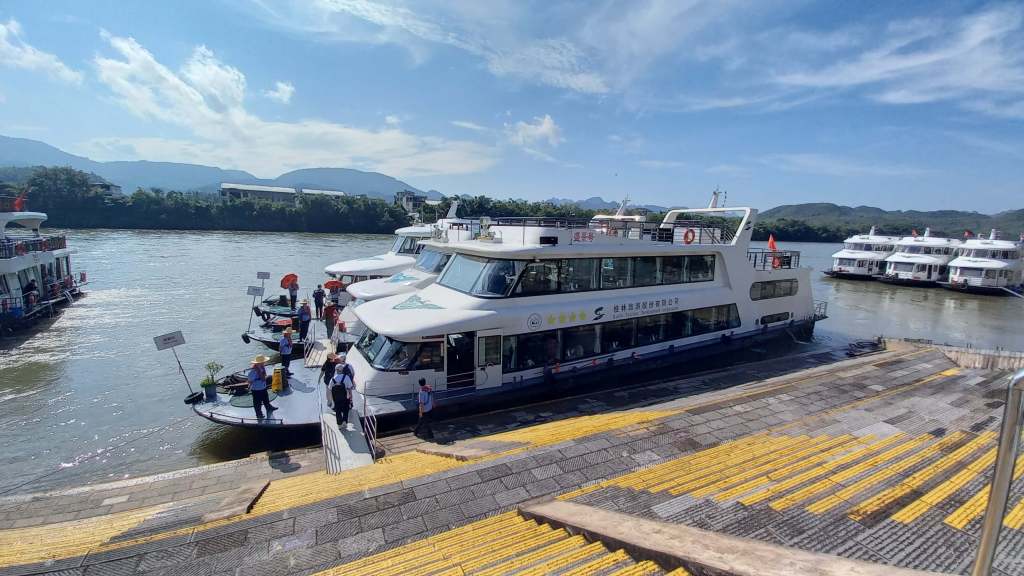
Gosh and wow, what an incredible day. I’m so touched to know that after so many travels, I can still be in awe of many of the places I continue to visit. Today, it was the jaw-dropping beauty of the Li River, between Guilin and Yangshuo, that really did it for me. Now this is the quintessential China. As mentioned earlier, when one thinks of this country, one sees a lazy river flowing through forested landscapes and tall, limestone karst pinnacles rising up plentifully out of it as far as the eye can see. This place was it, I saw it, and I was in awe.
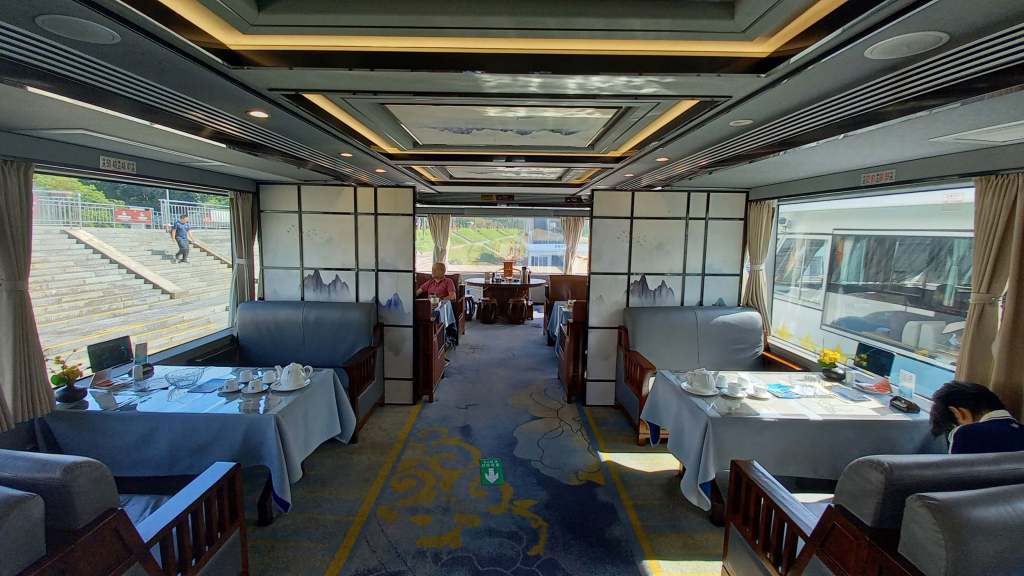
I took a day tour which involved a taxi pick-up from my hotel, along with an Italian couple staying in central Guilin, to the Li River Cruise starting point around an hour’s drive out of town. The place was busy, but very well-organised, with several cruises leaving every half-hour. I was on a 10am cruise, boarding one of the ten boats that set off at this time. Once on board it was chill, and I was shown to my seat on the second of two floors, right at the front of the boat with very much the best view on board, and seemingly in business class. There were two tables up there, each for four people, with lots of space for each individual. The rest of the tables on that deck and also the one below seemed a bit more cramped, with six to a table downstairs. I wasn’t sure why I got one of the top seats, as the whole cruise was “four-star” as opposed to some of the other boats doing the run being “three-star”, but I surely was not complaining…!
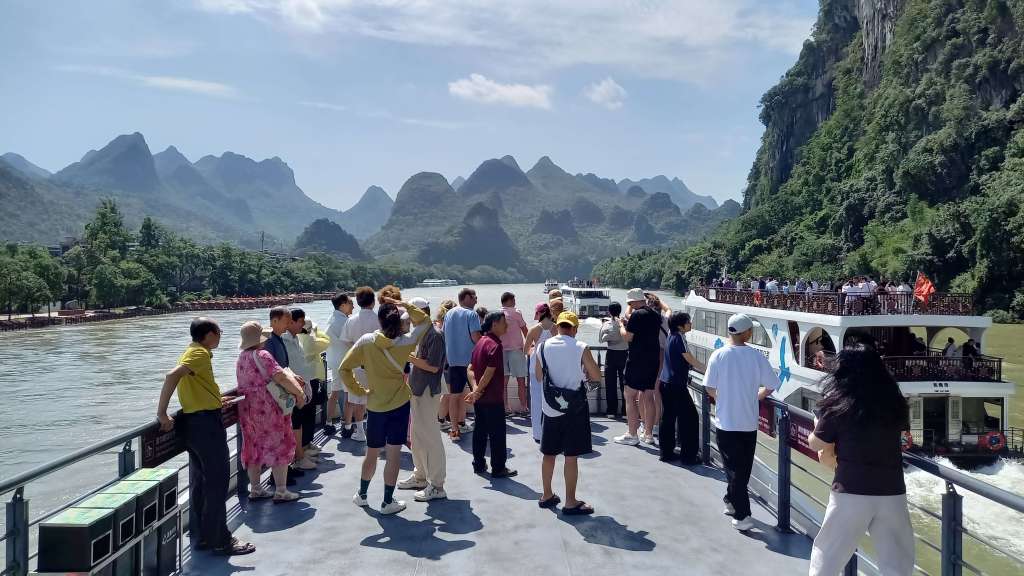
On the other table was a fascinating family from Holland, the parents of which were bringing back their two adopted children for the first time to the country they were both adopted in around 15 years ago. Both the teenage children had slightly different facial features to the majority of the population, if one doesn’t mind me saying, and I had the feeling they may both have likely been put up for adoption there, or even abandoned, in those days as their families perhaps in the more rural areas of the country quite possibly wouldn’t have accepted them – it would also have been during the time of China’s famed One Child Policy. I was in full admiration of the Dutch adoptive parents, and enjoyed talking with them. I myself sat with a family of three from nearby Guangdong Province from whence I had just come, who had brought their own tea from home as it seemed preferable to the one the cruise was serving. The son spoke only a little English, and the parents none, so I was able to practise my Chinese with them. I was able to say things like “does your father like tea”, and “delicious” when they offered me some of theirs. Thank you DuoLingo! I also enjoyed interacting with lots of the other passengers, both international and domestic tourists – there must only have been around 50 of us on board.
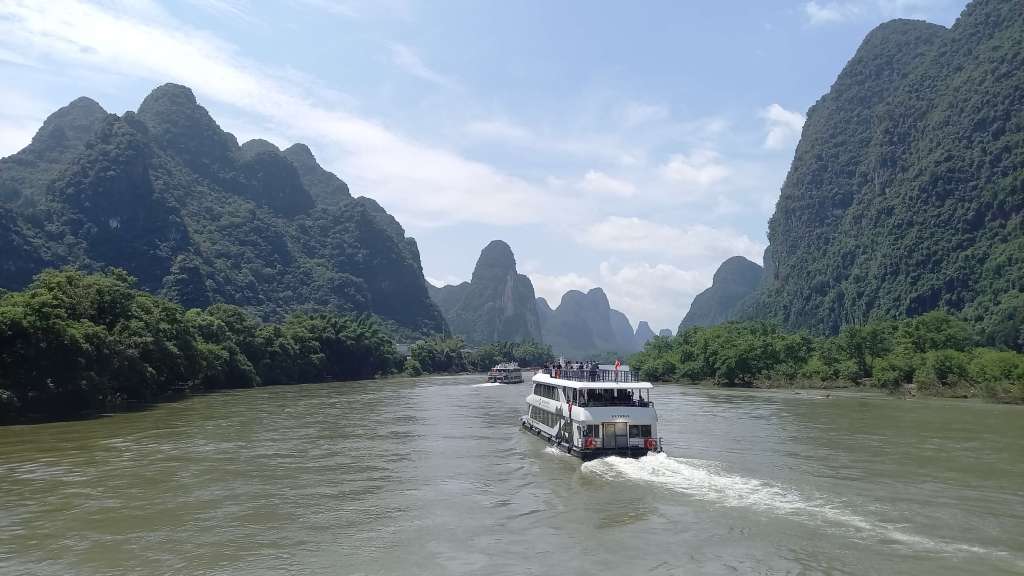
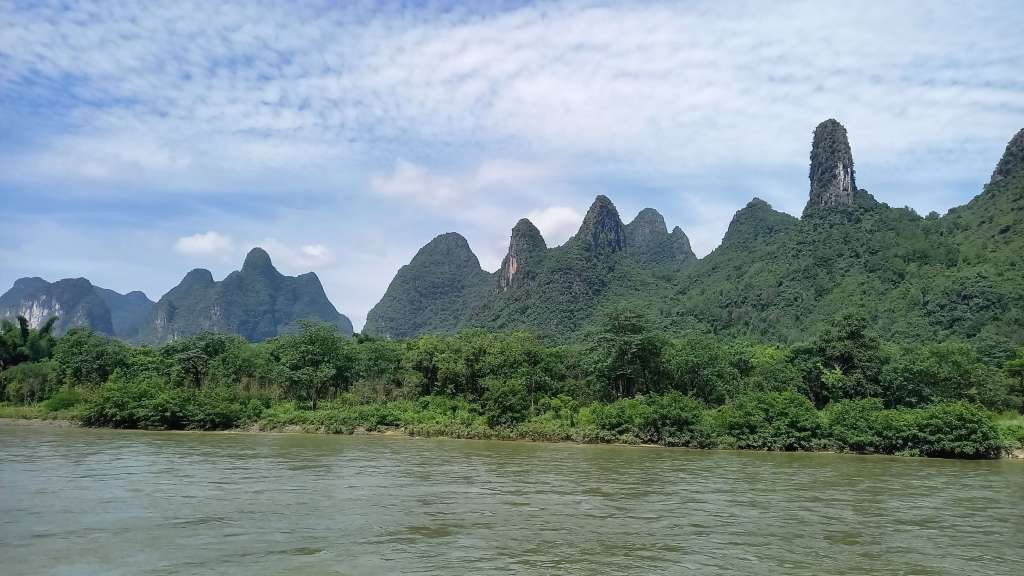
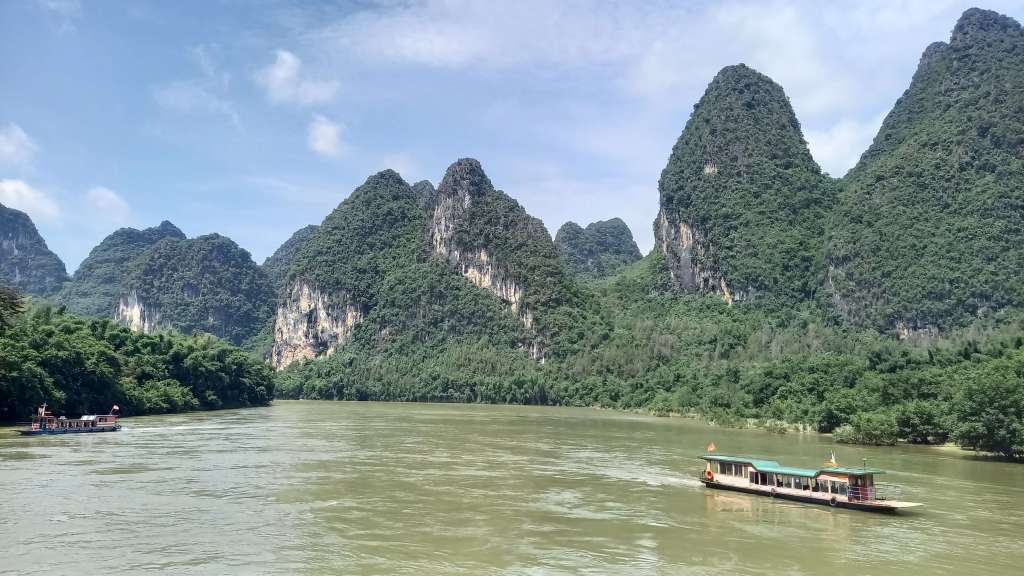
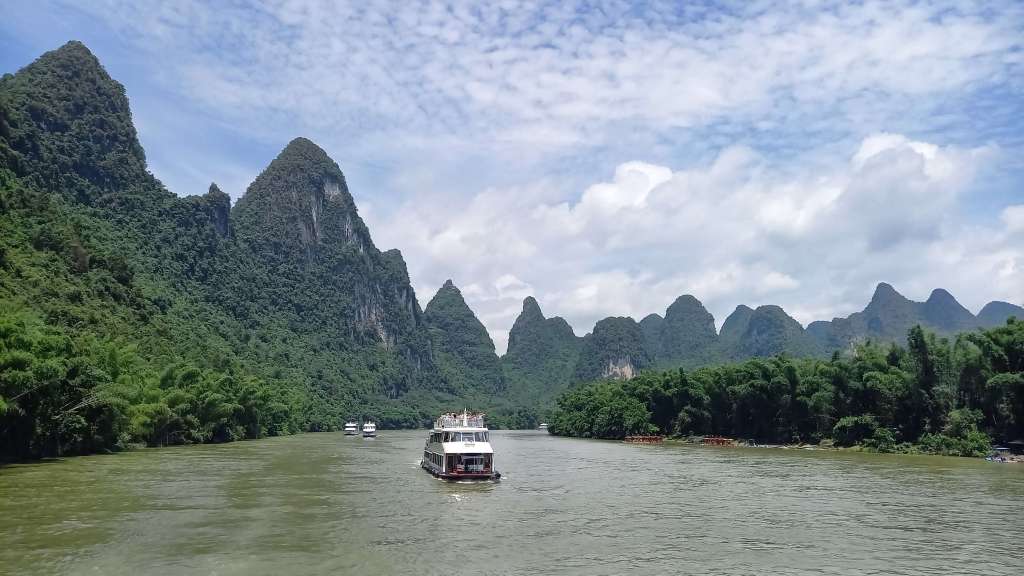
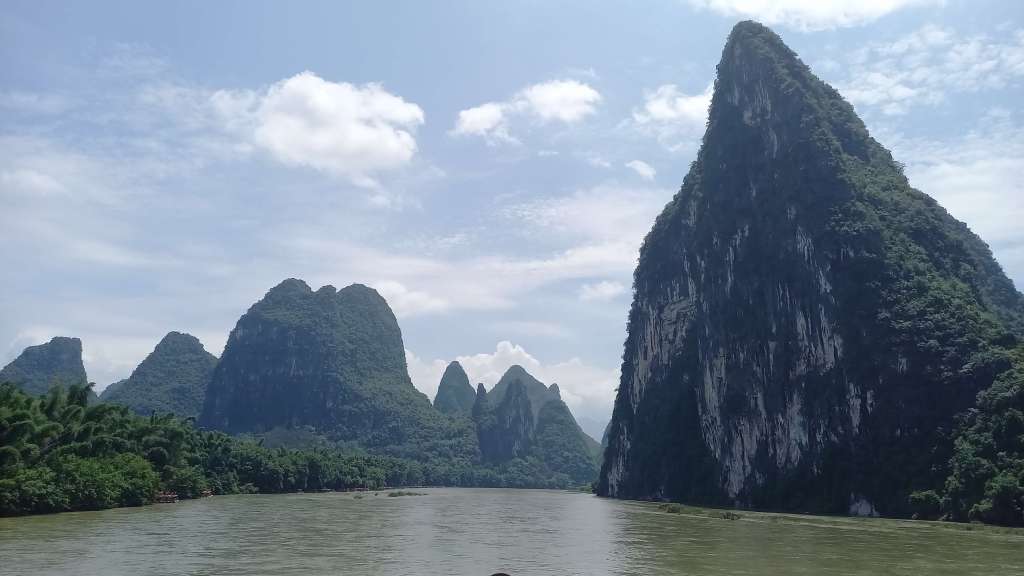
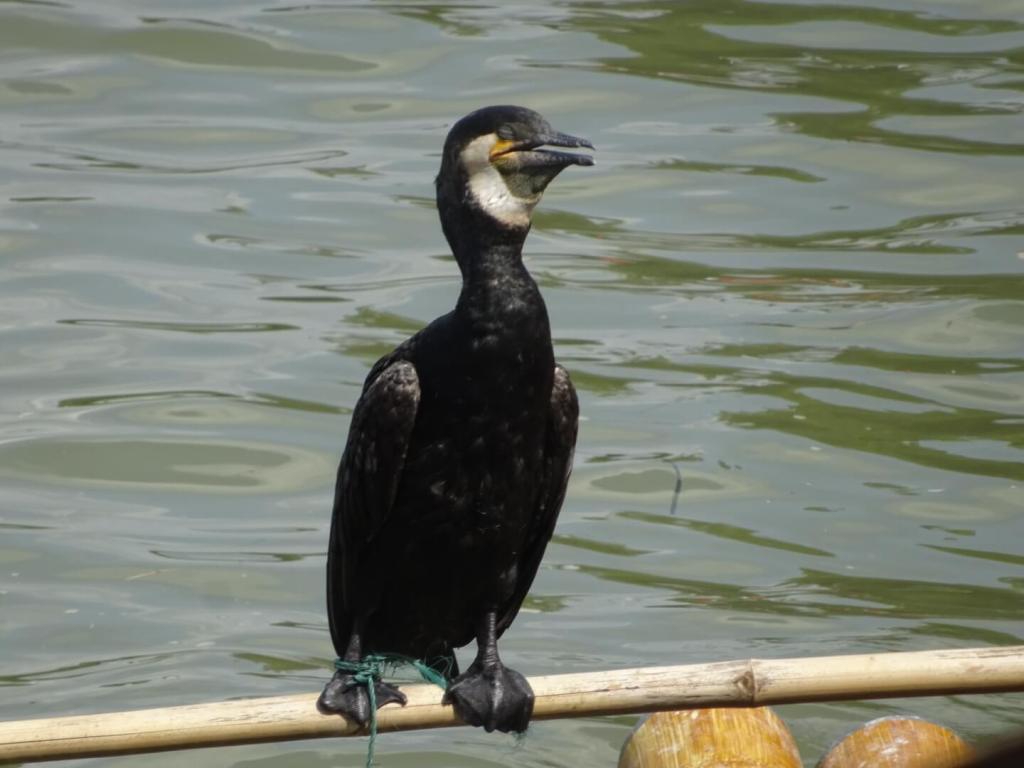
But the views from the river cruise, my goodness! Just amazing. Particular places of interest were “Nine Horse Mountain”, whose limestone colouring is said to represent nine horses, “Monkey King Mountain”, I wasn’t quite sure why it was called this, and a part where everyone got excited taking photos of their 20 yuan bank notes with the scenery in the background, as this particular collection of limestone pinnacles feature on this bank note. I of course took pictures in all these places, as well as so many others. It was a delightful cruise, topped off also by a delightful buffet lunch of just more delicious Chinese food – I’m loving the food here by the way, they may just have to roll me out of the country!
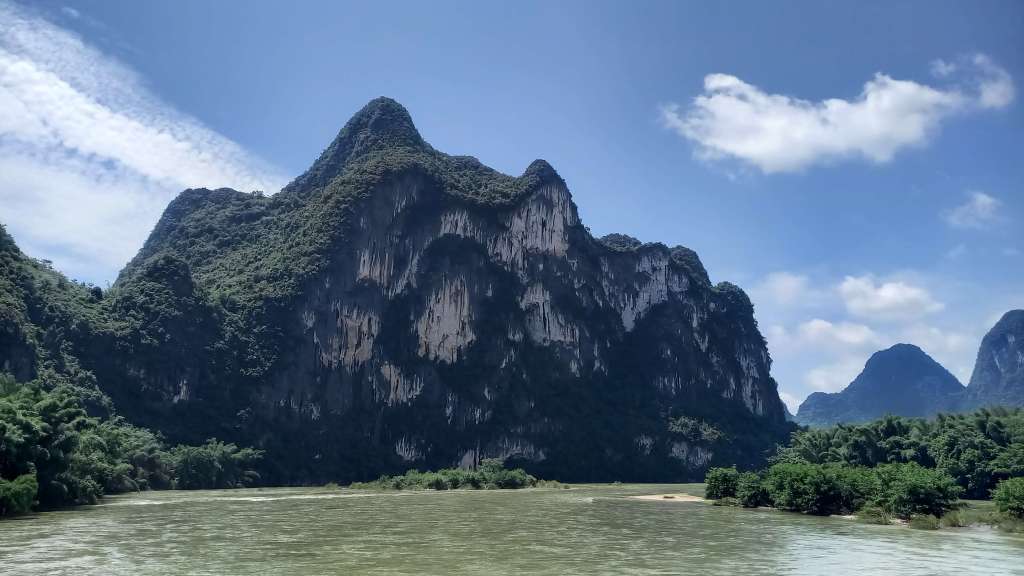
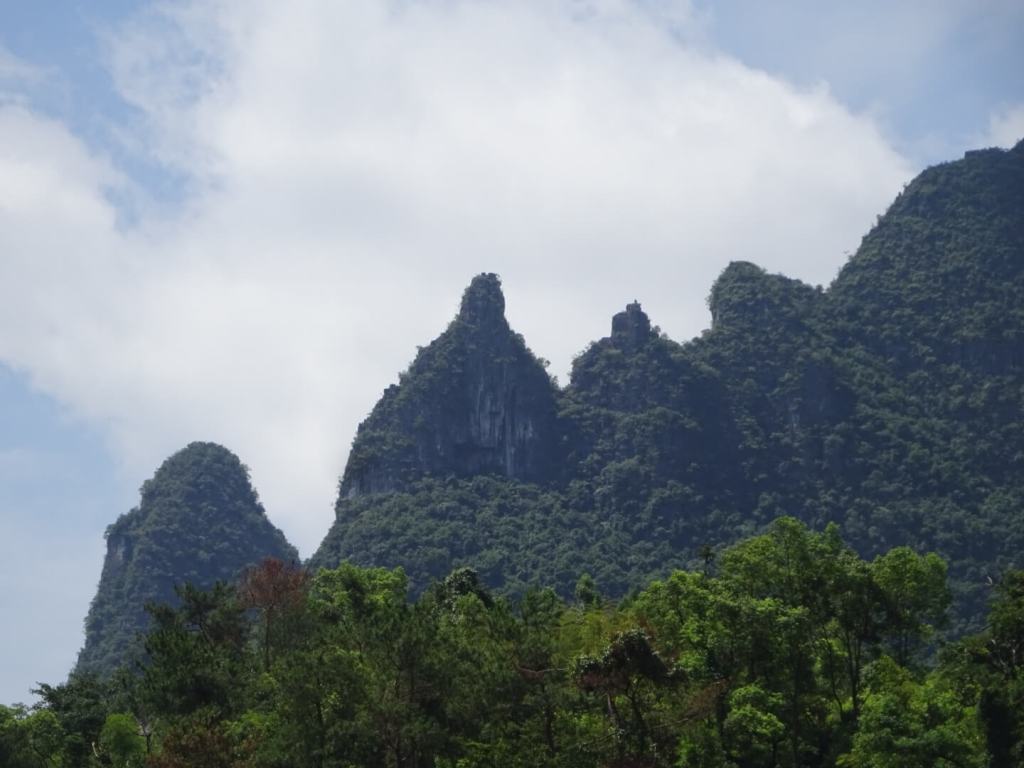
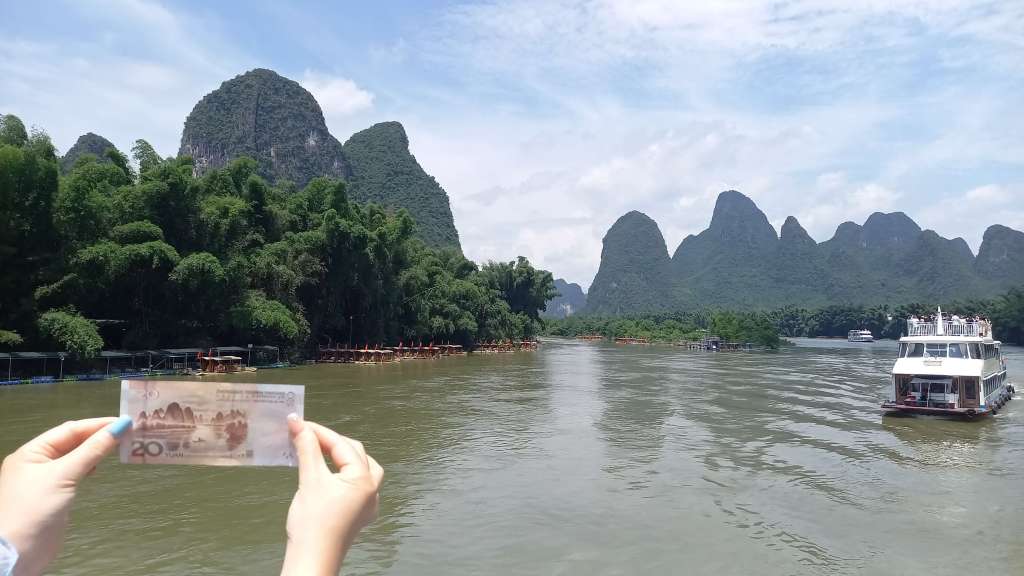
Upon arrival in Yangshuo, the blissful peace of the river cruise was pretty much shattered, as we, along with the nine other boats, disembarked and headed through a busy souvenir stall-lined passageway of around 800 metres before being spat out into the middle of this rather incongruous tourist town in the middle of all this limestone and forested beauty.
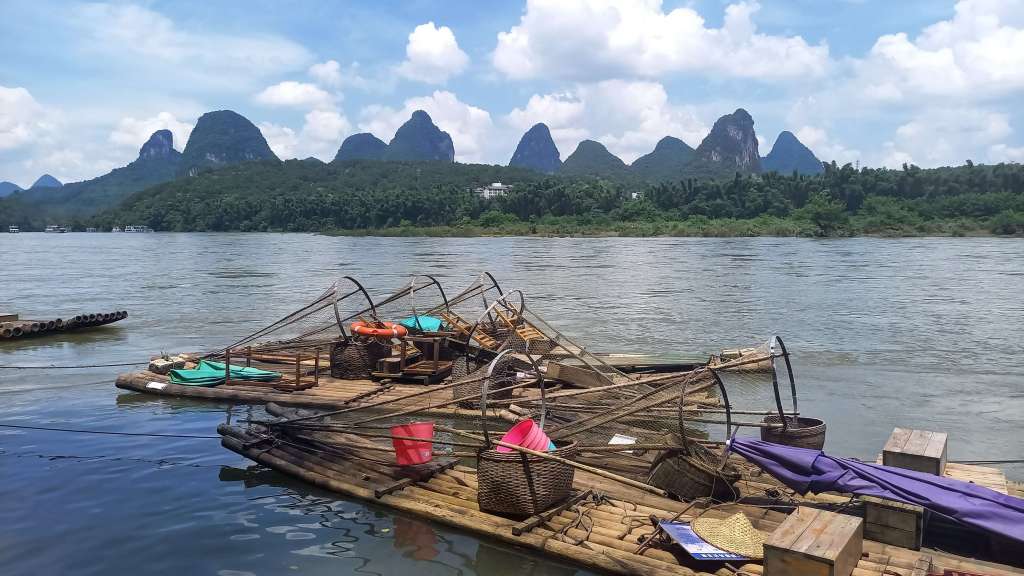
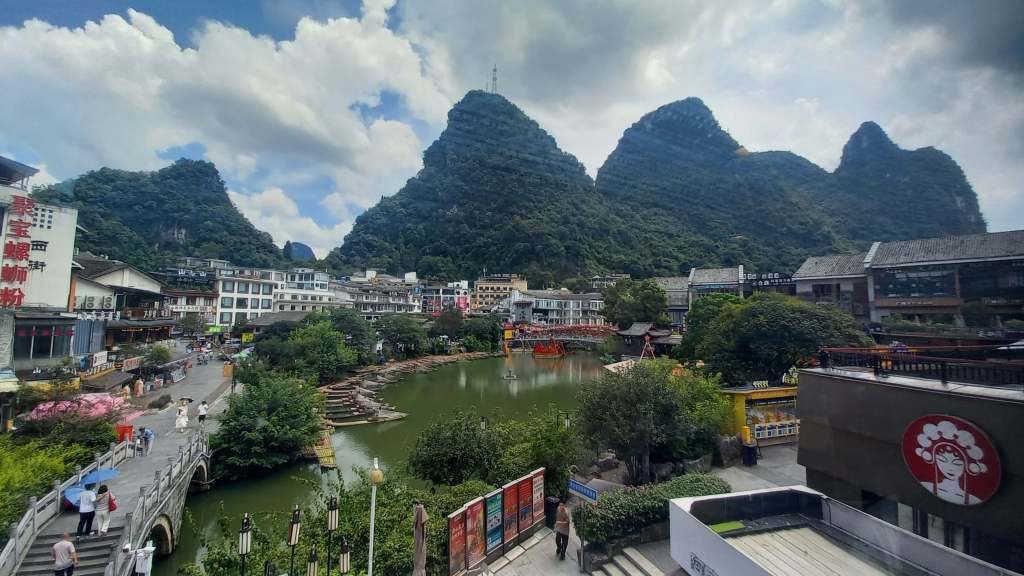
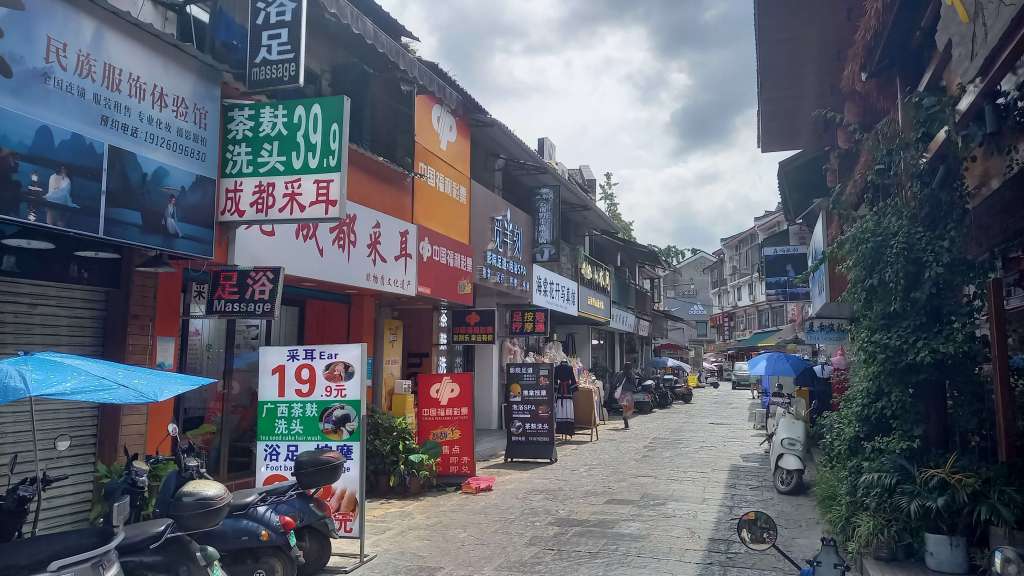
Now back in my old backpacking days over 20 years ago, and when I came to China back in 2002, Yangshuo was the main backpacker haunt of the country. The place apparently abounded with backpacker hostels and banana pancakes. Today it seems oh-so-different from the pictures in my 2002 Lonely Planet, and completely caters instead for the domestic Chinese traveller. I was pretty much the only foreign face in town, and attracted a fair few looks and “hello’s”. I wasn’t there in its international travelling heyday, but I imagine it has changed greatly since then. Whilst still set amidst the lush beauty and limestone pinnacles of the surrounding rural landscape, it was a busy place. Still, I enjoyed wandering its streets, ducking into various air-conditioned places every now and then as it was a particularly hot day. I stopped off for an iced coffee on a hotel roof restaurant with great views, a McDonald’s for a coke with plenty more ice and more great views, and finally an awesome 30-minute shoulder, back and foot massage at the many parlours in town offering this service. That bit was just blissful!
Unfortunately this day tour is actually only one-way, catering to the many tourists using it as a way to travel from Guilin to Yangshuo to spend a night or two in the latter. I could not find any tours returning back to Guilin, so instead had to figure it out when I got there. I found a bus route that was heading back to Guilin every half-hour or so and took it, arriving back again in delightful Lujia Village and my boutique hotel room once more.
I also just noticed on the bus trip back while gazing out the window, that very few cars and motorbikes in China have exhaust pipes, and that petrol stations are pretty much empty everywhere. I realised that this country must have made a really big switch to electric vehicles in recent times, which along with the hugely reduced amounts of litter and spitting since I was last there, additionally added to the massive differences I was noticing between 2002 and 2026. The air in the cities today is indeed pretty darn clean, and also so different from all the pollution before – I was quite surprised I hadn’t noticed this until this point!
On my second full day in Guilin, I had another full day tour. This one was to the Longji Rice Terraces north of town, another famous attraction of the Guilin region. This time I joined my first of two Chinese-speaking tours on this trip, which was very much an experience in itself! The Chinese-speaking driver-guide picked me up from Lujia village, and was a fascinating dude – a self-proclaimed follower of Taoism, he had long hair in a pony tail and was strikingly tall with thick glasses. He was very much an extrovert, and I could sense energy bubbling from him as soon as I met him. We then picked up six further tourists, all Chinese who were all very friendly, though none of whom could really speak any English either. It’s amazing how one still gets by in the country though, and in this situation. The afore-mentioned WeChat app is very much the way forward. China’s version of WhatsApp, but also used for a plethora of other things like ordering food in restaurants and for delivery, booking taxis, paying bills, and so much more besides. On this day, it helped me communicate with my fascinating driver-guide, who would speak into his WeChat in Chinese. My own app would then receive his voice message, transcribe it for me into English, and then I would speak back into it in English, for it to then do the same for him in reverse. And in this way I got by on the trip, knowing where we’re going, a bit of the history and background to the places, how much time we had at each stop, and so on. Just incredible!
As mentioned, he was a bit of a high-energy dude, and this wasn’t always a good thing to my mind. He sped around the roads, overtook, undertook, and beeped just about everyone. He did some really quite hair-raising driving, in the city, and also along the windy roads up and down the mountains, on the way to the terraces and back again. I didn’t appreciate this, and neither did any of the other road users I’m sure, as China seems to have moved beyond such driving with all the beeping since I was last there in 2002. Most people now drive sedately. He was also pretty much non-stop yapping to the group the whole trip, with the loudest of voices. When I used my Google Translate app to try and catch a bit of what he was saying and have it translated, it seems he was mostly talking about food and the local delicacies, but also of the unique nature of the people of Guangxi county – actually an autonomous region of the country called the Guangxi Zhuang Autonomous Region (GZAR), to recognise the large minority presence of Zhuang people in the region, making up around a third of the population. He had a go-go-go attitude all day which did become a bit wearing after a while, but I was able to block quite a bit of it out, and I thought he was a really nice guy deep down. I still had a wonderful, if truly fascinating and unique, day.
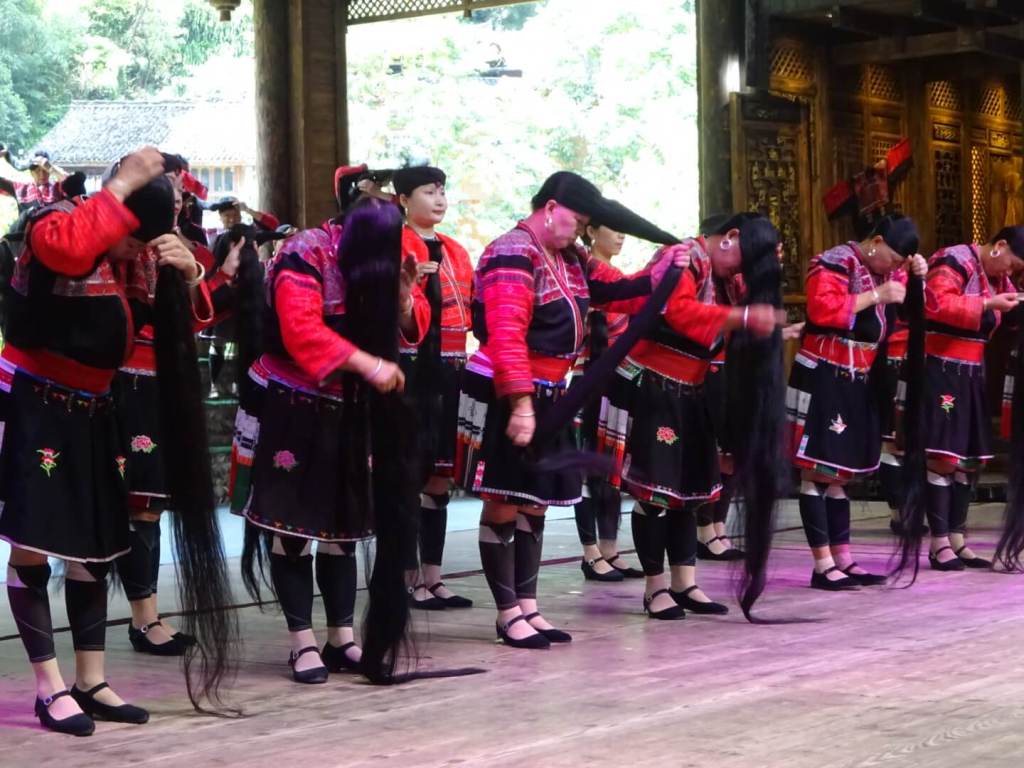
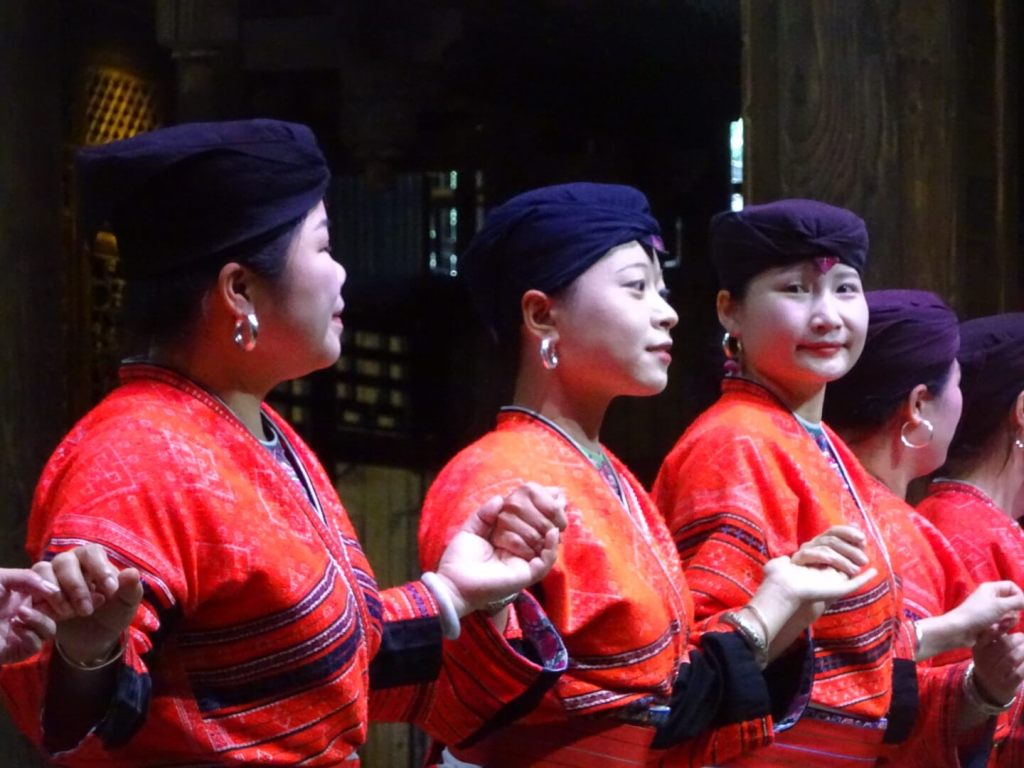
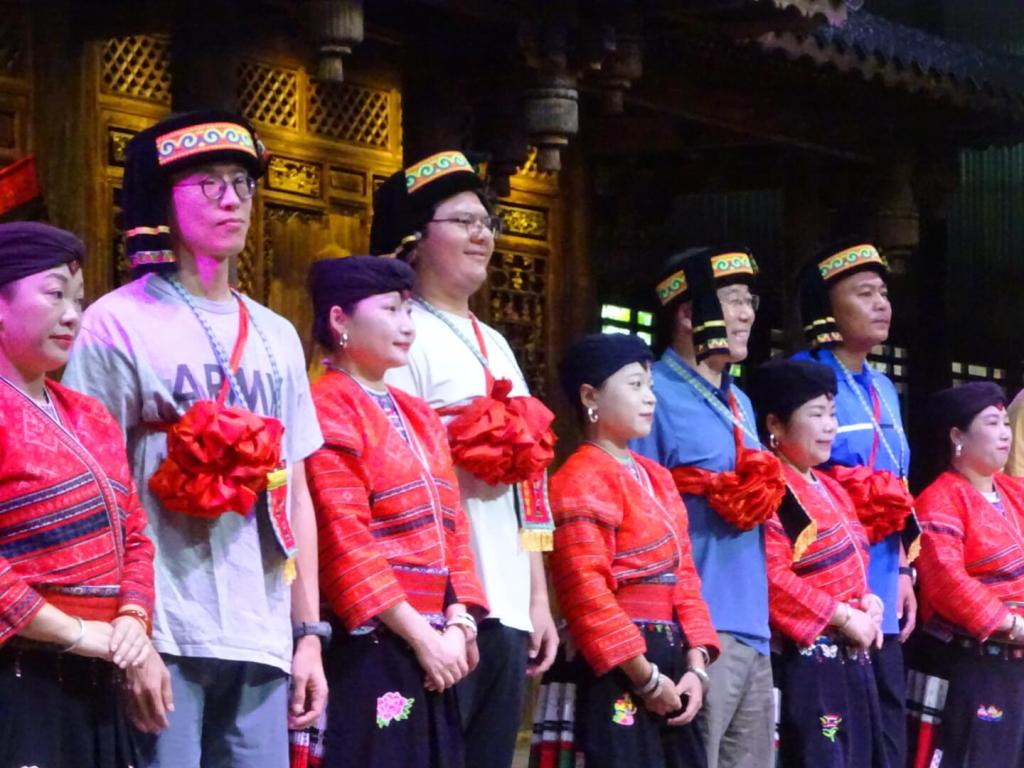
First up was Huangluo Yao village, where the women of the Red Yao ethnic people famously do not cut their hair. The Yao people are one of China’s 56 officially recognised minorities, and while spread throughout southern China, 70% live in the GZAR. The Red Yao are so-named as this particular sub-group of the Yao people tend to dress in reds and blacks, which was certainly noticeable during their awesome song and dance performance which I attended. As well as singing and dancing, there was a time at the end where they showed their super-long locks and how they managed them. That was really interesting. There was also some audience participation involving five men chosen from the crowd “marrying” five of their women. They asked me to come up, but I declined. Maybe if I were travelling with others I may have gone, but I would have felt awkward doing this alone. Just as well, as after “marrying” a local lady on stage, they were expected to pay an additional 70 yuan (around £8) for the privilege – I would not have appreciated that. It was interesting to see from this though, that the women keep their hair tied up in a circular hat until their day of marriage, at which point they are allowed to remove their hats and show their long hair which they’d been growing all their lives thus far to their new husbands.
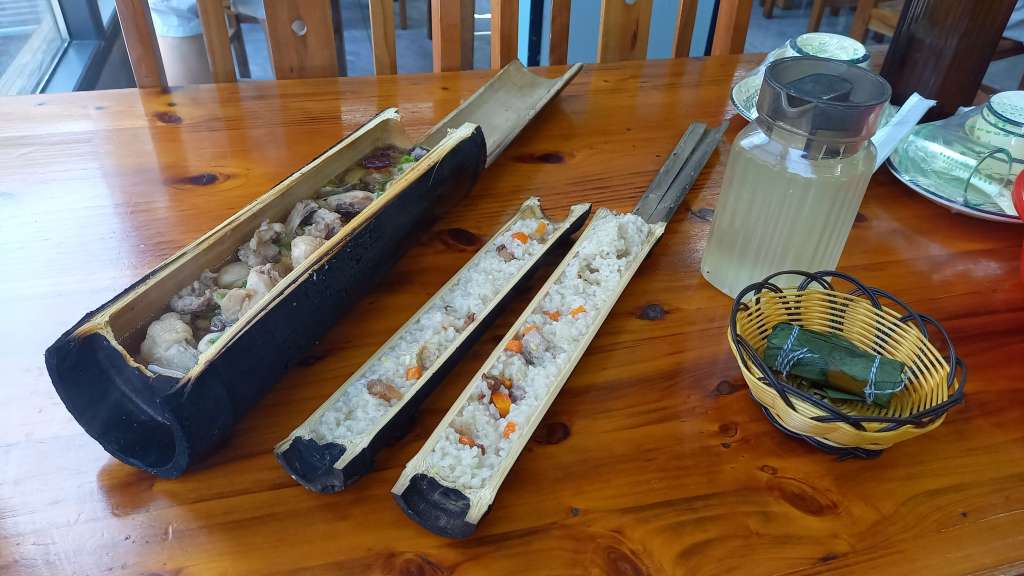
Lunch was at a local joint in the village, and I went for the traditional local delicacy of chicken and rice cooked inside bamboo poles! It was quite unique, but the chicken looked nasty – every piece was attached to a bone. So I just got by on the rice, which was fair-to-middling, like.
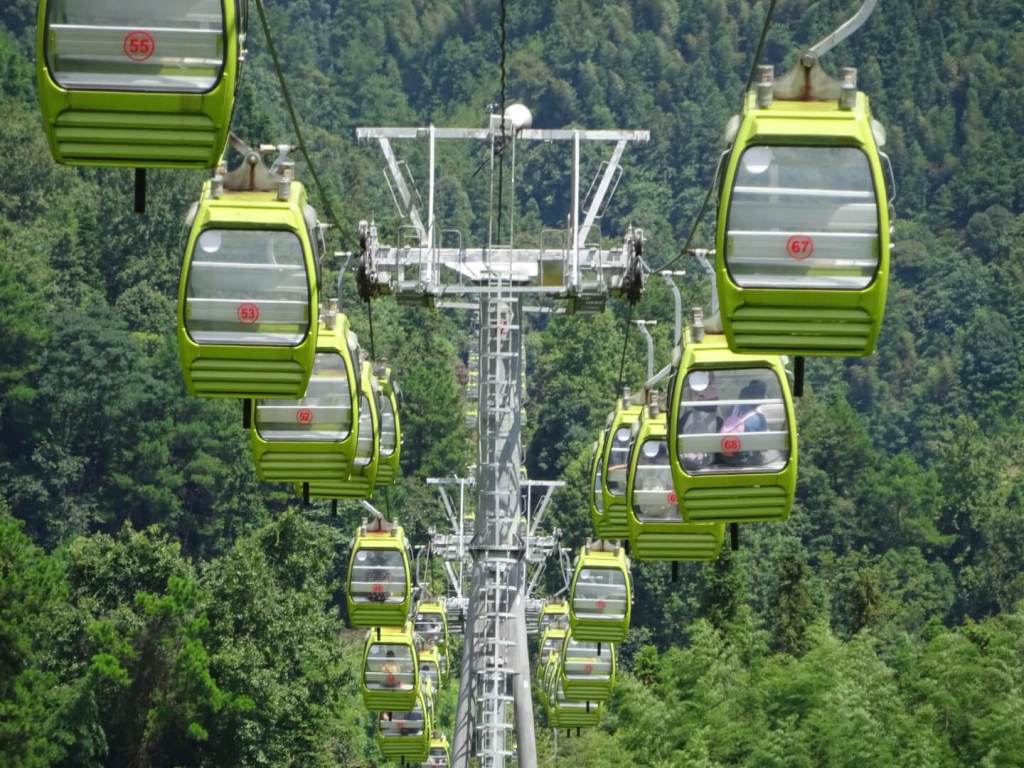
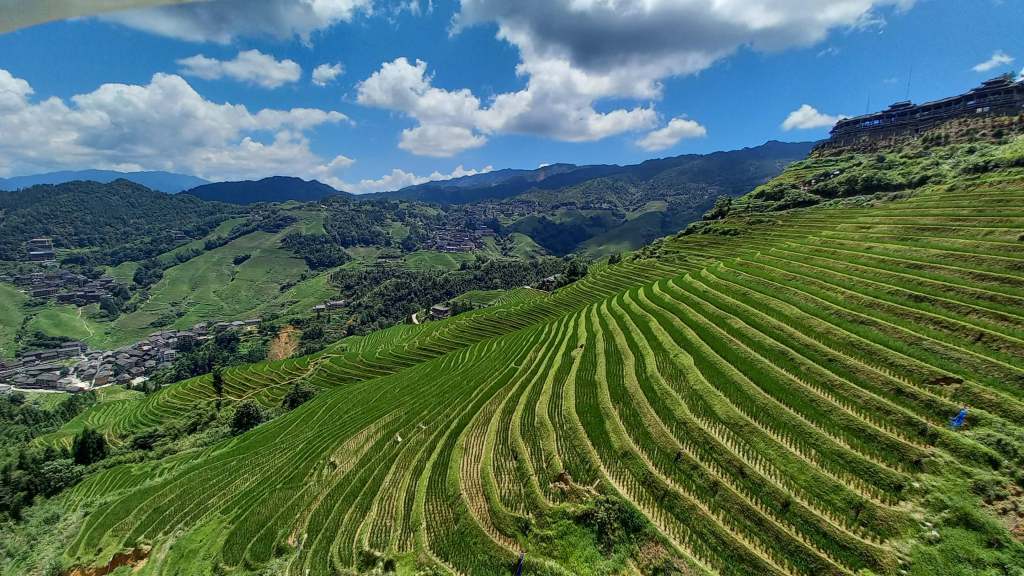
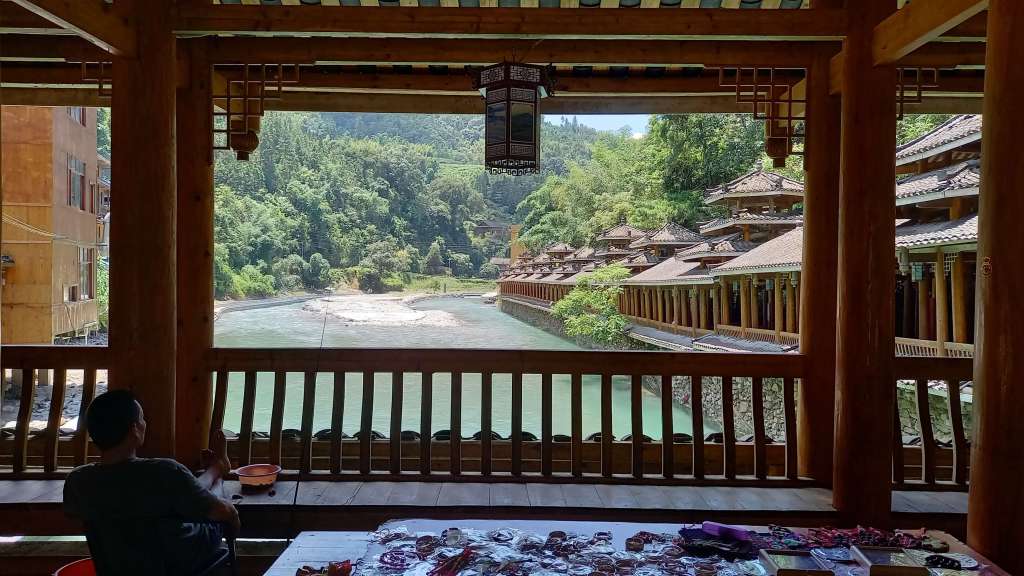
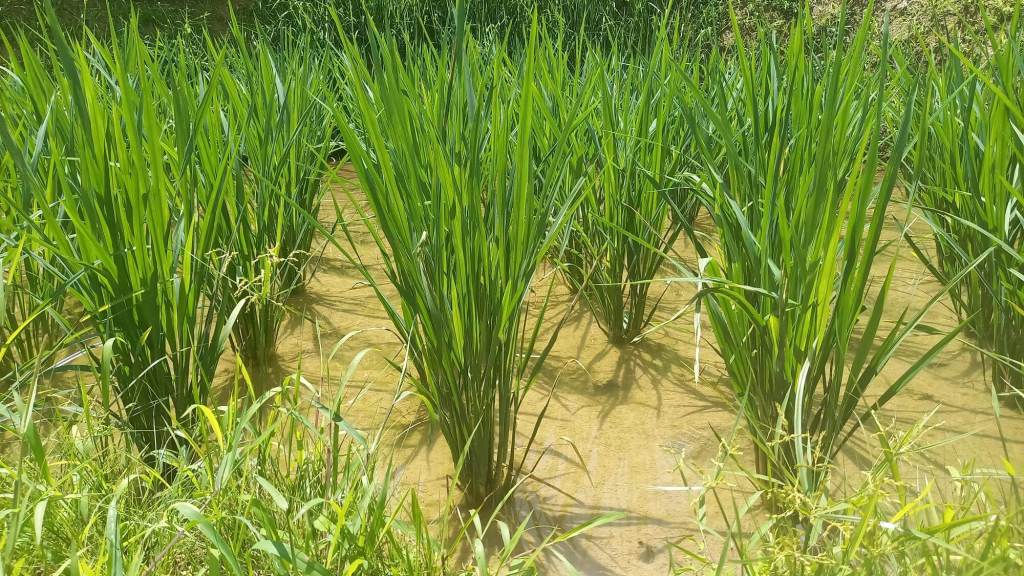
Finally was the highlight of the day for me – the Longji Rice Terraces! What I had actually booked the tour to see. The top of the mountain where such awesome views could be had over row upon lush row of these green, water-filled terraces growing China’s most famous agricultural product was reached via a 25-minute cable car ride. That was a long one! The views both up and down were also stunning. At the top I enjoyed a good wander, getting away from many of the other tourists by following a short peaceful circular route through the terraces, and then stopping off for a cold fizzy iced tea (fizzy!) at a local joint’s balcony, just gazing out over the beautiful far-reaching views below.
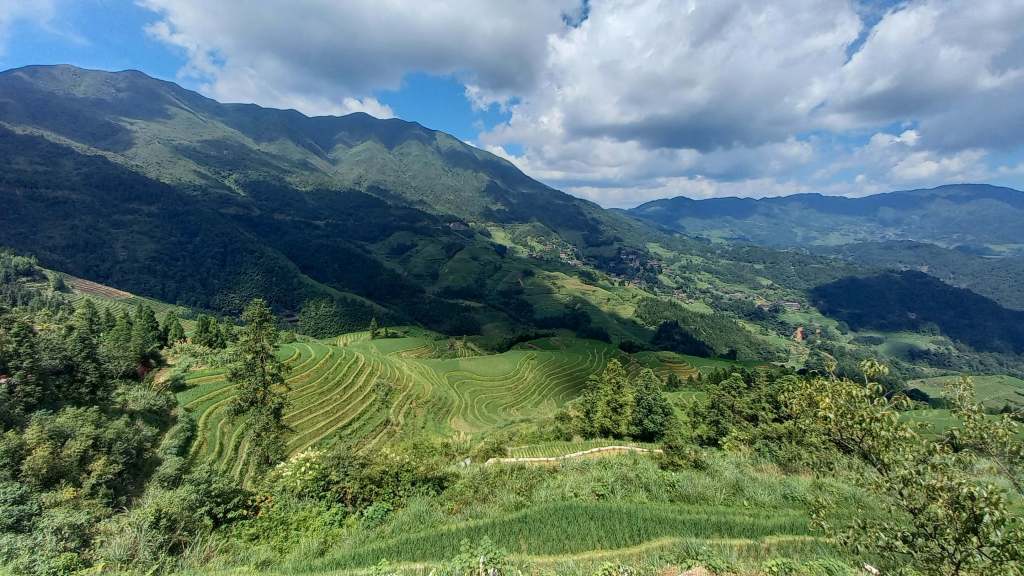
After a crazy drive again back into Guilin and to my delightful accommodation, I headed to bed that evening contemplating what an amazing few days I’d had in this beautiful place. I was halfway through the China leg of my trip now, and was so excited to journey more through this incredible, has-to-be-seen-to-be-believed country!

 Alex Waring's Travel Blog