
6th August 2026
What a perfect place to finish my Chinese adventures, and to start to look into the Central Asian segment of my summer six-weeker 2026. Delightful Xi’an! Not only is it abundant in sights due to its long history as being one of the ancient imperial capitals of China, and home to the nearby Terracotta Warriors, which I had just been so excited to see my whole journey thus far, it is also the eastern terminus of Central Asia’s legendary Silk Road. Indeed, it is to this part of Asia which my travels will be turning after my time in Xi’an, and while actually really quite sad to be finishing up on my four-week adventure in China, I was also really excited to explore one of the few regions of the world I had yet to see on my global travels.
Three wonderful things also happened upon my arrival in Xi’an, which greatly lifted my spirits – not that they were down at all as my travels thus far had been incredible. But I felt so boosted.
Firstly, I checked myself into another wonderful Ibis Hotel, my final one, and definitely the best of all. My room was huge, with a separate sitting room and bathroom around the corner – it was like a suite, with a great top-floor view over the streets below and within walking distance of many of the city’s top sights.
Secondly, the weather had changed. After two cracking thunderstorms in the region, my time in Xi’an was mostly rainy and cloudy, with temperatures down to just 22°C. At times the wind even felt a bit chilly. This was most welcome after three weeks of scorchio and humidity, approaching 40°C most days, and I felt free to walk around and amble the delightful streets of the city without worrying about sweating or over-heating. This was quite something, as along with Chongqing, Xi’an is also famous for being one of the hottest cities in China during the summer.
And finally, hallelujah, I had Internet connection on my phone again, outside of the WiFi in my hotel. For some reason I wasn’t able to connect on my mobile network in Luoyang from the morning of my second day onwards, and this continued until about an hour after checking into my hotel in Xi’an. Normally this isn’t the end of the world on my travels. But it makes a major difference in China, where most everything requires Internet connection on one’s phone – for me that meant paying for things and using taxis. Cash and metered taxis are still there and an option, but so much more hassle. Vendors are also legally obliged to accept cash, and they often do, so this hadn’t been too cumbersome these last couple of days. It was the lack of being able to book a taxi easily that was the main headache.
Thus, in leaving Luoyang, my hotel host most graciously ordered me my Didi to the train station, and I reimbursed him the upfront cost in cash. Arriving in Xi’an, I didn’t want to face the hustling metered taxi guys outside the station, and used the Metro to get to my accommodation instead. This was fine actually, and fortunately my hotel was only a short walk away from a station. The weather was also cool enough to make walking with my backpacks not an uncomfortable, sweaty experience. But when my Internet connection turned back on again, I was singing praises. While cash-free China is hugely convenient for travelling in, it’s quite scary how reliant on this the country has become, and how cumbersome travel becomes when one loses connection, as I did.
Still, as with my time in this Central Asian-oriented city at the start of the Silk Road heading west, this has perhaps also been a good stepping stone into my upcoming time in Kazakhstan and Uzbekistan, when I’d probably need to revert to the withdrawing of cash from ATMs and bartering with taxi drivers to get by again.
Xi’an is also just lovely! There are definitely more foreign faces here, though it is still of course very much a Chinese city. It is filled with lovely tree-lined streets, and the cool temperatures made it feel really quite genteel compared with other places I’d been thus far.
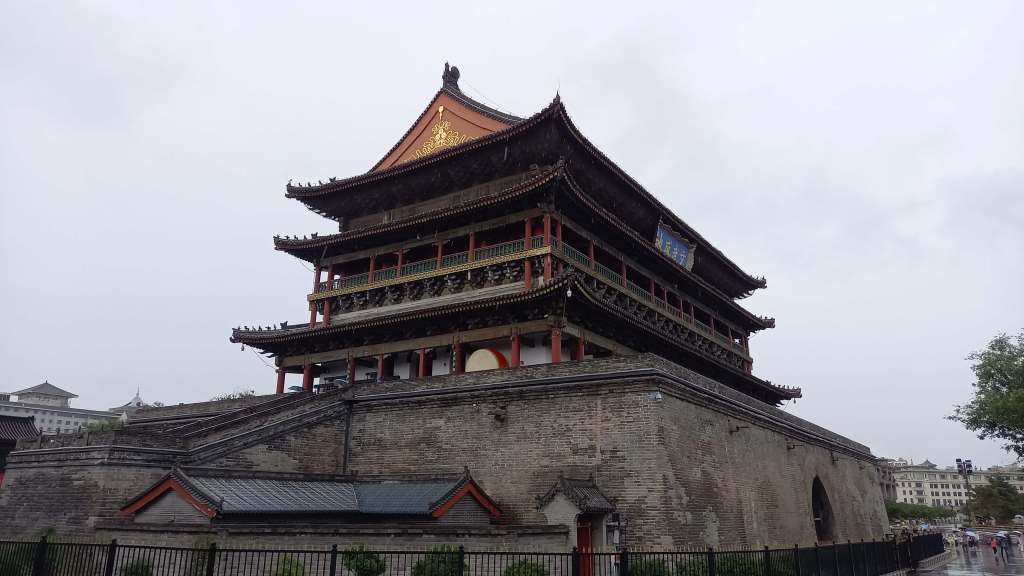
After a short rest in my huge room, I spent the afternoon exploring the sights around my hotel, which was right in the middle of everything. As mentioned in my last, Xi’an, along with Luoyang, is also one of China’s four great imperial cities, along with Beijing and Nanjing. In fact, it often swapped capital status back and forth with Luoyang over several centuries, from the 11th century BC to the 10th century AD. So much so, that Xi’an, formerly known as Chang’an, was often known as the “Western Capital”, and Luoyang as the “Eastern Capital”, depending on where the external threats to Imperial China were coming from – whether from the Mongols to the north, or the various peoples of the western deserts and steppes. This is quite convenient, as Beijing literally means “Northern Capital” and Nanjing “Southern Capital” – there is thus an ancient imperial city for each compass point!
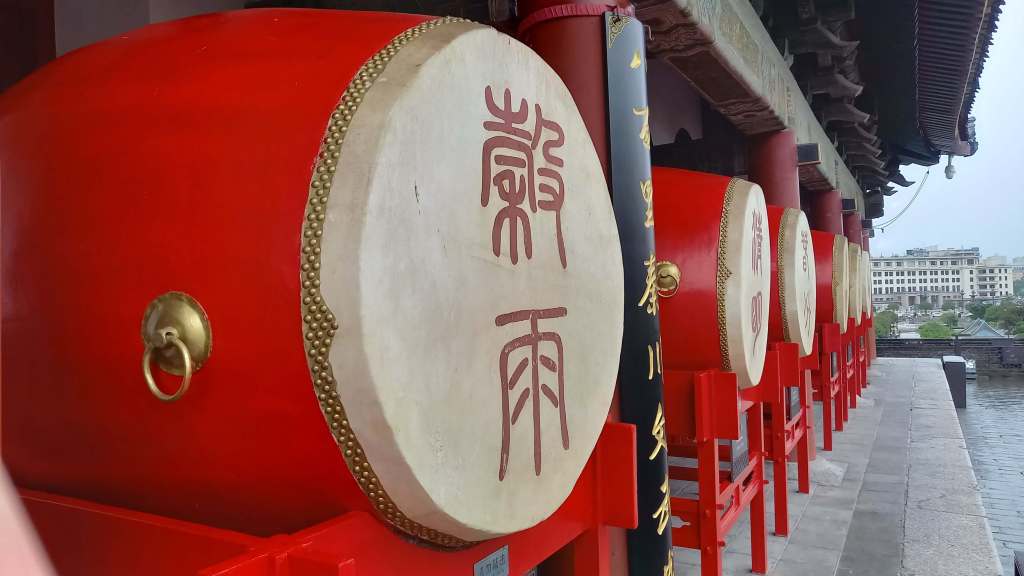
Due to Xi’an’s history of imperial power, defence, and being the cosmopolitan centre of a large empire, the city is today filled with a vast array of fascinating sights and attractions, and as a result is a hot tourist attraction in the country for both domestic and international visitors.
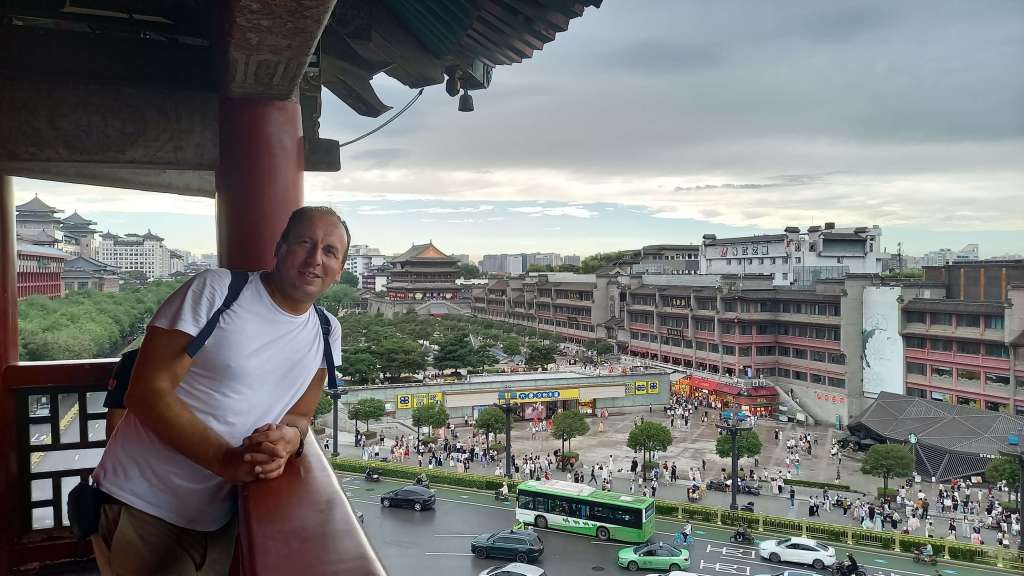
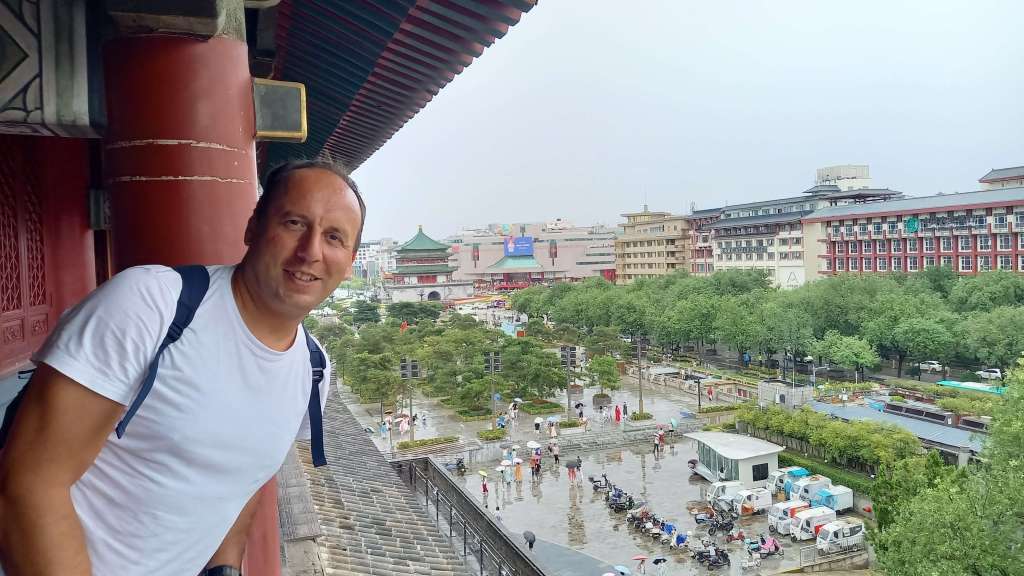
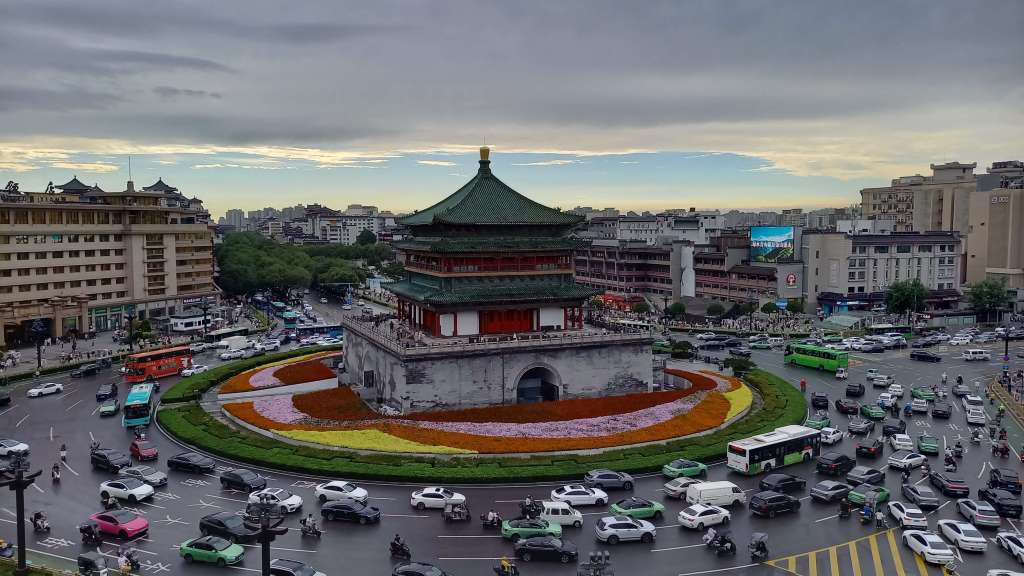
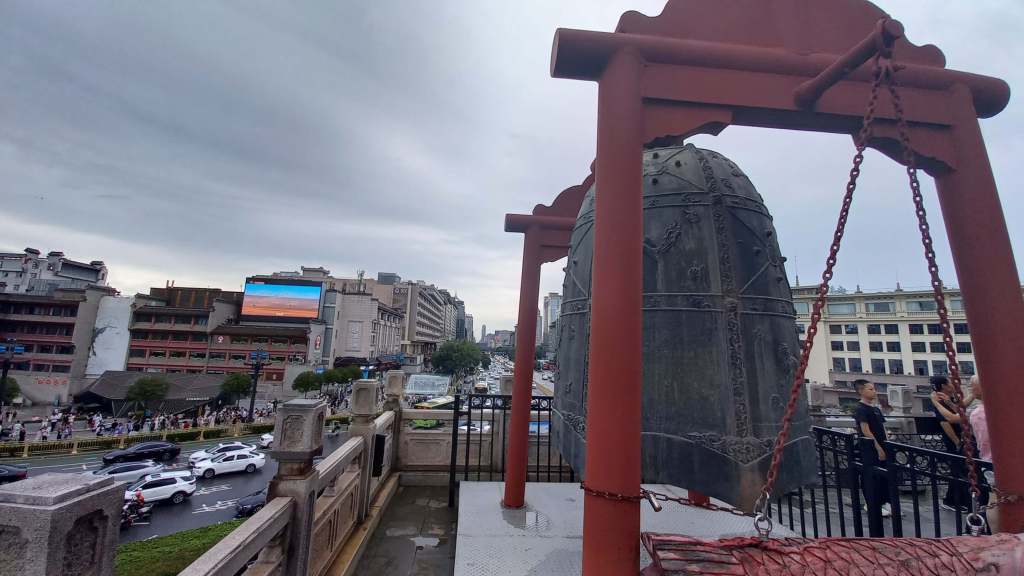
My highly enjoyable afternoon wanderings included taking in both the Bell Tower and the Drum Tower, both built in the 14th century during the Ming Dynasty. The former was used to mark the morning opening of the four city gates of the extensive city walls still intact today and completely surrounding the old town, while the latter was used to mark the closing of the gates in the evening. In fact, the Bell Tower sits right in the middle of where the north-south road intersects with the east-west road, and you can see all four city gates from this highly central vantage point in the city.
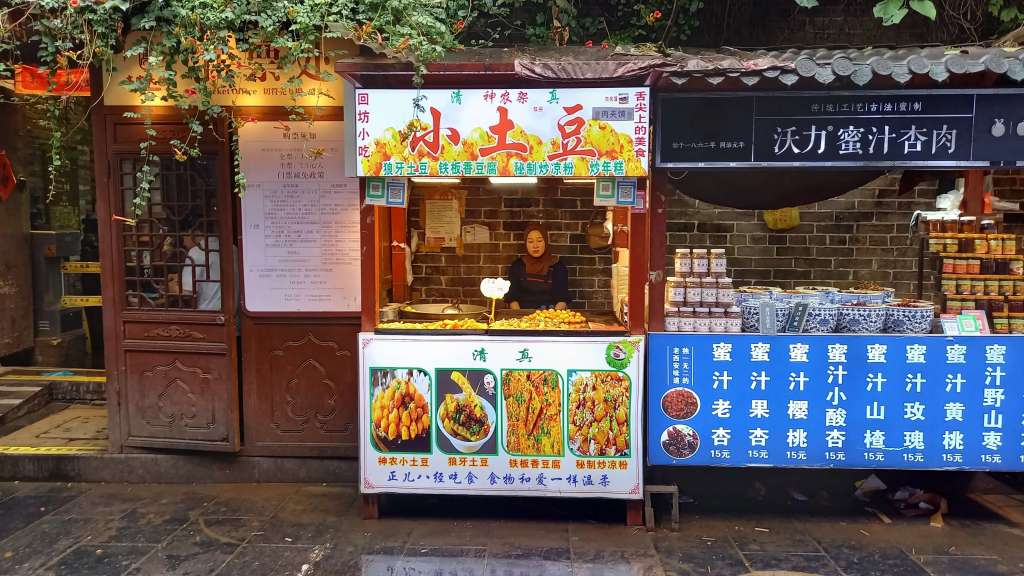
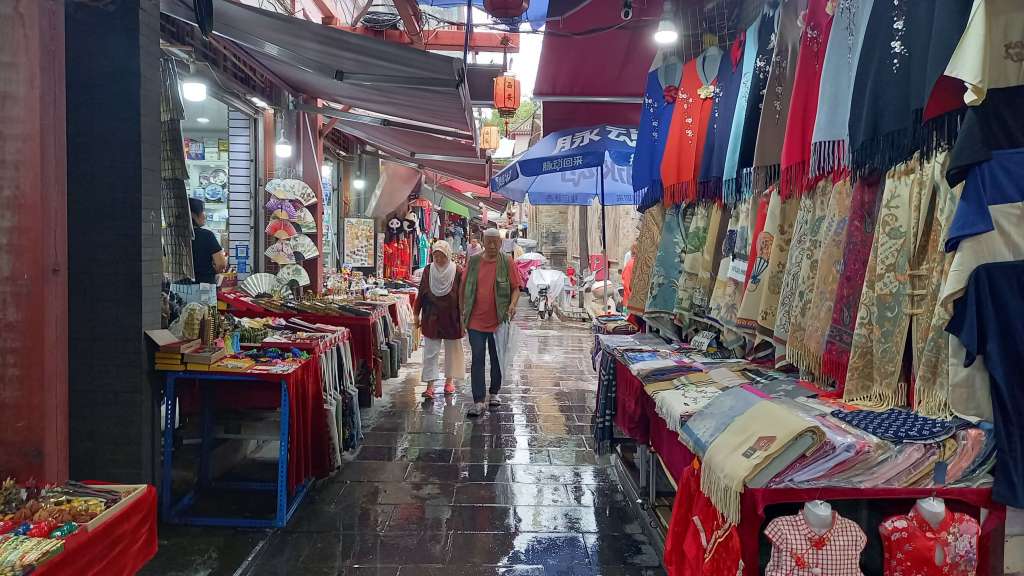
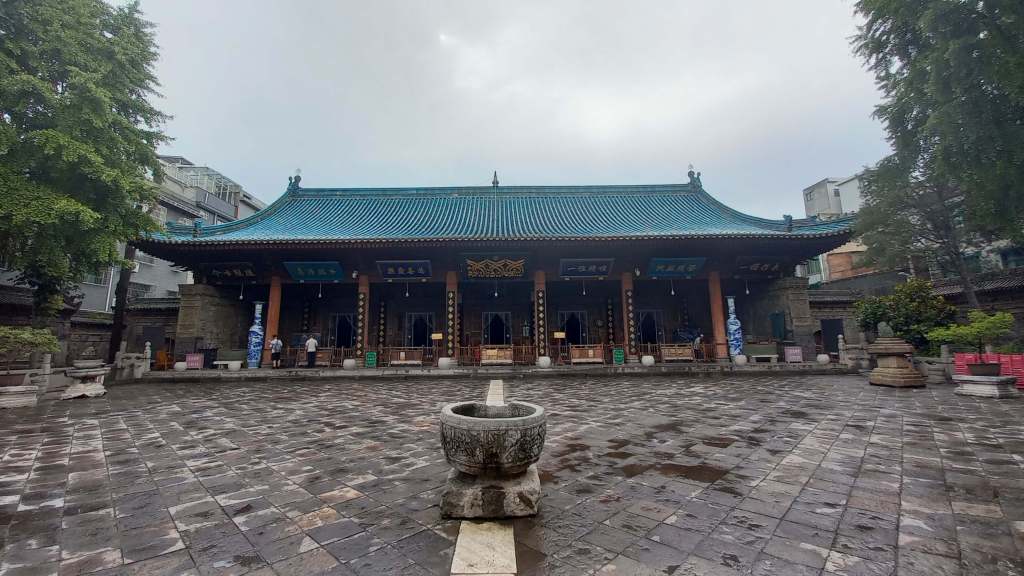
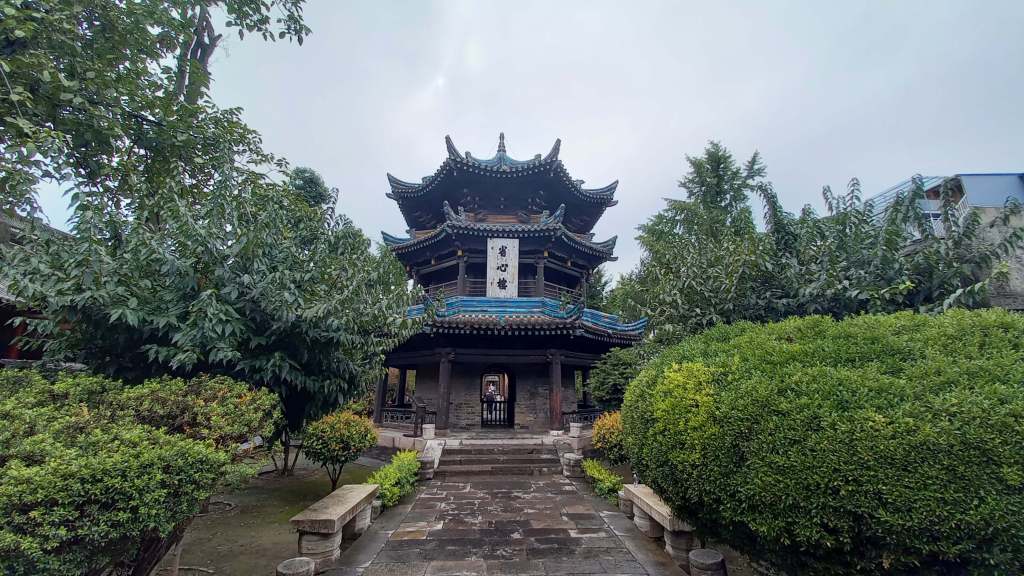
I also fitted in a visit to the city’s Great Mosque and its Muslim Quarter, both equally star attractions of Xi’an. I found it absolutely fascinating to see non-Uyghur Chinese Muslims in the city – these are Han Chinese people who found the Muslim faith from travelling Arabian and Persian merchants who arrived in the country by both land and maritime silk routes. These people are now referred to as a distinct ethnic group called the Hui people – Chinese men and women, but wearing Muslim hats and headscarves. The Great Mosque itself had the typical multi-level, up-curved Chinese rooves and tiles, including dragon motifs and sculptures, along with Chinese characters interspersed with Arabic writing. Compared to various busy Buddhist, Taoist and Confucian Temples I’d visited thus far, this also Chinese religious place of worship was an oasis of peace, calm and tranquility in the midst of the shop-filled hustle and bustle of the surrounding streets. I could have spent hours in this very peaceful complex of buildings, courtyards and gardens.
I’d had a fascinating first day in Xi’an, and went to bed that evening so very excited about the next day ahead.
It was amazing! Quite possibly the absolute highlight, out of certainly a fair few, of my month-long adventure through China. As mentioned previously, this was my second visit to the country, my first being in 2002. I only did Beijing, Inner Mongolia and Manchuria back then. While I visited and walked along the amazing Great Wall of China at the time, I left with the feeling that I hadn’t fully done China. I also left with a rather bitter taste in my mouth of the country, and learned during this more recent visit that this was probably due to a few reasons I think. Firstly the rough and readiness of the people and travel up there, secondly the fact that in most places I visited foreigners were a rarity and the looks weren’t always that friendly, thirdly the large amounts of pollution, car honking, litter and spitting back then which all seem to have decreased throughout the country, and finally the comparative immaturity of myself as a younger, inexperienced traveller back then.
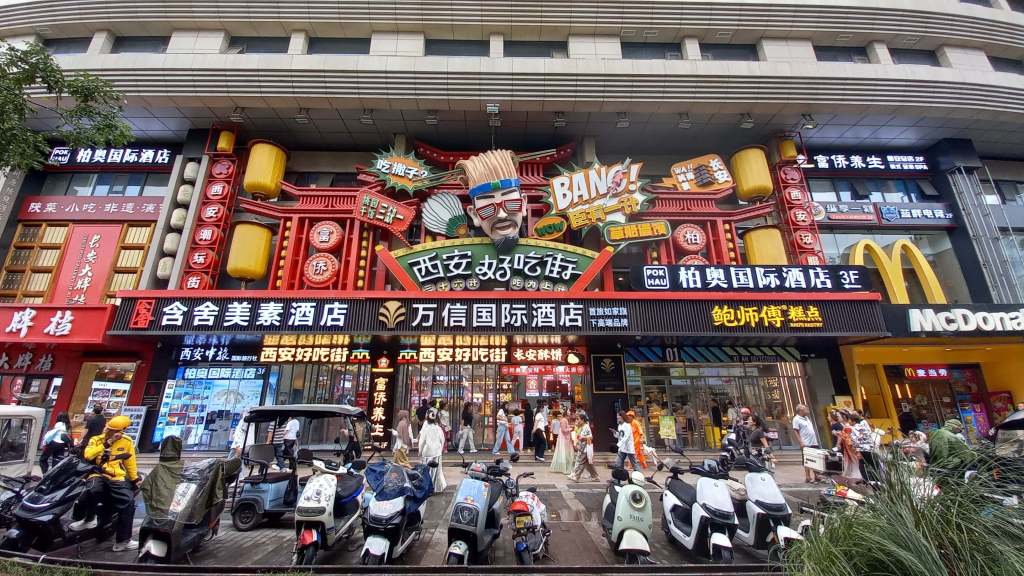
I can safely say now that I’m absolutely delighted to have returned, to square that circle left unfinished. My impressions now of China are glorious, with super-friendly people. And most importantly I think, I now feel that I can say I have done this country. This is because on this day, I did the Terracotta Warriors! After the Great Wall, I think this remarkable sight is also a necessary inclusion to a China trip. And now I have done it, wahoo! I would absolutely love to return to China though, and am currently hoping for two more journeys there, as there is still so much more I’d like to see and do. But for now, I feel complete with China, filling a hole that I feel has been left open for 24 years.
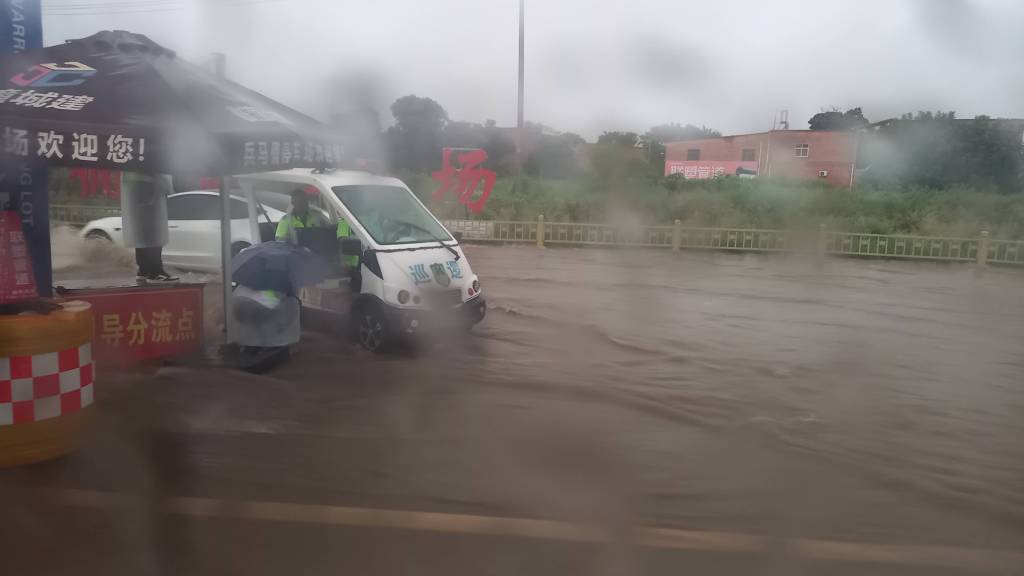
So I did a full day tour on this day, and for the first time on my travels (apart from on the Yangtze River Cruise), with an English-speaking group and an English-speaking guide. There were four ladies from Kyrgyzstan who didn’t actually speak much English, and a group of seven friends from Spain. Gosh, those Spanish people are sociable people who like talking! Our guide was called Adam, and was a Chinese Muslim. This is something I continued to find fascinating, and along with the Kyrgyz group, and with Xi’an in general, seemed to be a nice transition into my upcoming Central Asian adventures beginning in a couple of days.
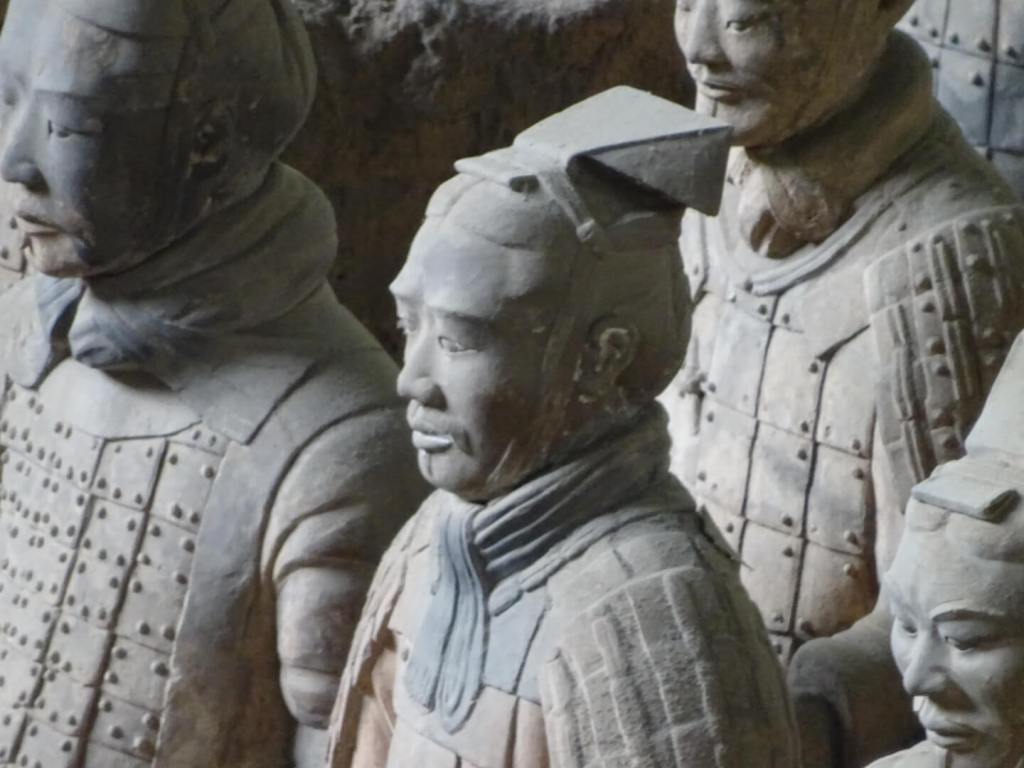
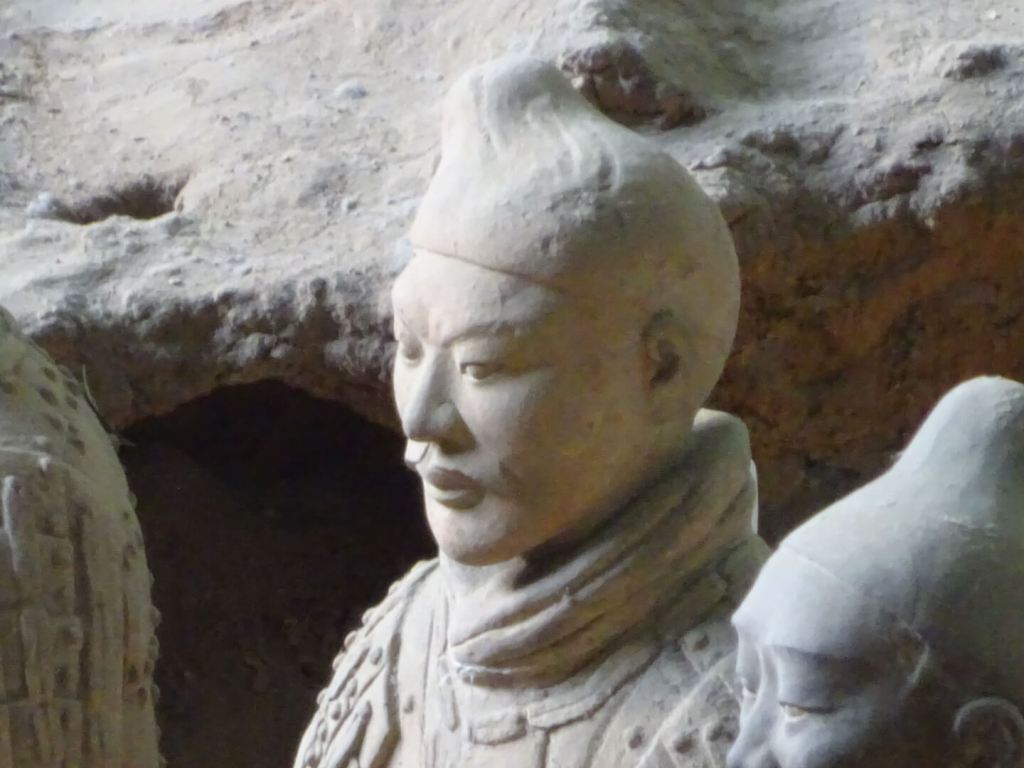
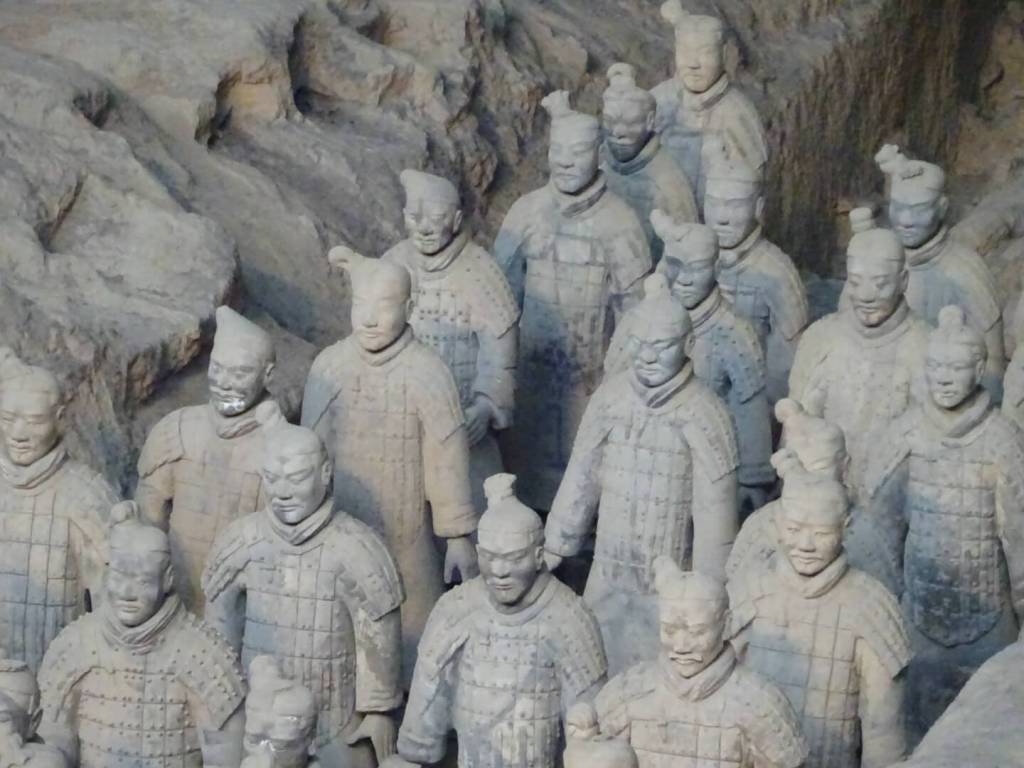
Created in the 3rd century BC by Qin Shi Huang, the first Emperor of China, this huge collection of over 8,000 life-size warriors made out of clay, along with hundreds of chariots and horses, was only discovered in 1974 when a local group of farmers were digging a well on their land during a drought. Emperor Qin’s was the first dynasty to fully unite China, and fascinatingly his name gave rise to the west calling the country China – I never knew this before!
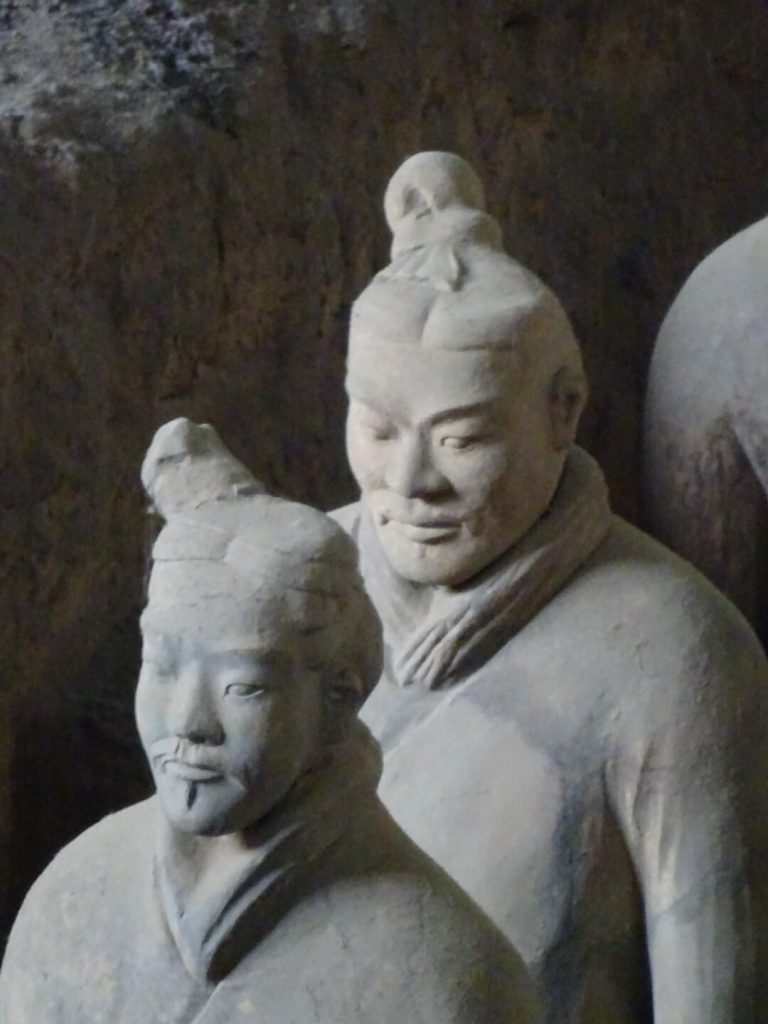
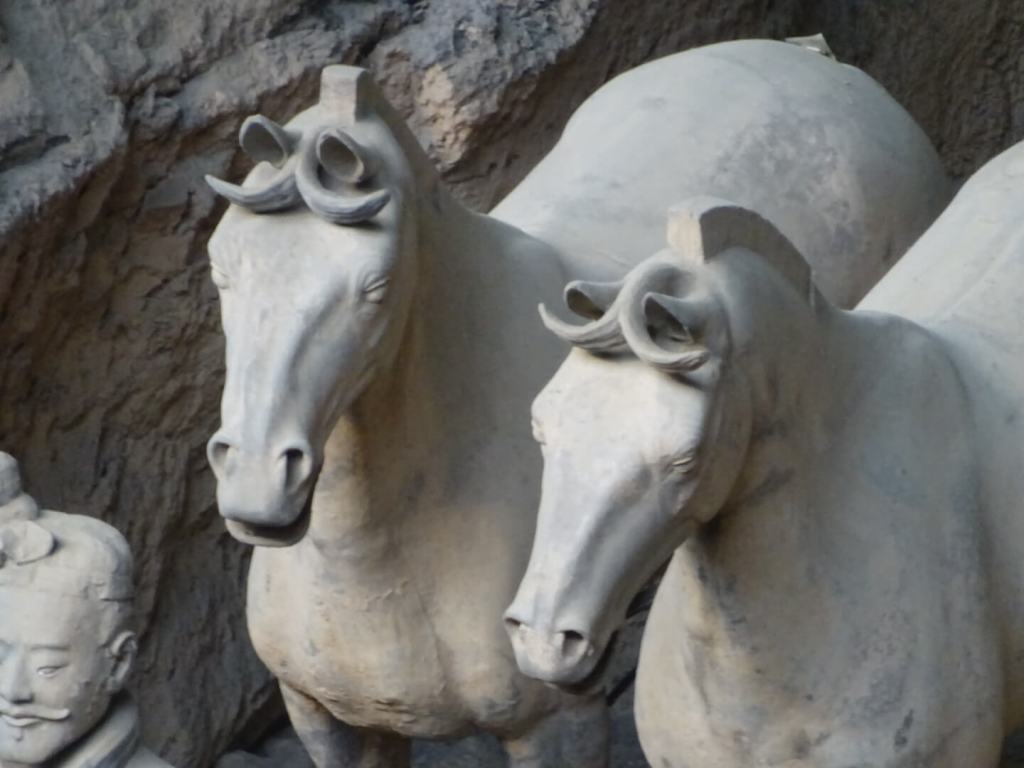
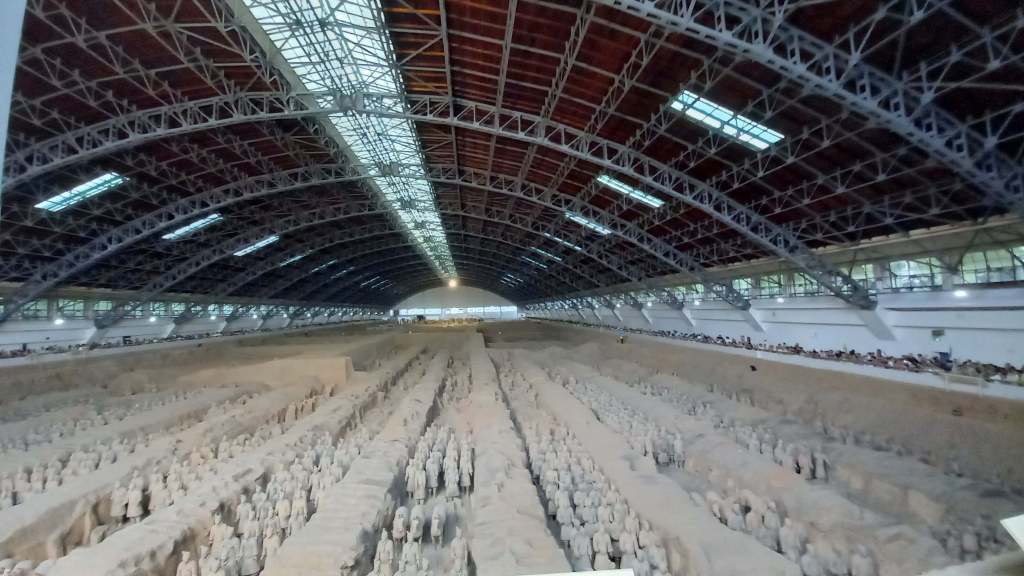
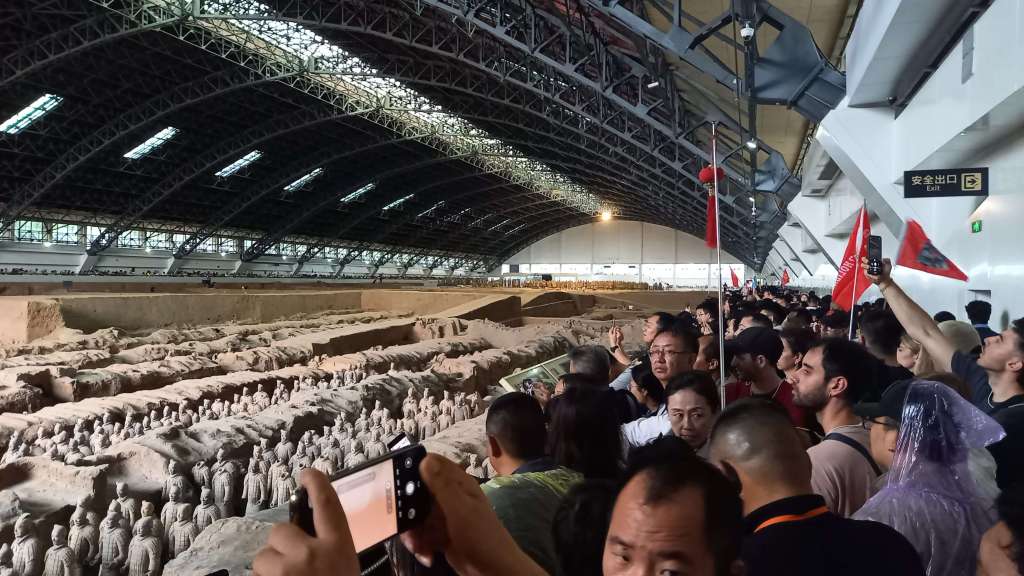
Since 1974, excavations have taken place over the years, and the visitor experience focuses on three main rooms to visit. The first one is vast, and along with the great number of these fascinating figures in the middle of the room, was also filled around the outside to the brim with tourists. Getting a good view at the front of the crowds took patience, but I managed it a few times. Each statue has a different face, and rather than representing sacrificed soldiers to accompany the Emperor into the next life which is what I originally thought they were, they were apparently modelled by various sculptors on themselves and each other. I was so excited to see this oh-so-famous sight, and walking into the first hall filled with all those clay warrior statues, I was so elated I nearly cried!
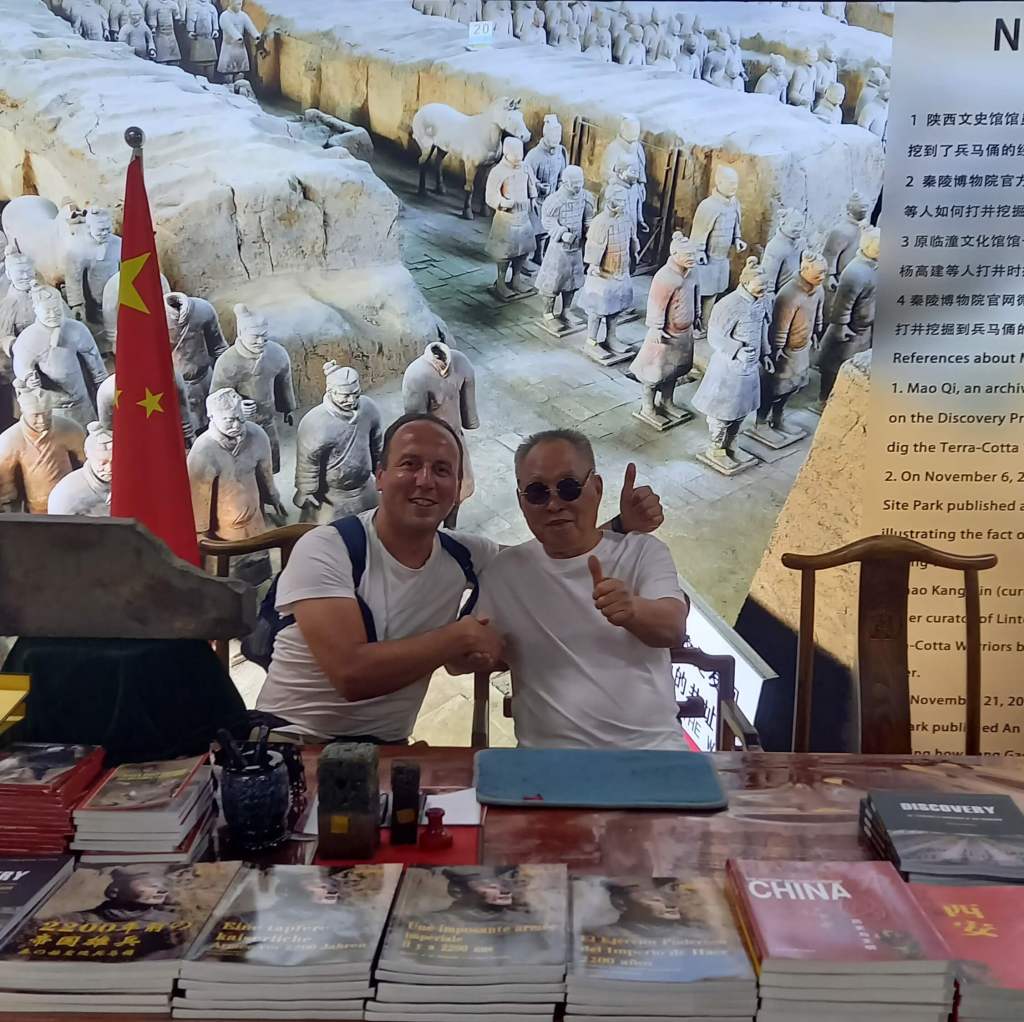
The second and third rooms weren’t that amazing, but we did get to meet and shake hands with a certain Mr Yang Gaojian a bit later, one of the original farmers who first found the site back in 1974. I couldn’t quite believe it was him, and also wondered why he wasn’t more popular – mostly foreign visitors were meeting him, not the hundreds and hundreds of domestic tourists who were also onsite. But I went with it anyway, met the man, and shook his hand – that felt quite the honour.
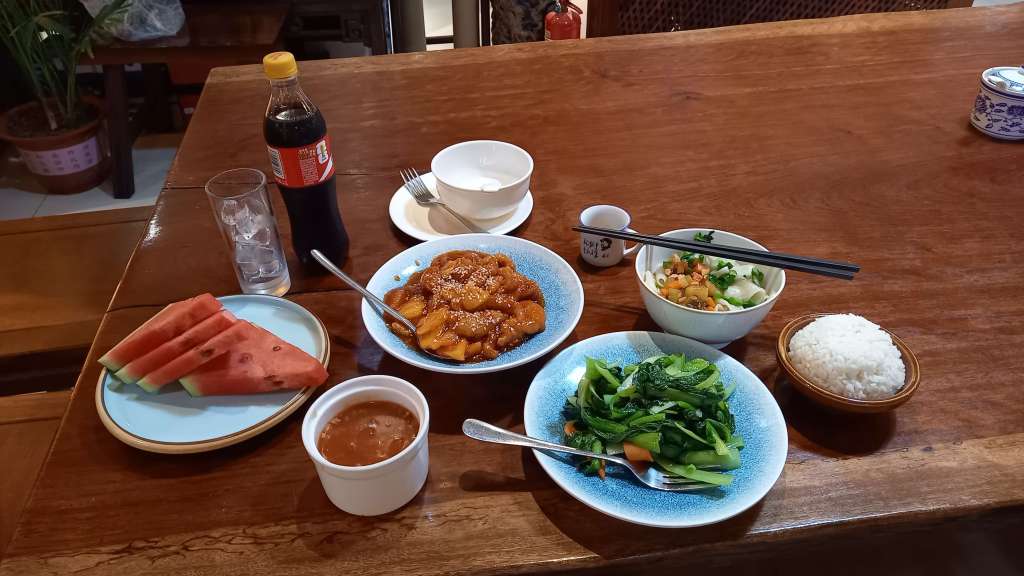
After a lovely lunch at one of the many onsite restaurants, where I was given far more food than I could possibly eat and wondered what happened to the leftovers (onto the next customer’s plate…?!), we visited the nearby Huaqing Palace. This place is famous for its hot springs, and for being both the home of Emperor Xuanzong of the Tang Dynasty and his consort, the Lady Yang, as well as the site of the Xi’an incident between the Chinese Nationalists and Communists.
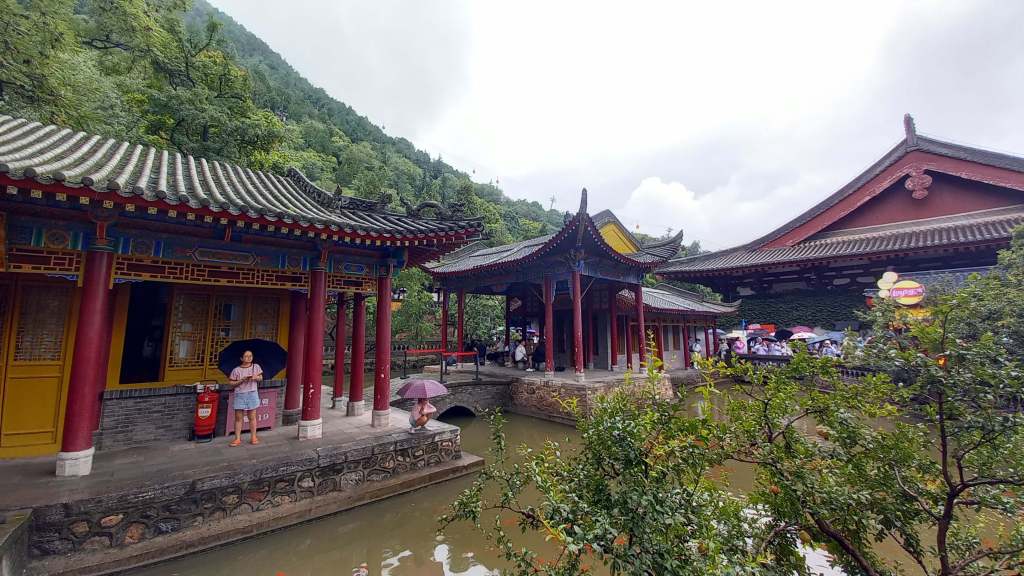
Lady Yang was said to be very beautiful, and lived in the palace with her lover, the Emperor Xuanzong in the 8th century AD during the Tang Dynasty. Following an unsuccessful rebellion by an ambitious general, Lady Yang was blamed for it, and the Emperor’s guards demanded her death. Filled with sorrow, the Emperor was forced to have her strangled, and the story went down in history as one of China’s most famous tragic romances.
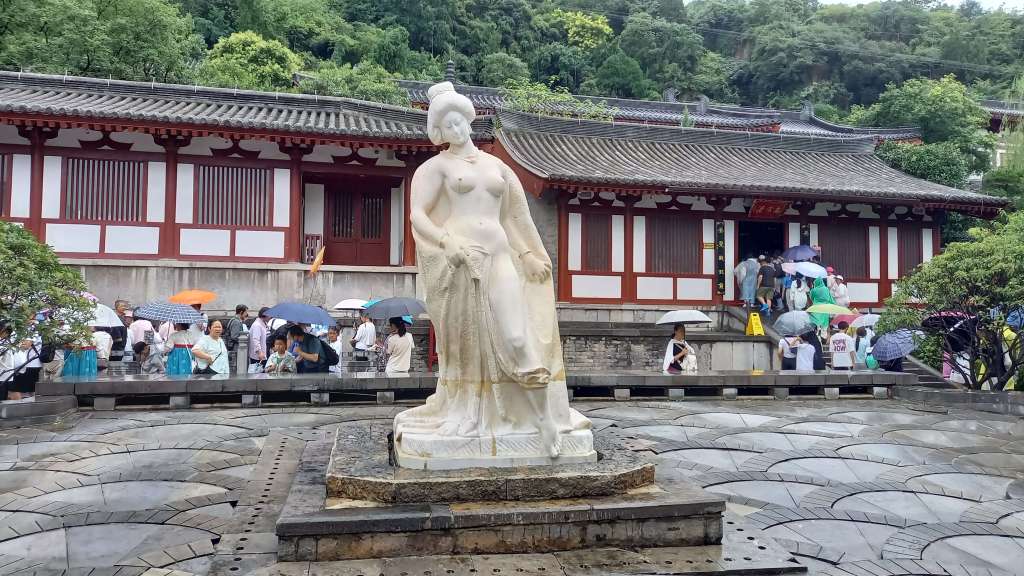
The Xi’an incident refers to the kidnapping in 1936 of Chinese Nationalist leader Chiang Kai-Shek there at the Huaqing Palace near Xi’an, in order to unite the Chinese Nationalists and Communists against their common enemy at the time, the Japanese. This worked for the duration of World War Two, but once over, hostilities between the two sides continued into the Chinese Civil War, which eventually led to Chiang Kai-Shek and his Kuomintang Nationalist Party retreating to the island of Taiwan and staying there ever since.
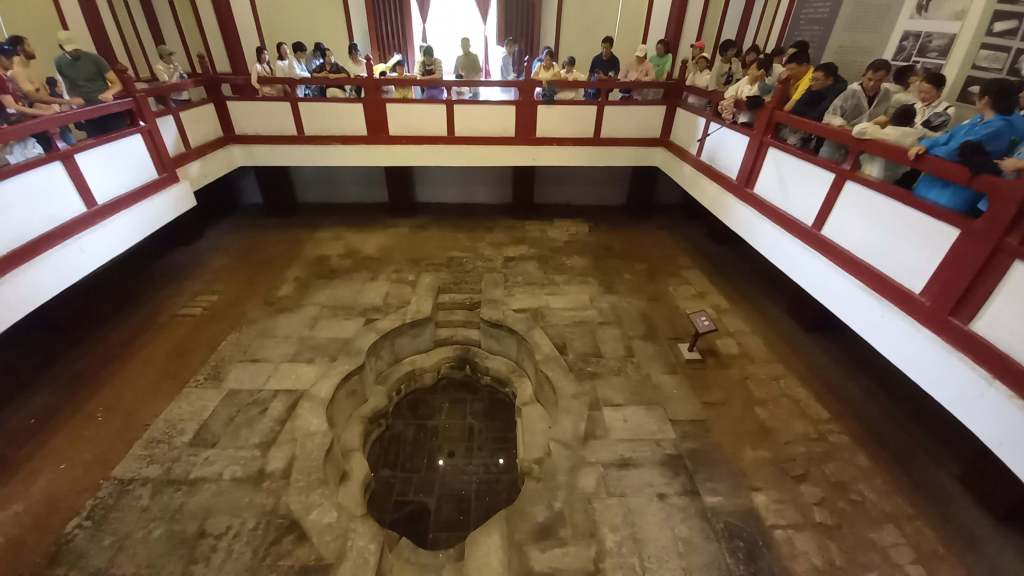
I must admit, the Huaqing Palace was a little underwhelming after the Terracotta Warriors, particularly as most of the buildings seemed to be replicas of the original palace, but the hot spring baths were original, and the location was lovely at the foot of a mist- and forest-covered mountain. It was also just nice to make a day trip of it.
It was a relatively early end to my sightseeing for the day, getting back to my hotel around 4.45pm, and it was lovely to get some downtime. I was preparing myself both with my plans, and also mentally and physically, for the next segment of my trip beginning in two days’ time with my flight to Kazakhstan, so I appreciated this extra time very much.
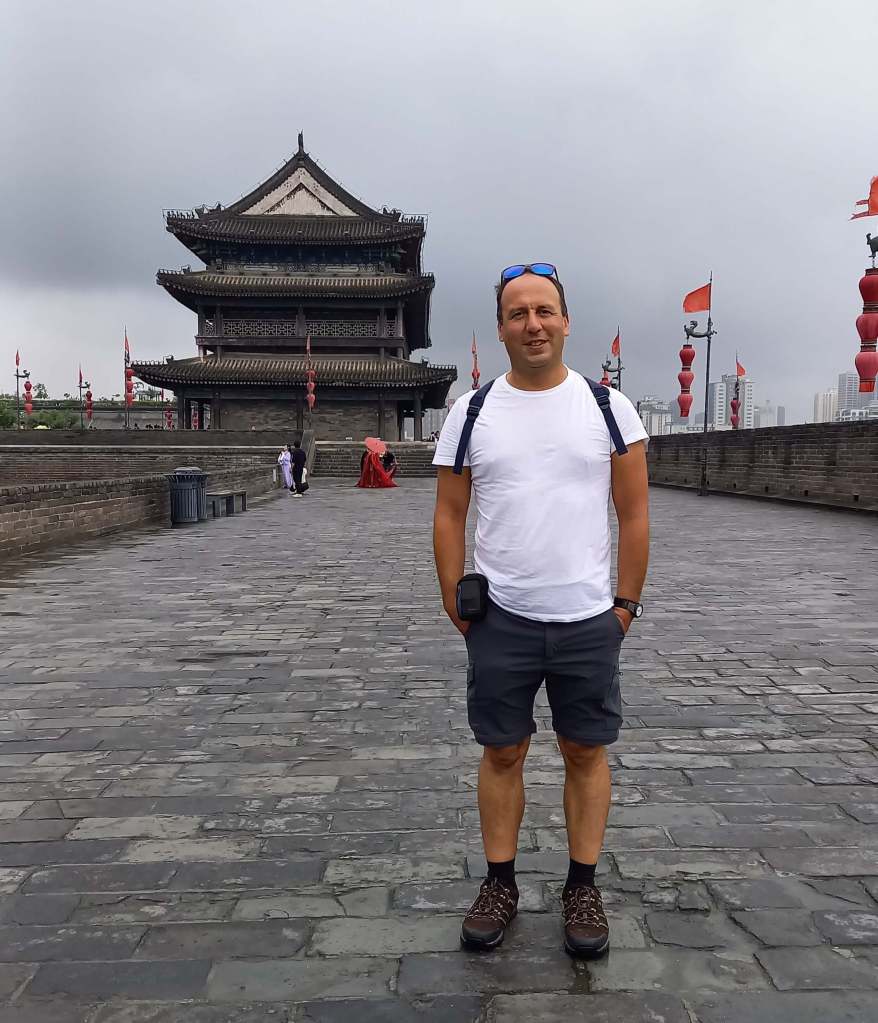
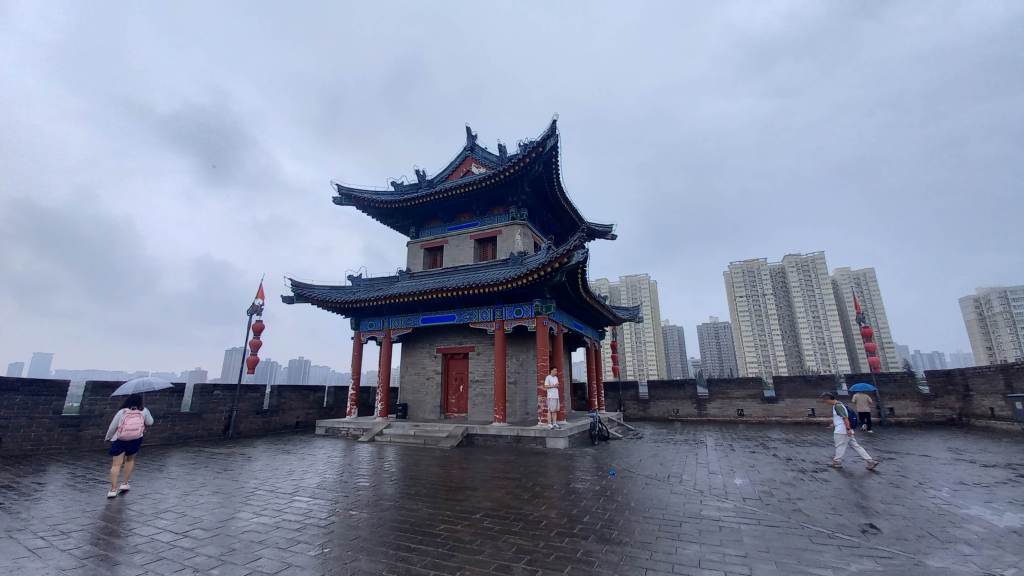
The next day was amazing, exploring lovely Xi’an itself, a real gem of a city. It felt orderly, with a square-grid pattern of tree-lined streets and attractive buildings. I did quite a bit of walking on this day, as the temperatures were very pleasant meaning I didn’t break out in a sweat just walking one city block. There was heavy rain at times, but this was worth it if it kept the temperatures down.
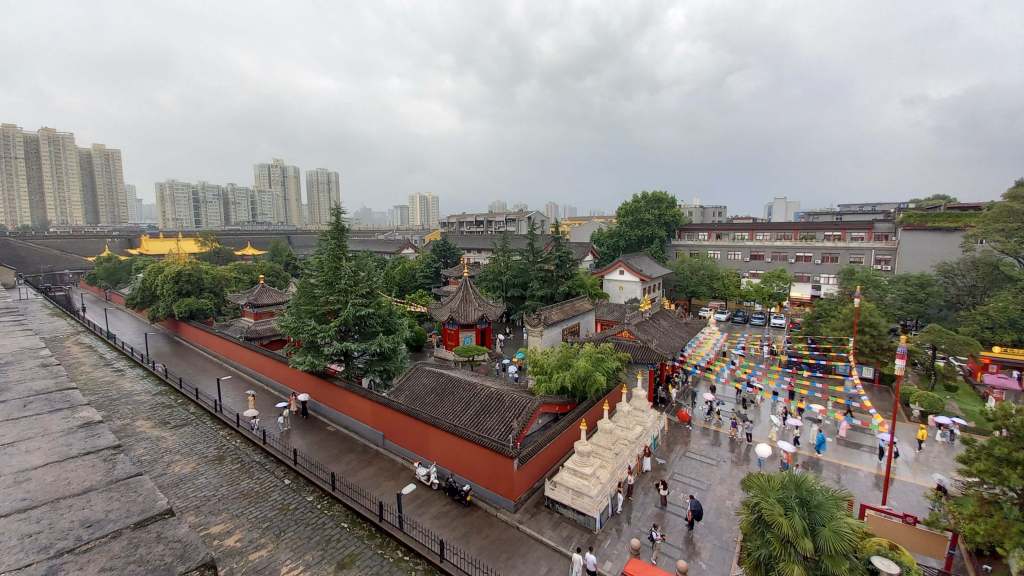
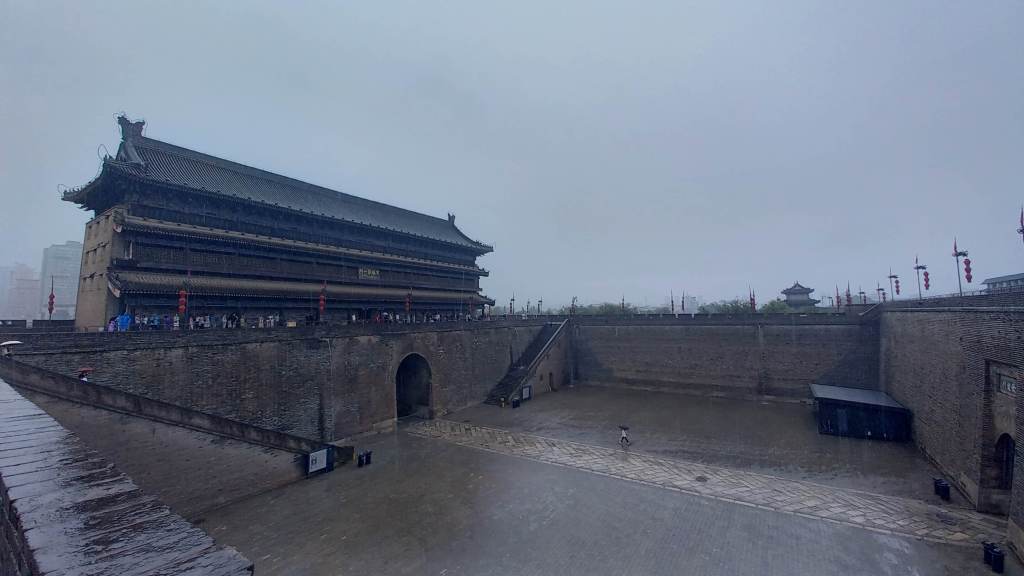
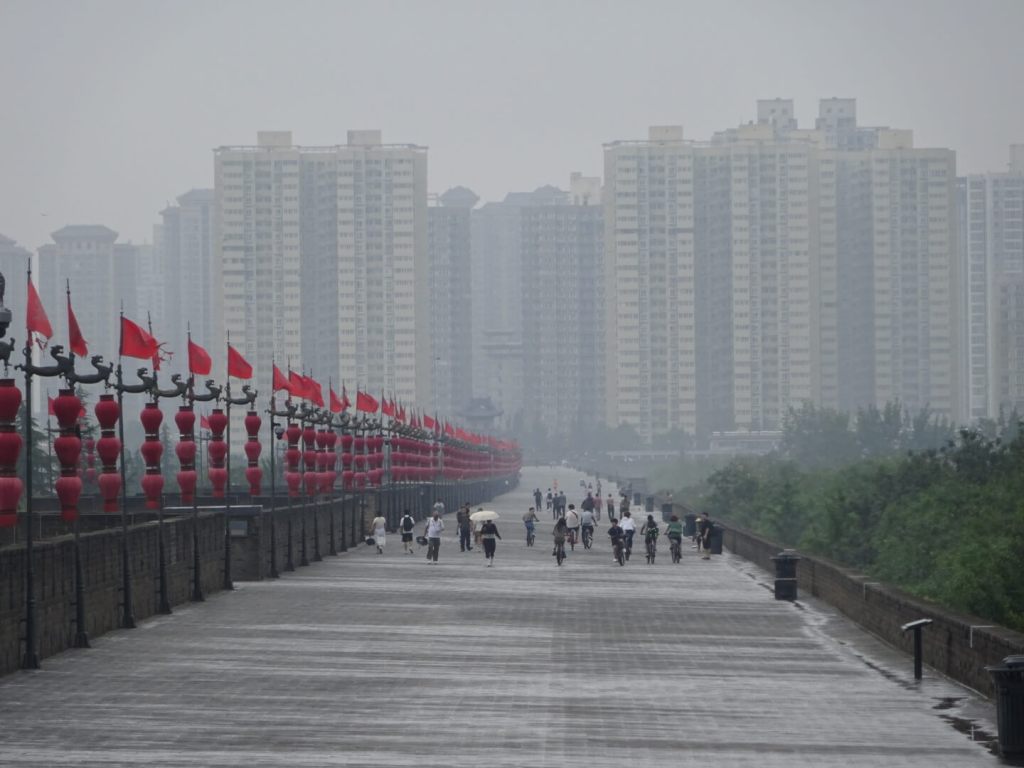
I first walked around 2.5 miles of the nine-miles of completely intact 14th century Ming Dynasty-era city walls, from the west gate to the north gate. I googled which were the quietest gates, in order to avoid any crowds, and it turned out to be these two. It was quieter still due to the rain on this day, which became really heavy towards the end, and I ended up sheltering for a bit under one of the many turret roofs which dot the walls. I thoroughly enjoyed the walk, and the views from up there, especially of the Guangren Tibetan Buddhist Temple which the north-west corner of the wall overlooks.
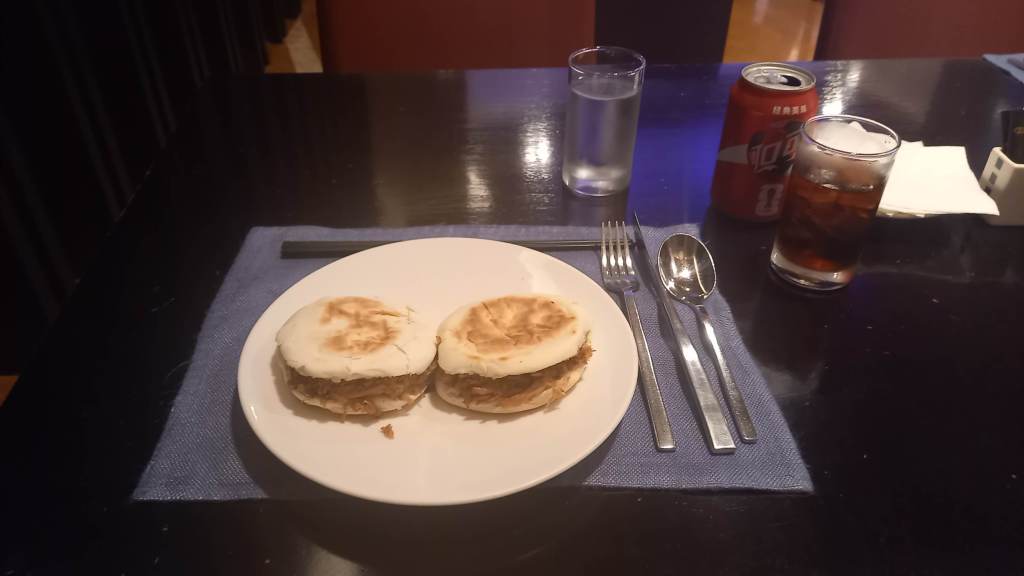
I then headed for lunch at the Sofitel Hotel on People’s Square, to try the local Xi’an speciality called roujiamo, or the “Xi’an Hamburger”. This was delicious, and involves slow-braised pork belly sandwiched in a pocket of bread made from semi-fermented wheat flour dough – yum! From there I headed to the city’s most famous landmark apparently, the Big Goose Pagoda, dating back to 7th century Tang Dynasty China, before taking a quick decko at the Shaanxi History Museum nearby. This is said to be one of the country’s best museums, and you could tell, with two slow-moving queues each snaking around the block of the building. While China really does do museums amazingly, and some of my best memories from this trip come from my museum visits, namely in Haikou and Wuhan, they can also be incredibly and uncomfortably crowded, particularly during this busy summer tourist season. I decided against it, as if the queues were that long, goodness knows how busy it would have been inside…!
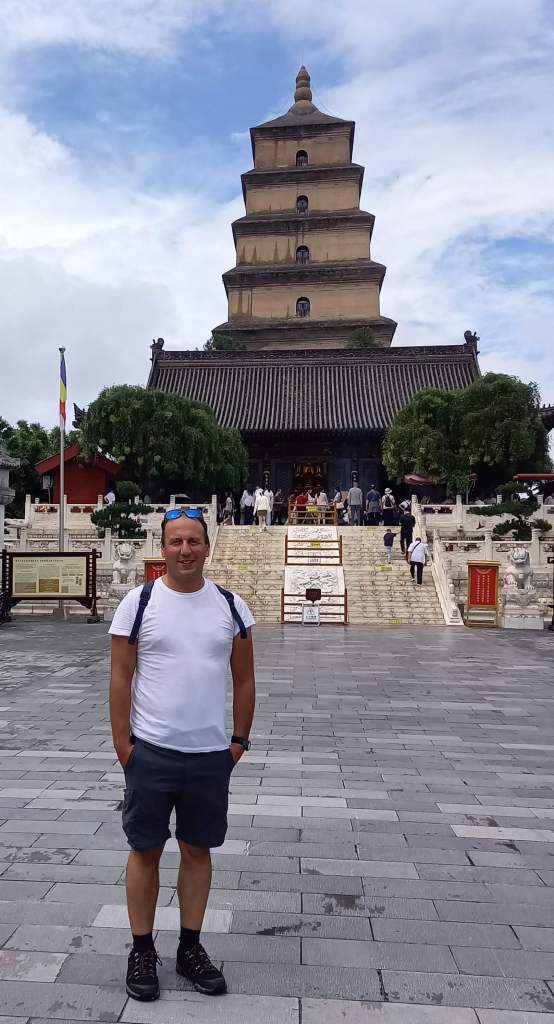
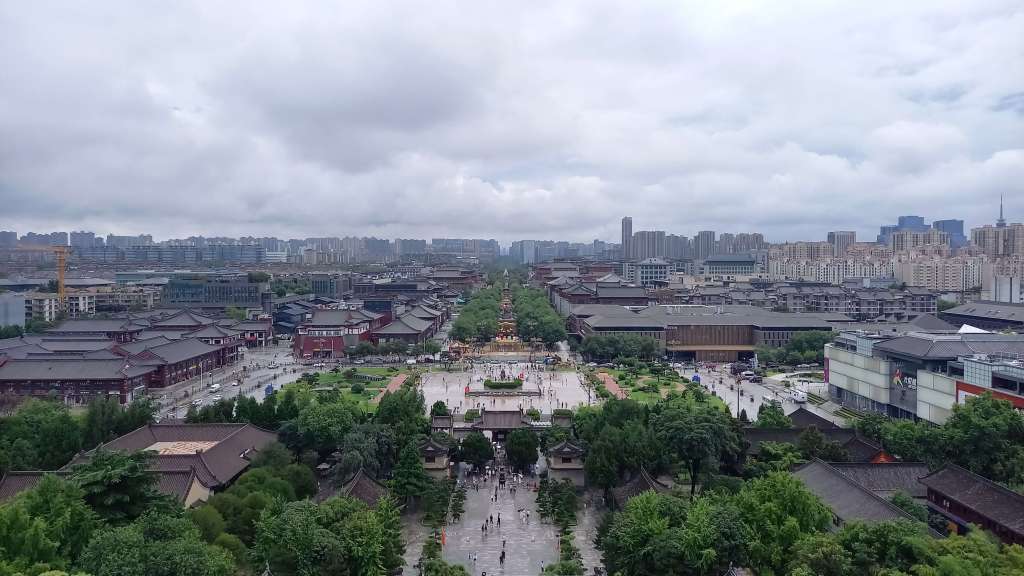
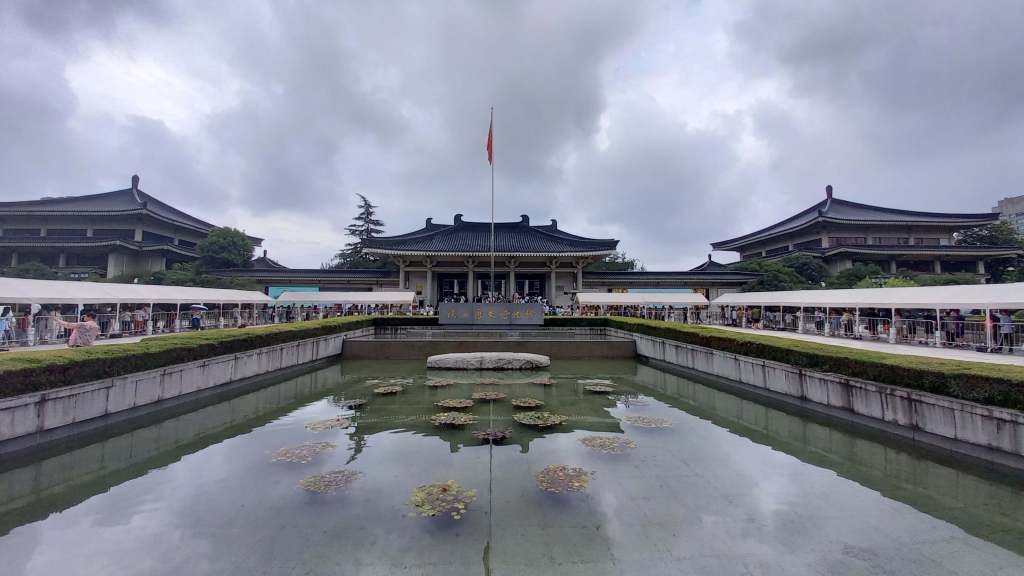
Finally took a walk through the lovely leafy suburb of Beilin within the city walls, and surrounding my hotel. On the way I stopped by the south gate of the city walls nearby, but this was apparently the most popular gate when I researched this the night before, and now that the rain had stopped, the streets were beginning to throng again with people. There was already a queue there just to get into the gate. This was a no for me, and instead as mentioned, I enjoyed my walk through lovely and peaceful Beilin, stopping off at the unexpected and beautiful early-18th century St Francis Catholic Cathedral around the corner from my hotel. I loved this. Just like the Muslim Great Mosque of Xi’an, this Cathedral’s roof was also built in the Chinese-style, with its sloping and upturned tiling and dragon motifs on the corners. I loved this fusion of Eastern architecture absorbing Western religions.
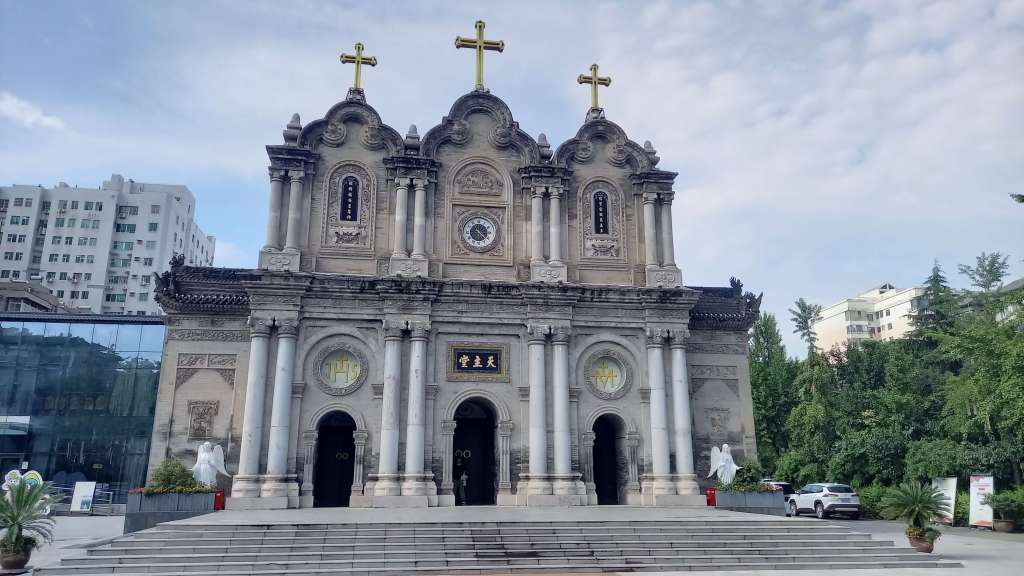
Back to my hotel for the evening, not only for contemplation of this lovely day exploring Xi’an, but also of my amazing trip in China. I enjoyed every single minute of it. I loved this country, and I feel this may have come across in my blogs on my time there. Its vastness, the ease of travelling and getting around (when connection is working of course…!), the sheer scale of the development and changes since I was last there, the absolutely wonderful and welcoming people, the safety and security, the ability to just be myself there and relax, which I’m still contemplating as to why this is different to back home, the absolutely delicious food, the awesome scenery, culture and history, the comfortable, hospitable and very affordable accommodation. I could just go on. China, I love you, and I have absolutely loved every minute of being in the country. While parting the next day seemed quite sad, I did have the encouraging feeling that I’d be back again.
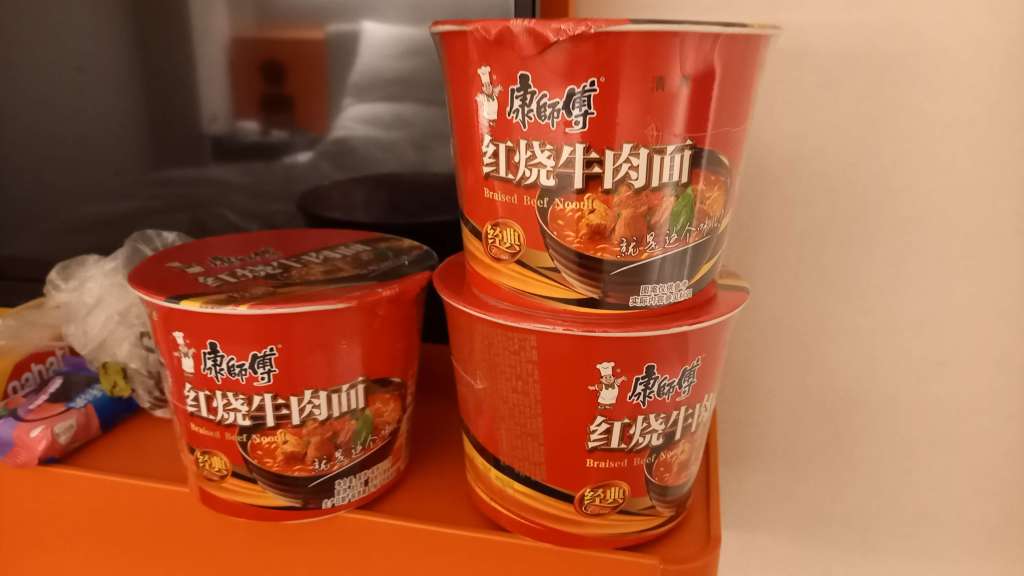
While my journey continues onwards and upwards, and westwards, China, I bid you farewell, and hopefully until the next time. Thank you for having me. You’ve been amazing! Wo ai ni.


