
16th July 2026
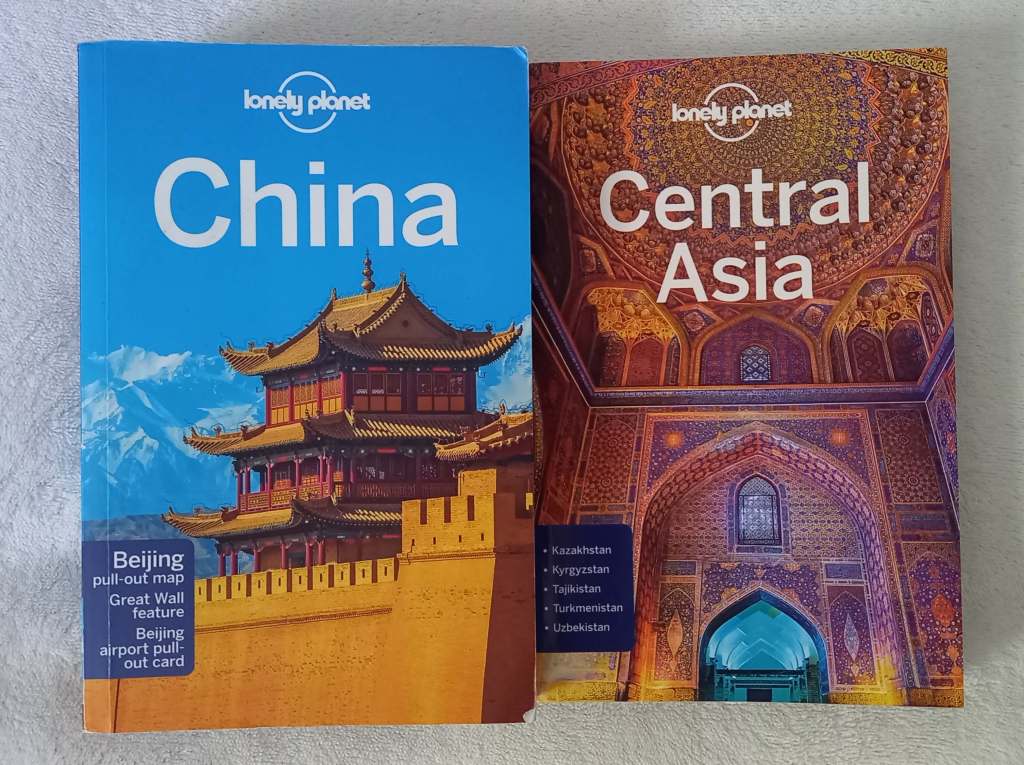
Wahoo! I have started my epic summer six-weeker 2026, by flying from London Gatwick to Shanghai’s Pudong International Airport, with the very friendly Air China. I was a bit nervous to begin this one to be honest, although I’m always a bit nervous before my trips, especially the big ones. This one rattled the nervous system just that little bit more as prior research had shown me that Internet connection and payment methods in China are so much different to elsewhere. I consoled myself by considering that my time in China may be more of a blast from the past than other trips, relying more on my Lonely Planet and local knowledge and guidance rather than Google Maps and anything Google-related really. In the end though, travel there turned out to be pretty much seamless, and the country went from being one of the hardest places I’ve ever travelled in to one of the easiest, provided the apps and Internet connection play ball that is…!
So yes, I’ve actually been to China before. This was during the summer of 2002, after I’d just finished a year’s stint of teaching English in Moscow. I had already taken the Trans-Siberian through Siberia and Mongolia, exploring both on the way, and was then spending 16 days in the north of China: Inner Mongolia, Beijing and Manchuria. I found my travels there tough, and apart from Beijing, didn’t really enjoy them. Ever since though, I had wanted to return to China, to aim for a better experience than in these far-flung off-the-beaten track northern destinations. Travel was tough then – there were no bullet trains, no online bookings, the roads were constantly clogged, polluted and noisy with persistent honking, people were always spitting, and I was being stared at, not always nicely and sometimes laughed at, wherever I went. I didn’t enjoy this, and ever since pledged subconsciously to return, hopefully for a better, friendlier, and more modern experience of China. This was aiming to be that trip, and I can wholeheartedly say now that I’m back from my epic four weeks in the country, it was absolutely that, and then some!
My flight left Gatwick in the late morning, and after a couple of films (ET and Moana), some tasty Chinese-style plane food and a good nap, as well as my favourite seat right at the back with no-one behind me, I landed in Shanghai’s Pudong International Airport around 5.30am the following morning. Immigration was a bit of a bind as I couldn’t complete the online immigration declaration form on my phone and instead had to write out a manual one. By the time I had done this, waiting at the side of the immigration queue and not really being able to rest my writing on anything which was a bit awkward, my backpack was ready to collect from the carousel, and I walked through customs and right out into Shanghai and China! I was excited!
So if anyone is planning a visit to China, it is more-or-less essential to have one or two apps downloaded onto one’s phone. While cash payment is a legal requirement everywhere, in practice this isn’t always the case, and everyone, just everyone, pays there using an online app. The two main ones are Alipay and WeChat – the former is the favourite as it’s supposed to be easier to set up, but the latter worked infinitely better for me (more on that below), and you can also use it as an online messenger service just like WhatsApp in the west. There is also a taxi-hailing app called Didi, similar to the west’s Uber, though this can be found within both Alipay and WeChat so it’s not necessary to download this separately.
In addition to this, there is also China’s “Great Fire Wall” which blocks many western internet sites, email servers and apps, including everything Google-related, Yahoo and Facebook. To overcome this, many visitors download a VPN. I used and highly recommend Astrill VPN, and used Nord VPN as a not-quite-so-good back-up, although the roaming function on my UK O2 account pretty much worked throughout my whole time there, and allowed me to connect to pretty much everything. So for me, Internet connection turned out to be easier than I expected.
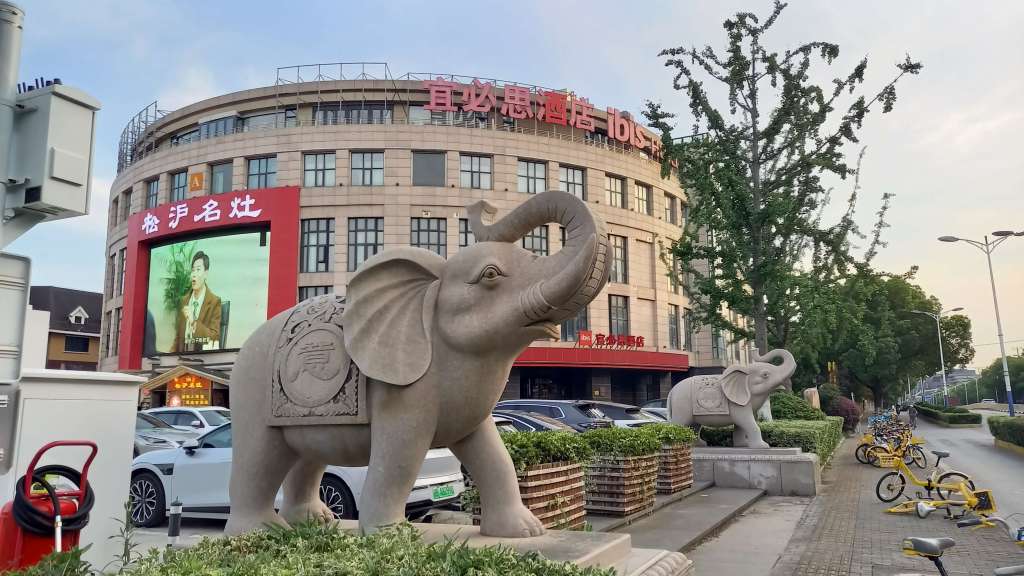
Still, it was all a bit new to me having just arrived in the country, and after a bit of figuring it out in the airport’s taxi-hailing app area, I managed to book a Didi taxi through my WeChat account, connected using my UK O2 roaming service, and boarded a taxi through the heavy morning rush hour traffic of Shanghai to the opposite side of this huge city. For the one-and-a-half hour, 30-mile journey, I paid a mere £20 or so – absolute bargain, and most short Didi city rides only cost about a pound or two. I checked into my very comfortable Ibis Hotel near Shanghai’s Hongqiao Airport, and this hotel chain was to become the mainstay of my four-week China adventure as I booked myself into one wherever it was available. The English-speaking reception lady was really friendly, and dodging the hotel’s own in-house robot (!) which was a busy little chappy there, opened the door to my lovely, cosy, business-hotel style room with air-conditioning on full blast. In my travelling career, I’ve made it my aim to always book into an Ibis in whichever countries they are affordable in, as they are so my type of accommodation. Friendly, comfortable, quiet, non-touristy but oriented to the local business traveller, and set up with all the traveller’s requirements and amenities I look for. In China they are indeed affordable and ubiquitous, so as mentioned I’d booked myself into a fair few during my time there.
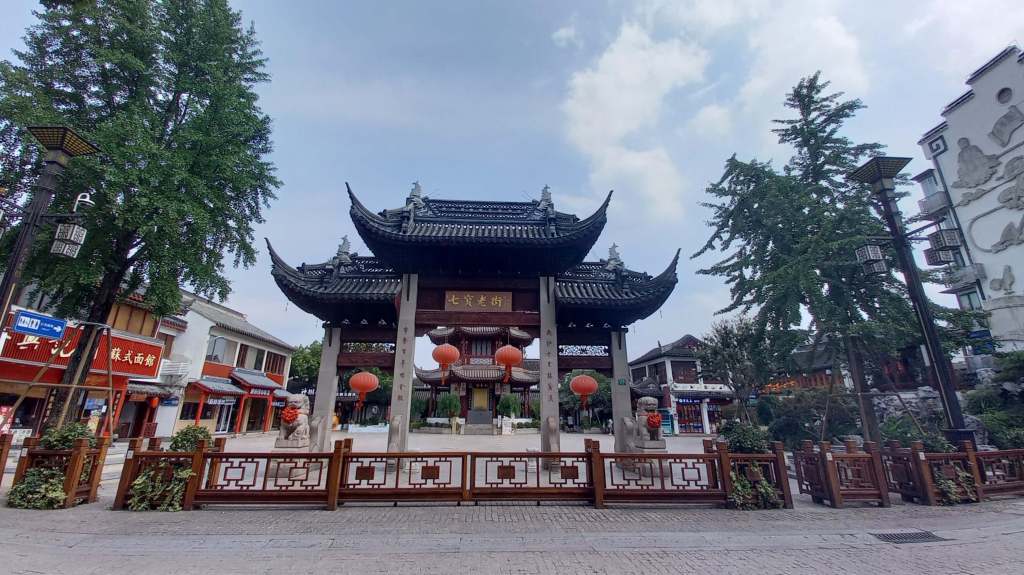
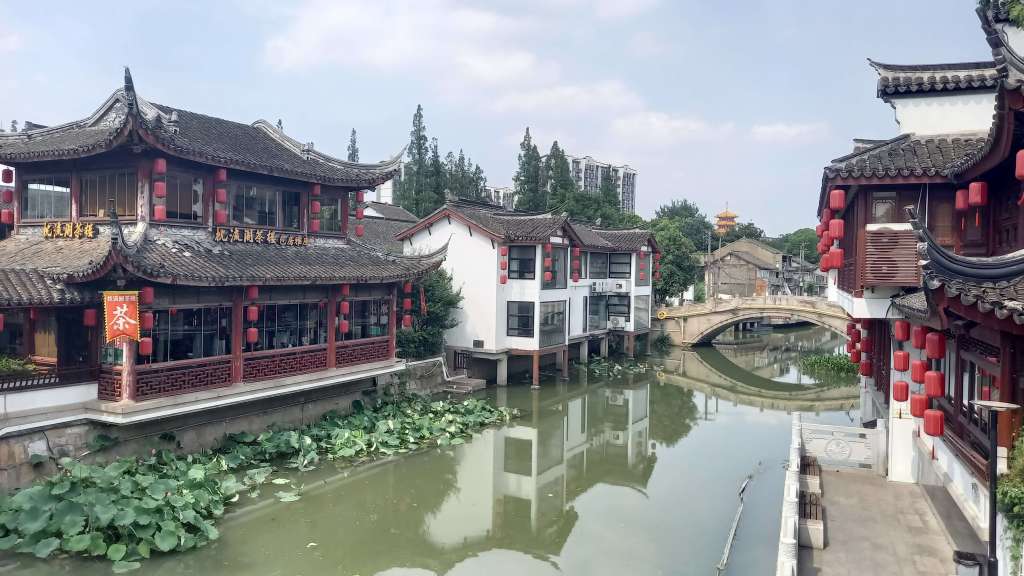
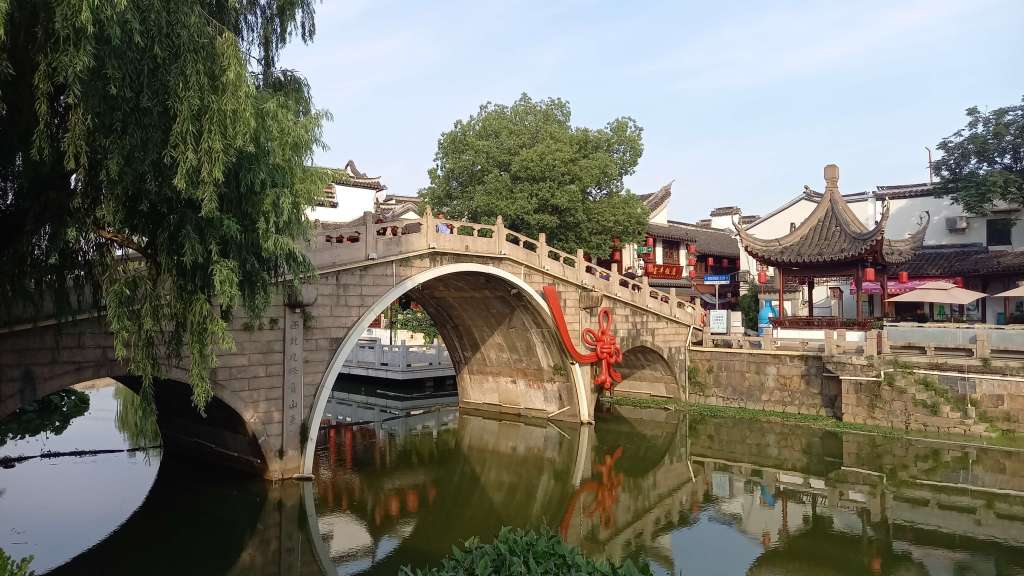
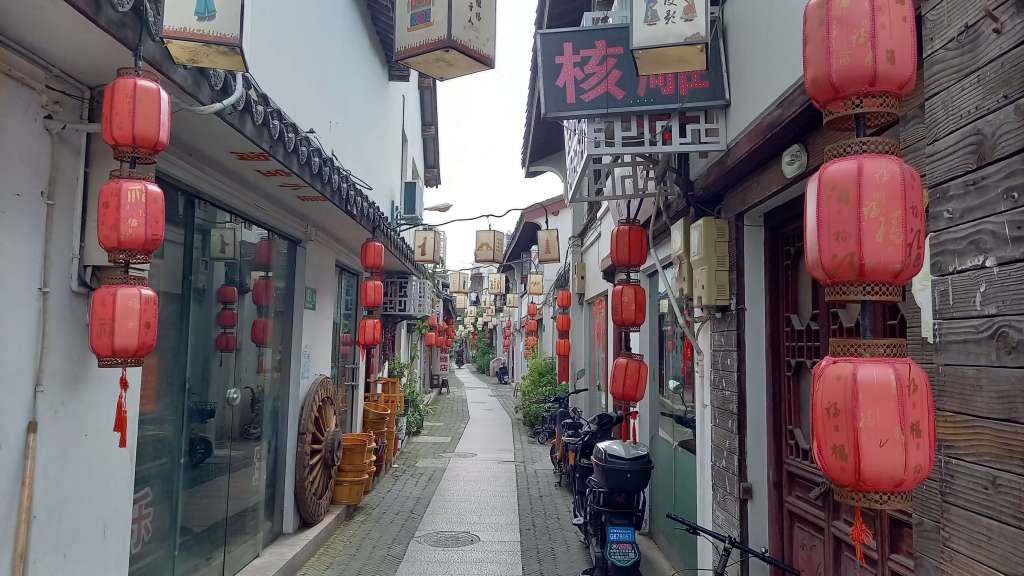
After a four-hour sleep on the plane, I got myself another four hours of sleep with my early and complimentary check-in (thank you Ibis!), and left to do a bit of exploring around 2pm. I wasn’t aiming for much. China is a country which I feel needs a bit of know-how to travel through, and thus I hadn’t set my travels up with the highest of sightseeing expectations throughout my trip, so as to be able to have time to orientate myself in each place, and get to grips with the system. This first day was very much a day of that. I took another Didi ride from my hotel, a much shorter one this time, and using my Alipay account this time on my back-up phone rather than my regular phone as the regular one had an issue with account verification. I was heading to the nearby and lovely little Qibao Ancient Town, filled with canals, cobblestoned alleyways, bridges, and lovely shops and boutiques. It dates back 1,000 years to the Northern Song Dynasty and was expanded significantly during both the Ming and Qing Dynasties to become an important commercial and trading centre by the 18th century. It was a lovely place to begin my China travels 2026 – small, perfectly-formed, manageable and friendly.
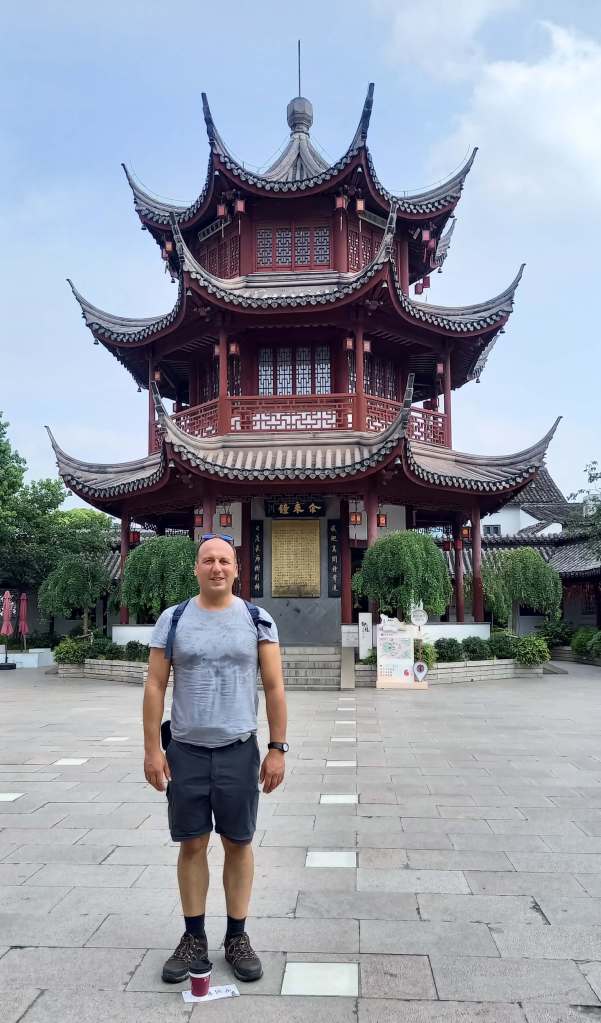
Most of my time there was in fact spent in two air-conditioned spaces, the strikingly beautiful Qibao Bell Tower, and a rather unusual communism hero-themed place, sorting out my payment methods. Since my taxi ride, Alipay had blocked my account and service also on my back-up phone, and it hadn’t accepted my payment method for the short taxi ride I used to get there. I managed to fortunately pay for it using WeChat instead, which itself wouldn’t work until I’d made that payment as it was also connected to Didi. I then had three separate online chats with the Alipay customer service team, who on each of the three separate occasions started off with something like “certainly, don’t worry, we’ll be able to help you, and you’ll be using Alipay again in no time”, to abruptly reaching the point of saying “oh, right, sorry, there’s actually nothing we can do for you” on each occasion. It seems as though some kind of block had been put on my security verification for some reason, which I can only wonder about why. I thus deleted my account after learning online this wasn’t an uncommon issue for foreigners, and fortunately was able to use WeChat and its own in-built Didi mini-app for the rest of my time in the country (well, most of it at least – more on that in two future blogs!).
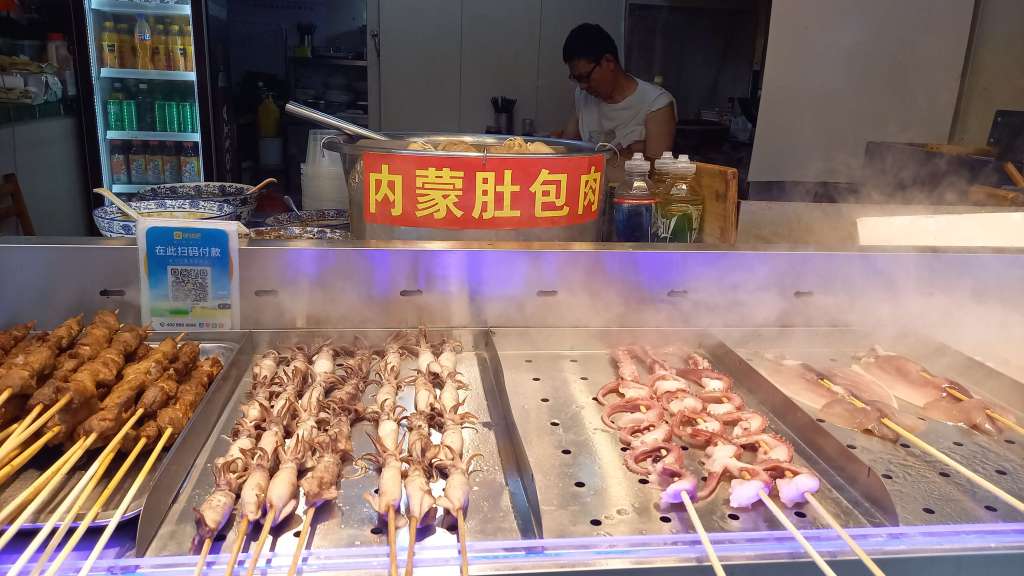
I decided to walk back the one-and-a-half miles to my hotel, which would have been nothing normally, but in this high heat and humidity was actually rather sweltering. I quickly learned that any distance more than a ten-minute walk in these conditions during my time in China would necessitate some kind of air-conditioned form of travel, be it a Metro ride just one stop, or a short two-minute Didi-ride. I stopped at Popeye’s Louisiana Chicken on the way for my takeaway dinner that evening – I just love finding such links between my trips, as my last US trip was through Louisiana and the Deep South a few months earlier, and now I was enjoying fried chicken on the first night of this trip. I spent the evening in air-conditioned bliss and lots of water to replace my fluid loss through sweat that afternoon, and came to drink two litres of water each evening of the China leg of my trip as a result. My delightful little Ibis room gave me a lovely kiss and a hug at the end of this, my first day on my epic trip through China!
The next day was the first of so many amazing full days in China, and I was so very pleased and touched to see pretty much straight away that my fears of returning to this country after what I mentioned had been rather a tough time there in 2002 were completely allayed, even quashed, vanquished! The people were so very friendly and welcoming, lots of smiles and pleasant looks, without the unpleasant staring like last time which made me feel I was walking on a different planet, no spitting, no constant honking, orderly queuing rather than a stressful melee, delicious food, easy transport, air conditioning everywhere, and quite frankly a seriously welcoming place. This may also be to some extent the difference travelling through the central regions of China as opposed to the northern and north-eastern backwaters, and if I may, a more mature and positive outlook in travelling with my more experienced self compared to my 20-something outlook last time. But I also feel the country has developed and progressed so much these last 24 years in addition to both these factors.
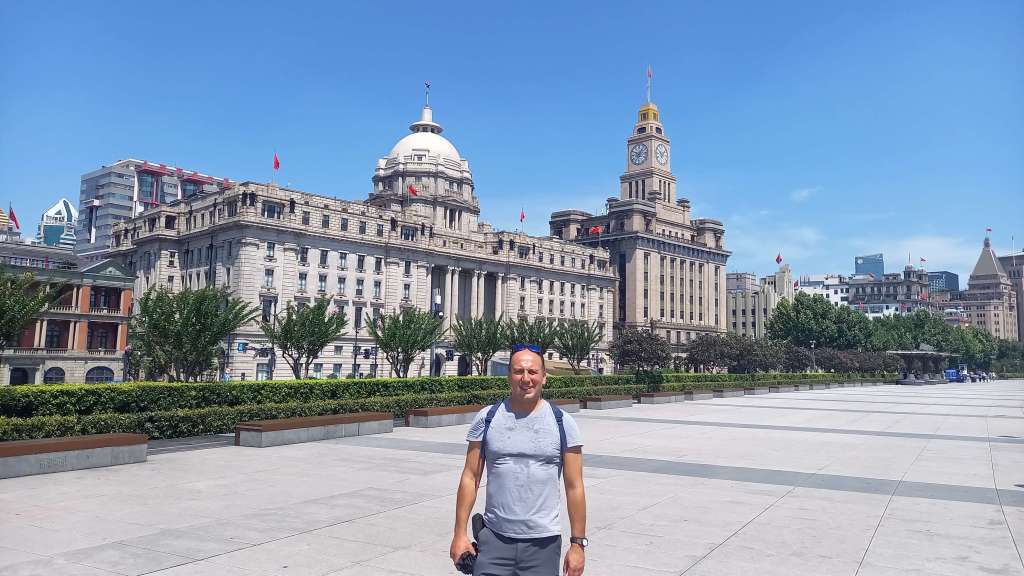
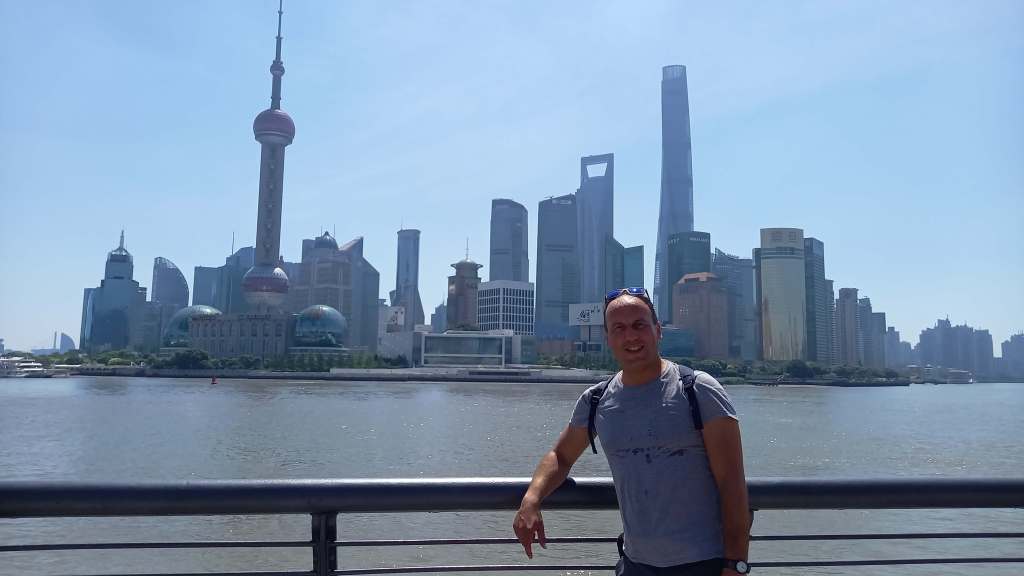
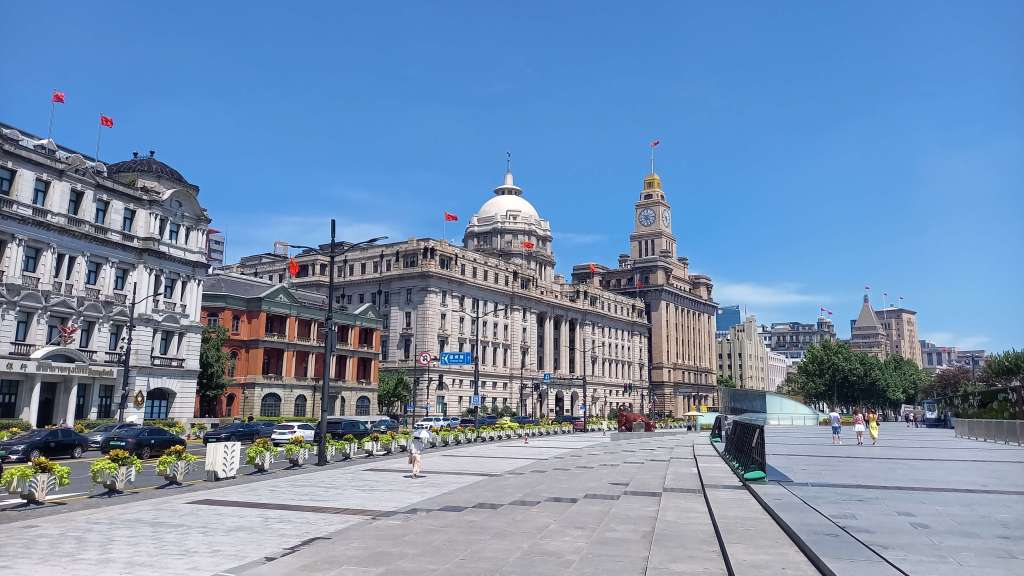
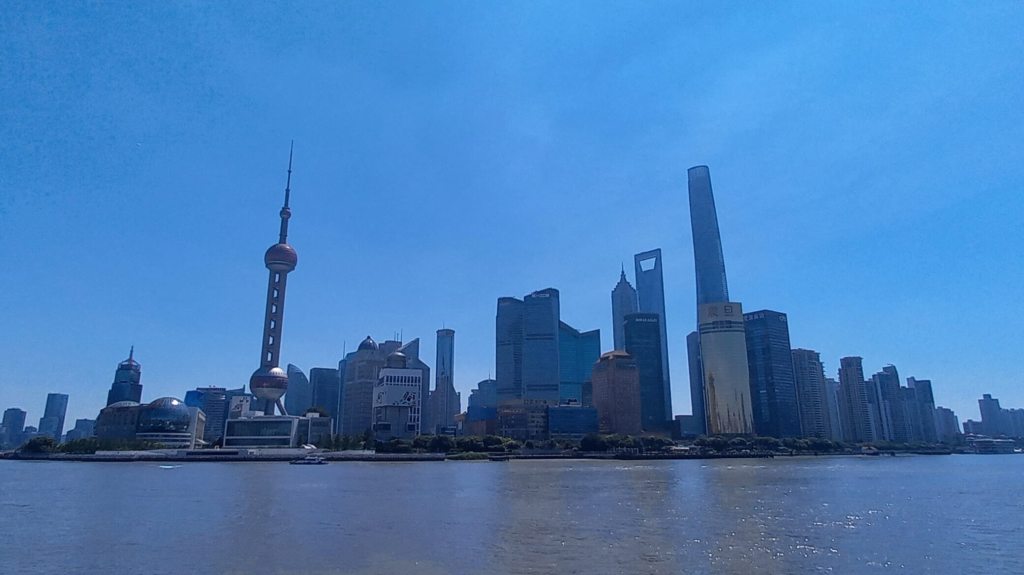
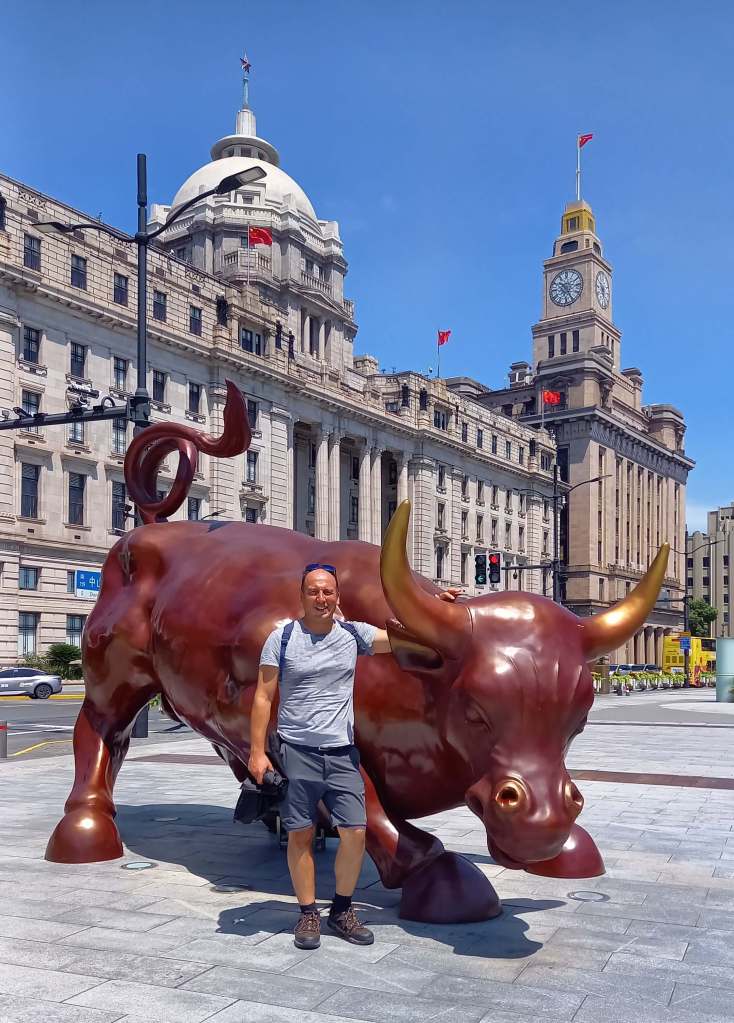
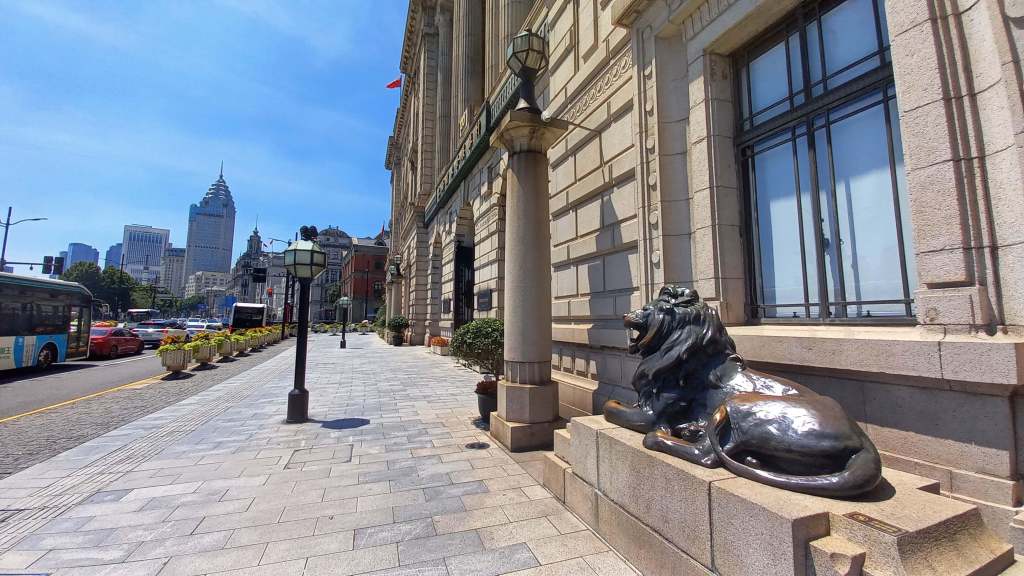
I headed by Didi and then Metro to the city’s iconic Bund first, home to 52 iconic historical buildings stretching about a mile along the west bank of the Huangpu River, the Yangtze’s final major tributary before it empties into the East China Sea just east of the city. It was the heart of 19th century Shanghai, when it was once a British trading post, whose character has been immortalised in my mind by the films “Indiana Jones and the Temple of Doom” and “Empire of the Sun”. I enjoyed walking around, though it was absolutely boiling, and I ended up ducking into a few of the buildings which now serve as banks for some air-conditioning, along with one which is home to an interesting “Workers’ Museum” dedicated to dozens of smiling, happy people who have been nominated over the years for various workers’ awards by the Chinese Communist Party. There were also awesome views over to the hugely impressive, skyscraper-filled Pudong area on the opposite bank of the river, towards which my travels were heading next.
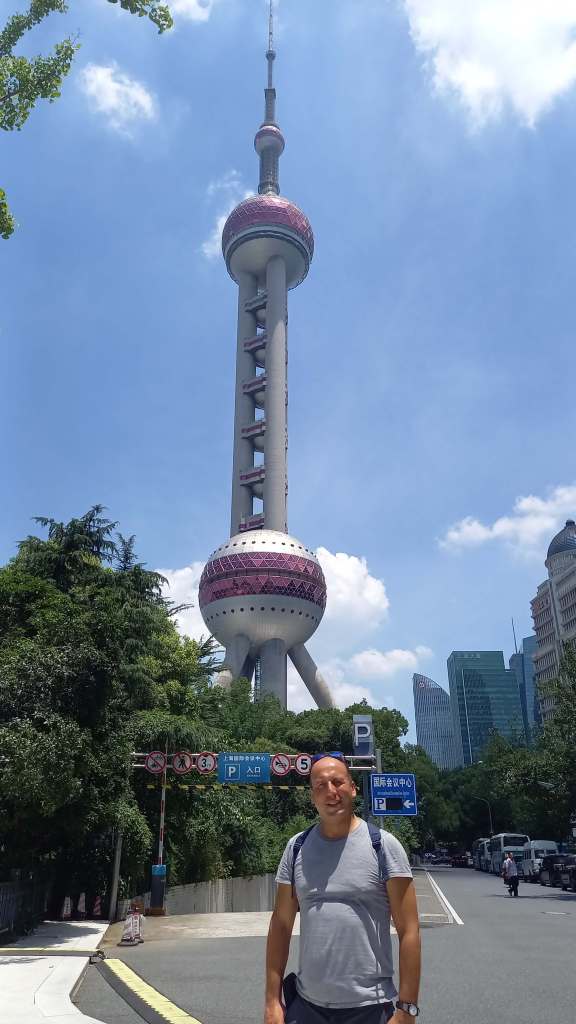
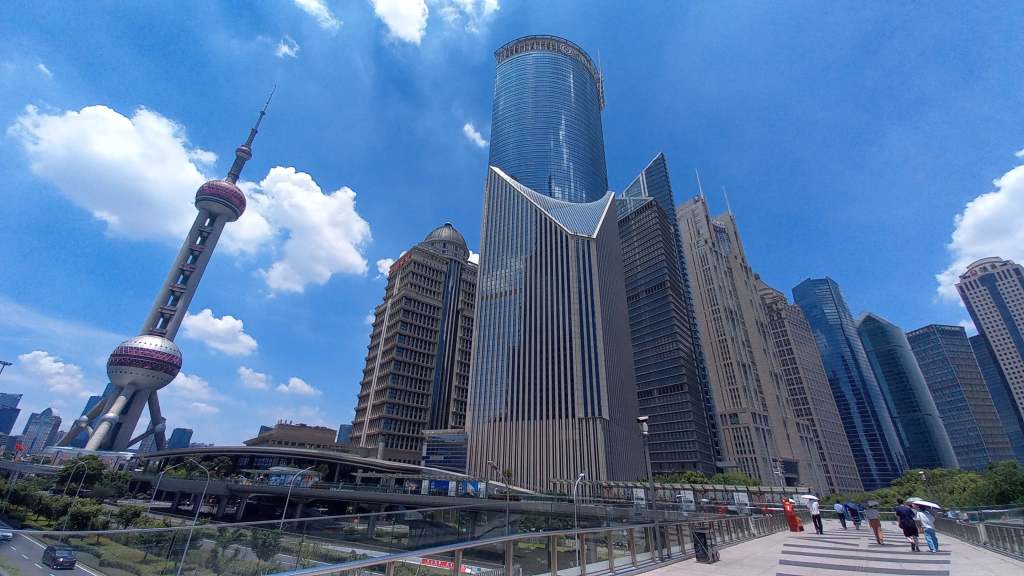
My journey there was through the Bund Sightseeing Tunnel, in a small vehicle which travels along an underground, under-river track through an eclectic light show. Shanghai’s ultra-modern Pudong area on the other side was designated in 1990 as a special economic development zone, attracting huge national and international investment to become a gleaming, glossy skyscraper-filled area of modern beauty, with an awesome skyline to match. The 468m futuristic Oriental Pearl Tower, the 421m Jin Mao Tower representing a traditional Chinese pagoda, the 492m Shanghai World Financial Centre nicknamed “The Bottle Opener” due to its big rectangular hole at the top, and the 632m Shanghai Tower, more on that below, were absolute highlights for me.
I stopped off for a delicious vegetable curry and rice lunch at the high-end IFC Mall, noting happily that Chinese malls are similar to their Singaporean counterparts with their attached food courts, and I came to take advantage of these for my lunches over the next few weeks. Got talking there to a fellow diner, a very friendly local finance worker who was only born in the year I last visited China, 2002. It was interesting to talk about how different the country is now, even though it made me feel rather aged being twice the chap’s age!
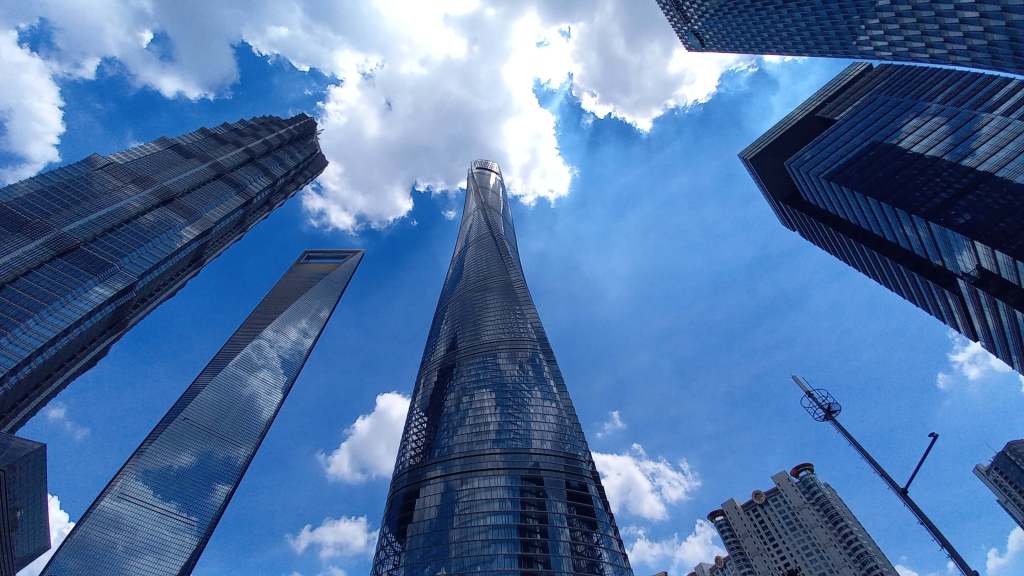
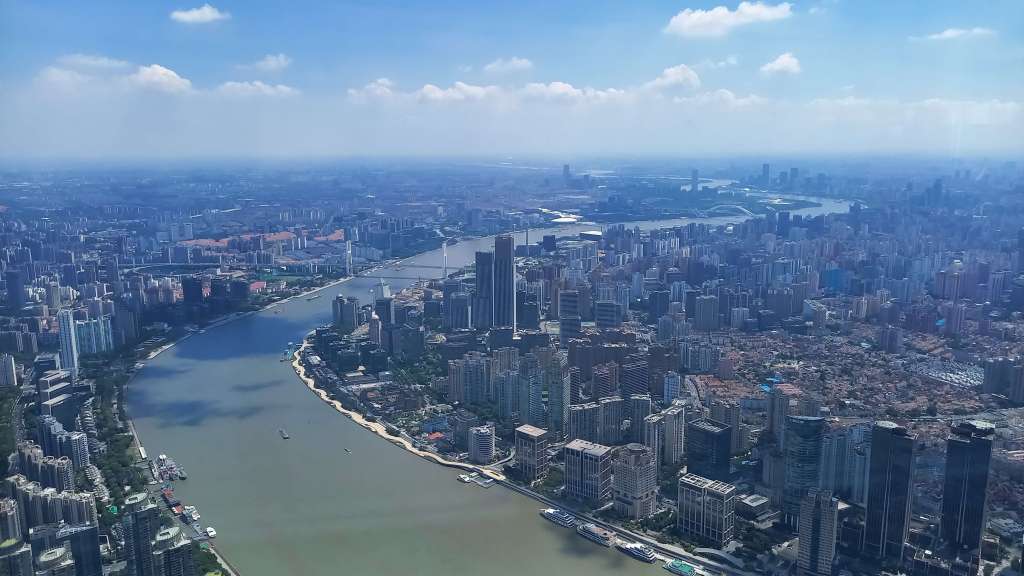
Following this, it was up the world’s fastest lift at 40mph, and also the world’s tallest single lift, up to the 118th floor of the afore-mentioned 121-storey, 632m high Shanghai Tower. It is China’s tallest building, and the world’s third tallest after Dubai’s 828m Burj Khalifa and Kuala Lumpur’s 679m Merdeka 118. After the Burj Khalifa, it also has the world’s second highest observation deck at 562m high (BK’s is 585m by the way). So it was pretty awesome to be so high up, and the views needless to say were just awesome!
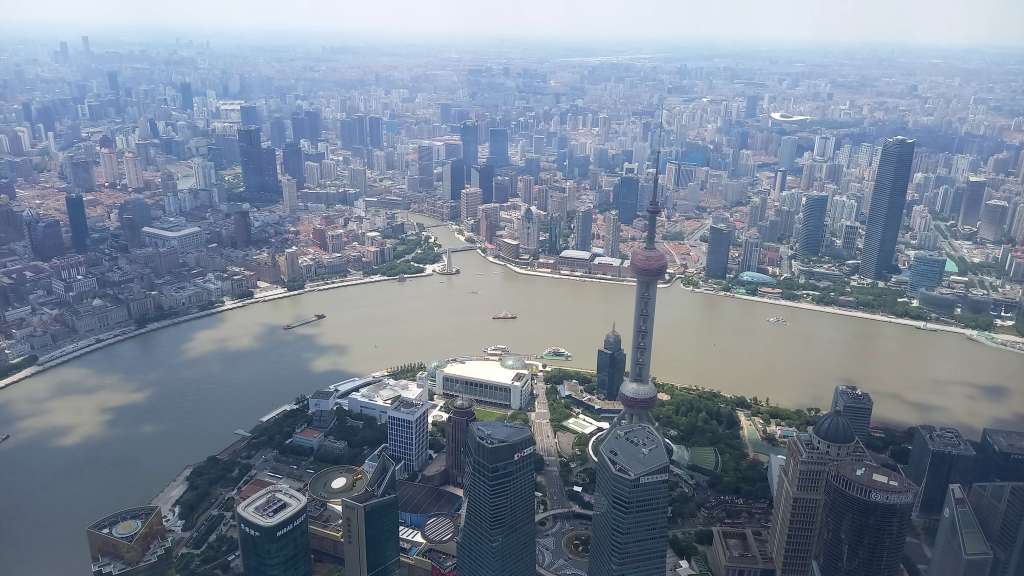
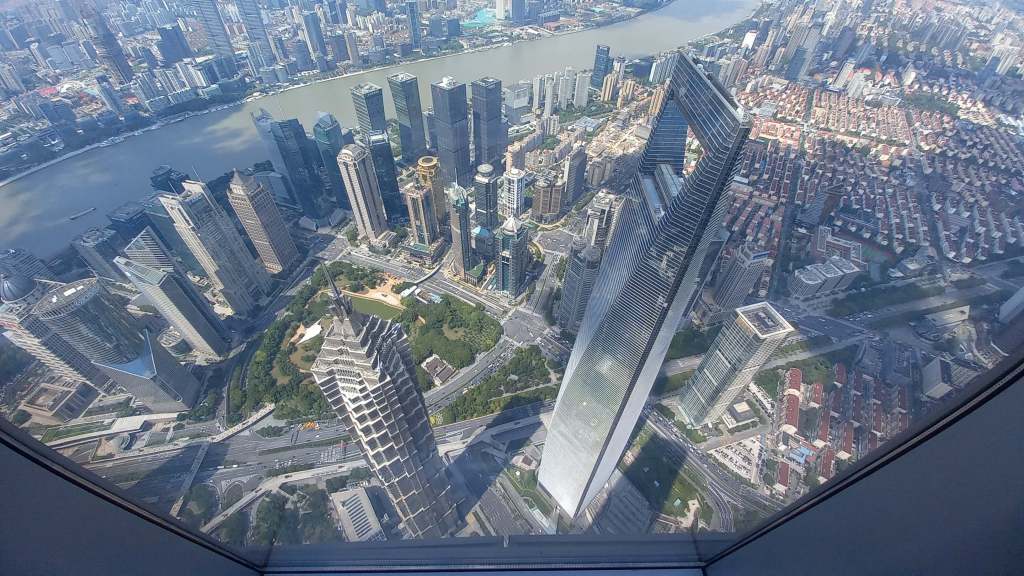
From up there you could see the buildings of the vast and sprawling Shanghai metropolis for as far as the eye could see, and I was apparently quite fortunate on that day as it was both cloud- and smog-free. The Oriental Pearl Tower was absolutely dwarfed from up there, as were both the neighbouring Jin Mao and Shanghai World Financial Towers. The buildings of the Bund where I had been just an hour or so earlier were a mere speck in the distance below on the banks of the Huangpu River, which snaked through the whole cityscape spread out below me. On the Bund I could just about make out the Cathay Hotel, which at 77m was the city’s tallest building at the time it was built in 1910. What an amazing transformation this city has undergone in just over 100 years, and I was reminded several times throughout my journey how rapidly this country has changed in such a short space of time, to become the hugely influential, modern, efficient, and international-looking country that it is now. I was just in awe up there.
Back on ground zero, I took another ride on the city’s highly efficient and sprawling Metro again, which has gone from having only three lines in 2002, to 21 today including one Maglev train line connecting Pudong International Airport to the city centre. I was particularly impressed with how orderly the people make their way through the system, queuing up for escalators and onto trains, and allowing people off first before getting on. This was not always the case I have to add in some of the more provincial cities I visited later on this trip, even today, but for it to be the case in its largest city is impressive. The people of Shanghai indeed impressed me with their orderliness and civility.
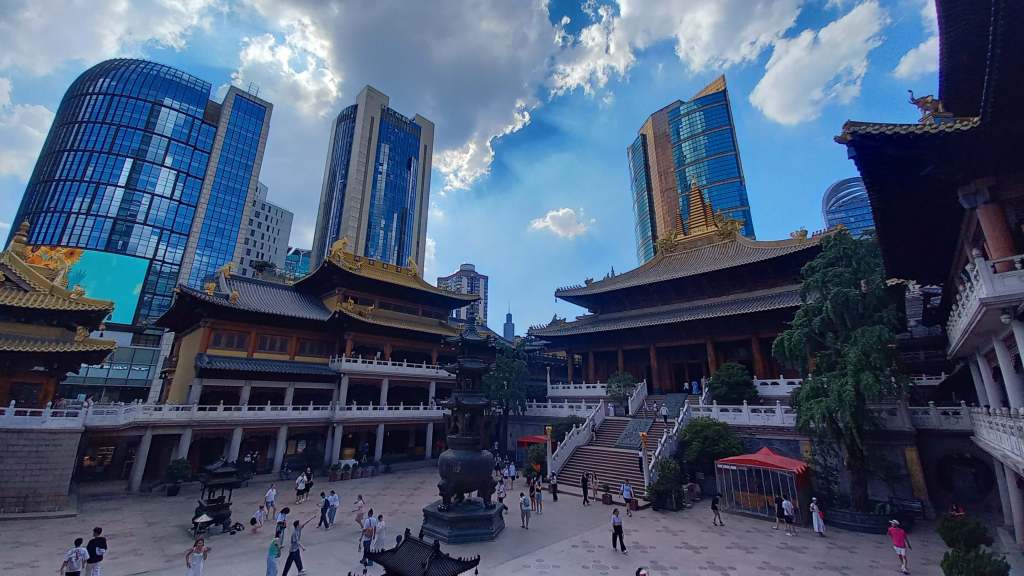
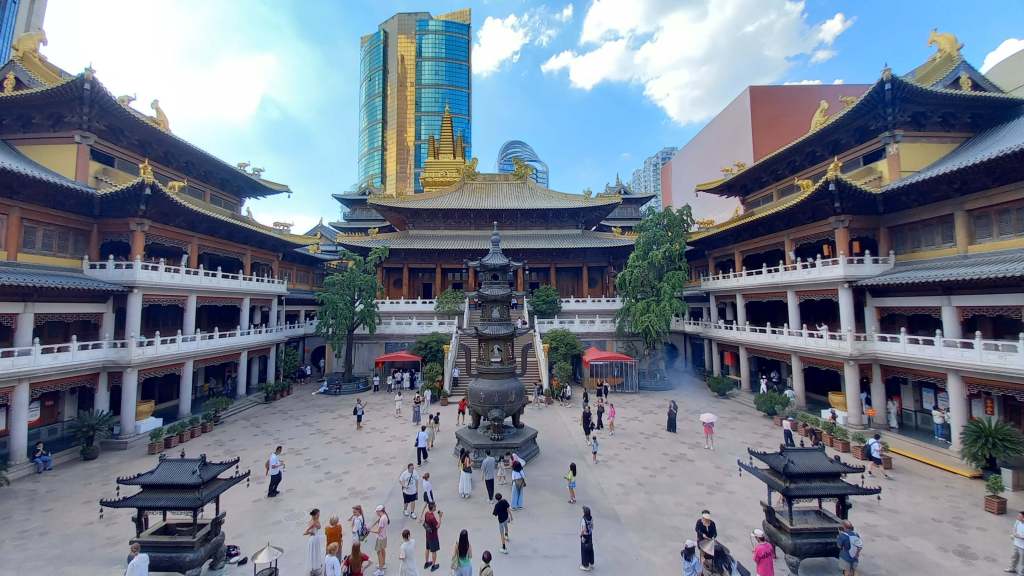
I was heading to my final visit for the day, the lovely 13th century Jing’an Esoteric Buddhist Temple. While my visit felt marred slightly by the sheer heat, especially inside the temple’s rooms and shrines, and my sweating, it felt a veritable microcosm of comparative peace and tranquility in this oh-so modern of cities, surrounded by many of its gleaming skyscrapers towering over the centuries-old building below.
I headed from there for one last air-conditioned Metro and Didi ride back to my lovely hotel room, leaving me in air-conditioned bliss for the rest of the evening, with plenty of water to rehydrate, and a drop of whisky and instant noodles for my tea. I had had an awesome first full day on my summer adventure, and felt really excited for the rest of it.
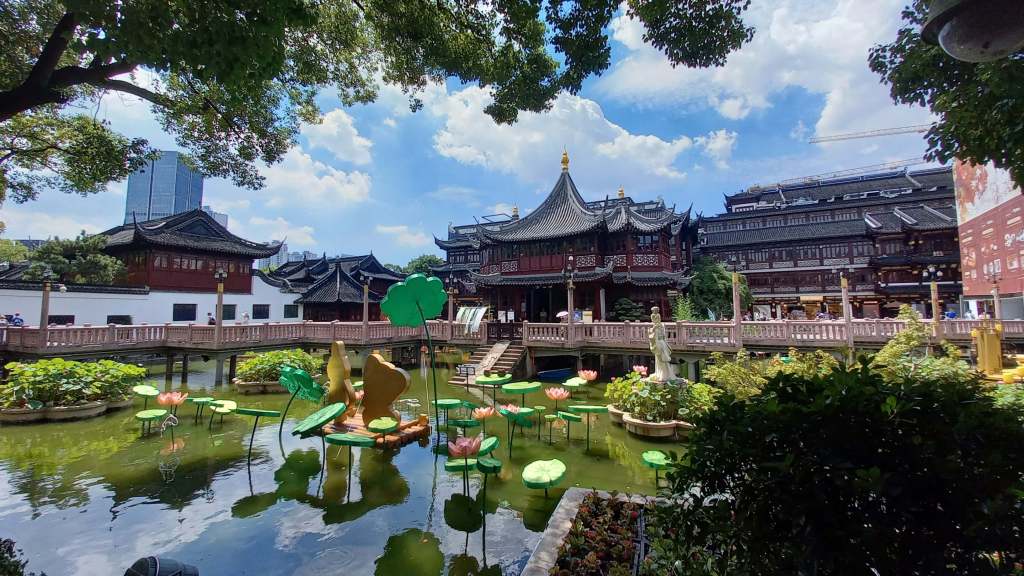
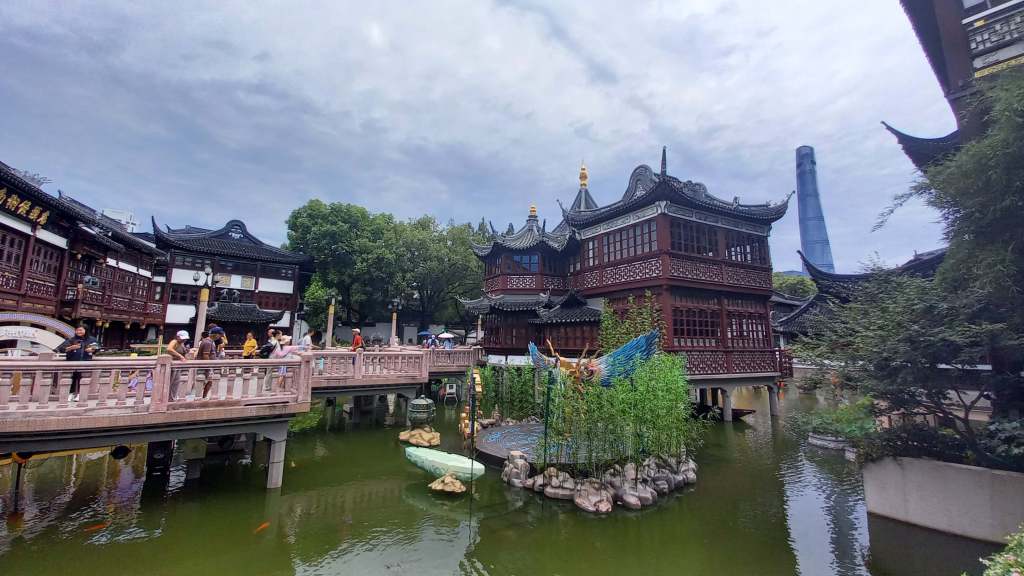
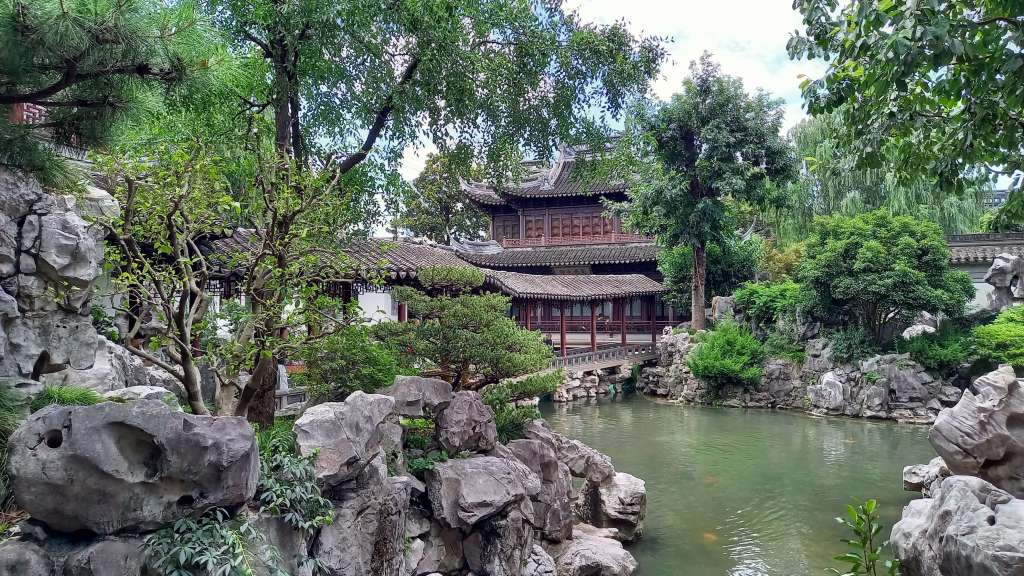
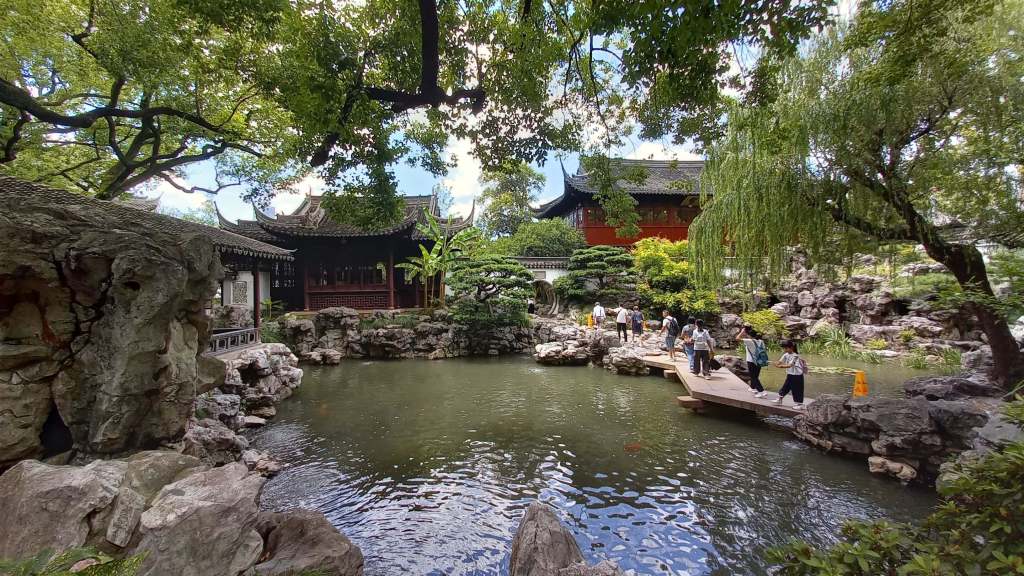
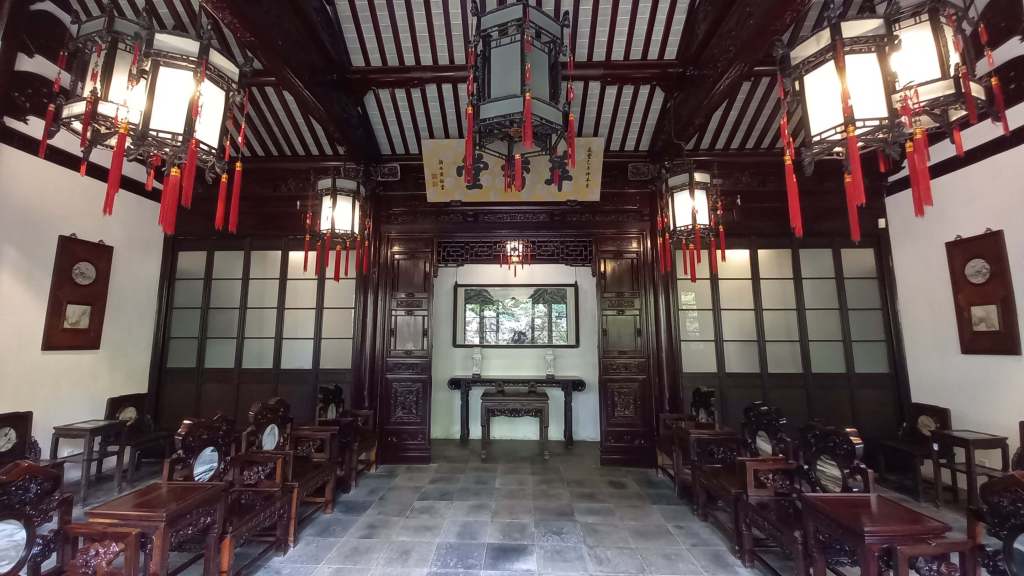
I also really enjoyed my second full day exploring Shanghai, and first headed to the beautiful, but busy and hot Yuyuan Garden. This is a 16th century Ming Dynasty-built collection of ponds, pavilions and rockeries, put together by a government official to comfort his ailing father in his old age, which I thought was a lovely original raison-d’etre! The garden was certainly beautiful, but I didn’t enjoy it so much as any cooling wind didn’t really seem to circulate around the place, while the heat of the sun probably also reflected off the rock faces making it hotter – I was sweating even in the shade. It was also popular with a few large tour groups, so it was not so quiet and serene as I am sure it would originally have intended to be, but I was glad I visited all the same. It did inspire me to buy one of those hand-held battery-powered fans which also adds fine misted water to its cooling effects from a local retailer. I was so grateful for this, and it became absolutely essential in my efforts to keep cool during several later stages of this epic journey through some rather hot lands during a very hot time of year.
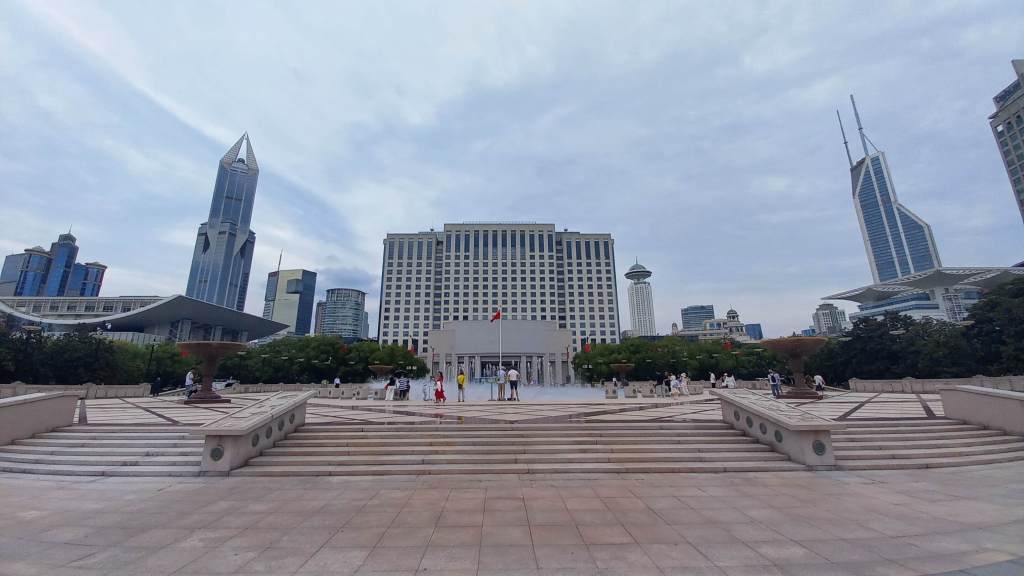
I then headed to the museums around the People’s Square and People’s Park area in the middle of town, happy now to spend the afternoon in air-conditioned learning environments. The Square and Park were named after the Chinese Communist Party converted the area in 1949 from an exclusive colonial racetrack frequented by wealthy foreigners and elites, to a peaceful area open to anyone and everyone. Today it is surrounded by grandiose buildings home to government headquarters, museums, and entertainment venues. I spent the afternoon in three of its museums.
First up was the Shanghai Museum, which I’m afraid to say was a tad disappointing, and I should have looked more closely into it before I entered. After paying the steep entrance fee, I learned that the whole place is currently dedicated to showcasing Aztec, Maya and Inca exhibits and the pre-Colombian history of Latin America. I was expecting to see the classical Chinese and Shanghai exhibits detailed in my Lonely Planet, and goodness knows where these had gone since the building turned itself over to Ancient American civilisations instead. It seemed to be the place to be though, and was filled with local tourists. Not wishing to sound a travel snob, but having been four times to the Aztec, Maya and Inca regions of the world, and having already delighted in the wonders of the fantastic Lorca Museum of Lima, Peru, a third of whose exhibits were currently on display here, the place didn’t really tickle my fancy at this time. I visited enough to make the entrance fee feel worthwhile, and headed on.
Next was the Shanghai Urban Planning Exhibition Hall, and my favourite of the three. It was quiet, and absolutely fascinating to learn about the past development of this former concession-era city, along with most interestingly its current and future plans and ambitions. Seeing the futuristic planned hubs within the city and several of its urban planning projects which the powers that be have lined up for this already top-class global city, Shanghai definitely seems a city for the future, incorporating into its existing megalopolis and urban features some seriously beautiful environmental and natural additions to the cityscape. This museum certainly confirmed to me that despite having come such a long way already, Shanghai certainly has plans to go even further.
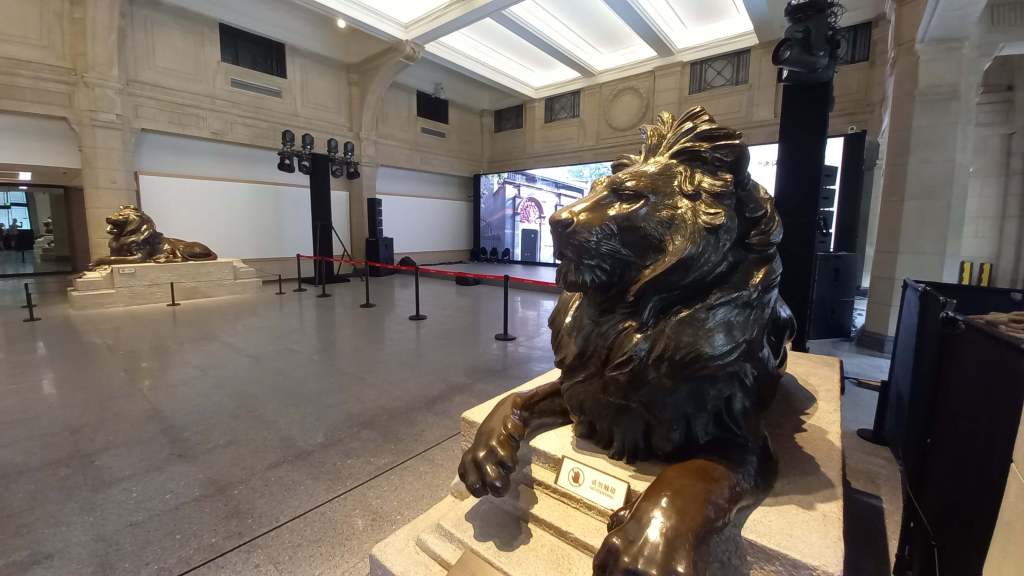
And finally I headed to the Shanghai History Museum. This was busier than the latter, but not so heaving as the former. It was a good place to learn about the city’s developments from ancient times to its more recent British-influenced concession-era days of the unique art deco “roaring twenties” times, which seemed to hit this city harder than most. I absolutely love visiting places around the world with a British colonial history connection, and it always makes me feel more connected to such places – Shanghai is certainly one of them.
My absolute highlight for the day was enjoying Afternoon Tea in this final museum’s lovely rooftop terrace restaurant, which continued to connect my British soul to the British past of this fascinating city.
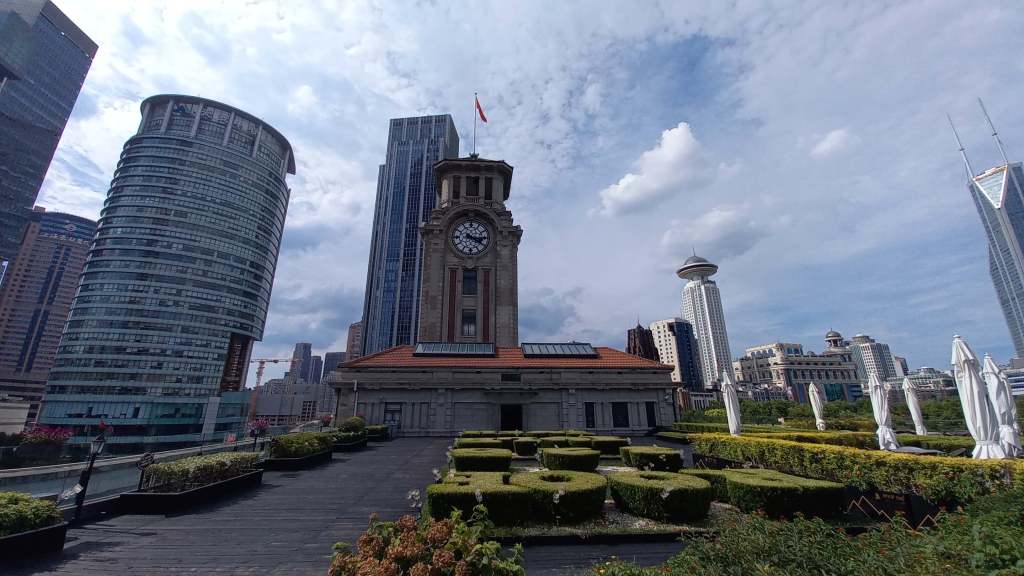
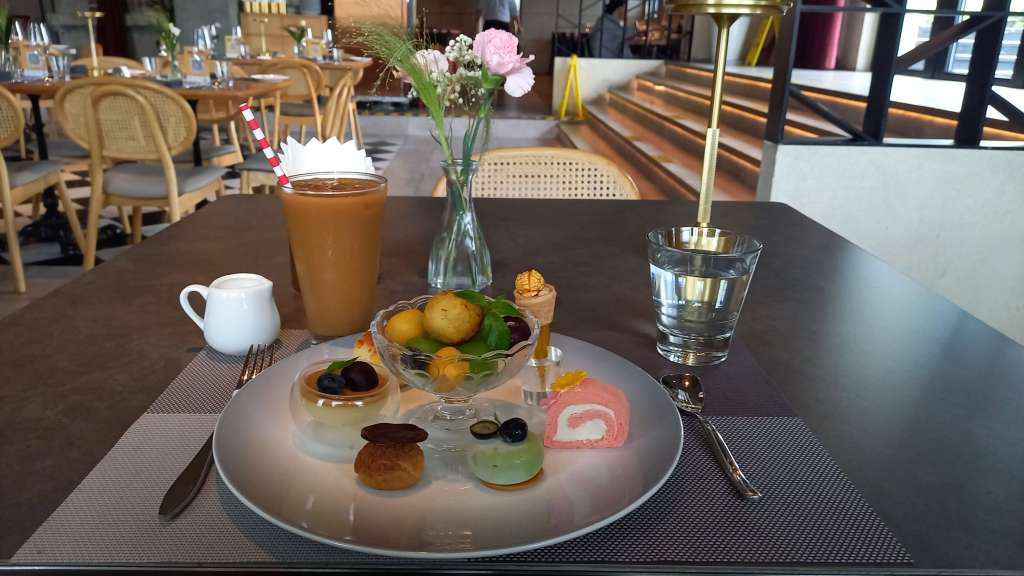
And so, after a final Metro ride back to my accommodation, my time in Shanghai came to a close. It had been awesome, and it was absolutely amazing to think that this was just the start of this epic summer six-weeker. No doubt there was indeed more to come. The next day I was flying south to the Chinese tropical island of Hainan, from Shanghai Hongqiao International Airport just to the north of my hotel. I’d actually be on one of the many planes that for the previous three days had been taking off and landing right above me.
I was dead excited, and of course, more on that in my next.

 Alex Waring's Travel Blog