
22nd July 2026
Greetings from the Chinese mega-city of Guangzhou! Well, every Chinese city seems to be a mega-city to be honest! The size and vastness of this country and its urban areas is just astonishing, and everything just seems to work. With 1.4 billion people. It all just seems to work. As you may be able to tell, I am just so impressed with this country. I’m going to be brutally honest with my opinion here, that as we in the West die a slow death, succumbed to our egos, our constant “me me me” attitude, our demand for our own individual rights ahead of society’s, and the governments’ continual and blatant desire to overlook the needs and wishes of the ordinary hard-working people, we are quietly and surreptitiously being overtaken as the world’s top dog by China and the beautiful countries of the east. I feel the western heyday was from the 1950s to the 1980s, and we are now in decline. I am not only in absolute awe at what I’ve seen so far in this country, I’m reminded of how pathetic we in the West have become.
But alas, this may indeed be just the whisky talking as I write this on my first evening in Guangzhou. I’ve just bought a litre-bottle of Scotch from a Walmart here (for just £5.50, which I still can’t get over!), which should last me another two weeks. I like to finish each day of sightseeing as I travel with a whee dram…!
I think I’ll start again. So, here I am in Guangzhou, formerly known as Canton by the West and thus the origin of the word Cantonese, to denote the language that seems to be more commonly spoken around here than Mandarin, along with the culture and cuisine. Indeed, although I can’t quite put my finger on as to why, the city has a more Hong Kong kind of vibe to it, itself also a Cantonese city. It is the country’s third largest city at around 16 million inhabitants, after Shanghai’s 27 million and Beijing’s 19 million, though if you join up the conglomerate urban area of Hong Kong, Shenzhen, Guangzhou and even Macau, along with a few others, you end up with this absolute giant collection of people here in this area also known as the Pearl River Delta – home to 86 million people! That’s more than the size of the UK! It is clearly an important city in the country, and I was excited to be here!
I was also interested in visiting due to the city’s rather tumultuous history as the centrepoint, and at times flashpoint, of China’s often turbulent relations with the outside world. At a time when the both the Ming (1368 to 1644) and the Qing (1644 to 1912) Dynasties were pursuing isolationist foreign policies to distance themselves from the ever-increasing explorational habits of the European global powers, there were still little forays which the British, French, Portuguese, Germans and Russians managed to make into the country, none more so than in a small concession-era trading post in the heart of this modern city of Guangzhou. In actual fact, this concession area is centered upon a small river island called Shamian on the Pearl River, or Zhu Jiang, running through the middle of town. And I was particularly interested to explore the city’s British colonial past here.
So after a wonderful weekend on the laid-back (at least comparatively for China) tropical island of Hainan and catching up with my friend David, I flew China Southern Airlines just an hour to the north-east to the giant city of Guangzhou. Took a Didi from the airport to, you guessed it if you’ve read my two previous China blogs, an Ibis Hotel which I have come to really trust for their affordability, quality, peace, and an overall good stay. After a short rest in my near-identical room to the one I had back in Haikou, along with an extra seating area and a lovely view out the window over the Guangzhou Orchid Garden just next door, I headed out for a bit of exploration on my first day in town.
First up, a quick whisky stock-up as mentioned at a nearby Walmart a short Metro ride away – yes, they even have Walmarts in China! Pronounced “Wo-er-ma”. I think the reader may have figured out by now that I like a drink in the evening when I travel, and the most economical way for this I’ve found is to go for the spirits – brandy first, but if not, I wouldn’t say no to whisky. Particularly a Scotch, one litre bottle as mentioned, for just £5.50…! Upon buying it, as well as trying to get a sausage and egg muffin at a nearby Tim Horton’s (yes, they even have Tim Horton’s there…!!), I noted that my WeChat mobile phone app (also called Weixin in China) wasn’t working properly. This happened throughout my time in Guangzhou for some reason, and while I could scan the QR codes of others, others could not scan my QR codes. With a bit of online research, I saw that this seemed a common problem in Guangzhou, so instead I often used cash, and once my credit card, for payments in the city. It was nice to know that this was still possible, and that retailers are legally obliged to use cash. Still, it was a relief to be back to normal again a few days later in my next stop of Guilin, as it was still a bit of a hassle having the bemused shop assistant open the dusty draw of cash with a long-forgotten key that they probably hadn’t used in weeks.
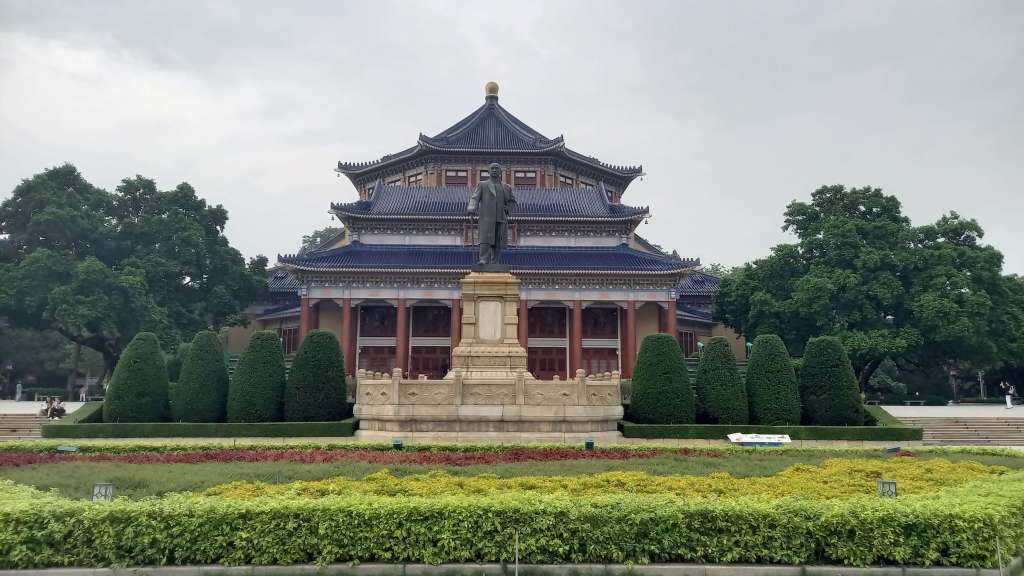
I then took a final Metro ride for the day to the Sun Yat-sen Memorial Hall, a notable building in town dedicated to, well, Sun Yat-sen (1866 – 1925). Fascinatingly, although a nationalist rather than a communist, and founder of the Kuomintang political party as well as the first president of the Republic of China, he is well-respected in the modern, communist People’s Republic of China as being the father of the modern nation due to his pivotal role in the 1911 Chinese Revolution which saw the overthrowing of the Qing Dynasty and two thousand years of imperialistic, dynastic rule in the country. It was in fact Sun Yat-sen’s successor, Chiang Kai-shek, who led the nationalist Kuomintang against communist leader Mao Zedong’s Chinese Communist Party during the Chinese Civil War following World War II, retreating to Taiwan with the Kuomintang in 1949 where the Republic of China has remained ever since. Thus, while Chiang Kai-shek is no friend to modern China, original Kuomintang founder Sun Yat-sen is – he is incidentally also revered in Taiwan. Hailing from Guangzhou’s Guangdong province and making this southern city his headquarters during his revolutionary years against the Qing Dynasty, the Memorial Hall standing there today honours this man and his status as being the founding father of China today.
While I had arrived after the Hall’s opening hours, the grounds were lovely to walk around, and the building a sight to behold. I also climbed up nearby Yuexiu Mountain through its extensive and lovely Yuexiu Park, which was a hot and sweaty climb of 500 steps in total! Fortunately the temperature that day had been only 30°C with a cloudy sky, so it could have been hotter. The trees in the Park felt ancient, and the misty ponds and fortified walls dating back to the city wall times of the city’s Ming Dynasty era, added an ethereal air to the place. I headed back to my hotel again after a lovely first day on my time in fascinating Guangzhou.
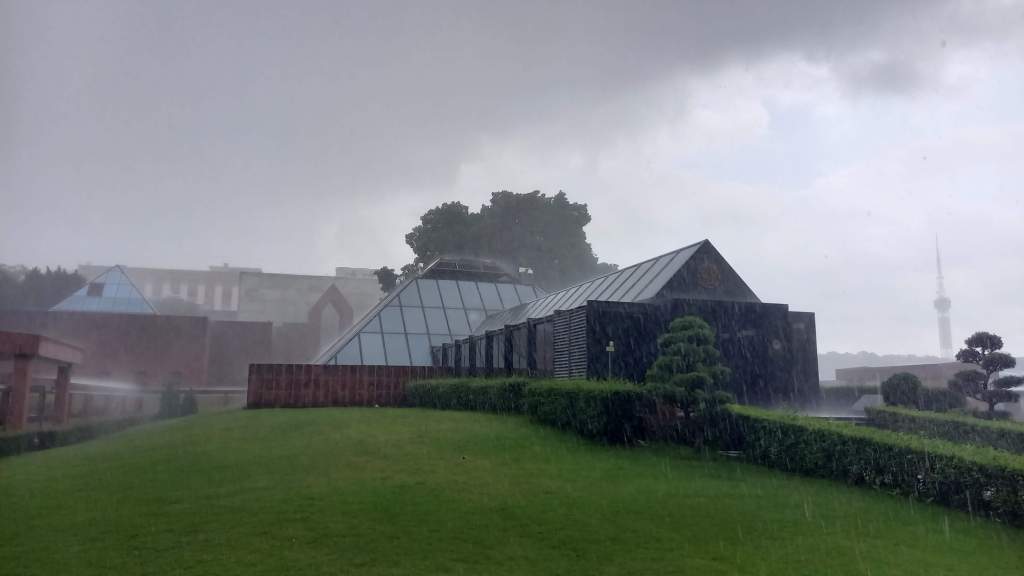
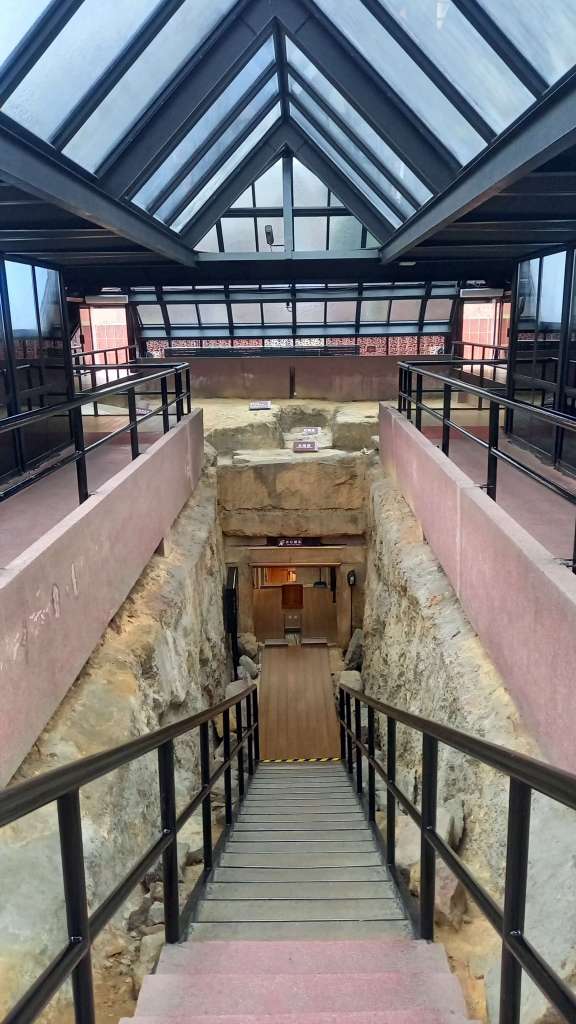
First up was the Mausoleum of the Nanyue King, the final resting place of Zhao Mo, second ruler of the ancient Kingdom of Nanyue, a small kingdom in these southern parts of modern China. It was quite incredible in the middle of this sprawling metropolis, to climb a hill, then head down some steps and see this ancient tomb straight out of an Indiana Jones film right in the heart of it. I arrived just at opening time, and also when the heavens truly opened with a cracking thunderstorm. Thus while all the other tourists who were already quite numerous at this time were sheltering indoors around the ticket counter, I headed outside and got drenched, to be the first to arrive at the tomb itself on that day. I initially felt really pleased that I actually had the whole place to myself, before then learning that you actually need to pre-book tickets to go inside the tomb itself the day before. Darn. Still, I could see it from above though, which was still pretty impressive, and I absolutely delighted in the attached museum showcasing finds from within the tomb to accompany the king into the next life.
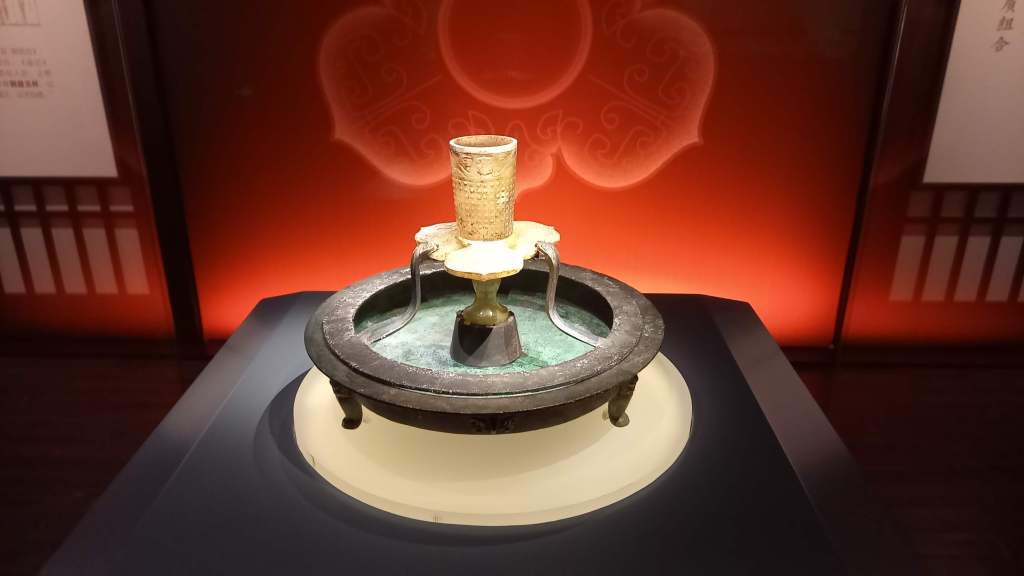
Jade items abounded, including a whole suit that was created to cover his body completely, made up of hundreds of small jade pieces all sewn together with silk cloth. Truly fascinating. I also bought a small black dragon trinket with a Chinese Year of the Horse emblem visible when looking inside, after being wooed by a lovely sales girl in the souvenir shop there. She told me I must be very courageous and brave travelling in China alone, hence the black I chose for the colour, which represents courage. When I told her I was born in the Chinese Year of the Horse, she thought this was 1990, and couldn’t believe it was actually 1978. Completely flattered, and clearly being a very talented and successful sales girl, I bought the trinket…! This year is also the Chinese Year of the Horse, so it is apparently an auspicious year for me too – what a great year to choose for my re-visit to China!
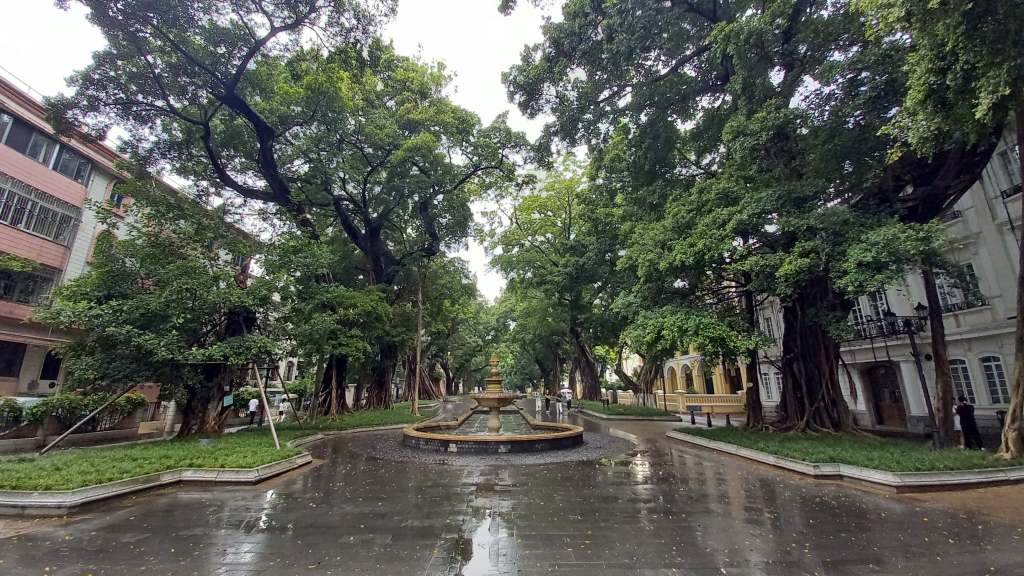
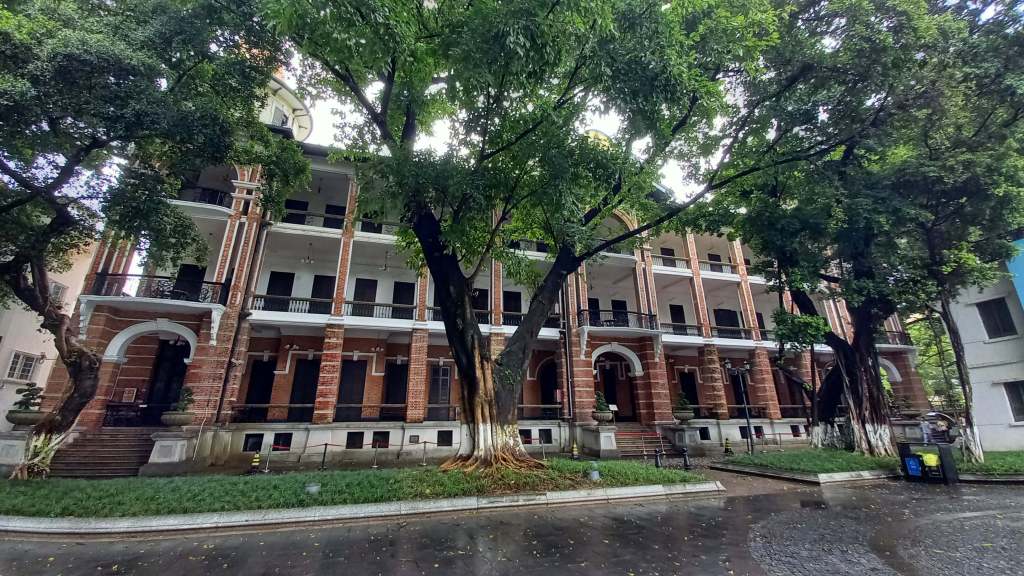
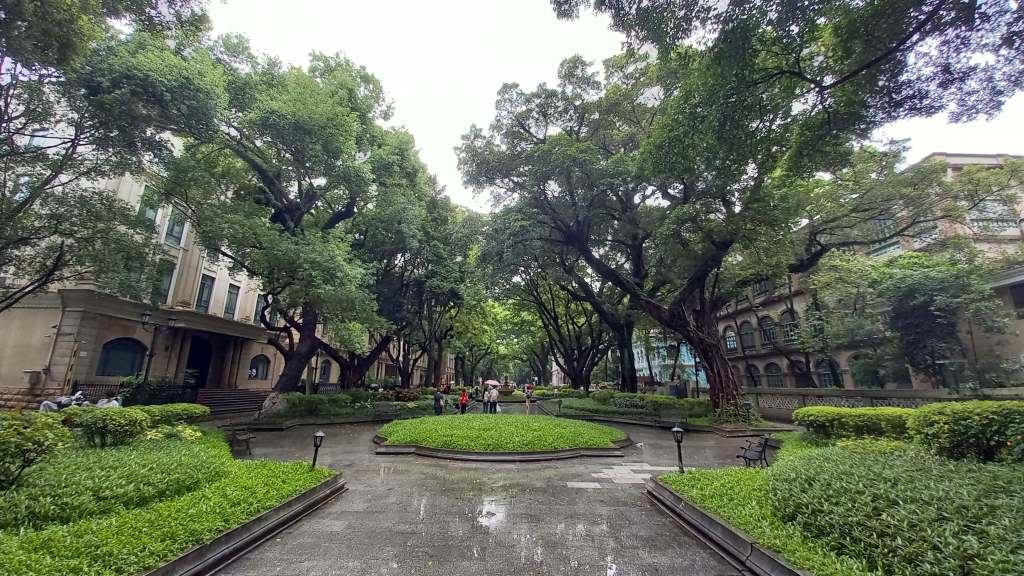
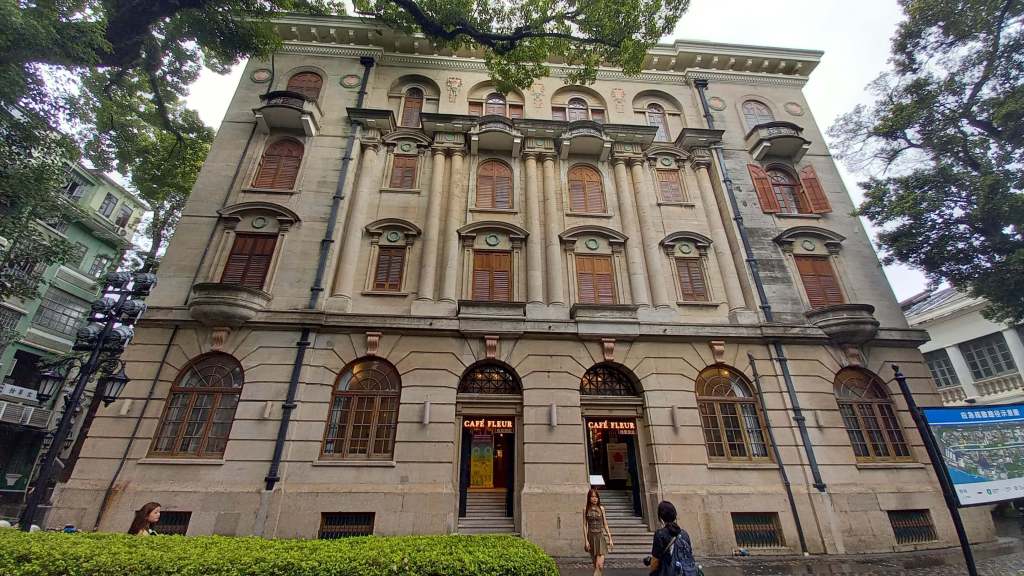
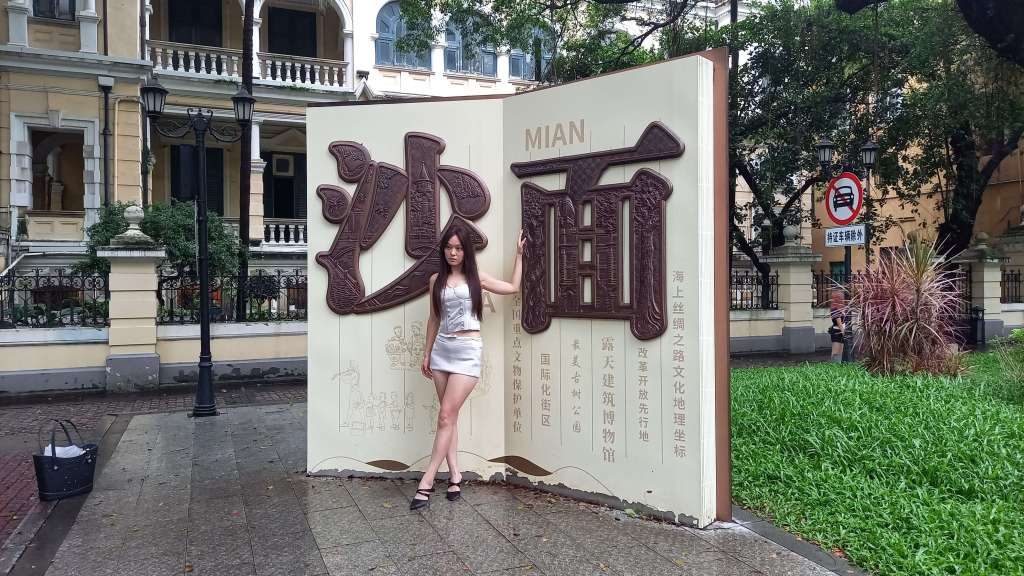
I then headed to delightful Shamian Island, which is as mentioned before the old Cantonese British-French concession-era trading post built on a small island in the middle of the city on the edge of the Pearl River, separated from the rest of Guangzhou by a little canal. It was an absolutely gorgeous place to wander, with its central banyan tree-lined thoroughfare bordered by delightful colonial-era buildings. Had another “Afternoon Tea” of a cute little pizza and coffee at Café Fleur, in the old French Bank of Indo-China building. I could get used to afternoon teas in this country! I also arrived on the island at the tail-end of the thunderstorm, so initially had again the place pretty much to myself. By the time I was leaving though, it was absolutely heaving! Chinese tourists clearly don’t like being out in their rainstorms!
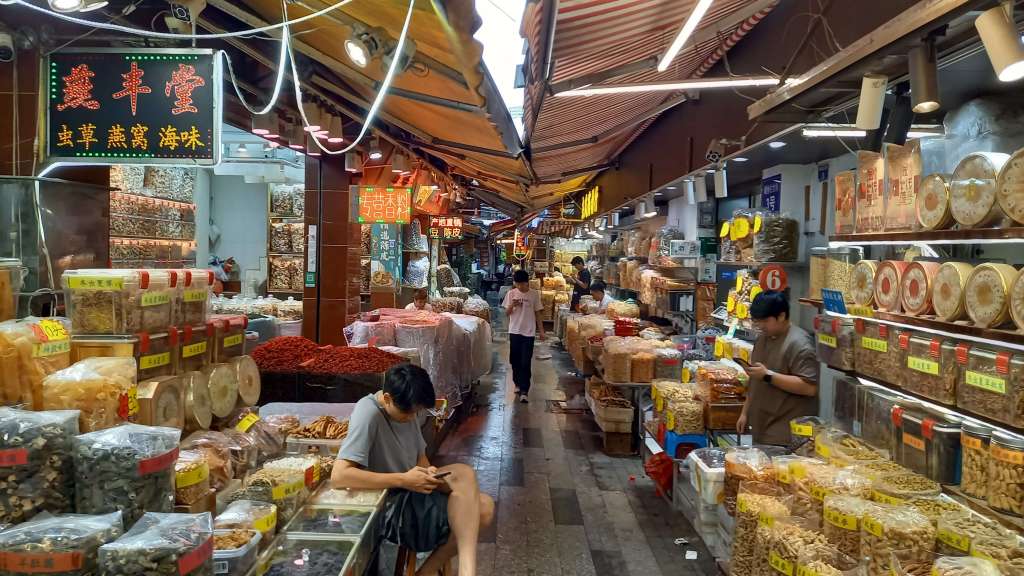
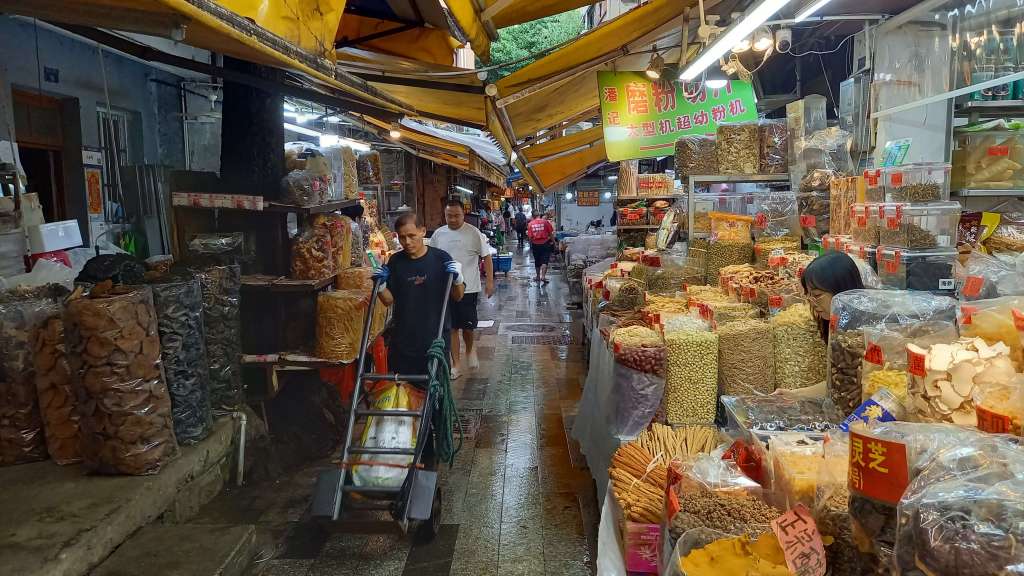
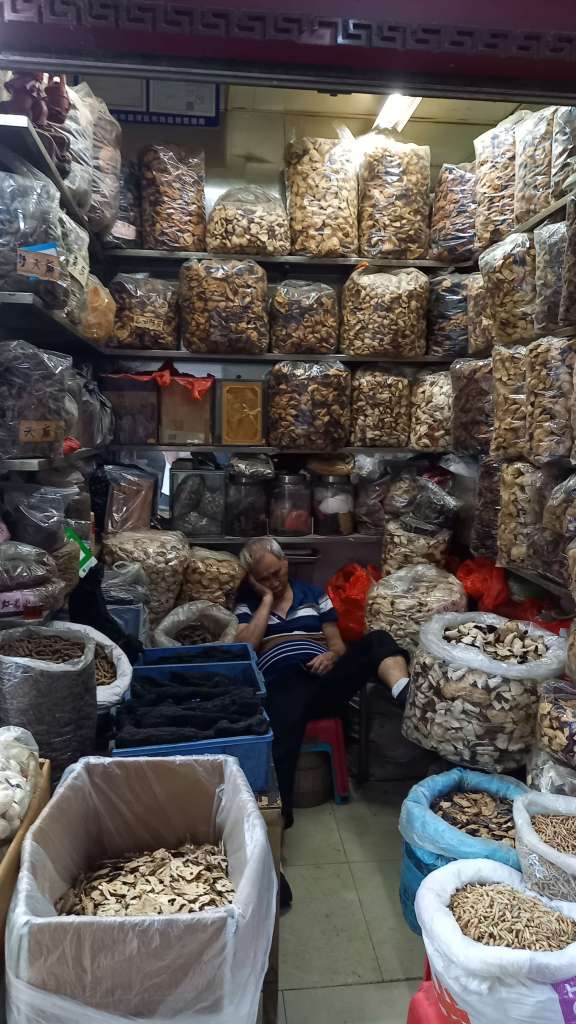
Next up was the fascinating Qingping Chinese Medicine Market, filled with all sorts of stalls selling all manner of dried herbs, berries, peppercorns, mushrooms, ginseng and fish, used in their famous traditional medicinal concoctions. The smells were powerful and refreshing, as was the walk through the tiny alleyways. This very much felt like Hong Kong to me.
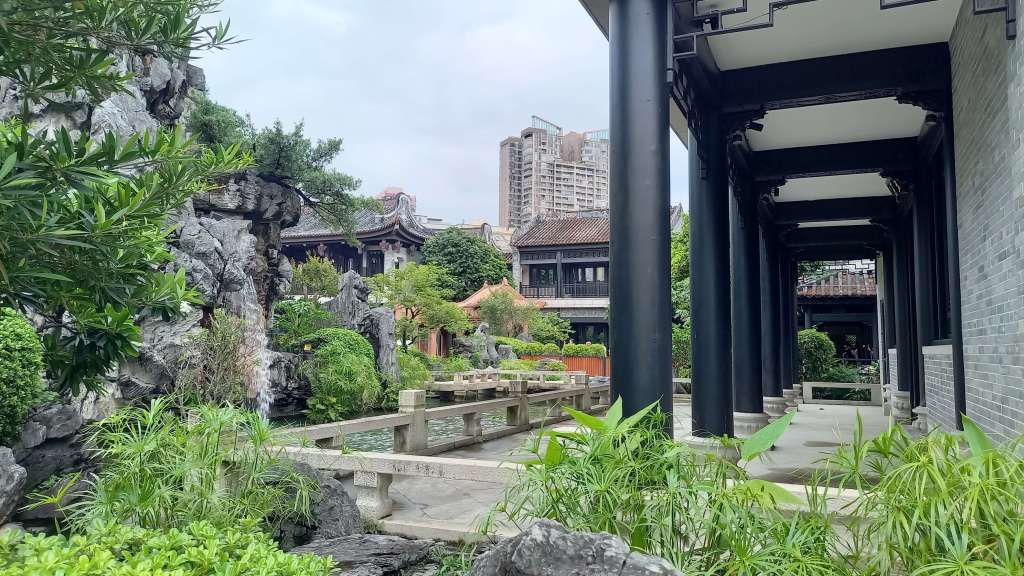
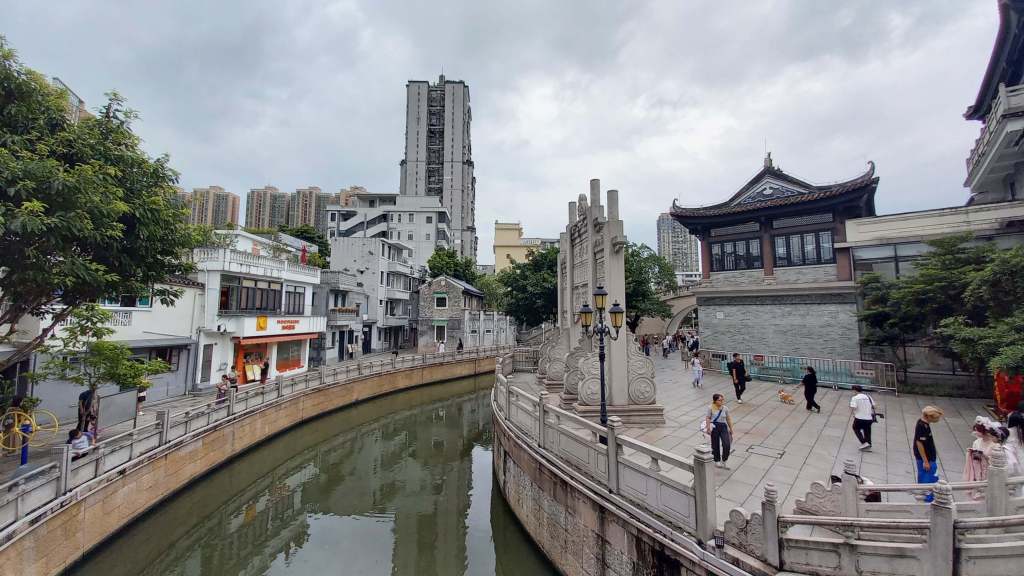
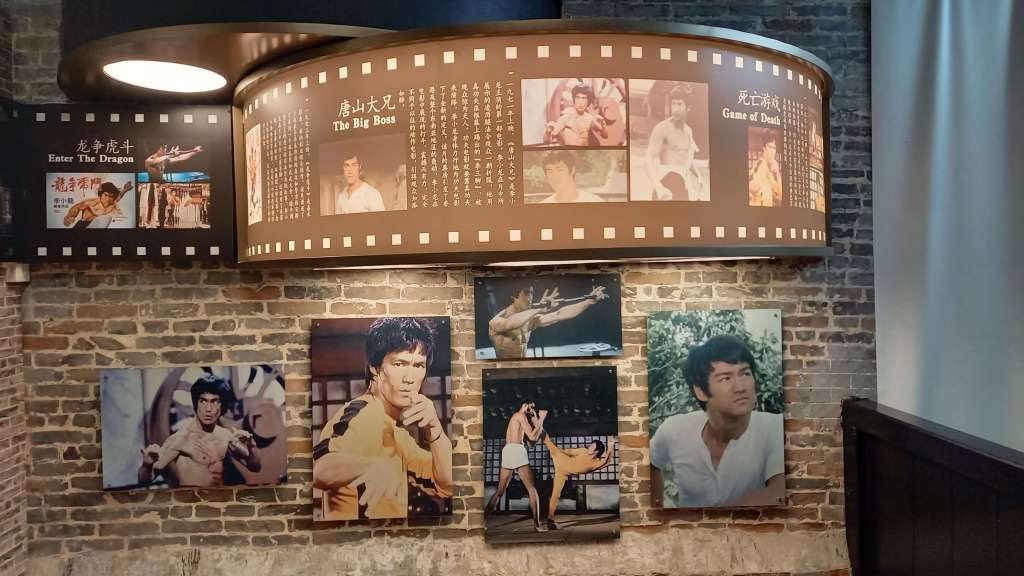
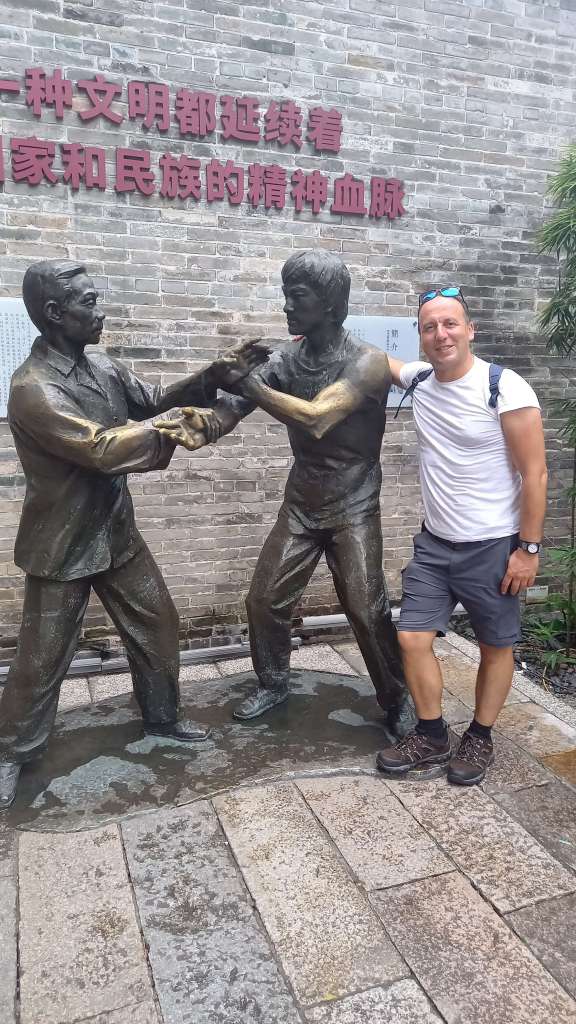
Then it was onto nearby Enning Lu, home to Old Guangzhou’s Qilou architecture of porticoed row houses, similar to back in Haikou, and in fact quite common throughout old towns of southern Chinese cities. This area is also home to the historic centre of Cantonese Opera, which artists worldwide call their historic and spiritual home, as well as the Bruce Lee Ancestral Home, where the Kung Fu legend’s father, also a Cantonese Opera Artist, once lived. It was in fact his father who had taught him the martial art of “gongfu”, or Kung Fu. Apparently he was quite an arrogant chap, and I absolutely love his tongue-in-cheek portrayal in the fantastic Quentin Tarantino film “Once Upon a Time in Hollywood”.
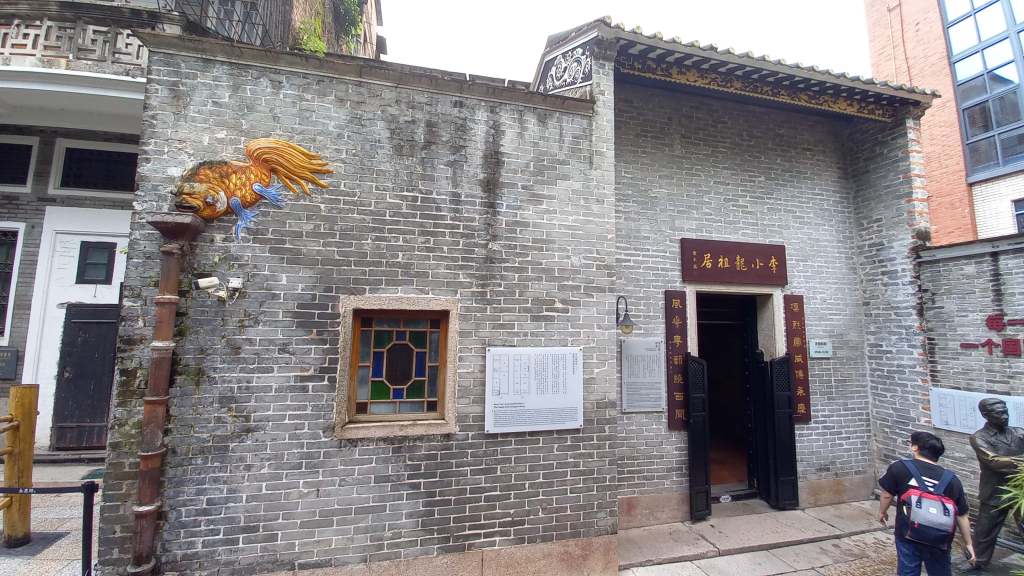
It was also in the Enning Lu area where I bought my first ever pair of reading glasses (+2), after realising that I was finding it hard to read my trusty Lonely Planets now after all these years…! Definitely born in 1978, not 1990…!!
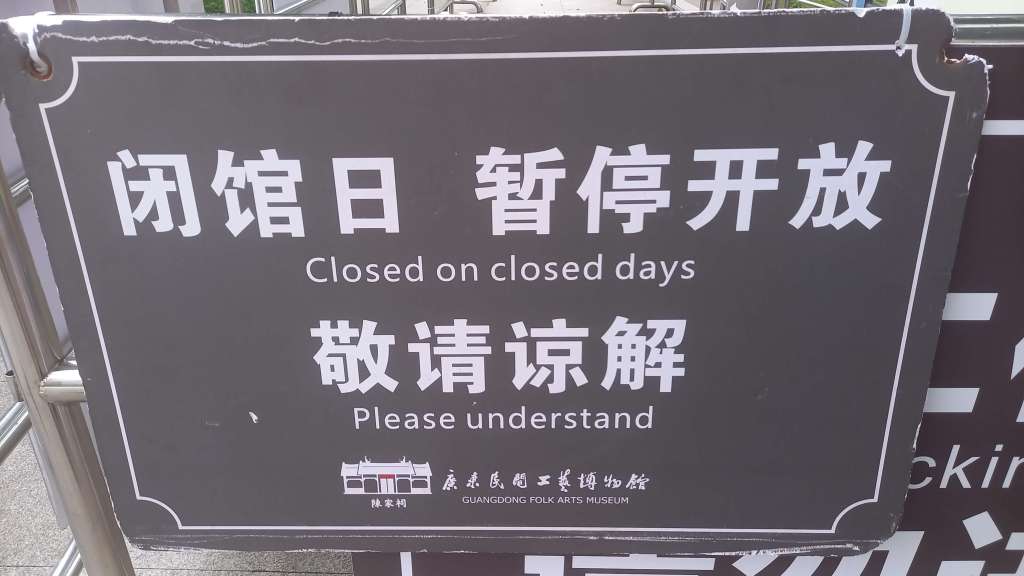
I took a taxi from there onto the Chen Clan Ancestral Hall, one of the city’s top sights apparently and home to a 19th century Confucian school, though I unfortunately found it to be closed on this day. My disappointment was fully tempered though by one of the many hilarious “Chinglish” signs there that I encountered throughout my travels in the country, saying “Closed on closed days”…!!
It was then a Metro ride to my final stop for the day, the absolutely heaving Cathedral of the Sacred Heart. Built in the late 19th century, and supposedly modelled on Paris’ Notre Dame, there was definitely a similarity if you imagine the two spires on top of its twin towers were not there. I was imagining a lovely, peaceful place to wind down at the end of a busy day of sightseeing, but I could not have been more wrong! As mentioned, it was just heaving!
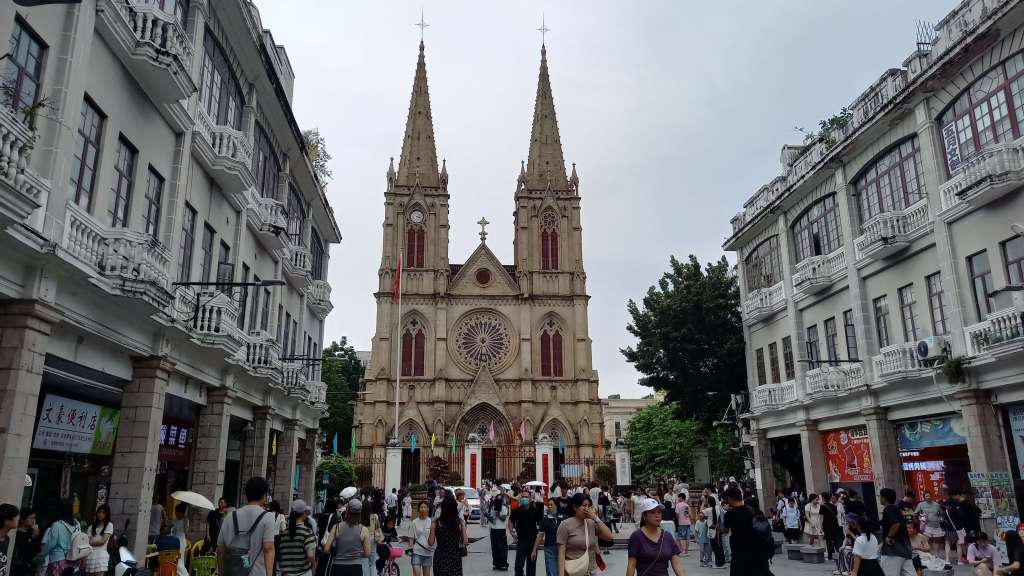
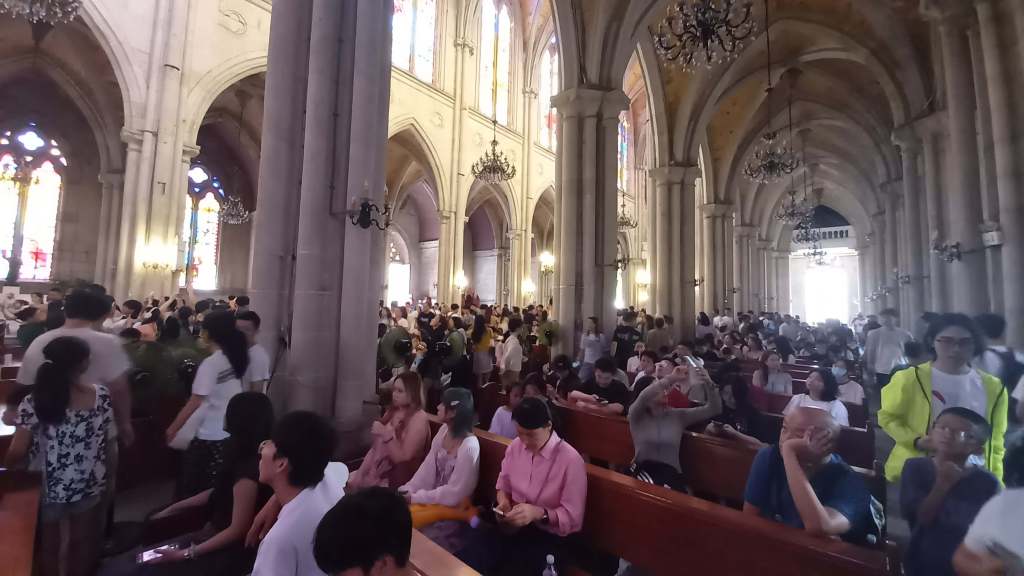
Local tourists seemed to really admire the architecture, the flying buttresses, the gargoyles, and the stained glass windows, as these were oft-photographed during my time there. It was standing room only inside, and very noisy and hot, with the heat from hundreds of bodies inside. I smirked at the various signs around encouraging “silence”, which felt like a distant memory long since forgotten while in there. A lady with a microphone was speaking to the crowds from the front, though I wasn’t sure what she was saying. I managed to find a seat, and spectacled myself not at the lovely architecture or stained glass windows, but at the absolutely seething mass of humanity taking pictures of it all. The grounds outside were equally very busy, and while a fascinating experience, I was glad to be hightailing it out of there after my visit. I learned later that the building is one of only four all-stone Gothic cathedrals in the world, along with Notre Dame de Paris, Westminster Abbey, and Cologne Cathedral (I can now say I’ve been to them all, yay!), and is famous for being exceptionally popular in China as the “Notre Dame of East Asia”.
After a busy but awesome day of sightseeing, I headed back for a lovely evening in with another delicious “Kang Shi Fu Braised Beef” pot noodle and a whisky, calling it a very pleasant first day of sightseeing in and around this absolutely fascinating southern Chinese metropolis.
My second full day in Guangzhou was equally awesome, with a few fantastically unique experiences. As mentioned, it’s not really an international tourist city, but there did seem to be plenty of local tourists visiting. It had a nice atmosphere, and I had some really nice encounters with some local people. Some older people seem to speak good English, and I wonder if this has any connection with Hong Kong not being too far away.
I was up early this morning, as I wanted to get to my first destination of the day for opening time and catch their awesome Kung Fu and Lion Dance performance at 10am. It was also quite a Metro ride away, as I was heading to the 11th century Zumiao Temple in the neighbouring city of Foshan. A city of ten million people in its own right, it is connected to the huge urban sprawl of Guangzhou, and in turn with the massive Pearl River Urban Conurbation as mentioned earlier. Foshan has its own Metro system, but a separate line called the Guangfo line (presumably combining the first syllables of the two cities of Guangzhou and Foshan) connects the two. This is one majorly big urban conglomeration!
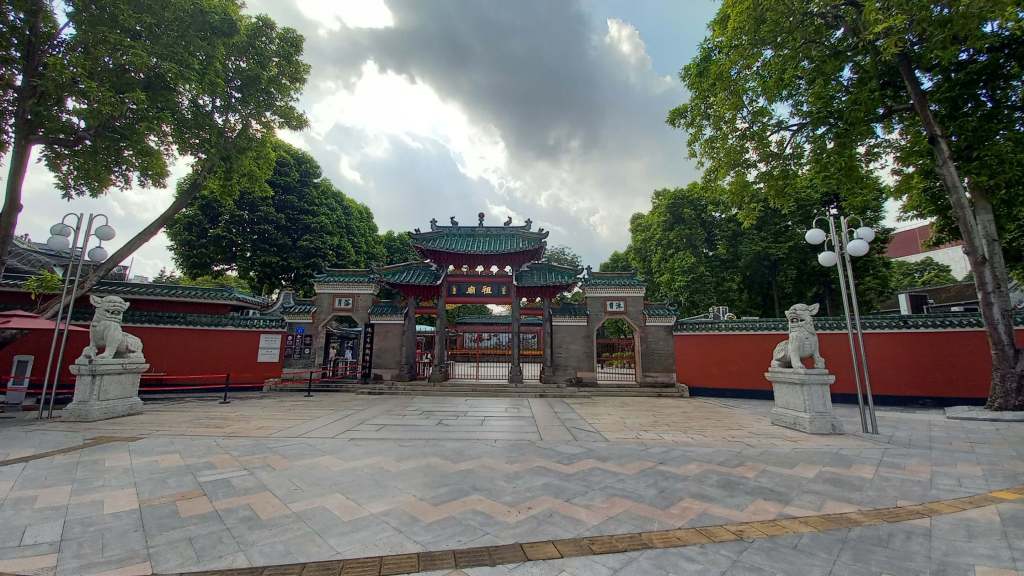
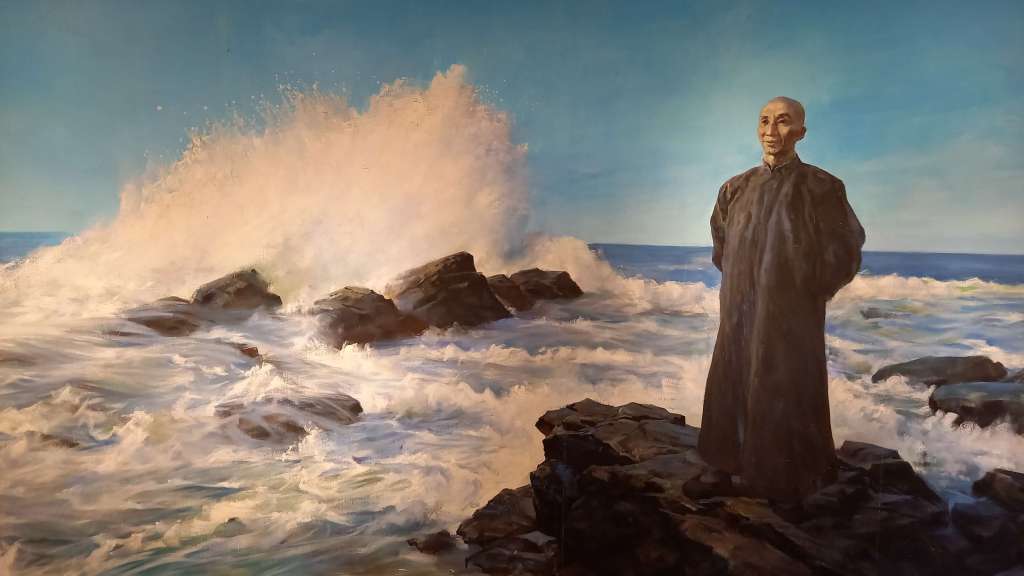
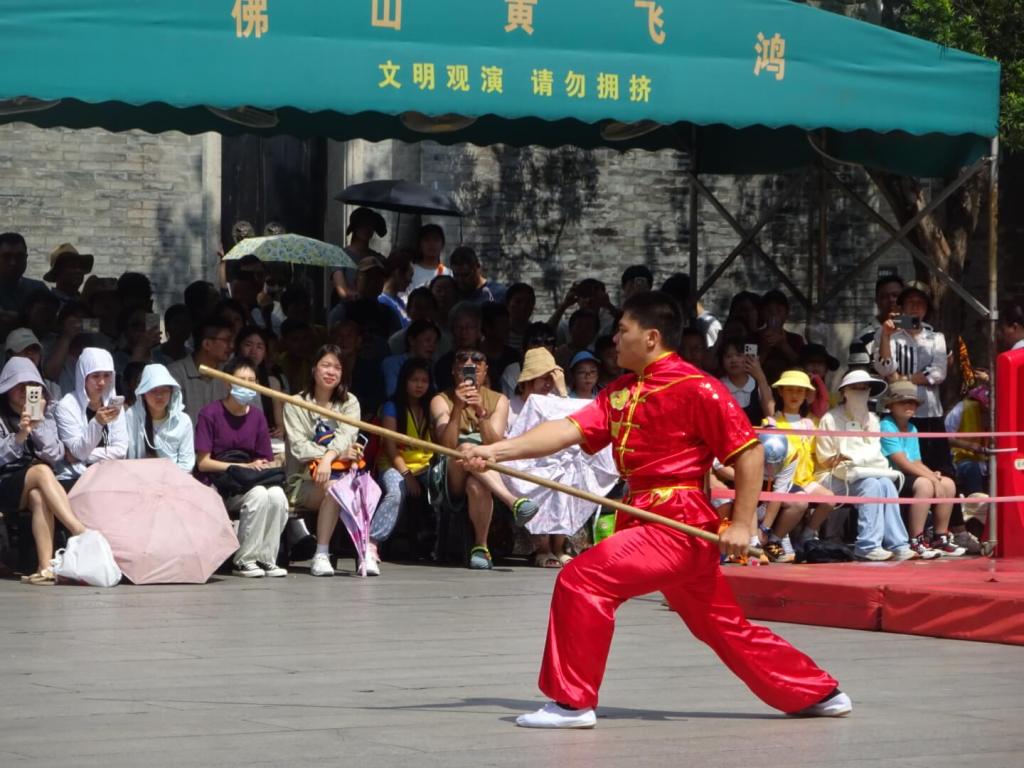
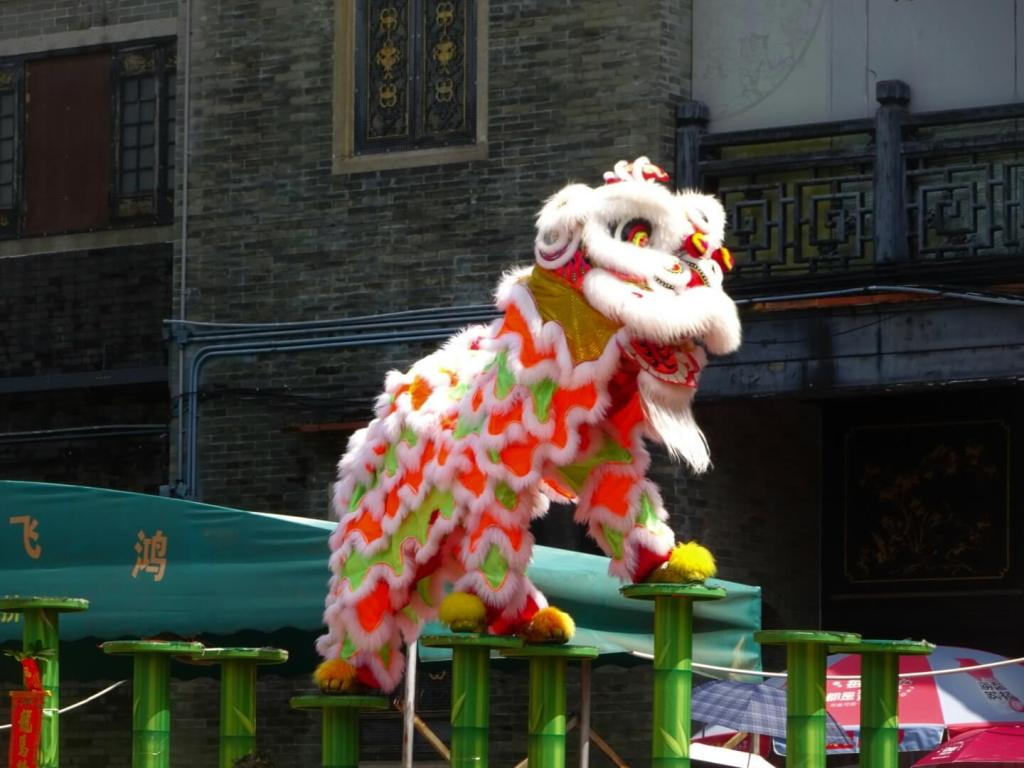
It was a good call on the early 8.30am opening time arrival, as I was able to explore the Temple very much at my own leisure without contending with the huge crowds that had gathered by the time I was leaving. The place included an interesting exhibition on Foshan’s Kung Fu connections, being the hometown of legendary Kung Fu icon Ip Man, who went on to teach Bruce Lee. But the absolute highlight just had to of course be the awesome Kung Fu and Lion Dance performance, the latter with a live drumming performance at the same time. Such amazing acrobatic skills, and the performers seemed to be not much older than 20 – some of the drummers looked about 12!
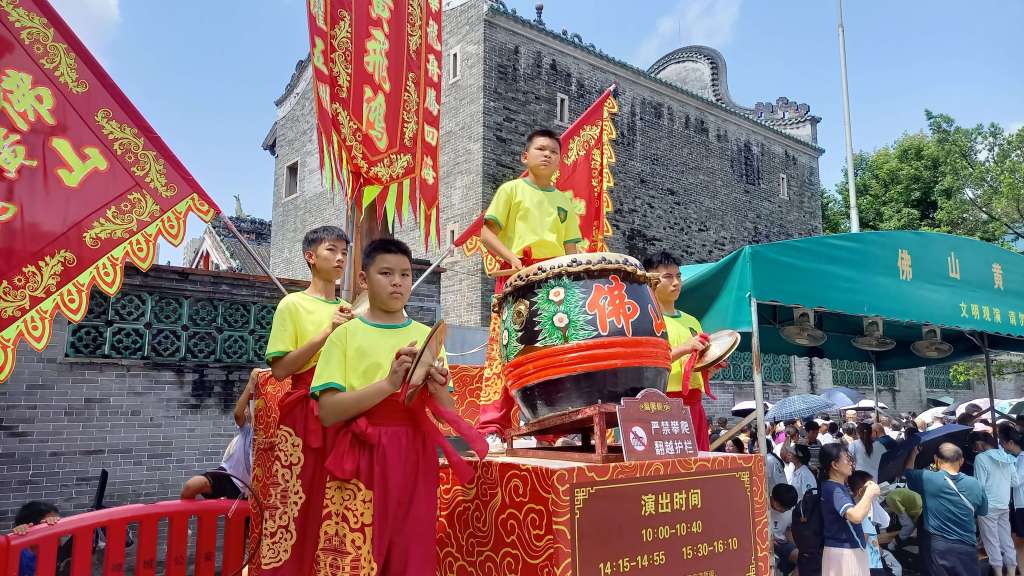
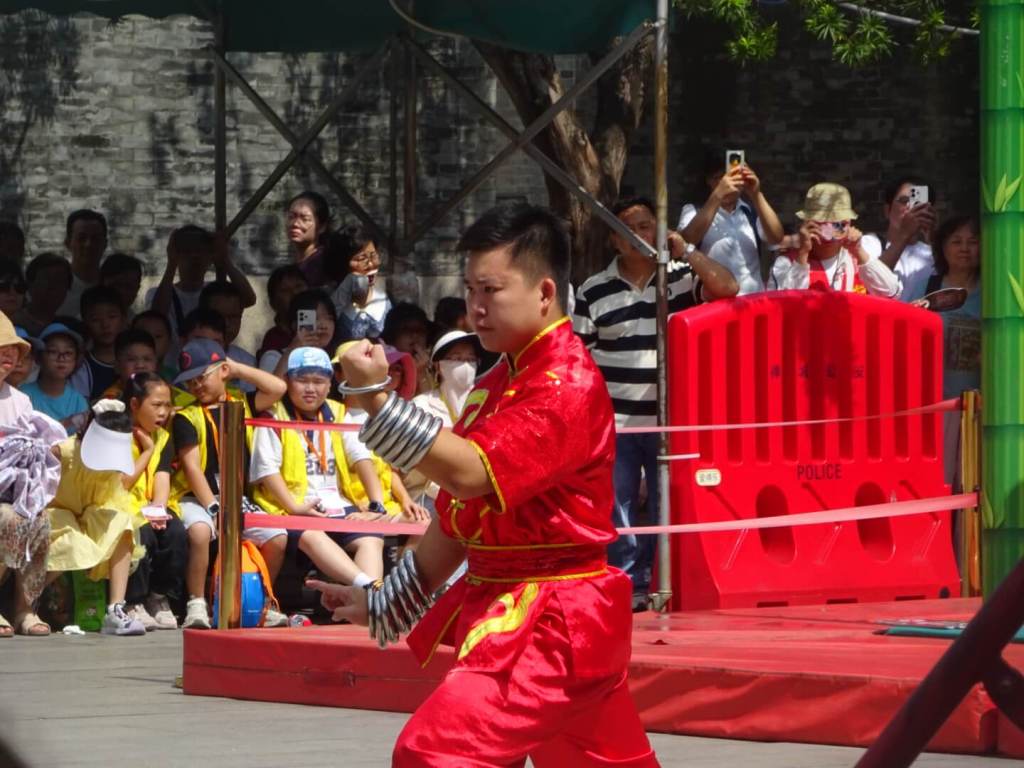
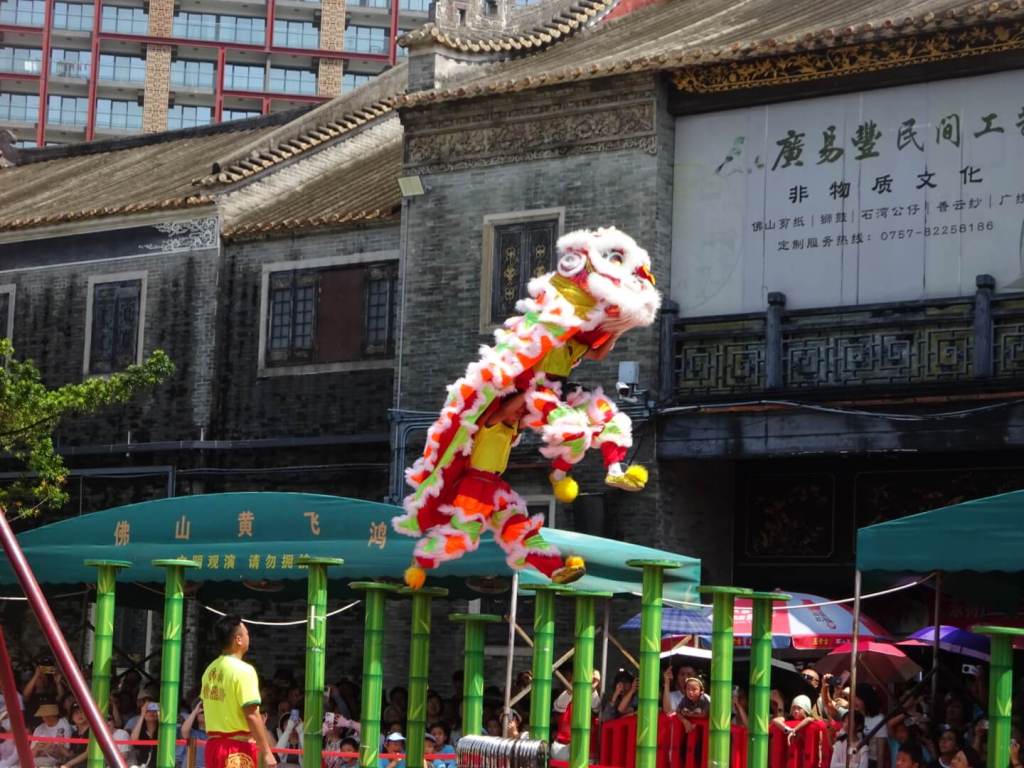
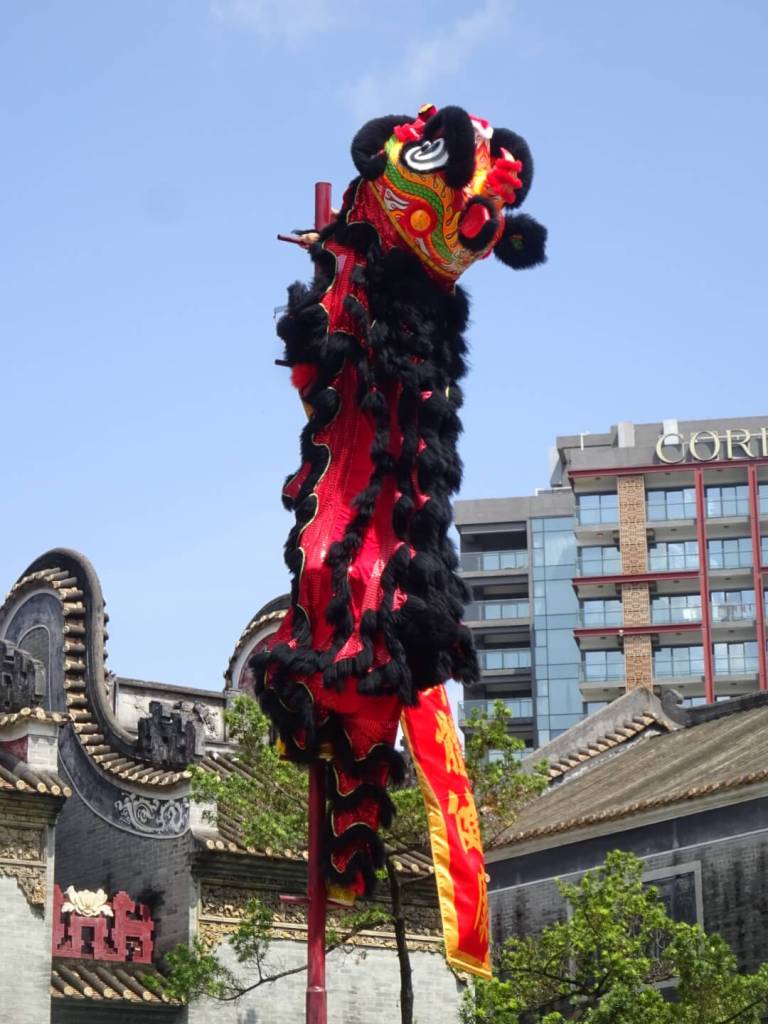
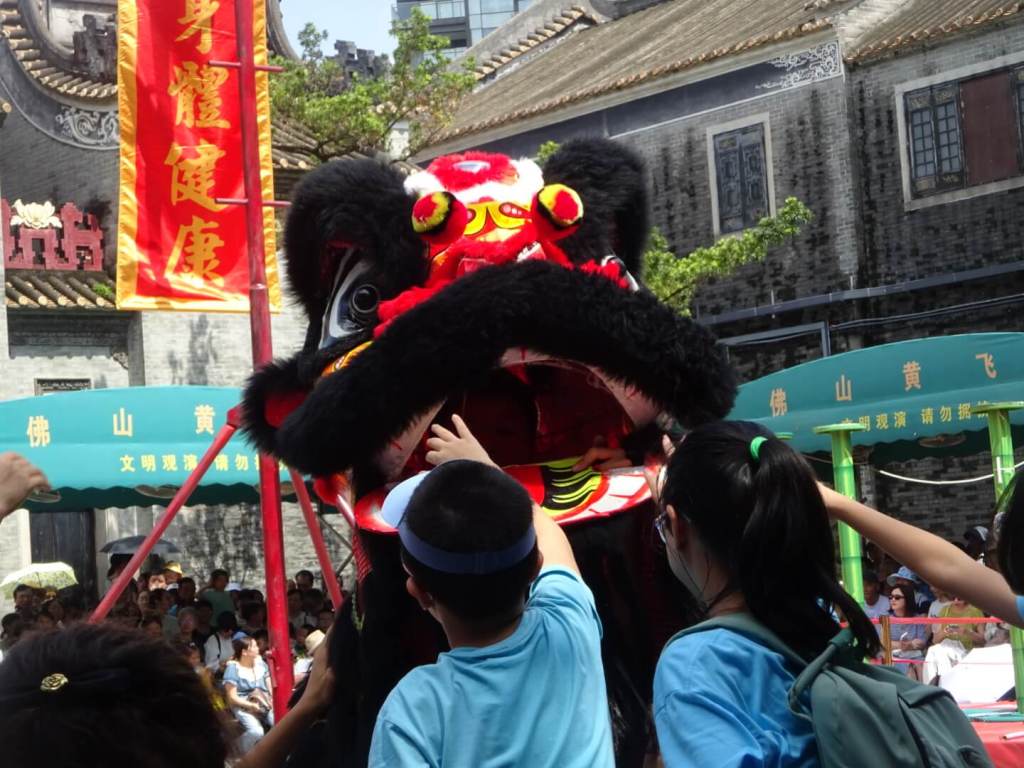
I had a lovely ramen lunch at the food court of a nearby shopping centre, and have come to learn, as mentioned in a previous blog, that China now seems very similar to Singapore in its love for both shopping malls as well as their concomitant food courts within. I would say these are very dependable places to enjoy local cuisine, at affordable prices, and without too great a risk of a dodgy tummy later. I was definitely loving the food part of my travelling in this country.
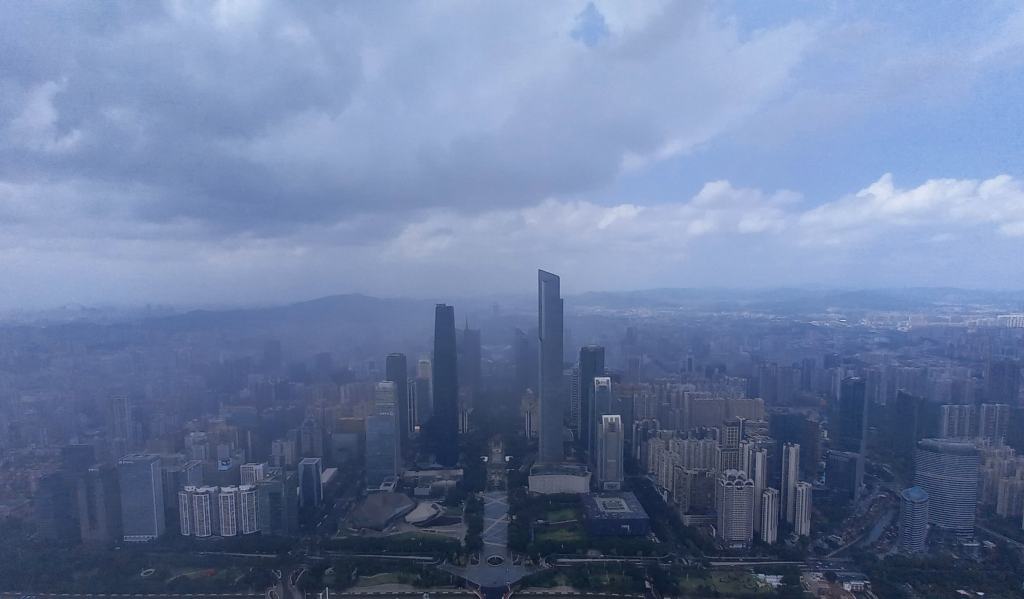
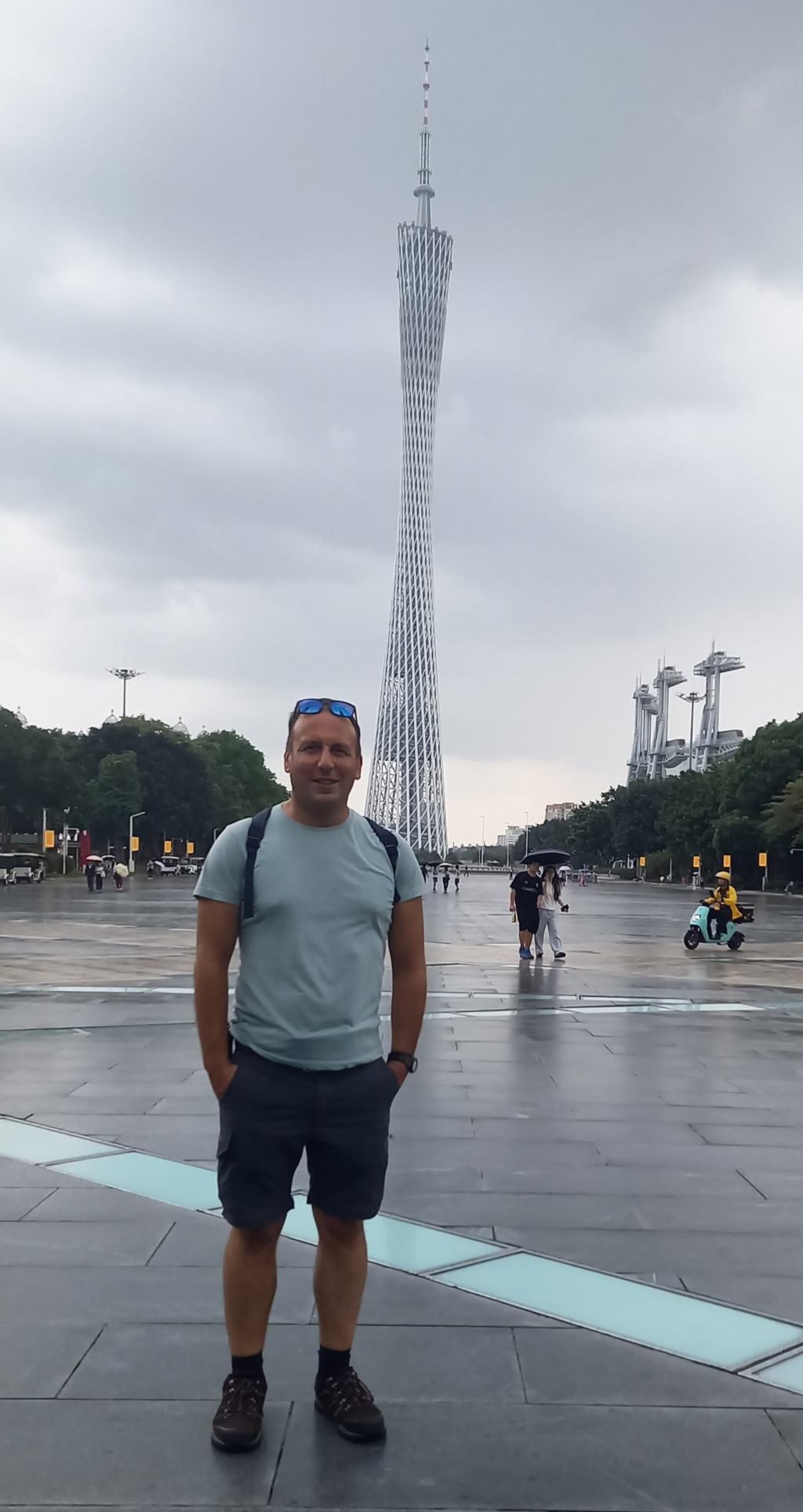
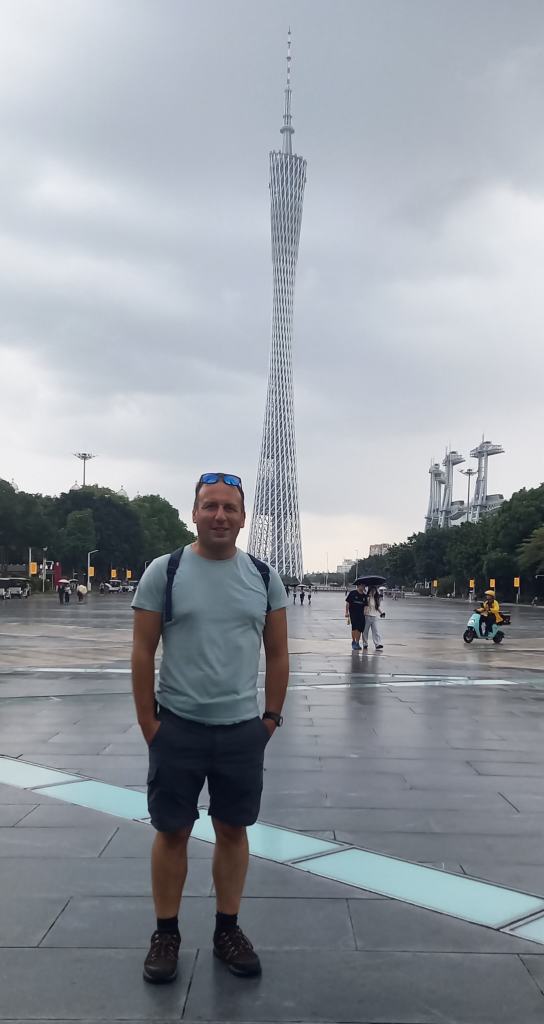
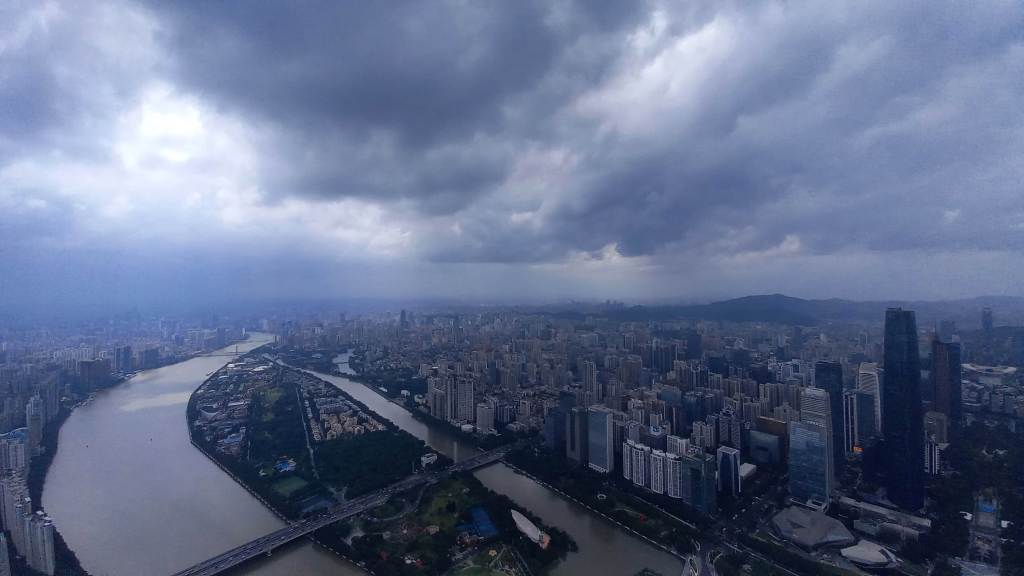
Next, it was on to the 600m-high Canton Tower back in Guangzhou, China’s third-tallest structure. It would in fact be the fifth-tallest building in the world, were it to be officially classified as a building, but it is in fact mostly hollow and serves primarily as a telecommunications tower as opposed to a building housing offices, flats or the like. I asked in the ticket office to be able to reach the highest point of the tower, and found out it was surprisingly very expensive. I bought it anyway, and was delighted in fact to see that my ticket took me much higher than where most visitors go on the 433m high observation deck. I was going up to the 488m deck, and having paid to go the extra mile got me away from the crowds and into very much like a VIP-experience with a lovely lift, and an observation deck in fact being outside rather than within glass windows as per the deck below. This day was another rather blustery one, and being exposed to both the wind and the rain up there was a really wild and exhilarating experience. The views were awesome, and so well worth it. There was also a rather nervewracking glass-bottomed floor part jutting out at the top, where I took a few photos with rather wobby legs.
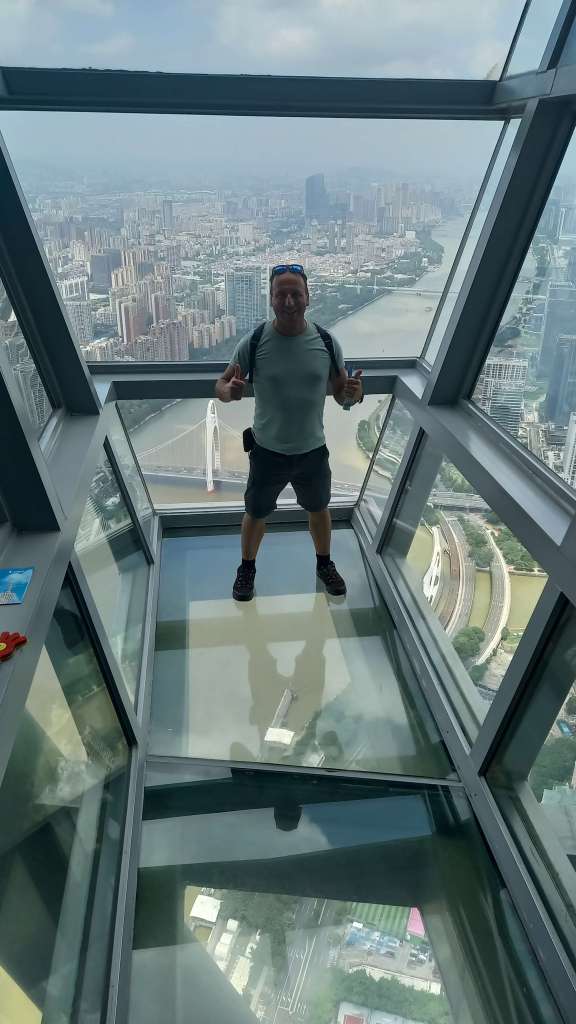
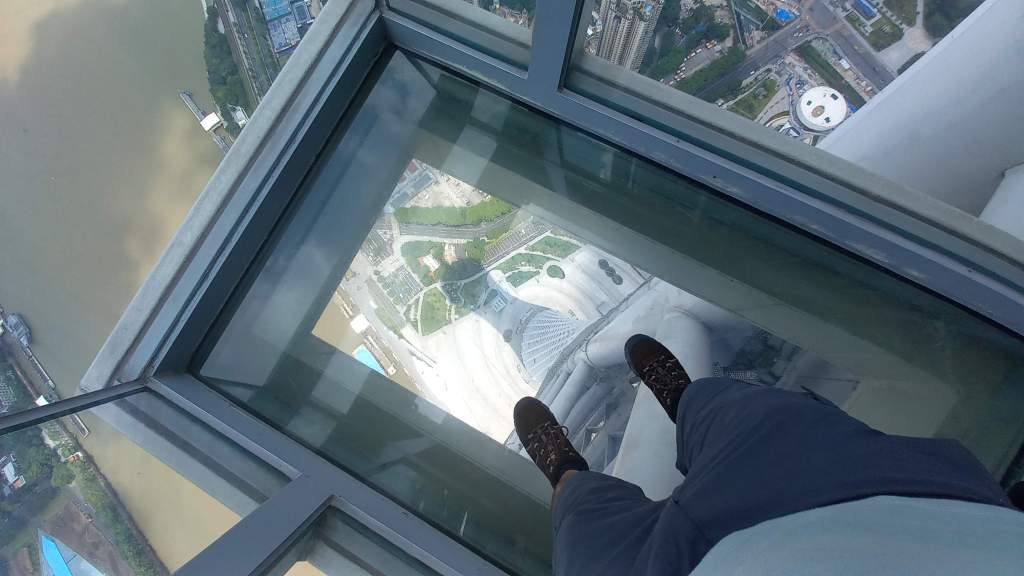
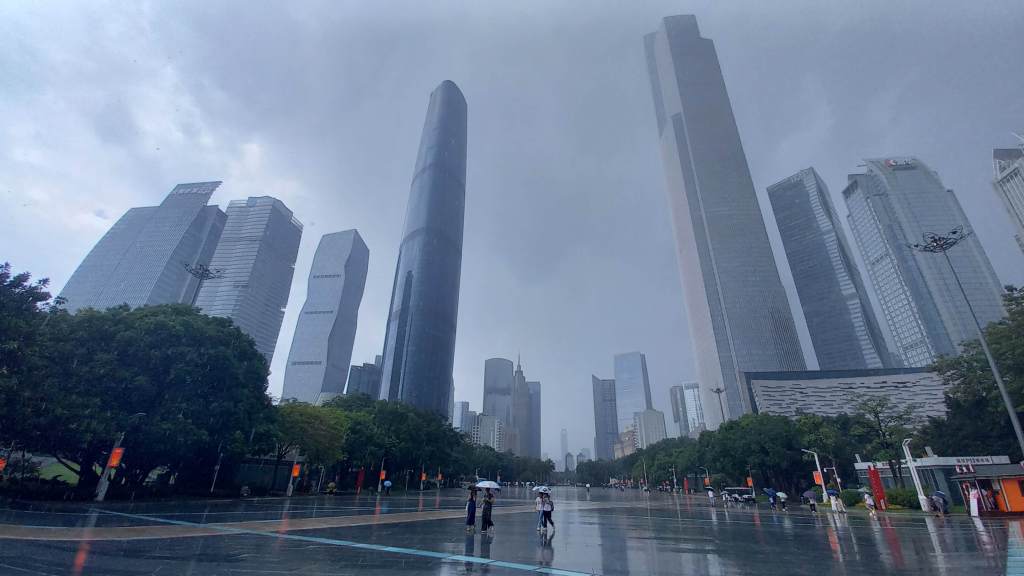
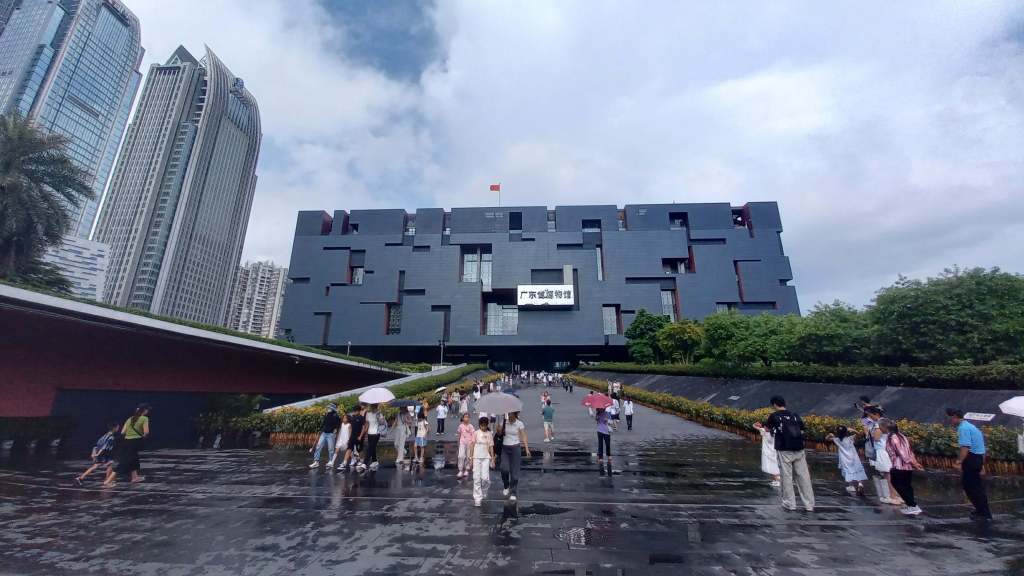
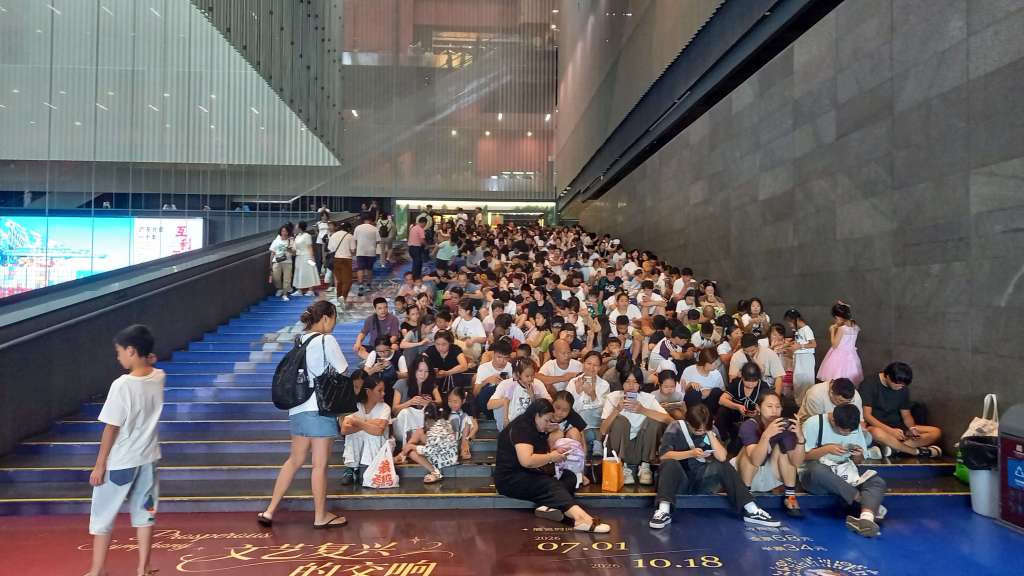
Finally, I headed to the city’s new and modern centre of Zhujiang, just across the Pearl River to the north of the Canton Tower. Checked out the famous and attractive Guangzhou Opera House in the driving rain, and then headed to the Guangdong Museum just opposite. The latter would have been really interesting, but it was absolutely packed to the gills, and I don’t even think this was because it was a rainy day. I found that there were just some museums in the country like this, just a tad too busy to be enjoyable. After exploring the Guangdong history exhibitions on the top floor, I called it a day as I’m not a huge fan of crowds. No biggie though, as I was glad to be heading back to my hotel to call it a day.
In my hotel lobby, I got talking with a friendly Russian chap from Kazakhstan on a short business trip to Guangzhou. There seemed to be a fair few Russian people in town seemingly doing business, as well as Arabic and African people doing the same – I would love to know why. He gave me a good few tips on my upcoming venture into this country after China, and I was surprised to learn that along the country’s northern border with Russia, there are a fair few “Russian towns” like the place he came from.
Guangzhou had been fascinating, and I absolutely loved thus far being in such a modern, developed and highly-sophisticated country with so much to see and learn, but with hardly a fellow (international) tourist in sight. Definitely my kind of travelling!
The next day I was heading on, but more of that in my next.

 Alex Waring's Travel Blog